
Do these 3 things before closing this tab:
1Fix the driver behind crashes, sound loss and screen glitches2Clear out junk files and repair common Windows errors3Scan for outdated or missing drivers - takes under a minuteiTechGuides is reader-supported. When you buy through links on our site, we may earn an affiliate commission. As an Amazon Associate I earn from qualifying purchases. Learn more
The honest way to compare Bluetooth-speaker battery life is to compare test conditions before comparing hours. A runtime figure is the duration measured at a particular loudness, distance, audio loop, codec, feature setting, temperature, battery age and shutdown definition. A manufacturer’s “up to” estimate and an independent test can both be useful, but unlike conditions do not produce a fair ranking.
What a battery-life number actually measures
Battery life is not a permanent property printed on the speaker. It is an observation made while the speaker converts stored battery energy into audio and other functions. Change the playback level, music, wireless connection, lighting or temperature and the elapsed time can change.
The phrase “up to” is especially important. It describes a best-case or selected test condition, not a promise that every owner will obtain that duration. A proper comparison keeps the conditions attached to every number:
- Sound level: the measured sound-pressure level (SPL), volume percentage or an undefined “moderate” setting.
- Measurement position: distance from the speaker and whether a meter or another method was used.
- Audio: the track or playlist, its frequency content, streaming service, codec and source device.
- Features: EQ, bass enhancement, RGB lighting, voice assistants, multi-speaker links, power-saving settings and USB output.
- Environment: temperature and, where relevant, wireless conditions.
- Battery state: how “fully charged” was established, firmware version and battery age.
- Endpoint: whether the clock stopped at a low-battery warning, automatic shutdown, severe volume reduction or complete loss of playback.
Without those details, two figures that look precise may not be comparable.
Popular on Amazon

- 2.25-inch LCD Screen with Backlight: This TS-501B sound level meter is measured noise levels are expressed in decibels and displayed on the 2.25-inch LCD screen, it easy to read on a big display design. Long press the backlight button to turn on a backlight, making it easy to view even in dim light
- Decibel Meter with A/C Weighting: TopTes TS-501B decibel meter uses a precise condenser microphone to capture sound. It’s equipped with A-weighting and C-weighting facilities that measure noise levels from 30 to 130 dB with an accuracy of 1.5 dB, Frequency from 30 to 8000Hz. Perfect for monitoring noise levels in communities, home theaters, audio systems, automobiles, workshops, schools, offices, factories
- MAX/MIN Measurement: The sound pressure level (SPL) meter has Max or Min measurement values to represent the maximum/minimum (high/low peak) value of the sound produced within a certain time, and the data hold function can freeze the current reading based on the sound measurement according to individual needs
- Easy Use and Feature Packed: The non-slip side design ensures that the portable noise meter fits easily in the hand. TS-501B SPL meter is a battery-operated noise meter that comes with three durable batteries and has an automatic power off function to extend battery life. A low battery indicator will appear on the screen when the battery is low to remind the user to replace the battery in time
- What’s in the Box: One TS-501B Decibel Meter, Three AAA Batteries, One User Manual, One Carry Case. The device has been factory calibrated to ensure high measurement accuracy and compliance with quality standards.
Why advertised and measured runtimes diverge
Volume changes power demand
Higher output generally consumes more power. Bose states that its SoundLink Flex can run “up to 12 hours” with Spotify’s Global Top 50 at 65% volume and typical indoor temperatures; it says playback below 50% can last longer and output above 65% reduces runtime faster. Those are manufacturer-stated conditions, not an independent result. See the SoundLink Flex product page for the claim and its qualifications.
Music is not electrically uniform
A bass-heavy track can demand more amplifier excursion than quiet speech or lightly arranged music. A playlist with changing loudness can therefore produce a different result from a repeated track. Nothing’s CMF Speaker S page specifies AAC audio, Balance EQ and Ultra Bass enabled, 50% volume and 25°C in controlled laboratory testing for its “up to 18 hours” figure. It also identifies audio content and frequency as variables, and describes laboratory figures as reference values rather than guarantees. The complete conditions are on Nothing’s CMF Speaker S page.
Extra electronics draw power
RGB lighting, multiple connected devices, voice-assistant features, charging another device and wireless activity all add demand. Firmware can alter power management, while a rechargeable battery gradually loses capacity with age. RTINGS lists volume, connected devices, RGB lighting, firmware status and battery aging among factors that affect its results.
Crashes, No Sound, or Screen Glitches?
Random freezes, missing sound and display glitches usually trace back to one bad driver. Find and replace yours safely.Free scan · under a minutePC Slower Than It Used to Be?
A free scan shows the junk files, broken settings and background clutter dragging Windows down - then fixes them in one click.Free scan · Windows 10 & 11Temperature and wireless conditions matter
Battery chemistry and electronics behave differently outside a comfortable indoor range. Bose names surrounding temperature as a variable in its estimate. Nothing lists environmental conditions and wireless conditions among possible sources of variation. A test in a cold outdoor setting should not be presented as equivalent to a laboratory or typical indoor test.
Published protocols are useful only when you keep them separate
Independent organizations publish repeatable methods, but their methods are not automatically interchangeable.
Also popular on Amazon
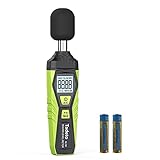
- 【Accurate Measurement】 The measuring range of the sound level meter is 30dB to 130dB . Highly accurate with ± 2.0 dB. Real-time monitoring can give you accurate data on the sound level in the area.
- 【A/C Weighted Measurement】 The A weighted simulates the frequency characteristics of low-intensity human ear noise, which is suitable for the detection of ambient noise. The C weighted simulates the frequency properties of high-intensity noises of the human ear, which are suitable for the sound pressure analysis of machine motors and machines. More professional measurement methods provide users with a more perfect user experience.
- 【Fast and Slow Measurement】 The sound level meter has the function of converting the fast and slow response rate. The fast response rate uses a time constant of 0.125s/time for general environmental measurement. The slow response rate uses a 1s/time constant, which is used for environmental measurements with relatively large changes in noise levels.
- 【Digital LCD Display 】 The digital display is a 4-digit LCD display with a resolution of 0.1 dB. Backlit LCD digital display, the reading effect is clearer in dark places. When the battery is low, the LCD display will display a low voltage icon, indicating that the power is low at this point and the battery needs to be replaced.
- 【Convenient and Lightweight 】Tadeto sound level meter is lightweight and easy to carry. It's widely used in factories, transportation, car, baby room and audio system offices, sound quality control in homes, schools, and construction sites.
| Source | Published method or claim | What it tells you | Comparison caution |
|---|---|---|---|
| RTINGS methodology | Latest firmware, full charge, continuous looped audio, calibrated to 80 dB SPL measured from 1 m, timed until playback stops; recharge time and power-saving features are also checked. | A fixed loudness and distance make results more repeatable across models. | 80 dB at 1 m is a comparison condition, not a universal definition of normal listening. |
| Which? testing method | Continuous music at a moderate volume. | Represents a stated listening approach and allows long-run measurements. | “Moderate” is not the same disclosed target as 80 dB SPL, so hours should not be merged into one ranking. |
| Manufacturer product page | An “up to” value under the maker’s selected content, volume, feature and environment. | Shows what the maker believes is achievable in a defined scenario. | It is not an independent measurement and may use a quieter or otherwise favorable condition. |
Which? summarizes the issue plainly: “Manufacturer claims and our own battery-life measurements don’t always align.” The statement appears in its testing explanation linked above.
A fair comparison protocol, step by step
If you are publishing measurements or checking several speakers yourself, use one protocol and document every variable. The following procedure combines the disclosed elements of published methods with the reporting details a reader needs.
What’s actually slowing this PC down?
Pick the symptom - the matching free tool is one click away.
- Inspect and charge. Record the model, battery condition and firmware version. Charge each unit using the maker’s procedure until its full-charge indication appears. Note whether the speaker can be used while charging.
- Standardize the source. Use the same phone or playback device, connection type and codec where possible. Select one continuous, documented track or playlist. If one speaker uses AAC and another uses a different codec, disclose that difference rather than implying identical conditions.
- Set the listening level. Choose a target and state it. RTINGS uses 80 dB SPL measured from 1 m. If you use a volume percentage or a “moderate” setting instead, report that exact choice and do not label it universally typical.
- Measure at a fixed distance. Put the speaker and meter in the same positions for every run. Keep the microphone or meter orientation consistent, since placement can affect the reading.
- Lock feature settings. Keep EQ, bass modes, lighting, voice assistants, multi-speaker links, charging outputs and power-saving options consistently on or off. Write down every exception.
- Start the clock. Begin continuous playback after the speaker reaches the selected level. Record the start time, room temperature and any wireless or network conditions that could change.
- Define the endpoint in advance. A defensible endpoint is the moment the speaker stops playback. Also record earlier low-battery warnings, automatic volume reduction or a power-saving shutdown so readers can see how usable the final portion was.
- Repeat surprising runs. If one result differs greatly from an advertised value or a previous run, check charge status, connection, firmware and settings, then repeat before drawing a conclusion. RTINGS says it may retest large disagreements between its result and a manufacturer claim.
- Report both numbers separately. Put the maker’s claim beside its stated conditions and the independent result beside your protocol. Do not silently combine them into one “accuracy” percentage.
How to read the Bose and Nothing examples
The two manufacturer examples demonstrate why condition disclosure matters, not which speaker lasts longer.
| Example | Advertised duration | Stated conditions | How to use it |
|---|---|---|---|
| Bose SoundLink Flex | Up to 12 hours | Spotify Global Top 50, 65% volume, typical indoor temperatures; the page says content, volume and surrounding temperature affect life. | Use as a manufacturer estimate tied to a particular listening scenario. |
| Nothing CMF Speaker S | Up to 18 hours | Fully charged; Balance EQ and Ultra Bass on; 50% volume; AAC; other features at default; 25°C controlled laboratory testing. | Use as a laboratory reference with unusually explicit settings, not as a direct ranking against the Bose figure. |
The 6-hour difference between those headline values does not prove that one model is six hours better. The volume, music, codec, feature state and temperature differ, and neither figure is an independent head-to-head measurement.
Do not rank speakers by battery capacity alone
A larger battery can store more energy, but the speaker’s amplifier, drivers, processor, radios and lighting determine how quickly that energy is consumed. Which? notes that a smaller speaker can use less power despite having a smaller battery. Runtime is therefore a system result: stored energy divided by power demand under the stated conditions.
Also popular on Amazon

- Accurate 30-130dB Noise Measurement: The Goldeep SL750A decibel meter measures sound levels from 30 to 130dB with ±1.5dB accuracy and a 31.5Hz-8KHz frequency response. This sound decibel meter is ideal for checking home noise, neighbor noise, traffic sound, office noise, construction sites, factories, classrooms, baby rooms and musical instruments.
- A/C Weighting for Different Sound Environments: This digital sound level meter supports A/C weighting modes for more flexible noise testing. A-weighting is suitable for environmental noise such as urban traffic, schools, offices, business areas and construction sites. C-weighting is designed for industrial noise from machinery, equipment, aerospace, high-speed rail and other high-intensity sound sources.
- dB/SONE Units for Sound & Loudness Testing: Use the dB unit to measure sound intensity for environmental noise, machine noise, traffic noise and workplace noise. Switch to SONE to better understand perceived loudness, making this db meter useful for music, audio systems, acoustic checks and instrument noise control..
- FAST/SLOW Response with MAX/MIN Tracking: The spl meter includes FAST and SLOW response settings. FAST response, 0.125s per reading, is useful for changing noise levels, while SLOW response, 1s per reading, is suitable for steady-state noise. MAX/MIN value tracking helps record peak and minimum noise levels over a period of time.
- Easy-to-Use Sound Meter for Daily & Professional Needs: Designed with data hold, clear LCD display, anti-slip grip and a windbreak ball, this sound meter is practical for indoor and outdoor use. Package includes 1 sound level meter, 2 AAA 1.5V batteries and 1 user manual, so you can start measuring noise right away.
When capacity is published, record its unit and whether it is a nominal or usable figure, but do not turn it into a runtime ranking without a matched test. Two speakers with similar capacity can have very different runtimes, and a smaller-capacity model can last longer at the same measured SPL if its system is more efficient.
What an independent test should report
A useful test result is more than “lasted 14 hours.” Include a compact record readers can audit:
- Model, firmware and battery age or condition.
- Charge method and confirmation of a full charge.
- Audio source, track or playlist, streaming service and codec.
- Measured SPL, volume setting and meter distance.
- EQ, enhancement, lights, assistants, links and charging-output settings.
- Room temperature and notable wireless conditions.
- Start time, endpoint definition and any low-battery behavior.
- Whether the run was repeated and, if so, how closely the results agreed.
These details let a reader decide whether a result resembles their use instead of treating a single hour total as universal.
DIY testing with a sound-level meter
A sound-level meter or decibel meter can help you reproduce a fixed SPL target. It measures sound pressure, not battery runtime, battery capacity or energy consumption, and it is optional if you are only comparing published data. If you use one:
- Place the meter 1 m from the speaker, using the same height and orientation for each model.
- Play the chosen loop and adjust the speaker until the meter reaches your target, such as 80 dB SPL.
- Wait for the reading to settle, then start the runtime clock.
- Do not move the speaker, meter or room furnishings between models.
- Record fluctuations and report whether the target was an average, a short-term reading or another setting.
A meter cannot validate the manufacturer’s battery capacity. Its role is to make the acoustic load more comparable.
Quick wins for a faster PC:
Scan for outdated or missing drivers - takes under a minuteDriver Scan →Clear out junk files and repair common Windows errorsFree Scan →Also popular on Amazon

- 【Widely Used】The noise meter is the use of environmental sound level instrument, can be widely used in such as factories, workshops, schools, residential, office areas, traffic roads, audio and other occasions of sound level measurement. Also suitable for noise engineering, product quality control, health,prevention and control.
- 【Accurate Measurement】Measuring Range:30~130dB ;Accuracy:±1.5dB(94dB@1KHz);Display Resolution:0.1dB
- 【A Weighted Measurement】 A Weighted network (automatic switching range display)
- 【Fast/Slow mode selection】Press the MODE key, you can convert the response speed of the noise meter, FAST fast, SLOW slow
- 【MAX/MIN Measurement】Press RANGE key to measure the maximum value of MAX and minimum value of MIN.A maximum duration of more than 3 seconds is recorded, with a normal test sampling rate of 0.5 seconds. The maximum error is ± 5%.
How to compare unlike published results
First, classify the evidence
- Manufacturer estimate: useful for the maker’s selected scenario, but conditional and not independent.
- Independent standardized test: stronger for model-to-model comparison when the same protocol is used.
- Independent test with vague settings: informative, but less reproducible if “moderate” volume or the audio material is undefined.
- Individual anecdote: useful for spotting possible issues, not a controlled runtime measurement.
Then match the loudness and distance
Compare results at the same measured SPL and distance whenever possible. A 60 dB indoor listening test and an 80 dB test answer different questions. Do not call the quieter result “more efficient” unless the acoustic output is matched.
Separate feature scenarios
Make separate rows for lights on versus lights off, bass enhancement enabled versus disabled, and a single connection versus a multi-speaker link. If a feature is not stated, write “not stated” rather than assuming it was off.
Keep charge and endpoint definitions visible
A speaker that plays quietly for another hour after a low-battery warning is not equivalent to one that maintains its normal output until immediate shutdown. Report both the warning point and the final endpoint when the source provides them.
Independent reader supportYour contribution helps us test, update, and keep practical guides available for everyone.Why “real-world battery life” needs a qualification
There is no single real-world listening level. One owner may play speech quietly indoors; another may use a speaker outdoors near traffic. The same model can last much longer at low volume than at high output. A responsible comparison therefore says “at 80 dB SPL from 1 m,” “at 65% volume with the maker’s playlist,” or another concrete condition instead of presenting one duration as everyone’s experience.
Recommended Free Tools
Usage habits also accumulate over time. Frequent high-volume sessions, warm or cold environments, several connected devices, active lighting and an aging battery can each move an owner’s result away from a new-speaker laboratory number.
Also popular on Amazon
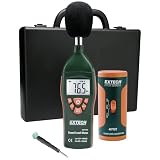
- Datalogs up to 16,000 readings with USB interface for downloading to a PC
- Triple LCD displays humidity, temperature, and date (year, month, and day)
- Programmable from keypad or PC
- Selectable data sampling rate
- User programmable audible and visual alarms
Common comparison mistakes and their fixes
| Mistake | Why it misleads | Fix |
|---|---|---|
| Sorting only by the largest advertised hour figure | “Up to” values may use different volume, content and temperatures. | Show the conditions beside every claim and keep independent results separate. |
| Calling 80 dB “normal listening” | It is a repeatable test target, not a universal preference. | Label it as the protocol condition. |
| Using battery capacity as a proxy for runtime | Power demand varies by amplifier, drivers, processing and features. | Use matched runtime measurements. |
| Leaving EQ and lights undocumented | Enhancement and illumination can materially change drain. | State whether each feature was enabled, disabled or not stated. |
| Comparing a new battery with an old one | Rechargeable cells degrade. | Record battery age or condition and avoid presenting the result as a new-unit specification. |
| Stopping at the first warning without explanation | Readers cannot tell whether playback continued at reduced output. | Define and report both warning behavior and shutdown endpoint. |
| Computing a claim-versus-test accuracy percentage | Different protocols make the arithmetic look more precise than the evidence. | Only calculate it when conditions are sufficiently aligned, and show the calculation and assumptions. |
What published testing says about the range
Which? reports that some speakers in its coverage fall below five hours while others exceed 30 hours. Those figures describe its tested products and continuous-music method; they are not a controlled universal range for every Bluetooth speaker. The spread reinforces why model, loudness and protocol must accompany every hour value.
How much should battery life influence a purchase?
Start with the loudness and setting you actually need. For a desk or bedroom, a lower measured-SPL result may still cover a full day. For an outdoor gathering, a speaker that maintains higher output for the required period may be more useful even if its quiet-playback headline is lower.
- Define the session. Estimate the hours you need and whether the speaker will be used indoors, outdoors or while traveling.
- Choose the comparison condition. Prefer matched independent SPL results; use manufacturer figures only with their conditions attached.
- Check feature requirements. If lighting, bass enhancement, voice assistance or multi-speaker linking is essential, seek a test with those features enabled.
- Check charging behavior. Recharge time and power-saving behavior can matter as much as the final runtime; RTINGS includes both in its battery testing.
- Allow for aging and temperature. Treat a new-unit result as a starting point, not a lifetime guarantee.
Why battery life matters to buyers
Qualcomm’s The State of Sound 2021 reports that 42% of surveyed Bluetooth wireless-speaker respondents selected battery life as a purchase driver. The percentage applies to that survey’s participants, not to all current speaker buyers. The report is available at Qualcomm’s 2021 report.
Free tools Windows power users keep installed
One-click scans. No signup required.
That level of interest makes transparent testing more valuable: readers can match a result to their own loudness, environment and feature settings instead of choosing a model from an unsupported headline number.
A compact checklist for any battery-life table
- Is the number a manufacturer estimate, an independent result or an anecdote?
- What loudness and distance were used?
- What music, source and codec played?
- Were EQ, lights, assistants and links on or off?
- What temperature and wireless conditions applied?
- Was the battery new, aged or unspecified?
- What exactly counted as the end?
- Can the result be compared directly with the neighboring rows?
If any answer is missing, preserve the gap in the table as “not stated” and avoid a stronger conclusion than the evidence supports.

