
To combine live streaming with video on demand (VOD), decide whether viewers need a replay, temporary catch-up access, or a scheduled channel that mixes recorded videos with live feeds. These are different workflows: a replay turns a past event into a lasting asset, DVR access depends on a retention window, and linear playout schedules VOD and live sources into a channel.
Choose the viewing experience first
Start with what viewers should be able to do. That choice determines what you must retain, publish, and operate.
| Pattern | What viewers get | What you need to manage |
|---|---|---|
| Live event plus replay | A real-time event, followed by a replay that can remain in a VOD catalogue. | Retain the live media long enough to create the replay, then copy or publish it to durable storage. |
| DVR or catch-up | Time-shifted access to content associated with the live stream. Viewers may join late, watch with a delay, or skip parts. | A defined retention window. Access ends when the retained live segments and associated manifest expire. |
| Scheduled linear channel | A channel with a programme schedule combining catalogue videos and live feeds. | Playout scheduling and channel operations, rather than simply saving an event as a replay. |
Google Cloud documents replay clips and DVR sessions as live-to-VOD workflows; Brightcove describes scheduled VOD items and live feeds as a linear channel. Those distinctions matter: a temporary catch-up window is not a durable replay, and neither is the same product experience as a programmed channel. (Google Cloud live-to-VOD documentation; Brightcove Cloud Playout overview.)
How to build a live event with a lasting replay
- Set the replay promise. Decide whether the replay will be searchable in a catalogue, available only to a particular audience, or removed after a defined period. Confirm that you have the rights to retain, replay, repackage, and monetize the event content.
- Choose a live ingest workflow. Select an input protocol and production workflow supported by your encoder and streaming service. Google Cloud’s Live Stream API documents SRT and RTMP input; Cloudflare Stream documents RTMPS or SRT live input. These are examples of provider support, not universal requirements. (Google Cloud Live Stream API overview; Cloudflare Stream live documentation.)
- Encode and package for delivery. The system prepares the feed into media segments and manifests that a compatible player can request in sequence. Common formats described by AWS include MPEG-DASH, Apple HLS, Microsoft Smooth Streaming, and CMAF. Google’s Live Stream API documents HLS and DASH output. A format match alone does not guarantee that every codec, player, DRM setup, or device will work together. (AWS video streaming documentation; Google Cloud Live Stream API overview.)
- Configure retention before the event. If your chosen clipping workflow depends on retained live segments, set the live channel’s retention window in advance. Allow time for review and clip creation, then copy the finished replay into durable storage or publish it to the VOD catalogue. Google’s documentation shows a 24-hour configuration example; it is an example, not a general retention recommendation. (Google Cloud live-to-VOD documentation.)
- Create and publish the replay. In Google’s documented Live Stream API clip workflow, a clip is made from past content by copying an HLS manifest and its associated segments to a chosen directory. The documentation says this clip feature supports HLS manifests only; it does not support live clipping or scheduling future clips. Verify that your selected platform’s workflow matches your publishing needs.
- Test playback and operations. Check the replay on the actual apps and devices your audience uses. Confirm captions, access controls, catalogue metadata, failure handling, and how a viewer finds the replay. Google documents embedded CEA-608/708 caption passthrough and encryption options for its API; Cloudflare documents playback through its player or an HLS/DASH-compatible player. These are product-specific capabilities, not guarantees for every service. (Google Cloud Live Stream API overview; Cloudflare Stream live documentation.)
When to use DVR instead of a replay
Choose DVR or catch-up when viewers need temporary access around a live broadcast, rather than a permanent catalogue item. Google Cloud documents DVR sessions for past, current, or future content; viewers can join late and watch with a delay or skip sections. The DVR manifest remains with the live segments and is removed when the retention window expires. A replay clip, by contrast, is copied to a specified location and can outlast that window. Set the retention period to match the access promise you make to viewers. (Google Cloud live-to-VOD documentation.)
#1 Best Overall

- MAKE YOUR TV SMARTER - Enhance any TV with the ability to play videos, music, and photo slideshows from a USB drive or MicroSD Card! It’s so simple and intuitive - anyone can use it. The Micca 4K is amazingly compact and affordable, get one for each TV in the house!
- PLAYS 4K ULTRA-HD VIDEOS - Works with TVs old and new! Smoothly plays videos up to 4096x2304@30fps over UHD 4K/60Hz HDMI output. Sharp and clear video and audio in pure digital format, compatible with 4K and 1080p TVs, projectors, and monitor displays. Composite AV output for use with analog TVs or for sending sound to a stereo system.
- DUAL USB AND MICRO SD READER - Play media files from USB flash drives and USB hard drives up to 8TB, or microSD cards up to 1TB. Supports FAT/FAT32, exFAT and NTFS file systems. Compatible with wireless air mouse remotes for non-line-of-sight control so that the player can be hidden away!
- SIMPLE DIGITAL SIGNAGE - Automatic video playback with endless repeat and looping, and the ability to resume from the last stopping point. Configurable 90/180/270 degree video output rotation. Great for digital signage applications such as restaurant menu boards, lobby welcome videos, art and museum installations.
- MEDIA FORMAT SUPPORT - Videos: MKV, MP4/M4V, AVI, MOV, MPG, VOB, M2TS, TS files encoded with H.265/HEVC, H.264/AVC, MPEG1/2/4, VC1, up to 4096x2304, 30fps, 200mbps. Subtitles: SRT, PGS, IDX+SUB. Music: MP3, WAV, FLAC. Photos: JPG, GIF, BMP, PNG
When to schedule a linear channel
Use scheduled playout when the goal is for viewers to tune in to a continuous or scheduled channel, not simply to watch an event and its replay. Brightcove describes Cloud Playout as programming VOD catalogue items together with live feeds into a linear channel, with examples including 24/7 linear channels, pop-up or virtual channels, and simulated live events. The schedule is the product: decide how recorded items and live sources fit together, and plan who updates and monitors that programming. (Brightcove Cloud Playout overview.)
Plan the storage and delivery architecture
Separate the jobs, even when components are shared
A typical cloud design packages video into segments and manifests, stores VOD assets on an origin or object store, and delivers them through a CDN. AWS describes VOD storage on a server or S3 with CloudFront delivery, and live delivery through MediaStore or MediaPackage origins with CloudFront. Live and VOD can share parts of a packaging and delivery stack, but live ingest, retention, replay publishing, and on-demand playback still have distinct requirements. (AWS video streaming documentation.)
Rank #2
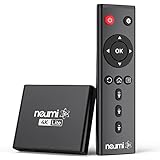
- 【SIMPLE, POWERFUL, COMPACT】- Easily play videos, photos, and music files from USB drives, hard drives, and SD cards. Simple and intuitive to use with no complicated settings. Takes up very little space - it’s smaller than a deck of playing cards!
- 【4K/UHD VIDEO PLAYBACK】- Stunning HDMI video quality up to 2160p/60Hz with support for the latest video formats such as H.265/HEVC. Feeds digital surround sound to home theater receivers for a cinema-like movie experience. Includes analog AV output for connecting to an older TV or for sending audio to a stereo system.
- 【READS USB DRIVES AND SD CARDS】- Reads USB flash drives and hard drives up to 8TB and SD cards up to 1TB. Supports FAT32, exFAT, and NTFS file systems. Automatic playback, continuous looping and repeat, and the ability to resume video playback from the last stop point.
- 【TRIGGER SENSOR INPUT】- Ability to loop one video continuously and play a different video when triggered by an optional push-button or motion sensor. Build an interactive digital signage display, art gallery or museum on-demand video player, or a Halloween special effect in just a few steps. Push-button and motion sensors sold separately.
- 【MEDIA FORMAT SUPPORT】 - Video: MP4, MKV, AVI, TS/TP, MOV, VOB, and M2TS files using H.265/HEVC, H.264/AVC, VC1, or MPEG2/4 codecs, up to 4096x2304p@30fps, 10-bit color, and 200mbps. Photos: JPG, JPEG, BMP, GIF (non-animated), PNG. Music: MP3, WMA, OGG, FLAC, APE, AAC
Choose a managed platform or assemble separate encoding, packaging, storage, and CDN services according to your need for control, existing infrastructure, audience geography, scale, and operating capacity. The cited provider documentation describes workflow fit, not a current like-for-like price comparison or independent performance test.
Validate devices, captions, access, and delivery
- Player and device support: Test the real app and device matrix. HLS, DASH, or CMAF support does not make every player, codec, or DRM arrangement interchangeable. (AWS video streaming documentation.)
- Browser access: For browser playback, configure appropriate CORS headers for manifest and segment requests. Microsoft’s guidance also notes that DRM license requests need different routing and caching treatment from media segments. (Microsoft Learn video streaming guidance.)
- DRM: Microsoft names PlayReady, Widevine, and FairPlay as possible components in commercial deployments, depending on devices. Treat DRM as a system-design requirement; the guidance does not establish that Azure Front Door itself supplies every DRM service. (Microsoft Learn video streaming guidance.)
- Captions and access control: Confirm whether captions survive the encode and packaging workflow, and whether the live event and replay require different access rules.
- Bandwidth: Plan with representative content, not resolution alone. Cloudflare notes that an adaptive-bitrate bandwidth estimate can differ with visual complexity: slides may require less bandwidth than fast-motion sports at the same resolution. (Cloudflare Stream live documentation.)
- Resilience and geography: Set latency and failure-recovery expectations, consider audience locations and expected concurrency, and validate operational failover against your own delivery needs.
Cost and monetization decisions
Compare the cost categories that apply to your architecture: encoding, storage duration, packaging, CDN egress, platform fees, and support. The provider documentation cited here does not establish comparable current prices, so estimate costs using your expected usage and each provider’s current terms rather than assuming one architecture is cheaper.
Do these 3 things before closing this tab:
1Fix the driver behind crashes, sound loss and screen glitches2Repair Windows errors before they cause bigger problems3Scan for outdated or missing drivers - takes under a minuteRank #3

- [Smooth 4K Ultra HD Playback] This 4K@30Hz HDMI digital media player utilizes H.265/HEVC decoding technology, enabling playback of videos up to 4096×2304 resolution compared to H.264 or 1080P, delivering a clearer and smoother picture.
- [Plug and Play] The HD media player is easy to use, requiring no WiFi or app. It supports direct playback/copying/deletion of videos, music, photos, PPTs, and PDFs from USB storage devices or Micro SD cards. Equipped with dual USB ports, this media player can also connect to a mouse/keyboard or speakers.
- [HDMI RCA Optical Outputs] This media player connects to TVs, digital signage displays, or projectors via an HDMI port for crisp 4K video playback. The player also comes with analog RCA output to hook up legacy older TVs and monitors, plus built-in optical audio port to transmit lossless digital surround sound to soundbars, amplifiers and home theater audio systems, delivering immersive high-fidelity audio without signal loss.
- [TV Projector or Digital Signage] This 4K media player supports autoplay, loop playback, and shuffle playback, and supports both landscape and portrait display modes. HDMI media player can run continuously, making it ideal for TV projector or digital signage such as restaurant welcome videos, reception videos, and art and museum installations.
- [Extensive Compatibility] This media player for TV can play media files from USB hard drives up to 8TB in capacity or micro SD cards up to 1TB in capacity. Supported file systems include FAT32, exFAT, and NTFS. Supported formats include: H.265/HEVC (MKV, MOV, AVI), MPEG, FLV, RM, 3GP, MP4, WMV, RMVB, DAT, MPG, TS, M2TS, JPG, JPEG, BMP, GIF, PNG, MP3, OGG, FLAC, APE, AAC, WMA, etc.
Advertising can be used with live and replay viewing, but combining the formats does not insert ads automatically. Google Cloud documents Video Stitcher workflows for dynamically inserting ads into VOD and live sessions using HLS/DASH-compatible formats. You still need to plan rights, ad decisioning, measurement, player integration, and the audience model. (Google Cloud VOD use case.)
Troubleshoot common design failures
- The event ends, but no durable replay appears: Check whether live segments were retained long enough and whether the clip or publishing step copied them to durable storage. A DVR retention window alone does not create a permanent catalogue asset.
- The catch-up link stops working: Compare the viewer’s access period with the configured retention window. If the promise is longer than the window, publish a durable replay instead of relying on retained live segments.
- A clip workflow rejects the source: Check the provider’s clip constraints. Google’s documented workflow supports HLS manifests for clips and uses past content; it does not support live clipping or scheduled future clips.
- Video works on one device but not another: Verify the actual manifest, codec, player, DRM, and device combination. A shared format such as HLS or DASH does not by itself guarantee compatibility.
- Browser playback fails while media seems available: Inspect CORS headers on manifest and segment requests. If DRM is involved, check license-request routing and caching separately from media delivery.
- Delivery estimates are unexpectedly high: Revisit the content used for bandwidth planning. Motion and visual complexity affect adaptive-bitrate needs, so test with material resembling the real event.
Or let it run in the cloud
If the goal is a continuous YouTube channel playing uploaded videos, rather than a custom live-event/VOD platform architecture, StreamNeo is a separate option: upload a recording or build a playlist, add your YouTube stream key, and go live. It runs from the cloud, so nothing has to stay on at home; uploaded video streams at its original quality up to 4K 60fps at one price per slot, with automatic recovery if YouTube drops the stream. The first day is free with no card. Monthly pricing is $9.99 per month. Start the free first day with StreamNeo.
Rank #4
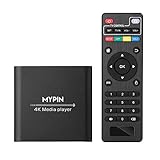
- 【4K Media Player】-- Experience Full 4k@30hz media files in this digital media player; It supports a single file up to 4GB(FAT32) or 30GB(NTFS) in MKV, AVI, TS/TP, MP4/M4V, MOV, VOB, M2TS, WMV, PMP, PG, M2TS; It is capable of 4K video only for 4K TV, HDMI up to 7.1 surround sound, good for home entertainment systems;Made of aluminum alloy, it has better protection during carrying
- 【Dual USB Ports】-- Plays from TF card / USB flash drives(up to 128G) and USB hard drives up to 8TB. Dual USB ports for connecting two devices, but it can only read one of them at one time. You can also connect a USB mouse or keyboard to operate the player, making your TV smarter by adding the ability to play videos, music, and photo slideshows or PPT
- 【H.265 Decoding】-- Powerful H.265 decoding loads files by taking half time and half occupation of bandwidth of H.264 decoding, it is much more efficient and faster; Enjoy a higher quality video experience with less buffering
- 【Multiple Play Modes & Vertical Display】 -- This 4k media player can play various popular videos, music, and photos. Videos and photos can be played in order, and music can be played randomly; It also reads PPT document, you can connect a PPT flip to display it better. It also supports horizontal and vertical screen, compatible with your vertical screen
- 【HDMI & AV & Optical Output】-- You can manage the media player to play MP3 or WAV songs to your speakers via optical or AV output to experience better audio effects. It also reads embedded and external subtitle files like SRT, SMI, SUB, SSA
Frequently Asked Questions
Can the same video platform serve both live events and VOD?
Yes, some services support both workflows, but confirm the specific ingest, output, retention, replay, and player capabilities you need. Shared delivery components do not make every workflow interchangeable.
Does combining live and on-demand video automatically add advertising?
No. Ad insertion requires a separate workflow, including ad decisioning, measurement, rights, and playback integration.
Free tools Windows power users keep installed
One-click scans. No signup required.
Quick Recap
Best Value
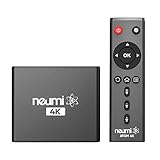
- The NEUMI ATOM 4K is the easy and affordable way to add video, photo, and music playback to any TV, new or old, at up to 4K Ultra-HD quality. Just attach a USB drive or SD card with your media files, select a file, and play! It is simple and intuitive to use with no complicated settings or controls. Turn on its automatic playback and resume capability and you won’t even need to pick up the remote.
- HDMI 4K/60fps Ultra-HD Quality - The ATOM 4K offers stunning video quality through its HDMI output that supports up to 2160p/60Hz resolution, with support for the latest video formats such as H.265/HEVC. It can feed digital surround sound to your home theater receiver for a cinema-like listening experience. Additionally, the ATOM 4K provides analog AV output for connecting to an older TV, or for sending audio to a stereo system.
- Reads USB Drives and SD Cards - Simply copy your videos, photos, or music files onto a USB drive or an SD card, insert it into the ATOM 4K, and you are ready to play those files using an easy-to-navigate menu. Got a lot of media files? No problem! The ATOM 4K can read USB drives up to 4TB or Micro SD cards up to 512GB. Popular file systems are supported, including FAT32, exFAT and NTFS.
- Fully Automatic Playback - Turn on its automatic playback feature and the ATOM 4K will find and play media files on its own without any user input. It will also remember where you stopped watching on a video and resume playing from the stop point. Combined with the ability to loop and repeat videos continuously, the ATOM 4K is a perfect player for simple digital signage.
- Media Format Support - Video: MP4, MKV, AVI, TS/TP, MOV, VOB, and M2TS files using H.265/HEVC, H.264/AVC, VC1 or MPEG2/4 codecs, up to 4096x2304p@60fps resolution, 10-bit color, and 250mbps. Photos: JPG, JPEG, BMP, GIF (non-animated), PNG. Music: MP3, WMA, OGG, FLAC, APE, AAC
Product prices and availability are accurate as of the date/time indicated and are subject to change. Any price and availability information displayed on Amazon at the time of purchase will apply.

