
What’s actually slowing this PC down?
Pick the symptom - the matching free tool is one click away.
iTechGuides is reader-supported. When you buy through links on our site, we may earn an affiliate commission. As an Amazon Associate I earn from qualifying purchases. Learn more
The right steel grade is not simply the one with the highest yield strength. Select it as a coordinated design and procurement decision: establish the governing jurisdiction and code, identify the product form and dimensions, check strength and ductility for the actual member, verify welding and fabrication requirements, account for toughness and exposure, and confirm that the required material is available. The responsible structural engineer must approve the final specification.
What “steel grade” means in a project specification
A grade is only one part of a complete material designation. A purchase requirement normally identifies a product standard (such as an ASTM specification), the grade within that standard, the product form, dimensions or thickness, and any supplementary requirements. The same nominal strength level can have different chemistry limits, manufacturing controls, welding implications, and permitted uses depending on whether the material is a W-shape, HSS, pipe, plate, bar, or another product.
| # | Preview | Product | Price | |
|---|---|---|---|---|
| 1 |

|
Steel Construction Manual, 16th edition | $543.00 | Buy on Amazon |
| 2 |

|
16th ed. Steel Construction Manual | $690.00 | Buy on Amazon |
| 3 |
|
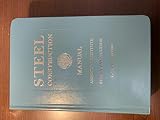
Steel Construction Manual | $358.58 | Buy on Amazon |
| 4 |

|
Steel Construction Manual, 13th Edition (Book) | $179.99 | Buy on Amazon |
| 5 |

|
Steel Construction Manual | $363.88 | Buy on Amazon |
For example, round HSS and steel pipe are not interchangeable descriptions. They are manufactured to different standards and must be specified accordingly. A grade name without its governing specification can therefore be ambiguous and can lead to a material that does not satisfy the design or contract documents.
The Tool Desk
Outbyte PC Repair FREEClear out junk files and repair common Windows errorsFree Scan →Outbyte Driver Updater FREEFix the driver behind crashes, sound loss and screen glitchesFind Drivers →First establish the governing code and structural system
Confirm jurisdiction and adopted edition
Determine the project location, the building or bridge authority having jurisdiction, the adopted building and material codes, and the edition named in the contract. The examples in this guide are primarily U.S. building practice. A jurisdiction may have adopted an edition different from the current publication, or may apply additional requirements. Do not treat the ASTM examples below as globally applicable grade equivalencies.
#1 Best Overall
For U.S. structural-steel buildings, ANSI/AISC 360-22 is the generally applicable specification for design and construction, using either LRFD or ASD. It is the 2022 edition and supersedes the 2016 edition, but the project must use the edition actually adopted or specified.
Check whether seismic provisions apply
If the structure has a seismic-force-resisting system, AISC 341-22 may impose material eligibility and grade limitations that are stricter than a general strength check. A grade that is strong enough and readily available can still be prohibited for a particular brace, moment frame, connection, or other seismic system. Identify the exact system and consult the applicable seismic provisions before approving a material substitution.
Separate building, bridge, and special-use requirements
Bridge specifications, industrial facilities, cranes, pressure-related equipment, fatigue-sensitive structures, and other special applications can use standards and toughness requirements that differ from ordinary building work. The owner’s criteria and contract documents govern where they are more restrictive than a general building specification.
Identify the product form before comparing grades
List every material form in the member schedule. A building may use several standards at once, and a grade available for one form may not exist or be permitted for another.
| Product form | Questions to answer |
|---|---|
| W or WT shapes | Which shape sizes and thickness ranges are required? Is the preferred W-shape specification available from the intended mill or service center? |
| M, S, MT, ST, HP, and L shapes | Does the candidate specification cover the exact shape family and thickness? Are older or less common sizes subject to longer lead times? |
| Hollow structural sections (HSS) | Is the section square, rectangular, or round HSS, and does the selected HSS specification cover its dimensions and wall thickness? |
| Pipe | Is the member actually steel pipe rather than round HSS? Confirm the pipe specification, nominal size, wall, and end or connection requirements. |
| Plate and bar | What thicknesses, widths, lengths, and edge conditions are needed? Do the design or service conditions require impact testing, ultrasonic examination, or through-thickness properties? |
AISC 303-22 identifies shop-standard materials used in common U.S. practice, but those listings are not a substitute for design, code, or contract requirements.
Common U.S. starting points by product form
| Product form or use | Common shop-standard starting point in AISC 303-22 | Important qualification |
|---|---|---|
| W and WT shapes | ASTM A992/A992M | AISC describes A992 as the preferred W-shape material specification. Confirm availability for the required sizes and thicknesses. |
| M, S, MT, ST, HP, and L shapes; plates; bars | ASTM A572/A572M Grade 50 | Verify that the exact product and dimensions are covered and that the grade is permitted by the governing design and seismic provisions. |
| HSS | ASTM A500/A500M Grade C | Use the HSS specification for the selected shape and wall thickness; do not substitute a pipe designation. |
| Steel pipe | ASTM A53/A53M Grade B | Pipe is manufactured to a different standard from round HSS. Specify the form that the connection and design actually require. |
These are starting points for standard practice, not automatic answers. The engineer must verify design properties, dimensions, fabrication suitability, and code eligibility for each member.
Match strength to the actual structural demand
Use specified properties for the product and thickness
Compare the specified minimum yield and tensile strengths for the exact product form and thickness. AISC’s summary identifies ASTM A992 as having a nominal minimum yield strength of 50 ksi and tensile strength of 65 ksi for the covered W-shape material. Do not transfer those values to another specification, product, or thickness without checking its standard.
Do these 3 things before closing this tab:
1Clear out junk files and repair common Windows errors2Fix the driver behind crashes, sound loss and screen glitches3Repair Windows errors before they cause bigger problemsDesign capacity depends on the complete member and limit-state calculation, not on yield strength alone. Compression buckling, lateral-torsional buckling, shear, local slenderness, fatigue, serviceability, connection resistance, and detailing can govern. A higher-strength grade does not automatically make a member lighter, cheaper, or easier to fabricate.
Consider higher-strength W-shape options carefully
AISC identifies ASTM A572 Grades 55, 60, and 65 and ASTM A913 Grades 60, 65, and 70 as higher-strength W-shape options. Their availability and cost effectiveness must be confirmed before they are specified. The design must also account for connection behavior, stiffness and deflection limits, buckling, weld procedures, and any seismic restrictions.
Do not optimize one member in isolation
If a stronger grade reduces required area, check whether the resulting shape still meets stiffness, vibration, stability, connection, fire-protection, handling, and detailing requirements. A small reduction in steel weight can be offset by more demanding joints, uncommon dimensions, special welding controls, or a longer procurement lead time.
Check fabrication and welding compatibility
Give the fabricator the complete specification early enough to review it. Chemistry limits, carbon equivalent, thickness, heat treatment, preheat, interpass temperature, and welding procedure requirements can affect whether a grade can be fabricated as detailed. A grade name does not prove that every weld detail is acceptable.
Outdated Drivers Are Slowing You Down
One free scan finds every outdated or missing driver and matches the right update for your exact hardware.Free scan · exact hardware matchWindows Errors? Fix Them Before They Spread
Repair common Windows errors and clear accumulated junk for a smoother, more stable PC - no reinstall needed.Free scan · no reinstall- Review the material’s chemistry limits and any carbon-equivalent requirements relevant to the welding procedure.
- Confirm that the proposed welding procedure specification (WPS) and qualified procedure cover the material, thickness, process, and joint detail.
- Coordinate preheat, interpass temperature, consumables, heat input, and post-weld operations where required.
- Check forming, cutting, hole-making, straightening, and heat-treatment restrictions for the selected product and thickness.
- Ask the fabricator whether the required sizes, lengths, and finish can be produced without an unapproved substitution.
Determine toughness and inspection requirements
Charpy V-notch impact testing
Impact requirements depend on service temperature, fracture-critical or fatigue-sensitive behavior, seismic provisions, thickness, and the governing specification. If a minimum Charpy V-notch (CVN) value or test temperature is required, state it explicitly in the contract documents and purchase order; do not assume that a standard grade name includes the project’s desired toughness.
A historical AISC Engineering Journal study by Roger L. Brockenbrough (2003) found mean CVN values at 70°F generally above 100 ft-lb for the surveyed plate mill-test reports. The study also reported surveyed minimum values at 70°F meeting or exceeding 20 ft-lb for the specific plate material and use condition it examined. Those are sample-specific historical observations, not current market statistics or minimum guarantees for every plate.
Ultrasonic and other supplementary examination
Plates or shapes may require ultrasonic testing, through-thickness quality, or other supplementary examination because of joint configuration, lamellar-tearing risk, fatigue, or owner criteria. Call out the applicable supplement, acceptance criteria, test area, timing, and documentation in the order. A general reference to “high quality” is not an enforceable inspection requirement.
Rank #3
Traceability and material reports
Require mill test reports, heat identification, and the level of traceability appropriate to the contract. AISC 303-22 states: “For material ordered in accordance with an ASTM supplement or other special material requirements in the contract documents, identification capability shall include shape designation, material grade, and heat number.” Make sure the fabricator’s receiving, cutting, and piece-marking procedures preserve that identity through fabrication.
Quick wins for a faster PC:
Fix the driver behind crashes, sound loss and screen glitchesFind Drivers →Clear out junk files and repair common Windows errorsFree Scan →Account for exposure, corrosion, and detailing
Choose a corrosion strategy based on the actual environment and maintenance plan. Evaluate moisture, salt, industrial contaminants, trapped water, condensation, drainage, crevices, and access for inspection and repainting. A weathering grade is not a universal corrosion solution: it requires suitable exposure and detailing that allow a protective patina to form and prevent persistent wetness.
AISC identifies ASTM A588 Grade 50 as an option for weathering characteristics in W-shape applications. Before selecting it, confirm that the environment, appearance, drainage, joint details, adjacent materials, and owner maintenance requirements are compatible. In a continuously wet, sheltered, or chloride-laden location, a coating or a different corrosion system may be necessary even when a weathering grade is available.
Verify availability, dimensions, and total project cost
Ask mills, service centers, and the fabricator for current availability of the exact specification, grade, shape, thickness, length, and quantity. Availability changes by region and time; no industry-wide availability or savings percentage should be assumed.
- Confirm quoted lead time and the date through which the quotation is valid.
- Check whether all required sizes and lengths are stock items or require a mill rolling or production slot.
- Identify permitted substitutions and the engineer’s approval process before procurement.
- Include freight, cutting, testing, certification, special handling, coatings, and schedule effects in the cost comparison.
- Do not specify a less common grade solely because its nominal strength is higher.
A standard grade that is available in the required dimensions can produce a better schedule and lower installed cost than a stronger but uncommon grade. That conclusion must be established with project quotations, not inferred from a strength table.
A step-by-step grade-selection workflow
- Define the governing basis. Record the jurisdiction, adopted code editions, structure type, design method (LRFD or ASD where applicable), seismic category and system, owner criteria, and contract standards.
- Create a product-form schedule. For each member or assembly, list W-shape, HSS, pipe, plate, bar, angle, or other form; nominal dimensions; thickness; length; and quantity.
- Screen for permitted specifications. Select candidate ASTM or other jurisdictional specifications that cover the exact product and dimensions. Eliminate grades not permitted by the code, seismic system, owner, or contract.
- Design with specified properties. Check yielding, rupture, buckling, shear, fatigue, serviceability, fire or temperature effects where applicable, and all connection limit states using the properties for the actual product and thickness.
- Review fabrication. Coordinate chemistry, welding procedures, cutting, forming, heat treatment, tolerances, and inspection with the fabricator.
- Set toughness and examination requirements. Specify CVN temperature and energy, ultrasonic testing, through-thickness requirements, supplementary ASTM provisions, and acceptance criteria when required.
- Evaluate exposure and durability. Select coating, weathering, drainage, joint, and maintenance provisions appropriate to the environment.
- Obtain supply confirmation. Get written confirmation of availability, dimensions, lead time, certification, and pricing for the exact material.
- Document substitutions and traceability. State who may approve substitutions, how equivalence will be demonstrated, and how heat and piece identification will be maintained.
- Issue the final specification. The responsible structural engineer approves the material schedule and contract language before purchase.
How to compare candidate grades without overpromising
| Comparison axis | What to verify | Why it can change the decision |
|---|---|---|
| Code and system eligibility | Adopted edition, building or bridge rules, seismic system, owner criteria | A technically strong grade may be prohibited for the selected system. |
| Product and dimensions | Form, shape family, thickness, size range, length, tolerances | A grade may not be produced or permitted in the needed form. |
| Strength and design behavior | Specified yield and tensile values; buckling, connection, fatigue, and serviceability calculations | Higher yield strength does not remove other governing limit states. |
| Fabrication and welding | Chemistry, carbon equivalent, WPS qualification, preheat, forming, cutting | Fabrication controls can affect schedule, cost, and feasibility. |
| Toughness and inspection | CVN values and temperature, ultrasonic testing, traceability, acceptance criteria | Special requirements must be ordered and documented explicitly. |
| Exposure and durability | Corrosion environment, coating or weathering suitability, drainage, maintenance | Material alone cannot compensate for unsuitable detailing or exposure. |
| Availability and cost | Local stock, mill lead time, quantity, freight, testing, substitutions | Supply constraints can outweigh a nominal strength advantage. |
Illustrative decisions
Ordinary W-shape framing
For a typical U.S. building frame without unusual toughness or seismic restrictions, the engineer might begin with ASTM A992/A992M W-shapes, then verify the calculated member and connection demands, required sizes, and local supply. If the required shapes are unavailable, a substitution must be checked for design properties, fabrication, and code compliance rather than accepted by strength label alone.
Round HSS versus pipe column
If the drawings call for a round HSS, specify the applicable HSS standard and grade. If they call for pipe, specify the pipe standard and nominal pipe size. Treating the two as interchangeable can create differences in outside diameter, wall thickness, tolerances, connection detailing, and material certification.
Rank #4
- AUTOR:American Institute Of Steel Construction
- PAGINAS: 2,190
- TOMOS: 1
- IDIOMA:INGLES FORMATO:9.3 x 6.4 x 2.2 inches
- EDICION: 13ª FECHA ED.: 2006
Seismic moment frame
For a seismic-force-resisting moment frame, first identify the system in AISC 341 and its material limitations. Only after that screen should the engineer compare strength, toughness, welding, and availability. A general-purpose grade comparison is insufficient.
Independent reader supportYour contribution helps us test, update, and keep practical guides available for everyone.Specification and purchase-order checklist
- Jurisdiction, adopted code edition, structure type, and structural system identified.
- Design method and seismic system identified where applicable.
- ASTM or other governing specification and grade stated for every product form.
- Shape, size, thickness, length, quantity, and permitted tolerances listed.
- Specified design properties verified for the actual product and thickness.
- Welding, chemistry, carbon-equivalent, forming, and heat-treatment requirements coordinated.
- CVN impact testing, ultrasonic testing, through-thickness quality, or other supplements stated when required.
- Coating, weathering, corrosion, drainage, and maintenance assumptions documented.
- Mill or service-center availability, lead time, and dimensions confirmed.
- Substitution approval route and traceability requirements defined.
- Mill test reports and material identification requirements included.
- Final material schedule approved by the responsible structural engineer.
Common mistakes and their corrections
Choosing by yield strength alone
Problem: Selecting the highest nominal strength without checking buckling, stiffness, connections, welding, or supply.
Recommended Free Tools
Correction: Compare complete member and connection designs, then include fabrication and procurement evidence.
Using a grade name without a product specification
Problem: Writing “Grade 50 steel” for members that require different ASTM standards.
Correction: State the product form, governing specification, grade, dimensions, and supplements.
Assuming all code editions are interchangeable
Problem: Applying AISC 360-22 or 341-22 requirements where the jurisdiction adopted another edition, or overlooking a project-specific amendment.
Correction: Confirm adoption and contract requirements before design and procurement.
Best Value
- Steel manual, AISC, Book
- Fourteenth Edition
- 14th edition
- Steel construction manual
Ordering toughness after fabrication starts
Problem: Discovering that CVN testing or ultrasonic examination was needed only after material was purchased.
Correction: Put the test temperature, energy, supplement, acceptance criteria, and documentation in the order from the outset.
Calling round HSS “pipe”
Problem: Creating uncertainty about standard, dimensions, tolerances, and connections.
Free tools Windows power users keep installed
One-click scans. No signup required.
Correction: Use the correct HSS or pipe designation consistently in drawings, schedules, and purchase documents.
Treating weathering steel as maintenance-free
Problem: Selecting a weathering grade in an environment that remains wet or chloride-contaminated.
Correction: Evaluate exposure, drainage, detailing, appearance, coatings, and the owner’s maintenance plan together.
Useful standards and reference material
AISC 360-22 provides the generally applicable structural-steel building requirements, while AISC 341-22 addresses seismic design and material limitations. AISC 303-22 covers standard practice for steel buildings and bridges, including common shop-standard materials, ordering information, identification, and documentation. The AISC Steel Construction Manual, 16th Edition is a design reference keyed to the 2022 specification, but it does not replace the governing code, project documents, or the engineer’s judgment. Because industry practice changes, check the publication date and referenced standards in any AISC Design Guide you use.
The decisive record is the project’s approved material schedule and purchase order. They should state exactly what is being bought, where it may be used, what tests and reports are required, and who may approve a substitution.
Quick Recap
Product prices and availability are accurate as of the date/time indicated and are subject to change. Any price and availability information displayed on Amazon at the time of purchase will apply.

