
iTechGuides is reader-supported. When you buy through links on our site, we may earn an affiliate commission. As an Amazon Associate I earn from qualifying purchases. Learn more
For most first-time players, start with Normal/Casual. It gives you room to learn weapon matchups, terrain, enemy ranges and turn planning without permanently losing a favorite unit. If you already know tactical RPGs, choose Hard/Casual for stronger enemy pressure, or Hard/Classic if permanent deaths and map restarts are part of the experience you want. Maddening and Lunatic are best treated as specialist or repeat-run options because their balance differs substantially from one Fire Emblem game to another.
Fire Emblem difficulty is really two decisions: how demanding the enemies are, and whether a defeated ally is gone forever. Separating those choices lets you create a challenge that fits your experience instead of choosing a single label blindly.
The short answer: match enemy pressure and casualty rules to your tolerance
When a Fire Emblem game asks you to choose a mode and difficulty, evaluate two independent pressures:
- Difficulty tier: controls enemy strength and, depending on the game, the density and timing of tactical threats.
- Casualty mode: determines whether a unit who falls returns after the battle or is permanently removed from your army.
That produces four useful starting points:
| Player profile | Recommended setting | Why it fits |
|---|---|---|
| Completely new to Fire Emblem or tactical RPGs | Normal/Casual | You can learn the systems and follow the story without a permanent roster mistake ending a character’s participation. |
| New to Fire Emblem, experienced with strategy games | Normal/Classic or Hard/Casual | Choose Classic if you enjoy restarting after deaths; choose Hard/Casual if you want tougher enemies without permanent loss. |
| Finished an entry or understand the core systems | Hard/Casual, then Hard/Classic | Hard raises tactical demands while Casual lets you concentrate on solving maps before adding irreversible losses. |
| Series veteran seeking a puzzle-like challenge | Maddening or Lunatic, usually with Classic | The highest tier can demand precise builds and routing. Verify the individual game’s rules before assuming it resembles another title’s top mode. |
| Story-first or accessibility-focused player | Casual at a comfortable enemy tier | Casual is an intentional way to reduce the stress of losing characters, not a wrong way to play. |
You can also change the emphasis during a playthrough in games that allow difficulty adjustments, but do not assume every title permits every change. Check the specific game’s menu and manual before starting if you want that flexibility.
#1 Best Overall
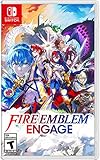
- Reawaken as a Divine Dragon and take down a thousand-year-old threat
- Take on turn-based, tactical combat and use Emblem Rings to customize your strategy
- Collect Emblem Rings and use them to summon heroes from past Fire EmblemTM games
- Fire EmblemTM Engage launches on January 20, 2023 alongside Fire Emblem Engage: Divine Edition featuring a steelbook case and art book
What difficulty changes in practice
Enemy stat pressure
Higher tiers generally make enemies harder to defeat and more dangerous to leave alive. That changes ordinary questions—whether to attack now, bait an enemy, or retreat—into calculations about damage, hit chance and survivability. A unit who comfortably survives one enemy phase on Normal may need terrain, a support bonus or a different weapon on Hard.
Tactical density and information
Fire Emblem maps ask you to manage enemy ranges, terrain, reinforcements, objectives and turn order. Higher settings punish casual movement more severely. Blind players can be surprised by reinforcements or hidden map information, so a tier that feels reasonable after one completed game may be much harsher on a first, spoiler-free run.
Permanent-loss pressure
Classic mode changes the cost of a mistake. A fallen unit is not merely unavailable for the next few turns; that character can be removed from the rest of the campaign. Players who choose Classic commonly restart a map when a key unit dies. If restarting conflicts with your available time, Casual may be the better fit even when you want a demanding battle.
What’s actually slowing this PC down?
Pick the symptom - the matching free tool is one click away.
Rewind tools reduce frustration, not planning
Modern entries include limited ways to return to an earlier point. They let you correct a bad move or test a safer sequence, but they do not remove the need to understand the map. Rewind uses may be limited per battle, and spending one early can leave you without a correction later.
Casual, Classic and the names used by each game
The names are not perfectly consistent across the series. Read the description on the start screen rather than assuming that a familiar label behaves identically in every entry.
| Game | Forgiving casualty mode | Permanent-loss mode | Difficulty tiers documented by Nintendo | Rewind or forecast detail |
|---|---|---|---|---|
| Fire Emblem Engage | Casual: fallen allies return in the next chapter. | Classic: allies defeated in battle are lost forever. | Normal, Hard and Maddening. | Draconic Time Crystal returns you to a previous point so you can redo an action. |
| Fire Emblem: Three Houses | Casual: fallen allies revive after each battle. | Classic: fallen allies are removed permanently. | Normal and Hard are the tiers described in the relevant guidance. | Divine Pulse rewinds time, with a limited number of uses per battle. |
| Fire Emblem Awakening | Newcomer: fallen comrades return for the next battle. | Classic: defeated units are removed permanently. | Difficulty is selected independently of Newcomer or Classic. | The combat forecast is an estimate and does not include possible dodges or critical hits. |
| Fire Emblem Fates | Phoenix Mode: the most forgiving option described for players less familiar with simulation RPGs. | Classic: a demanding permanent-loss experience. | Normal, Hard and Lunatic. | Mode and tier choices are presented separately. |
These descriptions come from Nintendo’s official game and support material. The practical conclusion is important: “Casual” in one game and “Newcomer” in another serve a similar purpose, but the timing of a returning unit and the available rewind system can differ.
Which setting should a beginner choose?
Choose Normal/Casual when every system is new
Normal/Casual is the lowest-pressure on-ramp for a player learning Fire Emblem. You can concentrate on the fundamentals:
Rank #2

- Reawaken as a Divine Dragon and take down a thousand-year-old threat
- Take on turn-based, tactical combat and use Emblem Rings to customize your strategy
- Collect Emblem Rings and use them to summon heroes from past Fire EmblemTM games
- Fire EmblemTM Engage launches on January 20, 2023 alongside Fire Emblem Engage: Divine Edition featuring a steelbook case and art book
- Match weapon types and magic to the opponent’s weaknesses.
- Read enemy attack ranges before ending a turn.
- Use terrain and defensive formations instead of exposing isolated units.
- Protect vulnerable healers and objective units.
- Plan an entire enemy phase rather than moving one character at a time without a goal.
Casual also makes experimentation safer. You can try a new class, weapon or formation and recover from a poor result after the battle. That does not make the maps meaningless; enemies still attack, objectives still have turn limits in some scenarios, and careless positioning can still cause a defeat.
Choose Normal/Classic if restarting sounds satisfying
Normal/Classic keeps enemy pressure moderate while making each death permanent. It is suitable for a new player who already enjoys turn-based strategy and is comfortable restarting a map after a mistake. Before selecting it, decide what “death” means for you. Some players accept a loss and continue with a smaller roster; others reload immediately. Neither approach is invalid, but the second can turn a short map into a long sequence of retries.
Choose Hard/Casual when you know strategy games
Hard/Casual is a strong compromise for players who understand grid tactics but do not know the particular Fire Emblem entry. Stronger enemies force better use of terrain, supports and action economy, while Casual prevents one misread reinforcement or critical hit from deleting a character permanently. It is also a useful bridge to a later Hard/Classic run.
Is Hard too difficult for a first playthrough?
Hard is not automatically too difficult, but the answer depends on your experience with tactical games and your willingness to restart. Hard/Casual is usually manageable for a strategy-game player who reads enemy ranges and checks combat outcomes before committing. Hard/Classic is less forgiving because a single error can require replaying an entire map.
Recommended Free Tools
Consider Hard for a first run if most of these statements are true:
- You routinely plan several moves ahead in turn-based games.
- You are comfortable using defensive terrain and baiting one enemy at a time.
- You will restart a map rather than accept the permanent loss of a core unit.
- You are willing to consult the game’s tutorials and inspect every combat forecast.
- You prefer learning through pressure instead of first seeing the story on an easier setting.
Start on Normal if several statements are false. The goal of a first playthrough is to understand the game’s systems well enough to make meaningful choices; difficulty should not hide those systems behind repeated trial and error.
Should you choose Casual or Classic?
Casual is best when continuity and learning matter most
Casual protects your roster after a battle. In Engage, Nintendo describes fallen allies returning in the next chapter; in Three Houses, fallen allies revive after each battle; Awakening’s Newcomer mode returns fallen comrades for the next battle. Those differences in timing matter, but the shared purpose is to remove permanent roster loss.
Rank #3

- Enter the Dagdan Empire—a prosperous land ruled by the gods—and compete in the Heroic Games for the chance to be granted one wish
- Play as four heroes competing in the Heroic Games whose fortunes are tied to the fate of the world
- Prepare for each match of the Heroic Games by exploring Dagda and its capital city of Dagsion
- Learn skills at the training grounds, recruit allies and build bonds of friendship, and explore beyond Dagsion’s walls to gain experience
- Use everything you have at your disposal, including your heroes’ special abilities, to turn the tide of battle
Choose Casual if you want to:
- See character conversations and supports without keeping a perfect survival record.
- Experiment with positioning, classes or weapons.
- Play in shorter sessions without maintaining a save-file safety routine.
- Reduce anxiety while learning a new entry’s maps and reinforcement patterns.
Classic is best when consequences are the appeal
Classic mode makes the army itself part of the strategy. A unit’s survival can affect future map options, support pairings and the roles available to you. The mode is most satisfying when you view a restart as part of solving the puzzle, not as lost progress.
Do these 3 things before closing this tab:
1Fix the driver behind crashes, sound loss and screen glitches2Repair Windows errors before they cause bigger problems3Scan for outdated or missing drivers - takes under a minuteClassic is a poor fit if a permanent loss would make you abandon the campaign, or if you have limited time to repeat long chapters. You can always use Classic on a later run after learning the maps on Casual.
Do not confuse casualty mode with enemy difficulty
Awakening’s official support guidance explicitly treats difficulty as independent from the choice between Classic and Newcomer. The same principle is useful across the series: Casual does not necessarily mean weak enemies, and Classic does not necessarily mean the highest enemy tier. Select the enemy challenge and the casualty rule separately whenever the game allows it.
When should you play Maddening or Lunatic?
Maddening and Lunatic are the names attached to the top end of different games, not a universal standard. Nintendo identifies Lunatic as Awakening’s highest difficulty and documents Lunatic among Fates’ choices; Engage uses Maddening. Their enemy tuning, available resources and map expectations are not interchangeable.
Use a repeat run as your default entry point
A first run teaches you what the game considers a safe formation, how classes develop and when maps introduce new threats. The highest tier often assumes that knowledge. On a repeat run you can plan around known objectives, recruitments and reinforcements instead of discovering them while under maximum pressure.
Quick wins for a faster PC:
Clear out junk files and repair common Windows errorsFree Scan →Scan for outdated or missing drivers - takes under a minuteDriver Scan →Check the specific game’s economy and recovery tools
Before selecting the top tier, find out how that title handles grinding, side maps, experience distribution, shop access and rewinds. A game that offers generous recovery tools can feel very different from one that expects precise resource management. The existence of a rewind function also does not guarantee unlimited retries; Three Houses, for example, limits Divine Pulse uses per battle.
Decide whether Classic is part of the challenge
Many veterans pair the highest enemy tier with Classic because permanent loss reinforces careful play. You can instead use Casual while learning the top tier’s enemy behavior. That combination isolates tactical difficulty from roster anxiety and can show whether the tier itself is enjoyable before you add irreversible consequences.
Rank #4

- Reawaken as a Divine Dragon and take down a thousand-year-old threat
- Take on turn-based, tactical combat and use Emblem Rings to customize your strategy
- Collect Emblem Rings and use them to summon heroes from past Fire EmblemTM games
- Fire EmblemTM Engage launches on January 20, 2023 alongside Fire Emblem Engage: Divine Edition featuring a steelbook case and art book
A step-by-step way to choose before starting
- Identify your baseline. If this is your first Fire Emblem or tactical RPG, begin at Normal. If you regularly play grid-based strategy games, consider Hard.
- Choose your loss tolerance. Pick Casual when you want fallen units back; pick Classic when you accept permanent removal and are willing to restart.
- Check the game’s labels. Confirm whether the forgiving option is called Casual, Newcomer or Phoenix Mode, and read when a defeated unit returns.
- Read the rewind description. Note whether the game uses the Draconic Time Crystal, Divine Pulse or another system, and whether uses are limited per battle.
- Account for blind play. If you do not know reinforcement triggers or map objectives, lower one axis of difficulty—usually choose Casual or Normal—until you learn the game’s conventions.
- Set a restart rule. On Classic, decide in advance whether any permanent death means restarting or whether only essential characters qualify. This prevents frustration-driven decisions mid-campaign.
- Reassess after several chapters. If battles feel routine and you understand the systems, raise the enemy tier on your next run. If every map becomes repeated trial and error, lower it without treating that as failure.
How to play well on each common combination
Normal/Casual
Use this setting to build habits rather than rush. Inspect every enemy range, learn which units can safely absorb a hit, and test how support bonuses affect combat. Because a fallen unit returns, you can deliberately explore the limits of a formation; still, protect objectives and avoid assuming every mistake can be repaired before the chapter ends.
Normal/Classic
Make a separate save before a map when the game permits it, and pause before ending each turn. Keep a reserve healer or defensive unit available so one unexpected attack does not cascade into a death. If a character falls, decide according to your restart rule instead of improvising under pressure.
Hard/Casual
Hard/Casual rewards disciplined forecasting. Compare expected damage, hit chance and enemy follow-up attacks before moving. Use the ability to recover your roster to learn which risks are acceptable, but do not rely on a last-second rewind for every turn. Your objective is to improve tactical consistency before adding Classic.
Hard/Classic
Plan around survival first. Keep units within support range when possible, avoid splitting the army without a clear objective, and treat unknown enemy ranges as lethal until verified. A failed map is information: identify the first decision that made the position unrecoverable, then change that decision on the restart rather than merely repeating the same sequence.
Maddening/Lunatic
Use detailed preparation. Review class paths, weapon availability, experience allocation and map objectives before committing resources. Expect apparently safe attacks to fail when the game excludes some risks from its forecasts; Awakening’s combat forecast, for example, does not include possible dodges or critical hits. Keep a backup plan for missed attacks and unexpected reinforcements.
Independent reader supportYour contribution helps us test, update, and keep practical guides available for everyone.Common mistakes that make a setting feel wrong
Choosing by label alone
“Hard,” “Lunatic” and “Maddening” are not standardized measurements. A tier’s reputation belongs to its game, not to the word itself. Read the title-specific description and look for information about resources, map design and rewind limits.
The Tool Desk
Outbyte Driver Updater FREEFix the driver behind crashes, sound loss and screen glitchesFind Drivers →Outbyte PC Repair FREEClear out junk files and repair common Windows errorsFree Scan →Assuming the combat forecast guarantees safety
A forecast is an estimate, not a promise. Awakening’s official support material specifically warns that its forecast does not include possible dodges and critical hits. Leave margin for unlucky outcomes, especially on Classic.
Best Value

- 0045496478544
- 10009828
Adding permanent loss before learning the maps
Classic can turn an otherwise enjoyable blind run into repeated restarts caused by surprises rather than decisions. If you want to learn a title’s systems first, Casual preserves the roster while you identify reinforcement timing and objective changes.
Treating rewind as a substitute for planning
Rewind tools are limited in some games and cannot fix every strategic problem. Save them for a genuinely bad branch or an information mistake; use ordinary planning to prevent predictable losses.
Continuing a campaign you no longer enjoy
The best setting is the one that keeps the tactical decisions interesting. If Classic makes you reload every chapter, switch to Casual on a new file or continue with a different rule. If Normal feels passive, raise the enemy tier on the next campaign rather than forcing yourself through a difficulty that is no longer teaching you anything.
Free tools Windows power users keep installed
One-click scans. No signup required.
Examples by player type
First strategy game, wants the story
Choose Normal/Casual. Spend the opening chapters learning ranges, terrain and weapon interactions. Once those ideas are familiar, a later Hard/Classic run can provide the consequence-driven experience without making the first campaign a test of terminology.
Experienced with grid tactics, new to Fire Emblem
Choose Hard/Casual if you want immediate pressure, or Normal/Classic if permanent loss is central to your enjoyment. The first option teaches the series’ mechanics while protecting the cast; the second keeps enemy numbers moderate while making your decisions consequential.
Completed one entry and wants a stricter second run
Move to Hard/Classic. You know how Fire Emblem handles turns, supports and forecasts, so the combination tests execution rather than basic literacy. Keep a rewind available where the game provides one, but treat it as a limited resource.
Veteran looking for a demanding puzzle
Investigate the specific game’s Maddening or Lunatic rules first. Select Classic if permanent loss is part of the desired challenge; select Casual if you want to isolate the enemy puzzle. Do not assume a successful run on one game’s top tier predicts success on another’s.
Windows Errors? Fix Them Before They Spread
Repair common Windows errors and clear accumulated junk for a smoother, more stable PC - no reinstall needed.Free scan · no reinstallOutdated Drivers Are Slowing You Down
One free scan finds every outdated or missing driver and matches the right update for your exact hardware.Free scan · exact hardware matchFrequently overlooked accessibility considerations
Casual mode is not merely a beginner setting. It supports players who prefer story continuity, have limited time for retries, or find permanent loss stressful. A demanding enemy tier with Casual can still require careful planning, while Normal/Classic can be more emotionally and logistically demanding than its enemy statistics suggest.
Likewise, rewind systems can help players who make an input mistake, misread an enemy range or need to pause a session unexpectedly. Because rewind uses may be limited, learn the rules before relying on them as an accessibility guarantee.
Final recommendation
Start with Normal/Casual unless you already have substantial tactical-game experience. Choose Hard/Casual when you want stronger enemies but not permanent roster loss, and move to Hard/Classic when you are comfortable restarting maps and want deaths to matter. Reserve Maddening or Lunatic for a later run or a deliberate specialist challenge, checking the individual game’s mechanics first. The right Fire Emblem difficulty is the combination that makes you think carefully without making you stop playing.
Quick Recap
Product prices and availability are accurate as of the date/time indicated and are subject to change. Any price and availability information displayed on Amazon at the time of purchase will apply.

