
Do these 3 things before closing this tab:
1Repair Windows errors before they cause bigger problems2Scan for outdated or missing drivers - takes under a minute3Clear out junk files and repair common Windows errorsiTechGuides is reader-supported. When you buy through links on our site, we may earn an affiliate commission. As an Amazon Associate I earn from qualifying purchases. Learn more
Choose matcha for the drink you will make, then verify where the leaf was grown, whether it was made from shaded tencha, when it was milled or packed, and whether the seller can document the lot. For plain whisking, look for a named growing region, spring harvest information, fine texture, vivid green color and lot-specific testing. For lattes or cooking, a culinary or latte-focused powder can offer better value because milk, sweeteners and heat cover delicate flavor.
Do not treat “ceremonial grade” as a legal or scientific standard. It is a seller’s descriptor, so the useful evidence is in the production, origin, freshness and testing details behind the label.

What high-quality matcha actually means
Matcha is powdered tea that you consume as a whole leaf rather than infusing and discarding the leaves. Quality therefore depends on the leaf itself, the way it was shaded and processed, how finely it was milled, and how well the powder was protected from deterioration.
The Japanese Ministry of Agriculture, Forestry and Fisheries (MAFF) describes high-quality Japanese teas as being shaded for a fixed period before picking. Young leaves intended for matcha and related high-grade teas are harvested during a short spring window. The Japan Agricultural Research Quarterly (JARQ) explains that matcha leaves are harvested after long-term shade treatment. Shading changes the leaf’s chemistry, including its catechin and chlorophyll profile, and helps produce the color and rounded flavor associated with good matcha.
Rank #2

- ✓ Premium Japanese Ceremonial Grade Matcha, Fresh from Japan - Made from shade grown, First Harvest tea leaves from Uji Kyoto. The tencha is only ground into powder right before it leaves Japan for the USA, and then sealed into air-tight packets. This gets you extremely fresh, quality Uji matcha to be enjoyed right here in America.
- ✓ Smooth, Balanced And Versatile, Ideal For Matcha Beginners - This matcha ceremonial grade green tea powder is smooth with balanced umami with a just a tiny hint of bitterness. It is the perfect matcha for beginners looking to make matcha lattes, or matcha teas (usucha).We recommend using this for recipes where matcha is the main ingredient.
- ✓ Improve Your Focus, Boost Energy Without Coffee – Greatly increase your focus and energy by drinking Naoki Matcha. Unlike the typical caffeine rush from coffee, the amino acid L-theanine in Naoki Matcha moderates the effects of caffeine and helps to relax the mind and body while providing a steady boost of energy for up to 6 hours. Matcha is also naturally gluten and sugar free, and is a healthy source of antioxidants.
- ✓ We Want To Help You Enjoy Matcha – To ensure you have the best matcha experience, we provide our full guidance through directions for use, recipes and tips for enjoying it. Whether you like to drink matcha as a tea, or to mix it up as a latte or smoothie, we do not think there’s a right or wrong way to enjoy matcha. Our 1.4 oz / 40g tin serves a total of 20 servings. 1 tsp (2 grams) of matcha powder makes either a cup of matcha tea (usucha) or a small matcha latte.
- ✓ Authentic Japanese Matcha From Uji – Uji is home to Japanese matcha culture and many of the tea estates have accumulated centuries of know-how and techniques. This blend of matcha is produced in Uji using these very same best practices.
That production story is more informative than a grade word printed on a tin. A credible listing should let you identify at least the growing region, the raw material, the relevant date and the package quantity. The more regularly you drink matcha, the more important it is to see lot-specific safety documentation as well.
Why online matcha labels can be misleading
Terms such as “ceremonial,” “premium” and “culinary” are not authority-defined grades. Matcha Almanac’s 2026 label guide notes that no authority defines these grades, meaning a seller can print “ceremonial” on a product without meeting a uniform chemical or agricultural specification. The JARQ study likewise found no official Japanese chemical grading requirements.
Origin wording also needs careful reading. “Grown in Uji,” “grown in Nishio” or another named region identifies cultivation more precisely than “product of Japan.” “Packed in Japan” or “blended in Japan” can describe the final processing or warehouse location while the leaf was grown elsewhere. A region name is useful evidence, but it is not by itself a guarantee of quality.
A 2018 JARQ survey of 25 powdered teas sold in the United States illustrates the variation. Sixteen samples came from Japan, four from China, two from Taiwan, one from Korea and two had indeterminable origins. Prices ranged from $4.30 to $160 per 100 grams. That spread means neither a Japanese-sounding name nor a high price can substitute for production details.
Start with the way you will use it
The right powder for a small bowl of straight matcha is not automatically the right powder for a large latte or a recipe. Decide the use before comparing listings.
| Use | Priorities | What to look for online | What to avoid overpaying for |
|---|---|---|---|
| Plain whisking with water | Smooth texture, sweetness, vivid green color, low harshness and transparent origin | Shaded tencha, named growing region, harvest or milling information, fine milling and a small package you can finish quickly | A “ceremonial” claim without dates, region or raw-material details |
| Latte or milk drinks | Strong flavor, color that survives dilution and sensible price per gram | Culinary or latte-focused powder with clear origin and freshness information | Paying a premium for delicate notes that milk and sweeteners will mask |
| Cooking and baking | Value, color, flavor strength and a package size suited to the recipe frequency | Culinary powder with a disclosed production date and storage guidance | Using a scarce, expensive small-batch powder where heat and other ingredients dominate |
For online searches, “ceremonial-style Japanese matcha powder” is a useful phrase only when the listing also discloses the growing region and freshness information. For milk drinks or cooking, search for a culinary or latte-focused matcha and then apply the same origin, date and testing checks.
Read the listing in this order
1. Find the growing region
Prefer a named prefecture, town or farm area. The statement should describe where the tea plant was cultivated, not merely where the powder was packed. If a listing says only “made in Japan,” “packed in Japan” or “blended in Japan,” treat the farm origin as unknown unless another panel supplies it.
Free tools Windows power users keep installed
One-click scans. No signup required.
Rank #3

- CAFE STYLE MATCHA AT HOME: Easily create delicious matcha green tea lattes, our matcha latte mix is slightly sweetened with organic unrefined cane sugar. Crafted by baristas for a smooth, creamy, lightly sweet flavor with the authentic earthy depth of premium Japanese matcha — never bitter, never grassy. Each 5.3oz bag contains approximately 15 servings — that's 15 café-style matcha lattes that taste indistinguishable from a $7 matcha latte from your local coffee shop. Perfect as a morning ritual, a 3pm energy reset, a pre-workout boost, or a weekend brunch treat — serve it hot in winter or over ice in summer for a café-worthy experience any time of day.
- EASY TO MAKE: Just add two teaspoons of matcha latte mix with 1/4 cup of warm water. When mixed, combine with your favorite hot or cold milk and enjoy (dairy, almond, oat, soy, coconut - all work great). For a true café experience, froth your milk first! Our matcha latte powder mixes easily in hot or iced preparations. Prefer it simple? Mix with just hot water for a lighter matcha tea experience or add your favorite milk for the full café-style latte. Both ways are delicious.
- FROTHER-FRIENDLY FORMULA: Our finely milled matcha powder is specifically designed to mix smoothly and froth beautifully — no clumping, no gritty texture, no need to sift. Works perfectly with electric milk frothers, handheld frothers, blenders, or a simple whisk.
- PREMIUM JAPANESE MATCHA: Sweetened exclusively with organic unrefined cane sugar for a café-style taste. Our matcha powder is 100% USDA certified organic, for a latte mix that is plant based, gluten free, GMO-free, Dairy Free, and delicious. This latte mix contains NO artificial flavors, NO artificial sweeteners, and NO preservatives.
- SMOOTH, SUSTAINED ENERGY WITHOUT THE JITTERS: Each serving contains approximately 20-30 mg of caffeine — about one third compared to a standard 8oz coffee — paired with naturally occurring L-theanine in matcha powder for calm, focused energy without the crash or jitters associated with coffee. Perfect for those who are caffeine-sensitive but still want a morning or afternoon boost.
Do not assume that a famous region guarantees a superior cup. Region is a traceability data point; cultivar, shading, harvest timing, milling and handling still matter.
2. Confirm the raw material is tencha
Tencha is shaded leaf that is steamed and dried without rolling. Stems and veins are removed before the leaf is ground into matcha. A listing that explicitly identifies tencha gives you more useful information than one that simply says “green tea powder.”
Shading should be described with enough specificity to be meaningful. MAFF’s description of high-quality teas refers to a fixed shading period before picking, while JARQ describes matcha leaves as receiving long-term shade treatment. A vague phrase such as “shade grown” without any process or harvest context is weaker evidence than a clear production explanation.
3. Check milling language and expected texture
“Stone-ground” or the Japanese term “ishi-usu” indicates slow milling with granite stones and is associated with very fine powder. Milling terminology is not a guarantee of taste, but it helps you distinguish matcha from coarse powdered tea.
Crashes, No Sound, or Screen Glitches?
Random freezes, missing sound and display glitches usually trace back to one bad driver. Find and replace yours safely.Free scan · under a minuteWindows Errors? Fix Them Before They Spread
Repair common Windows errors and clear accumulated junk for a smoother, more stable PC - no reinstall needed.Free scan · no reinstallGood powder should disperse smoothly when whisked. Persistent grit can indicate powder that is too coarse or has degraded. Do not confuse normal clumping from humidity with a deliberately coarse texture; both are reasons to inspect the package seal and storage history.
4. Look for a real date
A production, milling or packing date tells you more than a distant best-by date. Matcha’s flavor and color decline with exposure to oxygen, light, heat and moisture, so the interval since manufacture and the seller’s handling practices matter.
Look for the date on the package or ask the seller for the date of the lot currently being shipped. If the listing shows only a generic shelf-life statement and no production, milling or packing date, you cannot judge freshness precisely.
Rank #4
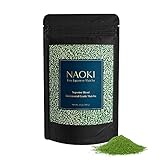
- ✓ Our Superior Blend Ceremonial Grade Matcha in Larger Packaging - Bigger packaging that offers both convenience and even greater value! Our 3.5 oz / 100g package serves a total of 50 servings. 1 tsp (2 grams) of matcha powder makes either a cup of matcha tea (usucha) or a small of matcha latte.
- ✓ Premium Japanese Ceremonial Grade Matcha, Fresh from Japan - Made from shade grown, First Harvest tea leaves from Uji Kyoto. The tencha is only ground into powder right before it leaves Japan for the USA, and then sealed into air-tight packets. This gets you extremely fresh, quality Uji matcha to be enjoyed right here in America.
- ✓ Smooth, Balanced And Versatile, Ideal For Matcha Beginners - This matcha ceremonial grade green tea powder is smooth with balanced umami with a hint of bitterness. It is the perfect matcha for beginners looking to make matcha lattes or occasional matcha teas (usucha).We recommend using this for recipes where matcha is the main ingredient.
- ✓ Improve Your Focus, Boost Energy Without Coffee – Greatly increase your focus by drinking Naoki Matcha. Unlike the typical caffeine rush from coffee, the amino acid L-theanine in Naoki Matcha moderates the effects of caffeine and helps to relax the mind and body while providing a steady boost of energy for up to 6 hours. Matcha is also naturally gluten and sugar free, and is a healthy source of antioxidants.
- ✓ We Want To Help You Enjoy Matcha – To ensure you have the best matcha experience, we provide our full guidance through directions for use, recipes and tips for enjoying it. Whether you like to drink matcha as a tea, or to mix it up as a latte or smoothie, we do not think there’s a right or wrong way to enjoy matcha. Our 3.5 oz / 100g tin serves a total of 50 servings. 1 tsp (2 grams) of matcha powder makes either a cup of matcha tea (usucha) or a small matcha latte.
5. Identify cultivar and blend information when available
A named cultivar or a clear blend description adds traceability. It is not necessary for every purchase, but it helps when you are comparing powders from the same region or trying to reproduce a preferred flavor. A listing that discloses only “premium Japanese matcha” gives you little basis for comparison.
6. Check package size and calculate price per gram
Compare unit cost, not the price of the tin. Divide the listed price by the net weight in grams. For example, a hypothetical $24 package containing 30 grams costs $0.80 per gram; a $32 package containing 50 grams costs $0.64 per gram. The calculation matters because package sizes vary widely and a low ticket price can hide a smaller quantity.
Buy an amount you can finish within roughly one to two months after opening. A larger package is not a bargain if the powder loses its color and aroma before you use it.
7. Inspect seller handling and shipping
Matcha should be protected from heat, light, air and moisture before it reaches you. Look for an airtight, opaque or light-resistant package, a clear storage statement and evidence that inventory is rotated rather than held indefinitely. During hot weather, ask how the seller protects orders in transit; a listing that says nothing about handling leaves an important quality variable unanswered.
8. Ask for lot-specific testing if you drink it regularly
Because matcha is consumed as whole leaf, a certificate of analysis (COA) tied to the actual lot is more useful than a generic statement that the tea is “tested.” A meaningful COA should identify:
- the lot or batch number;
- the harvest date or harvest period;
- the laboratory and its accreditation;
- the test date;
- heavy-metal results;
- pesticide-residue results;
- microbiology results; and
- relevant physicochemical measurements, with radioactive-material testing where applicable.
Do not treat a two-year-old COA or a document with no lot number as proof for a new shipment. Ask the seller to confirm that the document matches the package you will receive.
How to judge freshness after the package arrives
Use your senses as a confirmation step, not as the only evidence. Fresh, well-made matcha should have a vivid green appearance and whisk into a smooth suspension. Dull or yellowish color, pronounced harsh bitterness, stale aroma or grit should send you back to the date, seal and handling information.
Best Value

- DELICIOUS AND NUTRITIOUS TEA: 16 oz of MATCHA DNA Organic Green Tea Powder is naturally packed with antioxidants vitamins minerals amino acids and EGCG's.
- USDA CERTIFIED ORGANIC: All MATCHA DNA teas are USDA Certified Organic. Our farms have been inspected and meet the stringent USDA Organic rules and requirements.
- RICH IN ANTIOXIDANTS AND L-THEANINE: Matcha naturally contains antioxidants and L-theanine, known for calm focus and balanced energy. Inspired by matcha traditions, our organic matcha is perfect for tea, lattes and smoothies.
- CERTIFIED Without BPA PACKAGING: All MATCHA DNA Matcha tea packaging is Certified without BPA. We are the only Matcha tea company to package our teas in certified without BPA packaging.
- MatchaDNA Matcha Green Tea Powder is a Farm Direct to Customer Product, and this cuts out all the middlemen. All the money the middlemen would take is saved and those savings are passed on to our customers. MatchaDNA is USDA Certified Organic and is also tested by 3rd party labs for impurities. This ensures that you are getting a good quality product a good price.
Color has a chemical basis. In the 2018 JARQ sample, higher-priced products generally had higher chlorophyll levels and less chlorophyll-to-pheophytin conversion. Samples priced above $50 per 100 grams contained more than 370 mg/100 g of chlorophyll a and 160 mg/100 g of chlorophyll b, while samples below $20 per 100 grams contained less than 120 mg/100 g of each measured chlorophyll. Those findings describe that sample set; they do not establish a universal price threshold or prove that every expensive powder is better.
Storage once opened
- Reseal the package immediately after measuring.
- Keep it away from heat, direct light, air and moisture.
- Use a clean, dry utensil so water does not enter the container.
- Plan to finish the opened powder in roughly one to two months.
- If the powder develops a stale smell, persistent damp clumps or a noticeably dull color, treat that as a quality warning rather than trying to mask it with sweetener.
Understanding ceremonial versus culinary matcha
“Ceremonial” generally signals that a seller intends the powder for plain drinking, while “culinary” signals a stronger or more economical powder for recipes. Those are use-case descriptions, not regulated grades. A well-documented culinary powder can be a better choice for a latte than an expensive tin labeled ceremonial, and an undocumented ceremonial claim may be a poor choice for any preparation.
The Tool Desk
Outbyte PC Repair FREERepair Windows errors before they cause bigger problemsFix Now →Outbyte Driver Updater FREEFix the driver behind crashes, sound loss and screen glitchesFind Drivers →| Question | Plain-bowl powder | Latte or cooking powder |
|---|---|---|
| Primary test | Does it taste smooth, sweet and balanced with water alone? | Does its flavor and color remain noticeable after dilution or mixing? |
| Best evidence | Region, shaded tencha, harvest or milling date, fine texture and lot documentation | Clear origin and date plus value per gram and sufficient flavor strength |
| Package strategy | Small quantity used soon after opening | Quantity matched to recipe frequency, without sacrificing freshness |
| Grade wording | “Ceremonial-style” can be a search term, not a pass/fail test | “Culinary” or “latte” can be practical descriptors, not proof of poor quality |
What a sensible price comparison looks like
The 2018 JARQ survey’s $4.30-to-$160-per-100-gram range shows why price alone is unreliable. Products differed in origin, labeling and composition, and the study did not establish a universal relationship between price and quality.
Use price as one comparison axis alongside:
- named cultivation region;
- tencha and shading disclosure;
- harvest, milling or packing date;
- cultivar or blend detail;
- texture and color;
- lot-specific testing;
- net weight and price per gram; and
- shipping and storage practices.
If two listings are otherwise similar, the one with a recent date, smaller quantity and stronger lot traceability is usually the lower-risk purchase, even if its sticker price is higher.
Red flags that should change your decision
- Only a grade word: “Ceremonial” appears without region, tencha, date or testing information.
- Ambiguous origin: The listing says “packed in Japan” but never states where the leaf was grown.
- No date: Only a distant best-by date or a generic shelf-life claim is shown.
- Green color as the entire proof: Photos are vivid, but there is no production or handling detail.
- Unverifiable safety claim: “Lab tested” is stated without a lot number, laboratory, test date or results.
- Unusually large package: The quantity is more than you can use within one to two months after opening.
- Coarse powder: The product is described as matcha but the seller shows a visibly gritty texture or calls it simply green-tea powder.
A practical online buying checklist
Before clicking Buy, confirm each item that matters for your use:
- Choose the preparation: plain bowl, latte, smoothie or cooking.
- Read the origin: identify the growing region, not merely the packing country.
- Verify the leaf: look for tencha and a credible shading description.
- Check milling: fine, stone-ground or ishi-usu language is useful supporting evidence.
- Find the date: production, milling or packing date preferred over a distant best-by date.
- Compare quantity: calculate price per gram and choose a quantity you can finish promptly.
- Assess handling: confirm protection from heat, light, air and moisture.
- Request documentation: obtain a lot-specific COA if you drink matcha regularly.
- Inspect on arrival: confirm vivid color, fresh aroma and smooth whisking before discarding the packaging.
How to interpret contaminant limits
Heavy-metal rules are jurisdiction-specific. The COA guidance notes that the United States has no matcha-specific heavy-metal limit for adult tea, so buyers generally rely on supplier COAs, lot comparisons and applicable food-safety rules rather than one universal pass/fail number.
What’s actually slowing this PC down?
Pick the symptom - the matching free tool is one click away.
For context, the guidance cites China’s tea limits of 5.0 mg/kg for lead and 1.0 mg/kg for cadmium. Those are references for that jurisdiction, not universal limits for every country or every matcha product. Ask the seller which standard the laboratory used and interpret the result for your location.
Bottom line for choosing online
For a plain bowl, select the listing that can show shaded tencha, a named growing region, a recent production or milling date, fine powder and lot-specific testing. For lattes and cooking, choose a fresh, clearly sourced powder whose flavor and price fit the recipe rather than paying for an unregulated grade label. “Ceremonial” can describe intended use, but the evidence that matters is how the leaf was grown, processed, dated, tested and handled.
Quick Recap
Product prices and availability are accurate as of the date/time indicated and are subject to change. Any price and availability information displayed on Amazon at the time of purchase will apply.

