
Outdated Drivers Are Slowing You Down
One free scan finds every outdated or missing driver and matches the right update for your exact hardware.Free scan · exact hardware matchPC Slower Than It Used to Be?
A free scan shows the junk files, broken settings and background clutter dragging Windows down - then fixes them in one click.Free scan · Windows 10 & 11Choose a flagship camera phone if you want a capable camera that is nearly always with you, makes polished everyday photos with little setup, and fits naturally into mobile editing and sharing. Choose a dedicated mirrorless camera if you often need longer optical reach, more detail for cropping or large prints, optical background blur, direct controls, or files with more editing latitude. The right choice depends on what you photograph and where the images will be viewed—not on a universal winner.
Start with the pictures you actually make
Think about your usual subjects, the conditions you shoot in, and what happens to the files afterward. Casual family scenes, travel snapshots, and social posts often reward convenience and fast processing. Distant wildlife, sports, heavy cropping, and large prints put more value on a camera system’s lens choices and image detail.
- Choose a phone when availability, ease of use, and quick sharing matter more than extensive camera control.
- Choose a dedicated camera when you routinely hit a specific limit—such as insufficient zoom, detail, background separation, or editing flexibility—that a phone cannot reliably overcome.
- Wait before buying another device if you cannot name a recurring photographic problem a dedicated camera would solve. A separate camera only helps when you carry and use it.
Compare the pictures you would make with each option at their real destination: a phone screen, a close crop, or a print. A difference visible when zoomed in may not matter in a social post; a difference in reach or detail can matter greatly when the subject is far away or the image will be enlarged.
Where a flagship phone is the better fit
Convenience and everyday output
A phone is already part of most people’s daily carry. Its touchscreen interface, automatic exposure, and computational photography can deliver attractive results without lens changes or much setup. Multi-frame processing can also help balance difficult light in a scene, though the result depends on the phone, subject, and conditions.
Recommended Free Tools
#1 Best Overall

- 16MP Sensor: Captures detailed photos with a CMOS sensor for everyday shooting
- Optical Zoom: 4x optical zoom with a 27mm wide angle lens for flexible framing indoors or outdoors
- Full HD Video: Records 1080p video for travel clips, family moments, or simple vlogging
- Memory Support: Works with Class 10 SD, SDHC, or SDXC cards up to 512GB
- LCD Screen and Battery: 2.7in LCD screen with 2 AA alkaline batteries for convenient on-the-go use
That convenience extends beyond capture: photos are ready for mobile editing and sharing without moving files from another device. If your images are mostly viewed at ordinary screen sizes, the phone’s output may be entirely sufficient.
Video and quick publishing
Modern flagship phones can offer useful stabilization, autofocus, audio processing, and recording options. Which device performs best varies by task: a TechRadar comparison of the iPhone 17 Pro, Google Pixel 10 Pro, and Samsung Galaxy S25 Ultra discusses different strengths in still detail, motion, zoom, video stabilization, audio, processing, and recording features. These results apply to those named models, not to every phone or every kind of video.
Where a dedicated camera earns its place
Longer reach and lens choice
Reach is often the clearest reason to carry a separate camera. A dedicated system can use lenses suited to distant subjects such as wildlife or sports, while a phone’s small telephoto module has more limited scope. The difference becomes more apparent as focal length increases; digital enlargement cannot add the optical detail a longer lens captures.
Rank #2

- 16MP Sensor: Captures detailed photos with a CMOS sensor for everyday shooting
- Optical Zoom: 5x optical zoom with a 28mm wide angle lens for flexible framing indoors or outdoors
- Full HD Video: Records 1080p video for travel clips, family moments, or simple vlogging
- Memory Support: Works with Class 10 SD, SDHC, or SDXC cards up to 512GB
- LCD Screen and Battery: 2.7in LCD screen and a rechargeable lithium-ion battery for on-the-go use
Cropping, close inspection, and larger prints
A larger sensor and suitable lens can capture more fine detail and give you more room to crop or enlarge an image. Megapixel counts alone do not determine the result: focal length, lens and sensor performance, lighting, movement, and processing all matter. A high-resolution phone image is not automatically equivalent to a dedicated camera file when you inspect it closely or crop aggressively.
Quick wins for a faster PC:
Scan for outdated or missing drivers - takes under a minuteDriver Scan →Clear out junk files and repair common Windows errorsFree Scan →In a DPReview comparison published October 19, 2022, the Google Pixel 7 Pro and Canon EOS R5 could look close in some good-light wide or standard scenes at ordinary viewing sizes, while close inspection revealed differences in sharpness and detail. That comparison involved two specific devices and scenes; it is not a universal ranking.
Depth of field and rendering
Phones can simulate background blur in portrait modes, but the effect is software-generated. A dedicated camera can create optical depth of field through the lens and sensor, giving the photographer direct influence over how the subject and background render. The distinction matters most when you want controlled, repeatable separation rather than a convenient portrait effect.
Rank #3
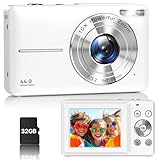
- Latest Digital Camera Built-in Fill Light : This compact digital camera is paired with a powerful CMOS processor and image stabilization to help you take & record the most exciting moments in 44 MP quality images & FHD 1080P quality videos anywhere, anytime. Plus, there is also a built-in fill light to help you take high quality pictures even in low light&dark settings, making this the perfect camera for all indoors/outdoors situations.
- Long-Lasting Battery Life & 16X Digital Zoom :This point and shoot camera will retain its battery charge even after long use. The controls and functions are easy to operate making this the perfect choice for children, teens and younger. This kids camera supports 16x digital zoom, you can zoom in or out the subject by pressing the W/T button for taking still photos to zoom in or out on distant objects and capture all the details you need.
- Multifunctional & Portable Digital Camera: This cheap digital camera is slim enough to fit in your pocket. You'll easily be able to take it with you on all your indoor/outdoor activities and adventures and ideal for beginners, children and teenagers. This kids digital camera is equipped with 20 filters, anti-shaking, self-timer, continuous shooting, date stamp, time-lapse recording, smile capture, internal MIC and speaker (recording sound videos), great for your daily photography needs.
- WEBCAM & PAUSE FUNCTION : More than just a FHD 1080p digital camera, it also works as a webcam for video calls and vlogging. Connect the camera to the computer, press shutter and power button at the same time and the camera will automatically turn on webcam mode for all your video calling and live streaming needs. The pause function allows you to pause when seeing playback videos.
- A Must Have Photography Device : This digital camera with SD card made from high-quality materials, this retro camera is safe and durable. Perfect for all ages to develop & improve their photographic abilities and observation skills. Our dedicated and experienced 24/7 support team is available for all after purchase troubleshooting, questions and technical help.
Manual control and deliberate shooting
A dedicated camera’s grip, viewfinder, dials, and physical controls can make it easier to adjust settings and compose deliberately, especially in changing conditions. Mirrorless cameras are not automatically bulky DSLRs: they omit the DSLR mirror and optical-viewfinder mechanism, and can still support interchangeable lenses and an electronic viewfinder. Fujifilm explains that design in its mirrorless camera overview; it is manufacturer education rather than an independent comparison of all systems.
Understand the trade-offs in light, movement, and editing
Low light and fast action
Computational processing can produce strong-looking images in challenging light, but processing cannot eliminate every hardware limitation. A comparison by DPReview found that the Pixel 7 Pro’s computational HDR could produce a strong result in difficult lighting, while some examples showed excessive processing. Low light combined with movement can be especially demanding: a phone may brighten a scene but still struggle to preserve natural detail or freeze action.
For action, consider autofocus behavior, shutter control, lens reach, and how much detail you need—not just the camera’s megapixel figure or its night mode. The best choice depends on the particular camera, lens, phone, and subject.
Rank #4

- 16MP Sensor: Captures detailed photos with a CMOS sensor for everyday shooting
- Optical Zoom: 5x optical zoom with a 28mm wide angle lens for flexible framing indoors or outdoors
- Full HD Video: Records 1080p video for travel clips, family moments, or simple vlogging
- Memory Support: Works with Class 10 SD, SDHC, or SDXC cards up to 512GB
- LCD Screen and Battery: 2.7in LCD screen and a rechargeable lithium-ion battery for on-the-go use
Files and post-processing
If you regularly edit exposure, color, or detail after capture, a dedicated camera may provide more latitude. In its Pixel 7 Pro and EOS R5 comparison, DPReview noted more post-processing room in the R5 files and more compression in the phone’s video. Those observations are tied to that comparison; they do not establish a general file-quality result for every current phone and camera.
Also consider workflow costs in time and storage. A dedicated camera may mean managing larger files, carrying spare batteries, transferring images, and editing on another device before sharing. A phone generally makes the path from capture to publication simpler.
Independent reader supportYour contribution helps us test, update, and keep practical guides available for everyone.Compare the real carrying and ownership cost
Do not compare a camera body with a phone’s camera in isolation. A separate system may require an initial lens, and the subjects you pursue may eventually call for additional lenses, batteries, storage, or editing tools. A phone upgrade may have a higher or lower cost depending on your situation, but no universal market-wide total-cost comparison is established here; prices vary by country, offers, and intended use.
Free tools Windows power users keep installed
One-click scans. No signup required.
Mirrorless systems can be smaller and lighter than DSLRs, but they remain another device to carry. An APS-C mirrorless camera with a kit lens is a reasonable starting category if you have identified a need for interchangeable lenses, reach, or more control. Compare the body together with the lens you will actually use rather than choosing by body specifications alone. No single body, current price, or regional bundle is established as the best choice for everyone.
Use this decision checklist
| Your priority | Better starting point | Why it matters |
|---|---|---|
| Photos mainly for phone screens and social sharing | Flagship phone | Convenience, automatic processing, and direct sharing fit the destination. |
| Distant wildlife, sports, or frequent long-zoom shots | Dedicated camera | Lens choice and optical reach matter more as focal length increases. |
| Frequent heavy crops or large prints | Dedicated camera | Greater detail and editing latitude can provide more room to work. |
| Portraits with convenient background blur | Flagship phone | Portrait processing can produce a quick simulated effect. |
| Controlled optical depth of field and rendering | Dedicated camera | Lens and sensor choices give you direct control over optical blur. |
| Minimal setup and one device for capture, editing, and sharing | Flagship phone | The complete workflow stays on the device you already carry. |
| Viewfinder composition, grip, and direct physical controls | Dedicated mirrorless camera | Its shooting interface supports deliberate operation. |
Before buying, review your own recent photos and videos. Note how often you wished you had more reach, detail, control, or editing latitude, then decide whether that shortfall is frequent enough to justify another device. If it is, select a camera and lens for that specific need.
Quick Recap
Product prices and availability are accurate as of the date/time indicated and are subject to change. Any price and availability information displayed on Amazon at the time of purchase will apply.

