
iTechGuides is reader-supported. When you buy through links on our site, we may earn an affiliate commission. As an Amazon Associate I earn from qualifying purchases. Learn more
Choose the trading card game (TCG) when your group mainly wants structured matches, card play, deck decisions and a clear opponent or win condition. Choose the tabletop role-playing game (RPG) when players want to portray characters, make consequential decisions and create a continuing story, usually with one person coordinating the game as gamemaster (GM).
That first choice only narrows the field. Player count, session length, preparation, age guidance, starter contents and expansion model vary substantially between individual products. Compare the exact book-franchise TCG and RPG you are considering rather than assuming that every card game is short and competitive or every RPG is long and difficult.
What are you actually choosing?
A franchise TCG is a card game licensed from an established fictional setting. Players normally bring, build or modify decks, play cards in turns and pursue a defined objective. The official Pokémon description, for example, presents two-player battles using constructed decks and a stated way to win; it is a useful example of a competitive card-game structure, not a rule that applies to every licensed card game. See the American Library Association’s Pokémon overview.
A tabletop RPG is a conversation-led game in which players act as characters and resolve uncertain actions with rules and dice. A GM describes the situation, portrays non-player characters and adjudicates the rules while the rest of the group decides what its characters attempt. Square Enix describes its Final Fantasy XIV RPG in those terms: one gamemaster leads a group of adventurers who roll dice and create a story together. The product’s official rulebook listing is a concrete example, not a universal RPG definition.
#1 Best Overall

- SELF-CONTAINED INTRODUCTION: Intro Battle: Hoth offers a ready-to-play, beginner-friendly experience designed to introduce players to Star Wars: Unlimited with ease.
- ICONIC BATTLE OF HOTH: Relive the epic clash between Darth Vader’s Imperial army and Leia Organa’s Rebel forces defending Echo Base.
- TWO PRE-BUILT DECKS: Choose to command either the Imperial invaders or the Rebel defenders, each deck tailored for quick, engaging gameplay.
- DETAILED RULEBOOK & GAME BOARD: Includes step-by-step instructions and a helpful game board to help new players jump right into the action.
- EASY TO LEARN, ENDLESSLY FUN: Perfect for newcomers and Star Wars fans alike, offering a fast, strategic, and immersive card game experience.
The boundary is not absolute. A card game can contain a campaign or narrative chapters, and an RPG can use tactical combat, maps and objective-based encounters. Fantasy Flight Games separates player expansions from story expansions in its Living Card Game model, while the Tales of Xadia RPG centers character creation and shared storytelling. Treat the format label as a starting point, then inspect the actual rules and contents.
Start with the experience your group wants
| If your group values… | Usually investigate first | Questions to ask before buying |
|---|---|---|
| Repeatable head-to-head matches | TCG or another competitive card game | Is there a fixed win condition? Must each player bring a deck? Is the game designed for two players or larger teams? |
| Character portrayal and shared narrative | Tabletop RPG | Who will run the game? Are characters persistent between sessions? Does the book provide an adventure or only rules? |
| Short, low-commitment gatherings | A card game with a published play-time range | Can a complete game finish in one sitting? How much setup and deck construction is required? |
| A continuing campaign in a favorite setting | An RPG or a card game with explicit story content | Are scenarios linked? What does the core product include, and which expansions add new story chapters? |
| Large groups with no designated organizer | A card game whose player count fits the group | Does the game support everyone simultaneously, or do players have to form smaller tables? |
Use the table to identify the experience, not to make a format-wide verdict. A particular TCG may offer cooperative or campaign modes, and a particular RPG may emphasize tactical combat more than free-form acting.
Competitive matches versus collaborative stories
Choose the card-game path for structured competition
Card play is a strong fit when the group enjoys evaluating options under constraints: which cards to include, when to spend resources and how to respond to an opponent. The rules usually define the active player, legal card effects and the condition that ends the match. This makes it easier to schedule a self-contained session and to replay the same game with different choices.
Before committing, check whether the product is truly a TCG. A traditional TCG generally distributes cards in randomized products and expects players to assemble decks; other card systems use fixed decks, preconstructed decks or a fixed-distribution model. Fantasy Flight’s Living Card Game explanation describes a different model in which a core set and later packs provide known contents. Do not describe an LCG as a TCG or assume its purchasing and deck-building demands are identical.
Choose the RPG path for authorship and character decisions
RPGs reward groups that want to ask, “What would my character do?” and accept outcomes that are not predetermined. Players may negotiate with an antagonist, avoid a fight, investigate clues or pursue a personal goal; the GM translates those choices into the next situation. Character sheets, relationships and consequences can carry from one session to the next.
This structure requires a willing GM or an agreed rotation. The GM role is not merely reading a script: it includes learning enough of the rules to resolve actions, preparing or selecting scenes and keeping the spotlight moving among players. Some games supply substantial guidance and premade adventures, while others expect the GM to create most of the setting. Read the product description for that division of labor before choosing.
Rank #2

- Yu-Gi-Oh! TCG: 2 Player Starter Set
Check player count and the GM requirement
Published player counts are more useful than format stereotypes. Square Enix lists the Final Fantasy XIV TTRPG Standard Rulebook for three to five players, recommends five and gives a playing time of 120 minutes or more; those are specifications for that rulebook, released in September 2025, not an average for RPGs. Hasbro lists Sweet Existence: A Strange Planet Party Card Game for four to eight players and 15–40 minutes. Its official instructions are the authority for that product.
Crashes, No Sound, or Screen Glitches?
Random freezes, missing sound and display glitches usually trace back to one bad driver. Find and replace yours safely.Free scan · under a minutePC Slower Than It Used to Be?
A free scan shows the junk files, broken settings and background clutter dragging Windows down - then fixes them in one click.Free scan · Windows 10 & 11| Published example | Players | Time | Age guidance | What the source establishes |
|---|---|---|---|---|
| Final Fantasy XIV TTRPG Standard Rulebook | 3–5; five recommended | 120+ minutes | 14+ | Square Enix product specifications; a rulebook-based RPG example |
| Sweet Existence: A Strange Planet Party Card Game | 4–8 | 15–40 minutes | 13+ | Hasbro product specifications; a party card-game example |
| Your candidate book-franchise TCG | Not stated here | Not stated here | Check the current product page | Use the publisher’s current listing and instructions |
| Your candidate RPG | Not stated here | Not stated here | Check the current rulebook | Confirm whether the listed number excludes the GM |
Notice that “three to five players” can mean three to five players plus a GM, or a total including the GM, depending on the publisher’s convention. Verify the definition in the rulebook. If your group has six or more people, a five-player RPG recommendation may require splitting the group, rotating attendance or selecting a different game; do not infer support from the setting’s popularity.
Compare session length and campaign continuity
One-shot card sessions
A card game with a 15–40 minute estimate can fit a lunch break or several rounds in one evening, but the estimate may assume players already know the rules. Add time for opening the box, sorting cards, teaching newcomers and building decks. Ask whether an unfinished match can be paused without losing hidden information or strategic context.
RPG sessions and ongoing campaigns
An RPG listing of 120 minutes or more is a planning signal, not a promise that every session ends after two hours. Character creation, recap, rules questions and breaks consume part of the meeting. Decide whether the group can meet regularly and whether someone will track campaign notes, advancement and unresolved plot threads.
Campaign continuity also changes the emotional commitment. A self-contained card match resets at the end; an RPG campaign makes earlier choices part of the next session. If attendance is unpredictable, look for an RPG that supports drop-in characters or standalone scenarios, or prefer a card game that does not penalize absences.
The Tool Desk
Outbyte PC Repair FREEClear out junk files and repair common Windows errorsFree Scan →Outbyte Driver Updater FREEScan for outdated or missing drivers - takes under a minuteDriver Scan →Assess learning, setup and preparation
What to inspect in a TCG
- How many cards or decks are needed to begin, and are starter decks ready to play?
- Must players understand deck construction before their first match, or can they use fixed lists?
- What zones, keywords and timing rules create the learning curve?
- Does the game require sleeves, counters, play space or reference cards?
- Are official formats or rotation rules relevant to the cards you plan to use?
Do not equate “card game” with “easy.” A short rules explanation can still lead to difficult strategic decisions, and a large card pool can make deck construction the main activity.
Rank #3
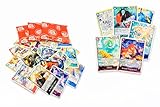
- 55 Total One Piece TCG Cards – Includes 50 assorted common/uncommon cards plus 5 guaranteed foil cards to elevate any collection
- Selected Variety – Features a wide range of One Piece characters, events, and actions sourced from multiple sets
- Great for Deck Building – Perfect for expanding strategies, testing new builds, or strengthening competitive and casual decks
- Collector-Ready Quality – All cards are carefully inspected and packed in excellent condition
- Perfect Entry or Expansion Set – Ideal for new players, seasoned fans, collectors, or as a gift for any One Piece enthusiast
What to inspect in an RPG
- Does the entry product contain character-creation rules, a bestiary, GM guidance and an adventure?
- Can players use premade characters, or must the group build characters before play?
- How much preparation is expected between sessions?
- Are dice, maps, tokens or digital aids required, or merely optional?
- Does the rules text explain how to adjudicate actions that the book does not anticipate?
RPG difficulty is distributed across the group. A beginner-friendly character sheet may still leave the GM with substantial preparation, while a detailed rulebook may make improvisation easier once learned. Ask who in your group has the time and interest to carry that work.
Read the entry product description carefully
The first purchase does not mean the same thing in each format. The Final Fantasy XIV TTRPG Standard Rulebook is described as containing core rules and three premade scenarios. That makes it a rules-and-adventures entry point, although you still need to confirm dice, character materials and the current contents before play. Square Enix’s store page showed the physical book as sold out when retrieved; availability can change, so check the current listing rather than treating that status as permanent.
Fantasy Flight’s Living Card Game model starts with a core set and uses later products for additional deck options or story content. Its model overview explains why a “core set,” “player expansion” and “story expansion” should not be treated as interchangeable. A licensed card game may instead sell fixed starter decks, randomized boosters or a self-contained box. Read the contents list and the “what you need to play” section for the exact title.
What’s actually slowing this PC down?
Pick the symptom - the matching free tool is one click away.
There is no reliable, format-wide cost conclusion in the available product information. A TCG can become expensive through repeated deck upgrades, while an RPG can require one rulebook but optional supplements; the reverse can also be true. Compare the current price and required products for your chosen games, separating mandatory purchases from optional expansions.
Use setting and story support as a tie-breaker
A familiar fictional world can motivate either format, but it serves different purposes. In an RPG, the setting supplies places, factions and character prompts that players can reinterpret through play. The Tales of Xadia site presents a handbook for creating characters and telling stories within The Dragon Prince setting, illustrating how a licensed world can be a framework for player-authored events.
In a card game, the setting may primarily change card abilities, art and flavor text while the underlying match remains competitive. Other designs add scenario progression or campaign rules. Fantasy Flight’s Fallout product page demonstrates that a card-driven or board-game experience can include narrative elements without becoming a traditional RPG. A story theme alone therefore does not tell you how much role-playing or continuity to expect.
Rank #4

- DIVE INTO THE ACTION: Includes two ready-to-play decks featuring Ahsoka Tano and General Grievous for immediate gameplay right out of the box.
- EXCLUSIVE CONTENT: Contains unique playsets of 10 cards unavailable in booster packs, perfect for new players and collectors alike.
- EXPLORE ICONIC BATTLES: Experience the Clone Wars era, commanding either the Galactic Republic or the Confederacy of Independent Systems.
- LEARN QUICKLY: Comes with all necessary components including counters, playmats, deckboxes, and a quickstart rulebook to streamline your learning process.
- EXPAND YOUR GAME: After mastering the starter set, enhance your tactics and collection with additional Twilight of the Republic booster packs (sold separately).
When evaluating a book franchise, look for concrete support: named characters, setting summaries, encounter guidance, scenario structure and rules for creating original characters. Marketing language such as “immersive” or “epic” is less useful than a contents list showing how those features work at the table.
Consider age guidance and group comfort
Age labels are product guidance, not standardized complexity scores. Square Enix lists its Final Fantasy XIV RPG as 14+, while Hasbro lists Sweet Existence as 13+. Those labels may reflect themes, reading demands, components or the publisher’s intended audience; they do not prove that one format is universally harder.
Discuss comfort before buying. Some players enjoy direct competition and table talk; others prefer cooperating against an automated opponent or fictional threat. RPGs can involve improvisation, speaking in character and scenes with sensitive themes. Card games can involve bluffing, take-that effects or unequal experience between a veteran deck builder and a newcomer. Agree on house boundaries, teaching expectations and whether losing should be treated as part of the fun.
Independent reader supportYour contribution helps us test, update, and keep practical guides available for everyone.A practical comparison worksheet
Fill this out for each candidate product. Use “not stated” when the publisher does not provide a value; do not substitute a guess.
| Decision axis | Evidence to record | Why it changes the choice |
|---|---|---|
| Primary activity | Match, cooperative scenario, character-led campaign or mixture | Determines whether competition or authorship is the group’s main source of enjoyment |
| Player range | Minimum, maximum and whether a GM is counted | Prevents buying a game that cannot seat the actual group |
| Typical session | Publisher’s duration, plus teaching and setup time | Shows whether the game fits your available evenings |
| Continuity | Reset-after-play, linked scenarios or persistent characters | Reveals the attendance and note-taking commitment |
| First-play contents | Decks, cards, rulebook, premade characters, scenarios, dice and tokens | Exposes extra purchases and preparation before the first session |
| Expansion model | Boosters, fixed packs, player expansions, story expansions or optional supplements | Indicates how the game may grow and what future spending or storage it entails |
| Rules workload | Deck construction, character creation, GM preparation and reference needs | Matches the game to the group’s available time and experience |
| Age and themes | Published age guidance and any content concerns | Protects younger players and avoids an uncomfortable first session |
Follow this decision process
- Describe the desired evening in one sentence. For example: “We want two competitive rounds with little preparation,” or “We want to inhabit characters and continue a story next month.” If neither sentence fits, shortlist one game from each format.
- Count the real participants. Include the prospective GM separately and check the exact player-count convention in each rulebook.
- Set the time boundary. Compare the published duration with your available slot, adding teaching, setup, food and cleanup.
- Inspect the entry product. Write down every component needed for a first session and every item described as optional. Do not assume a core set includes enough decks, or that a rulebook includes dice and adventures.
- Test the preparation burden. Ask who will build decks, read the rules, create characters, prepare scenes and track continuity. If nobody wants that job, remove RPGs that depend on an active GM or TCGs that require extensive deck construction.
- Check the continuation model. Decide whether you want independent matches, linked scenarios or a campaign. Look for explicit story expansions, scenario books or campaign rules rather than relying on the franchise name.
- Make a conditional choice. Select the product that satisfies the non-negotiable requirements first—group size, available time and willingness to prepare—then use theme and component quality as tie-breakers.
Common mistakes and how to avoid them
Assuming every franchise card game is a TCG
Some products use fixed decks, some use randomized cards and some use a living-card model with known expansion contents. Identify the distribution model and the deck-building requirement from the publisher’s instructions.
Quick wins for a faster PC:
Scan for outdated or missing drivers - takes under a minuteDriver Scan →Clear out junk files and repair common Windows errorsFree Scan →Fix the driver behind crashes, sound loss and screen glitchesFind Drivers →Assuming an RPG is automatically cooperative and casual
Many RPGs include tactical combat, resource management and strict objectives. Read the conflict and victory rules; choose a game whose level of tactics matches the group.
Best Value

- MASSIVE VALUE: Includes 100 authentic One Piece Trading Card Game cards plus 7 special foil cards as bonus content
- CARD VARIETY: Features characters, events, and action cards from various One Piece series sets, perfect for deck building
- COLLECTION BOOST: Great starter pack for new collectors or expansion for existing collections with mix of common and rare cards
- GAME READY: Cards are playable right out of the package and compatible with standard One Piece TCG gameplay
- STORAGE SOLUTION: Cards come sorted and ready for organization into your preferred storage method or deck boxes
Using one product’s schedule as a format average
The 15–40 minute Hasbro example and the 120-minutes-or-more Square Enix example show why product specifications matter. Neither figure predicts the duration of all card games or all RPG sessions.
Ignoring the GM’s workload
A rulebook can contain premade scenarios and still require a person to learn procedures, portray characters and manage pacing. Confirm that someone is willing to do this before buying an RPG.
Comparing prices without comparing what is included
A low entry price may omit decks, dice, scenarios or required expansions. A higher-priced box may include several ready-to-play options. Compare contents and mandatory purchases, not sticker prices alone.
Free tools Windows power users keep installed
One-click scans. No signup required.
Confusing story flavor with a story system
Flavor text and familiar names can enrich a match without creating character progression. Conversely, an RPG setting may be detailed while leaving the GM to write adventures. Look for explicit rules and scenarios that support the experience you want.
Bottom-line choice
Pick the book-franchise TCG when your group prioritizes defined matches, card decisions and a repeatable competitive structure. Pick the tabletop RPG when the group prioritizes character agency, shared fiction and an ongoing campaign—and when a GM and longer preparation are acceptable. If both appeal, compare one specific product from each using player count, duration, entry contents, expansion model, preparation and age guidance; those concrete details, not the label, determine which game will work at your table.
Quick Recap
Product prices and availability are accurate as of the date/time indicated and are subject to change. Any price and availability information displayed on Amazon at the time of purchase will apply.

