
Recommended Free Tools
Choose an MCP server by starting with one business workflow—not by browsing a server directory. Define the systems it must access, the actions it may take, and the identity it should use; then verify that a candidate exposes those capabilities to your intended MCP client and enforces the right permissions. MCP standardizes a client-server interface, but it does not by itself establish that a server is secure, suitable, or compatible with your organization.
1. Define the workflow and its boundaries
Describe one workflow from its trigger to its intended outcome. For example, a workflow might read a support ticket, look up an account, and prepare an update—but whether it may write that update, and who must approve it, should be explicit.

- List the systems and data the workflow needs, including sensitive or private information.
- Separate read-only operations from writes, approvals, and destructive actions.
- Identify whether requests act for an individual user or a service, and who approves risky actions.
- Record the intended outcome and the resources the workflow must not access.
This scope is the basis for judging both capability coverage and permissions. MCP servers can expose tools, prompts, and resources; some implementations also support elicitation. The protocol does not decide whether a user is allowed to invoke a tool.
2. Check that the server exposes the required capabilities
For every candidate, map the workflow’s steps to the server’s actual tools, resources, or prompts. For each tool, establish what it reads or changes, which downstream system it calls, and whether administrators can limit the exposed set.
#1 Best Overall

- More for the money with this high quality Product
- Offers premium quality at outstanding saving
- Excellent product
- 100% satisfaction
Do not treat a product label such as “MCP server” as proof that it covers your use case. Google Cloud, for example, documents toolsets as logical groups that can expose selected tools; you still need to verify that the specific server and toolset cover the product and operations your workflow requires.
3. Verify the intended client, transport, and authorization flow
Test compatibility with the exact MCP client and service versions your organization plans to use. Confirm support for the server’s transport, authorization flow, and required capabilities; matching the MCP interface alone is not enough.
The MCP transport overview describes two transport options:
- stdio: newline-delimited messages exchanged over a subprocess launched by the client.
- Streamable HTTP: messages sent to a single MCP endpoint, with replies delivered as JSON or request-scoped server-sent events.
Protocol semantics are intended to remain common across transports, but clients and server implementations can differ in what they support. Verify the complete combination rather than assuming that a client supporting MCP will support every transport, capability, or authorization setup.
Windows Errors? Fix Them Before They Spread
Repair common Windows errors and clear accumulated junk for a smoother, more stable PC - no reinstall needed.Free scan · no reinstallOutdated Drivers Are Slowing You Down
One free scan finds every outdated or missing driver and matches the right update for your exact hardware.Free scan · exact hardware match4. Choose an operating model
Local, remote, and gateway deployments solve different operating problems; none is the default best choice for every workflow.
| Pattern | How it works | What to plan for |
|---|---|---|
| Local server | The client launches a subprocess and communicates with it over stdio. | Who installs and updates it, how local credentials are controlled, and how each user’s setup is supported. |
| Remote server | A centrally hosted server provides an endpoint for clients. | Authentication and authorization to the MCP server and from it to downstream systems, plus careful handling of multi-tenant access. |
| Gateway | A central proxy routes clients to multiple remote MCP servers and can provide shared access and discovery through one endpoint. | Identity handling, routing and access controls, and the gateway’s own operation as a shared control point. |
A local process may fit a client-managed setup; central hosting or a gateway may fit an organization that needs centralized administration. Choose according to who connects, which networks must be reached, and who will operate the service. AWS describes hosting as a spectrum rather than a one-size-fits-all decision.
5. Evaluate identity and permissions end to end
For private data or actions, require authentication and authorize each request at the server. The MCP authorization specification says the server must validate tokens before processing requests and accept only tokens intended for that server. If the server calls an upstream API, it must use a separate token rather than forward the client’s token.
Decide whether each tool should act with user-delegated access or machine-to-machine access. AWS distinguishes interactive, user-specific access from background or scheduled work using consistent agent-level permissions; its guidance recommends separately scoped, purpose-generated downstream tokens, with access logged and audited.
Quick wins for a faster PC:
Fix the driver behind crashes, sound loss and screen glitchesFind Drivers →Clear out junk files and repair common Windows errorsFree Scan →Scan for outdated or missing drivers - takes under a minuteDriver Scan →Rank #3

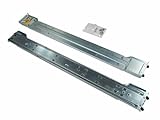
- Product type: Screw kit
- Made by Super Micro
- Manufacturer part number: MCP-410-00005-0N
- Supermicro MCP-410-00005-0N Screw Bag(100PCS) and Label for 24x Hot swap
- Mfr Part Number: MCP-410-00005-0N
Microsoft Entra’s guide describes a flow in which a server returns protected-resource metadata, the client requests a token for that server resource, and the server validates the token before running a tool. It recommends using a well-tested authentication library or middleware rather than writing token validation from scratch.
OpenAI’s server guidance puts authorization at the server for every request: “Enforce authorization in the MCP server for every request; never rely on the model to decide whether a user has access.” Treat authorization as an enforced control, not as an instruction to the model.
6. Check governance and operational ownership
Before selecting a candidate, establish who can register or deploy servers and tools, how versions are reviewed and updated, and what administrators can restrict. Also check whether the operating team can inspect usage, monitor performance, and protect downstream services with rate limits.
- Permissions: Can administrators limit which users, tools, or resources are available?
- Audit and monitoring: What is logged, and can the team investigate relevant use and performance?
- Change control: Who reviews versions and manages rollout or rollback?
- Service protection: Are rate limits and other operational controls adequate for downstream systems?
- Ownership: Is there a named team responsible for deployment, updates, incidents, and access reviews?
Platform documentation can help form a shortlist, but it is not a guarantee of fit. Microsoft documents Azure Logic Apps Standard workflows exposed as remote MCP servers, including OAuth setup, private endpoint and virtual-network connectivity, workflow run history, and monitoring integrations. Microsoft labels this capability as preview; confirm its current status, scope, and availability in your environment before relying on it.
Free tools Windows power users keep installed
One-click scans. No signup required.
Google Cloud documents remote MCP servers with identity-based access, fine-grained IAM, and toolsets for exposing selected groups of tools. Verify the specific server and workflow coverage. These examples are options to investigate, not endorsements or assurances that a particular configuration meets your requirements.
Independent reader supportYour contribution helps us test, update, and keep practical guides available for everyone.7. Compare candidates against the same checklist
| Selection area | Questions to answer |
|---|---|
| Workflow coverage | Does the server expose every required operation and data source? Can administrators narrow the available tools? |
| Client compatibility | Does the intended client support the transport, authorization flow, and capabilities the workflow needs? |
| Deployment and network | Is it local or remote? Can it reach private or on-premises systems? Who patches and operates it? |
| Identity and authorization | Is access user- or workload-based? Are permissions enforced for each request and tool? |
| Downstream credentials | Does the server use appropriately scoped credentials instead of reusing or forwarding the client token? |
| Governance and operations | Are logging, monitoring, rate limits, version controls, and administrative controls adequate? |
| Platform fit | Does it fit the organization’s identity, cloud, and workflow environment without relying on unverified assumptions? |
8. Run an acceptance check before rollout
Evaluate the proposed end-to-end setup with the intended MCP client and a least-privilege test identity. Use a workflow account or test data that is appropriate for the environment.
- Run the required workflow and verify that it reaches the expected outcome.
- Try to access unrelated resources and confirm the tools cannot read or change them.
- Test missing, invalid, or incorrectly scoped credentials and confirm requests fail closed.
- Inspect downstream calls to verify they use the intended user or workload identity and appropriately scoped credentials.
- Confirm administrators can inspect relevant usage and investigate failures.
This check is a practical way to validate the permissions and operating controls that matter for your workflow; protocol compatibility on its own does not establish them.
Quick Recap
Product prices and availability are accurate as of the date/time indicated and are subject to change. Any price and availability information displayed on Amazon at the time of purchase will apply.
What’s actually slowing this PC down?
Pick the symptom - the matching free tool is one click away.

