
Choose an enterprise AI platform by testing how well it fits your workloads, security requirements, existing systems, operating model, and total cost—not by selecting a vendor from a feature list. Compare the exact services and contract terms, then run a representative pilot with measurable success criteria. There is no universally best platform for every organization.
Start with the workloads and the systems around them
List the tasks the platform must support and the conditions it must meet: model choice, customization, latency, throughput, reliability, and expected demand. Then map the surrounding architecture. An enterprise platform is more than a model endpoint: AWS describes an approach built from reliable infrastructure, foundation-model selection, security and governance, and repeatable application patterns. The applications and business processes that will use AI need to be part of that design from the start. See AWS Prescriptive Guidance on an enterprise-ready generative AI environment.
Inventory the services and teams the platform must work with before comparing products:
- Identity provider, roles, and access-management processes
- Data sources, enterprise applications, and cloud network
- APIs, connectors, and protocols required by applications
- Logging, observability, security operations, and finance reporting
- Teams responsible for development, governance, and ongoing operations
Include maintenance and migration effort in the comparison. A connector that works in a demonstration may not meet production needs if it cannot preserve source permissions, fit monitoring workflows, or be maintained by the organization’s teams.
Do these 3 things before closing this tab:
1Scan for outdated or missing drivers - takes under a minute2Clear out junk files and repair common Windows errors3Fix the driver behind crashes, sound loss and screen glitches#1 Best Overall
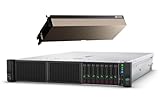
- HPE Proliant DL380 G10 8-Bay SFF Server | 2x Platinum 8164 2.0GHz 26-Core CPU (52-Cores Total)
- 64GB DDR4 RAM | 2x 1.92TB SATA III 2.5" SSD
- Smart Array S100i SR | 2x10GbE NIC
- 2x 500W PSU | Windows Server 2019 Standard Evaluation
- NVIDIA H100 Tensor Core 96GB PCIE GPU
Evaluate security and governance in the intended configuration
Security is a platform and implementation responsibility, not a checkbox attached to a model. AWS Prescriptive Guidance states: “A robust security and governance framework is essential for scaling generative AI adoption across the enterprise.” Its recommendations include granular roles, private networking where needed, model guardrails, protected invocation logs, audit trails, layered controls, regular assessments, and documented policies. The guidance specifically discusses AWS controls such as PrivateLink and CloudTrail; verify their relevance and configuration for the services you plan to use at AWS’s enterprise-ready environment guidance.
Ask each vendor to document and demonstrate the controls that apply to your proposed deployment:
Rank #2
- HPE Proliant DL380 G10 8-Bay SFF Server | 2x Platinum 8164 2.0GHz 26-Core CPU (52-Cores Total)
- 1024GB DDR4 RAM | 2x 1.92TB SATA III 2.5" SSD
- Smart Array S100i SR | 2x10GbE NIC
- 2x 500W PSU | Windows Server 2019 Standard Evaluation
- NVIDIA H100 Tensor Core 96GB PCIE GPU
- How identity, role separation, and least privilege work—including access to data and tools
- Whether private network connectivity is available and what setup it requires
- How prompts, responses, and other submitted data are handled, retained, and used
- Where data is stored and processed, and whether regional options apply
- What guardrails, invocation logs, and audit trails are available
- How incidents are handled and what compliance evidence covers the specific service
- Which controls and commitments are included in the contract
Microsoft recommends aligning governance with established identity and data-governance practices, and managing governance across agent lifecycle, data, security, and development standards. Consult Microsoft’s AI governance guidance and assess how it fits your existing controls.
Vendor security pages describe vendor offerings, not automatic guarantees for every product or deployment. OpenAI states that qualifying organizations can configure retention and that certain eligible customers can use data-residency and regional-processing options. It also reports SOC 2 Type 2 and ISO certifications for specified services and describes ISO/IEC 42001 coverage. Check the applicable product, endpoint, region, plan, eligibility, and contract, and review the relevant current assurance materials: OpenAI enterprise privacy and OpenAI security and privacy.
Free tools Windows power users keep installed
One-click scans. No signup required.
Rank #3
- HPE Proliant DL380 G10 8-Bay SFF Server | 2x Platinum 8164 2.0GHz 26-Core CPU (52-Cores Total)
- 128GB DDR4 RAM | 2x 1.92TB SATA III 2.5" SSD
- Smart Array S100i SR | 2x10GbE NIC
- 2x 500W PSU | Windows Server 2019 Standard Evaluation
- NVIDIA H100 Tensor Core 96GB PCIE GPU
Test integration, access, and operations
Require a demonstration using representative data and permissions, not just a count of available connectors. Check whether the platform fits your identity provider, data stack, applications, network, observability tools, and security operations. When AI retrieves data or invokes tools, preserve least-privilege access at the source boundary rather than treating the model or connector as a reason to bypass existing permissions.
A gateway can help centralize credentials and logs, apply policies, track usage and cost, and translate between model protocols. AWS describes these capabilities alongside capacity fallback in its Amazon Bedrock gateway guidance. Treat this as an architectural option to assess, not a requirement that every organization use a gateway.
Rank #4
- HPE Proliant DL380 G10 8-Bay SFF Server | 2x Platinum 8164 2.0GHz 26-Core CPU (52-Cores Total)
- 768GB DDR4 RAM | 2x 1.92TB SATA III 2.5" SSD
- Smart Array S100i SR | 2x10GbE NIC
- 2x 500W PSU | Windows Server 2019 Standard Evaluation
- NVIDIA H100 Tensor Core 94GB PCIE GPU
In the pilot, exercise the operating controls teams will need after launch: centralized administration, access changes, usage visibility, quotas, monitoring, fallback behavior, and model lifecycle governance. Confirm who can change models or policies, how changes are reviewed, and whether logs and usage data can be used by the teams responsible for security and cost.
Compare total cost against measurable value
Do not compare platforms using a model’s per-token rate alone. Scope a representative workload first, including expected request volume, prompt and output size, model mix, peak demand, availability needs, and human review. Then account for the full system:
Recommended Free Tools
Best Value
- HPE Proliant DL380 G10 8-Bay SFF Server | 2x Platinum 8164 2.0GHz 26-Core CPU (52-Cores Total)
- 1024GB DDR4 RAM | 2x 1.92TB SATA III 2.5" SSD
- Smart Array S100i SR | 2x10GbE NIC
- 2x 500W PSU | Windows Server 2019 Standard Evaluation
- NVIDIA H100 Tensor Core 80GB PCIE GPU
- Model consumption and provisioned capacity
- Cloud or specialized infrastructure, storage, and data movement
- Gateway, governance, and other required platform products
- Implementation, engineering, security, and ongoing operations
- Contractual commitments and the cost of changing or leaving the platform
Assign expected and actual costs to teams and use cases. Before deployment, define outcome measures such as time saved, cost avoided, process speed, or revenue impact. Review realized outcomes alongside spend so a project’s continued funding reflects evidence of value. IBM’s guidance covers cost auditing across tokens, cloud, and talent; defining metrics before deployment; and operationalizing FinOps. It also addresses why traditional cloud cost management may not be enough for AI: IBM’s FinOps guidance for AI.
Published list prices are starting points for scoping, not comparable total-cost quotes. For example, IBM’s watsonx.governance pricing page lists offerings with different starting prices and says prices are indicative, may vary by country, exclude taxes and duties, and depend on local availability. Align geography, included users, workload, usage, support, and contract terms before comparing vendor prices.
Independent reader supportYour contribution helps us test, update, and keep practical guides available for everyone.Assess portability and the market without assuming a winner
Ask how easily you can substitute models, move data, or migrate applications if requirements or costs change. Compare supported protocols and standards, export options, and the engineering effort required to exit. Standards can reduce lock-in, but compatibility should be tested against the specific models and services you plan to use.
IDC’s Future Enterprise Resiliency & Spending Survey Wave 1, February 2025, with N = 885, identified several provider categories in its discussion of AI platform priorities: leading cloud providers, enterprise application providers, AI governance tool providers, MLOps/LLMOps providers, data platform providers, and open-source vendors. This is a market map, not a recommendation for your organization. The survey figure does not reliably establish percentages for individual selection factors, so it should not be used to rank security, integration, or cost priorities. See the IDC survey chart.
What’s actually slowing this PC down?
Pick the symptom - the matching free tool is one click away.
Run a representative pilot before committing
Use a pilot to test the requirements that matter in production, rather than a generic proof of concept. Have the teams that own security, data, applications, operations, and finance agree on the scenario and success measures before testing. A practical sequence is:
Quick Recap
- Define the use case. Record the task, users, data, workload assumptions, quality needs, latency and availability expectations, and human review.
- Set acceptance criteria. Choose outcome measures and specify required security, governance, integration, and operational controls.
- Test with representative access. Use realistic data and permissions, and verify that access remains least-privilege across retrieval and tool use.
- Exercise failure and administration paths. Test monitoring, quotas, access changes, fallback behavior, logging, and incident handling.
- Measure full cost and results. Attribute platform, infrastructure, implementation, and operating costs to the use case and compare them with the agreed outcomes.
- Review scope before procurement. Confirm that documented controls, availability, regions, prices, and contractual terms apply to the exact product configuration you tested.
Product prices and availability are accurate as of the date/time indicated and are subject to change. Any price and availability information displayed on Amazon at the time of purchase will apply.

