
Choose a power supply (PSU) for your complete PC build—not just the graphics card—and verify its capacity, GPU connector, fit, and model-specific test results. A high wattage label or an 80 PLUS badge alone does not prove that a PSU is reliable.
How much wattage does your gaming PC need?
Start with the full parts list: processor, graphics card, motherboard, drives, cooling, and any USB-powered devices. CPU and GPU power figures alone do not capture the whole system, and components can draw more power briefly when boosting.
Use the graphics-card maker’s recommended system power as a starting point, then check that the PSU’s continuous rated capacity suits the actual build. MSI recommends roughly 20–30% capacity above typical peak demand as a practical headroom rule when budget and case space allow. That is guidance, not a universal requirement; a larger PSU is not automatically better.
For context, Corsair’s June 9, 2025 support guide attributes a 1,000W PSU recommendation for an RTX 5090 and 850W for an RTX 5080 to NVIDIA. MSI’s guide, published September 2026, also gives 1,000W as a baseline for a conventional RTX 5090 system. These figures are starting points, not a substitute for checking the current GPU guidance and the rest of your components.
Windows Errors? Fix Them Before They Spread
Repair common Windows errors and clear accumulated junk for a smoother, more stable PC - no reinstall needed.Free scan · no reinstallOutdated Drivers Are Slowing You Down
One free scan finds every outdated or missing driver and matches the right update for your exact hardware.Free scan · exact hardware match#1 Best Overall

- 80 PLUS GOLD CERTIFIED
- 10-year limited warranty, guaranteeing long term reliable operation
- Fully modular design
- ATX 3.1 & PCIE 5.1
Does your graphics card need a particular connector or PSU standard?
Check the exact connector required by your graphics card and whether the PSU includes the appropriate native cable. For newer, high-power GPUs, an ATX 3.1 PSU with a native 12V-2×6 cable is a useful target. FSP’s FAQ says ATX 3.1 references PCIe 5.1 and updates the 12+4-pin connector to 12V-2×6.
ATX 3.x transient-excursion testing addresses short power spikes. Cybenetics describes specified test cases reaching up to 200% of a PSU’s maximum power. This is a test condition for qualifying cases—not a claim that a gaming PC continuously draws twice its PSU rating.
Rank #2

- 80 PLUS GOLD CERTIFIED
- 10-year limited warranty, guaranteeing long term reliable operation
- Fully modular design
- ATX 3.1 & PCIE 5.1
Do not assume an adapter or a cable from another PSU is interchangeable. Modular PSU pinouts can differ; FSP warns that a modular cable should only be reused if it is approved for that exact PSU model.
How can you judge whether a PSU model is reliable?
Look for independent electrical and noise testing of the exact model, alongside its protection features, warranty, connectors, and regional support. Check the manufacturer’s product page for the precise model and revision rather than relying on a brand name or a family resemblance between products.
Free tools Windows power users keep installed
One-click scans. No signup required.
Rank #3
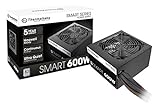
- Delivers 600W Continuous output at plus 40℃. Compliance with Intel ATX 12V 2. 31 and EPS 12V 2. 92 standards
- 80 PLUS Certified – 80% efficiency under typical load. Power good signal is 100-500 millisecond
- Supports (2) PCI-E 6 plus 2pin Connectors. Active (PFC) Power Factor Correction, MTBF: 100, 000 hours
- Industry Grade Protections: (OPP) Over Power Protection, (OVP) Over Voltage Protection, (SCP) Short Circuit Protection
- Hold up time is 16 millisecond minimum within 60 percent load. Input frequency range 50 - 60 in Hz
There is no comparable market-wide PSU failure-rate dataset in the evidence cited here. Warranty length, certification, and anecdotes do not establish a statistically proven lifespan or justify ranking brands by failure rate.
What do 80 PLUS and other certifications tell you?
80 PLUS concerns efficiency at defined operating conditions. It does not, on its own, establish electrical quality, safety, noise, component quality, or long-term reliability. MSI specifically cautions against treating efficiency certification as a complete performance assessment.
Rank #4
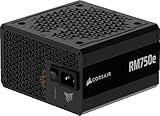
- Fully Modular PSU: Reliable and efficient, low-noise power supply with fully modular cabling, so you only have to connect the cables your system build needs.
- Intel ATX 3.1 Certified: Compliant with the ATX 3.1 power standard, supporting PCIe 5.1 platform withstands 2x transient power excursions from the GPU.
- Keeps Quiet: A 120mm rifle bearing fan with a specially calculated fan curve keeps fan noise down, even when operating at full load.
- 105°C-Rated Capacitors: Delivers steady, reliable power and dependable electrical performance.
- Modern Standby Compatible: Extremely fast wake-from-sleep times and better low-load efficiency.
Cybenetics runs separate voluntary programs: ETA for efficiency, LAMBDA for noise, and SAFE for safety and correct operation. These address different attributes, so compare the relevant results rather than treating one badge as a complete quality grade. A Gold or higher efficiency rating can be a sensible target, but not at the expense of correct sizing or sound model-level evidence.
Will the PSU fit your case and make installation manageable?
Check the PSU form factor and physical dimensions against the case specifications. Also confirm there is room for the PSU’s cables and that the graphics card has adequate clearance. A unit that fits the mounting standard may still make cable routing difficult in a compact case.
Best Value

- Delivers 500 Watt Continuous output at plus 40 degree. Compliance with Intel ATX 12 Volt 2.31 and EPS 12V 2.92 standards
- 80 PLUS Certified, 80 percentage efficiency under typical load
- Supports (2) PCI E 6plus2pin Connectors. Active (PFC) Power Factor Correction, MTBF: 100,000 hours
- Industry Grade Protections: (OPP) Over Power Protection, (OVP) Over Voltage Protection, (SCP) Short Circuit Protection
- High Quality Components
Fully modular units let you connect only the cables the build needs, which can make installation and cable management easier. Whatever the modularity, use only cables approved for the exact PSU model.
Independent reader supportYour contribution helps us test, update, and keep practical guides available for everyone.What should you compare before buying?
- Capacity: Compare the PSU’s continuous rating with the complete build and the graphics-card maker’s current system-power recommendation.
- Connector and standard: Confirm the GPU’s required native connector, cable, and ATX/PCIe compatibility.
- Model evidence: Check independent electrical and noise tests, plus the protection features specified for the exact PSU.
- Warranty and support: Verify coverage and service in your region.
- Efficiency and acoustics: Compare relevant efficiency and noise evidence; an efficiency badge is not a proxy for every quality measure.
- Fit and cabling: Confirm case dimensions, GPU clearance, cable set, and whether modularity would help your installation.
As one example rather than a universal recommendation, MSI identifies its MAG A750GLS PCIE5 as a 750W model with 80 PLUS Gold and a native 12V-2×6 cable, and presents it for RTX 5060-class systems. Whether that unit suits a particular PC depends on the full component list and the current GPU guidance.
Quick Recap
Product prices and availability are accurate as of the date/time indicated and are subject to change. Any price and availability information displayed on Amazon at the time of purchase will apply.

