
Do these 3 things before closing this tab:
1Repair Windows errors before they cause bigger problems2Scan for outdated or missing drivers - takes under a minute3Clear out junk files and repair common Windows errorsChoose a powered paraglider with a qualified instructor—not by picking a popular model or the most powerful engine. First identify the wing’s correct weight range for your planned powered setup, then match the motor and launch method to your weight, takeoff location, physical needs, budget, and local rules. A powered paraglider pairs a paraglider wing with a harness-mounted engine and propeller; some setups are foot-launched, while trikes or quads use wheels. There is no evidence-backed, universally best beginner model.
Start with instruction before buying a complete setup
Find a qualified local instructor or school before choosing equipment. Training helps you assess the demands of launching and landing, understand weather and airspace, and avoid buying a wing or motor that does not suit your experience or intended setup. The United States Powered Paragliding Association (USPPA) recommends quality training for safety.


Ask a prospective school for its syllabus and how it covers:
- Weather, meteorology, and forecasting
- Airspace and the rules that apply where you plan to fly
- Aerodynamics, wind, and ground handling
- Basic motor maintenance
- Landings with the engine off, so you practise managing a landing without power
Ask why the instructor recommends particular equipment, what gear the school uses, and whether it offers a simulator, towing, or tandem familiarization. If possible, speak with former students. Treat a claim that one brand is the only suitable choice with caution, especially if the seller also benefits from the sale. USPPA says industry experts suggest five to eight full training days, but that is not a universal duration or a guarantee of readiness. USPPA’s training and equipment guidance is a useful starting point.
What’s actually slowing this PC down?
Pick the symptom - the matching free tool is one click away.
#1 Best Overall
Training requirements are jurisdiction-specific. USPPA describes the U.S. context: it says Part 103 does not require a license, medical certificate, registration, or training, while recommending instruction for safety. That does not establish the rules for other countries, commercial operations, particular sites, or airspace. Confirm current requirements with the responsible aviation authority and a local instructor before flying.
Choose a beginner-suitable wing in the right weight range
Make suitability for a beginner’s skill the first filter; then confirm the manufacturer’s recommended weight range for the exact wing and powered configuration you intend to fly. Do not assume that similarly named free-flight and paramotor wings have the same range or handling.
Rank #2
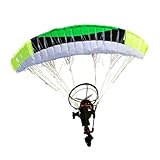
- Lightweight & Agile: Crafted from advanced nylon fabric, this 2.4G RC paraglider with 1.8m wingspan ensures effortless handling and smooth maneuverability, making it ideal for beginners and experienced pilots alike
- Stable & Safe Flight: Equipped with a cutting-edge stability system, this high-altitude stunt flight paraglider maintains steady control even in light winds, ensuring safe and confident flying experiences
- Extended 30-Minute Flight: Powered by an optimized motor and high-capacity power, this foldable canopy RC paraglider delivers up to 30 minutes of continuous flight, maximizing your outdoor fun
- Portable & Travel-Friendly: The clever foldable canopy design allows for compact storage and easy transport, making it the perfect companion for park outings, beach trips, and mountain adventures
- Multi-Channel & Beginner-Friendly: Featuring 2.4GHz anti-interference technology, multiple pilots can fly simultaneously. Included tutorial videos help newcomers quickly master stunt flying techniques with ease
Ask the instructor and manufacturer what the published weight measure includes. For the exact model, confirm whether the stated range is pilot-only or includes the motor and other equipment, and how it applies to your planned setup. USPPA advises beginners to use a beginner-appropriate wing within its manufacturer-recommended range and says beginner or intermediate wings are a better starting point than expert wings.
Brand descriptions are not independent comparisons. For example, the APCO-associated buying guide describes its F5 as beginner-to-intermediate and its F7 as beginner-focused, with model-specific sizing and launch or hook-in considerations. Treat those as manufacturer positioning, not a cross-brand test or a recommendation for every pilot. Check current specifications, suitability, certification or approval, and weight ranges with the manufacturer before purchasing. APCO’s guide to buying a paramotor wing covers its own product line.
Rank #3

- Attention: PNP Kit of Package Only No battery, No Receiver No Remote Controller !! 1-Battery: suggested to use 1s 380mah) 2-Remote Controller: No Special Requirements,labeled “multi-protocol compatible more well, 3-Receiver: Recommended Compact & Lightweight,with support for two channels: throttle and steering
- 81cm Paraglider PNP kit Suitable for beginners (Propeller color and paraglider canopy storage bag color will be send at random)
- Spacing: 9 units, 4.2 aspect ratio, 6.0 glide ratio
- Material: 30D nylon umbrella cloth, one-sided anti-tear coating
- Tile area: 0.16 square
Match motor power to your weight, location, and setup
Ask the instructor to match the engine to your weight, total setup, takeoff altitude, and intended launch style. USPPA identifies pilot weight and takeoff altitude as relevant and cautions that a stronger engine also adds weight and torque to manage. More power is not automatically a better beginner choice, and no single thrust figure is established for all pilots and configurations.
Before committing to a motor, ask about local access to service and spare parts, maintenance intervals, fuel requirements, and who can inspect or repair it. Confirm the answers against the exact manufacturer’s instructions; an engine that is difficult to support locally can make ownership less practical.
Rank #4

- Interference-free 2.4g control: Equipped with advanced 2.4G multi-channel RC technology, this paraglider ensures precise and responsive maneuvering without signal lag. The anti-interference system allows multiple pilots to fly simultaneously, making it perfect for competitive group sessions and exhilarating aerial stunts
- Two size options for every pilot: Choose between the 100cm compact wingspan for enhanced agility and fast stunts, or the 128cm large wingspan for superior stability and smoother gliding. Whether you are a beginner or a pro, you can find the perfect size to match your flying style and skill level
- Extended 30-minute flight sessions: Powered by an optimized energy system and high-performance battery, this model delivers up to 30 minutes of continuous flying fun per charge. Spend more time mastering high-altitude maneuvers and less time waiting on the ground for recharging
- Durable nylon & high-visibility design: Crafted from premium, high-tenacity nylon fabric with a reinforced crash-resistant frame. The vibrant Bright Yellow canopy provides superior visibility against the sky, making it much easier to track and retrieve compared to competitors' random-colored models
- Ready-to-fly (rtf) & portable: This complete package is ready to take off right out of the box with no complex assembly required. The thoughtfully designed foldable wings allow for easy transport in a backpack, making it the ideal outdoor companion for trips to parks, beaches, or open fields
Decide whether foot launch or wheels fit you
With a foot-launched setup, you run while carrying the engine on your back. A trike or quad uses wheels and may suit some physical abilities better, but it is a different configuration—not a guarantee of an easier or suitable launch at every site or in every condition. Ask a school to let you assess the equipment and realistic launch demands before choosing.
Budget for training, equipment, and ongoing ownership
USPPA publishes the following U.S.-context example estimates on its undated page, accessed in 2026. They are association estimates, not a 2026 market survey or current retailer quotes:
Quick wins for a faster PC:
Fix the driver behind crashes, sound loss and screen glitchesFind Drivers →Repair Windows errors before they cause bigger problemsFix Now →Scan for outdated or missing drivers - takes under a minuteDriver Scan →Best Value
| Item | USPPA example estimate | How to use it |
|---|---|---|
| Training | $1,500–$3,500 | Use as a planning reference; ask schools for current, itemized quotes. |
| New motor-and-wing gear | $8,000–$12,000 | Confirm exactly what a seller’s package includes. |
| Used gear | $6,000–$9,000 | Get an experienced inspection and review service history before purchase. |
These figures do not establish your full outlay. Include safety equipment such as a helmet, reserve parachute, gloves, and radio, as well as fuel and maintenance. USPPA also gives examples for some of these items and recurring costs, but those figures are not a current price list; request current quotes for your location and equipment. The available guidance does not establish a universal used-gear inspection interval or quantify used-equipment risk.
Independent reader supportYour contribution helps us test, update, and keep practical guides available for everyone.Include safety equipment, care, and local operating rules
USPPA calls a reserve parachute highly recommended and emphasizes propeller awareness, safe site and landing choices, sound weather decisions, and maintenance in line with the manufacturer’s instructions. It also warns against poor weather, obstructed sites, low flying, and violations of applicable rules or airspace. These are association recommendations, not a guarantee of safety or a substitute for instruction.
Rules depend on where and how you fly. The Ladakh Department of Tourism’s 2024 guidance concerns para-motoring activity in that jurisdiction. For covered commercial activity there, it calls for equipment and maintenance logs, servicing to manufacturer specifications, and annual wing inspections for porosity and line lengths, among other operator requirements. Those provisions should not be treated as worldwide law. Check current official rules for your location and activity. Ladakh’s 2024 para-motoring guidelines apply to their stated jurisdiction and scope.
Use a consistent checklist to compare options
Compare specific setups with your instructor rather than trying to rank brands in isolation. Ask for clear answers to these questions:
The Tool Desk
Outbyte Driver Updater FREEFix the driver behind crashes, sound loss and screen glitchesFind Drivers →Outbyte PC Repair FREEClear out junk files and repair common Windows errorsFree Scan →- Is the wing appropriate for a beginner with my experience?
- Does its manufacturer-confirmed weight range fit my intended powered configuration?
- Is the motor adequate for my weight and takeoff altitude without adding unnecessary weight and torque?
- Does the launch method suit my physical needs and the sites where I expect to train?
- Can I get parts, maintenance, and knowledgeable service locally?
- What will training, the complete setup, safety equipment, fuel, and maintenance cost?
- Which local rules, airspace limits, site requirements, or commercial-operation rules apply?
Ask the instructor to explain the tradeoffs and disclose any sales relationship. The available guidance does not support a single best brand or model, and manufacturer descriptions should not be mistaken for independent comparative testing. For the sport’s broader description, see the FAI’s paramotors overview.
Quick Recap
Product prices and availability are accurate as of the date/time indicated and are subject to change. Any price and availability information displayed on Amazon at the time of purchase will apply.

