
Choose a local AI model by matching it to your task first, then check whether its actual quantized file, context, and runtime fit the memory your PC can use. Finally, test it on your own prompts: model size alone does not tell you how capable or responsive it will be.
Start with the work you want the model to do
Make a shortlist around your main task—such as coding, general chat, reasoning, or asking questions about documents. Different model families are tuned for different work, so a smaller task-focused model may suit you better than a larger general-purpose one. There is no universal winner: test candidates on representative prompts from your own workload, and check current model cards for their intended use and limitations. Local LLM Team’s use-case guide discusses task-based selection.
If you need image or other multimodal input, verify that the specific model and your chosen runtime support it; do not assume a text model can handle those inputs just because it runs locally.
Check the real memory requirement, not just the parameter count
Parameter counts such as 7B or 70B describe model scale, not the full amount of memory needed to run it. Quantization reduces the space used by model weights, but the context’s key-value (KV) cache and runtime overhead also take memory. The exact requirement varies by model architecture, quantization, context length, and runtime. Start with the actual quantized file and compatibility information for the model you intend to run, then check how much GPU VRAM or system RAM is actually available on your PC.
Recommended Free Tools
#1 Best Overall

- EVOLUTION AMD RYZEN AI MAX+ 395 MINI PC - GMKtec EVO-X2 is the next evolution in AI mini PC Ryzen Strix Halo series. Thanks to AMD Simultaneous Multithreading (SMT) the core-count is effectively doubled, to 32 threads. Ryzen AI Max+ 395 has 64 MB of L3 cache and can boost up to 5.1 GHz, depending on the workload. The Ryzen AI Max+ 395 is currently rated as the "most powerful x86 APU" on the market for AI computing.
- AI NPU with XDNA 2 ARCHITECTURE - Powered by 16 “Zen 5” CPU cores, 50+ peak AI TOPS XDNA 2 NPU and a truly massive integrated GPU driven by 40 AMD RDNA 3.5 CUs, the Ryzen AI MAX+ 395 is a transformative upgrade and delivers a significant performance boost over the competition. The Ryzen AI Max+ 395 excels in consumer AI workloads like the llama.cpp-powered application: LM Studio. Shaping up to be the must-have app for client LLM workloads, LM Studio allows users to locally run the latest language model without any technical knowledge required and unleash their creativity and productivity.
- AMD RADEON 8090S iGPU GAMING PC - The AMD Radeon RX 8060S offers all 40 CUs with up to 2.9 GHz graphics clock and uses the new RDNA 3.5 architecture. The powerful iGPU is positioned between an RTX 4060 and 4070 laptop GPU and therefore enables gaming in FHD at maximum details in most demanding games. The 8060S can also utilize the full 128GB pool, which is perfect for running LLMs such as Deepseek 70B Q8, which runs comfortably on this machine.
- EIGHT CHANNEL LPDDR5X - LPDDR5X is a new ground breaking memory small form factor installed on-board. With blazing speeds up to to 8000MT/s, it runs 1.5x faster than the DDR5 SODIMMs; 90% better performance over DDR5 SODIMMs in video conferencing and photo editing; 30% better performance in productivity apps; 12% better performance in digital content workloads.
- QUAD SCREEN 8K DISPLAY SUPPORT - EVO-X2 AI Mini PC support 4-screen 4K/8K output via HDMI 2.1 (8K@60Hz), DisplayPort 1.4 (4K@60Hz), and dual USB 4 40Gbps Transfer speed (supporting PD3.0/DP1.4/DATA). Ideal for gaming, video editing, and multitasking, it provides expansive and crisp multi-display support.
The Hugging Face Skills GGUF Quantization Guide gives these illustrative figures, accessed in 2026. They are guide estimates, not guarantees for every model or setup:
| Example model and quantization | Model file size | RAM needed in the guide |
|---|---|---|
| 7B Q4_K_M | 4.1 GB | 7 GB |
| 7B Q8_0 | 7.0 GB | 11 GB |
| 13B Q4_K_M | 7.9 GB | 12 GB |
| 70B Q4_K_M | 41 GB | 48 GB |
The file is only part of the budget. Longer context usually means a larger KV cache, and the runtime needs overhead as well. A Hugging Face dataset’s memory documentation describes its estimates as including weights, KV cache, and overhead, and notes that usable memory can differ across devices even when their nominal installed memory matches. Check free, usable memory on your own machine rather than relying only on a GPU or PC’s advertised capacity.
Use model-size profiles as a starting point, not a compatibility promise
Mozilla’s LocalScore page, accessed in 2026, uses example Q4_K_M profiles of 1B, 8B, and 14B parameters with approximate VRAM figures of 2 GB, 6 GB, and 10 GB respectively. These are benchmark profiles, not minimum requirements for every model in those size classes. Architecture, context, runtime, and other memory use affect whether a specific model will fit. See Mozilla LocalScore for the profiles and benchmark details.
Rank #2

- Built for Local AI Development: AMD Ryzen AI Halo is designed for local AI development and inference, featuring 128GB unified memory and support for up to 200B parameter models to build and run intensive AI workloads locally.
- 128GB Unified Memory: Features 128GB LPDDR5x unified memory at 8000 MT/s with 256 GB/s memory bandwidth, providing a shared memory pool across the CPU, GPU, and NPU to support larger AI models.
- AMD Ryzen AI Max+ 395 Processor: Features 16 cores, 32 threads, and Zen 5 architecture, paired with AMD Radeon 8060S integrated graphics featuring 40 RDNA 3.5 compute units and an AMD XDNA 2 NPU with up to 50 TOPS.
- Linux AI Developer Platform: Purpose-built for Linux-based AI development with full AMD ROCm software support and preloaded tools, models, and workflows optimized for local AI development.
- Compact, Connected Design: Includes a 2TB M.2 SSD, 10GbE LAN, Wi-Fi 7, Bluetooth 5.4, USB-C connectivity, and HDMI 2.1b.
Choose a quantization that fits without undermining the task
Lower-memory quantizations can make a model fit on your PC, but the quantization choice is a quality-versus-memory trade-off. The Hugging Face guide recommends Q5_K_M or Q6_K for code generation, Q6_K or Q8_0 for technical or medical use, and Q4_K_M for creative writing. Treat these as that guide’s recommendations, not as independently tested guarantees; compare the available quantizations on your own prompts and quality bar.
If a candidate barely exceeds available memory, try a smaller model, a lower-memory quantization, or a shorter context before changing hardware. Each may involve a trade-off: a smaller or more compressed model may perform less well on some tasks, while shortening context limits how much material it can consider at once.
Compare speed using three separate measurements
A single tokens-per-second figure cannot describe the whole experience. Mozilla LocalScore distinguishes these measures:
Rank #3

- EVOLUTION AMD RYZEN AI MAX+ 395 MINI PC - GMKtec EVO-X2 is the next evolution in AI mini PC Ryzen Strix Halo series. Thanks to AMD Simultaneous Multithreading (SMT) the core-count is effectively doubled, to 32 threads. Ryzen AI Max+ 395 has 64 MB of L3 cache and can boost up to 5.1 GHz, depending on the workload. The Ryzen AI Max+ 395 is currently rated as the "most powerful x86 APU" on the market for AI computing.
- AI NPU with XDNA 2 ARCHITECTURE - Powered by 16 “Zen 5” CPU cores, 50+ peak AI TOPS XDNA 2 NPU and a truly massive integrated GPU driven by 40 AMD RDNA 3.5 CUs, the Ryzen AI MAX+ 395 is a transformative upgrade and delivers a significant performance boost over the competition. The Ryzen AI Max+ 395 excels in consumer AI workloads like the llama.cpp-powered application: LM Studio. Shaping up to be the must-have app for client LLM workloads, LM Studio allows users to locally run the latest language model without any technical knowledge required and unleash their creativity and productivity.
- AMD RADEON 8090S iGPU GAMING PC - The AMD Radeon RX 8060S offers all 40 CUs with up to 2.9 GHz graphics clock and uses the new RDNA 3.5 architecture. The powerful iGPU is positioned between an RTX 4060 and 4070 laptop GPU and therefore enables gaming in FHD at maximum details in most demanding games. The 8060S can also utilize the full 64GB pool, which is perfect for running LLMs such as Deepseek 32B, which runs comfortably on this machine.
- EIGHT CHANNEL LPDDR5X - LPDDR5X is a new ground breaking memory small form factor installed on-board. With blazing speeds up to to 8000MT/s, it runs 1.5x faster than the DDR5 SODIMMs; 90% better performance over DDR5 SODIMMs in video conferencing and photo editing; 30% better performance in productivity apps; 4% better performance in digital content workloads.
- QUAD SCREEN 8K DISPLAY SUPPORT - EVO-X2 AI Mini PC support 4-screen 4K/8K output via HDMI 2.1 (8K@60Hz), DisplayPort 1.4 (4K@60Hz), and dual USB 4 40Gbps Transfer speed (supporting PD3.0/DP1.4/DATA). Ideal for gaming, video editing, and multitasking, it provides expansive and crisp multi-display support.
- Prompt processing speed: how quickly the system processes input text, measured in tokens per second.
- Generation speed: how quickly it produces output, measured in tokens per second.
- Time to first token: the delay before output begins, measured in milliseconds.
Test with realistic prompt and output lengths: a model that responds quickly to a short prompt may feel quite different when asked to read a long document. Published numbers are useful only when the hardware, runtime, context, and workload are comparable.
Memory spillover can change speed sharply. Windows Central reported about 70 tokens per second for DeepSeek R1 14B on an RTX 5080 with 16 GB of VRAM at up to 16k context, then about 19 tokens per second when a longer context triggered use of system memory and the CPU. That is one reported test setup, not a speed forecast for other PCs. Windows Central’s Ollama example provides its setup and context.
What’s actually slowing this PC down?
Pick the symptom - the matching free tool is one click away.
Include the runtime in your comparison
The same model and hardware can perform differently with different inference runtimes and configurations. A 2025 preprint, “Production-Grade Local LLM Inference on Apple Silicon” by Rajesh et al., compares MLX, MLC-LLM, Ollama, llama.cpp, and PyTorch MPS on an M2 Ultra. Its results show why runtime matters; they do not establish a universal ranking for Windows PCs or other Apple hardware.
Rank #4
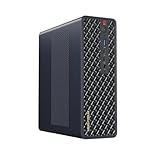
- 【Leading AI Mini Workstation】MINISFORUM AI MS-S1 Max Workstation comes with AMD Ryzen AI Max+ 395 processor, which uses AMD's latest generation Zen 5 architecture. It has 16 Cores and 32 Threads, the boost clock is up to 5.1GHz. The overall processor performance is up to 126 TOPS, and the NPU performance reaches up to 50 TOPS. AMD Ryzen AI enables improved productivity, advanced collaboration, and improved efficiency.
- 【AMD Radeon 8060S Graphics 】The MS-S1 Max Mini PC equipped with AMD Radeon 8060S Graphics which built on the new generation of RDNA 3.5 architecture AMD graphics, it brings ultra-high frame rate experiences and advanced content creation features anywhere and delivers staggering performance. It can handle all your computing and multimedia tasks efficiently.
- 【Five 8K Video Output】This MS-S1 Max Workstation comes with five video outputs, 1x HDMI (8K@60Hz), 2x USB4(40Gbps,Alt DP2.0,PD out 15W) and 2x USB4 V2(80Gbps,Alt DP2.0,PD out 15W) Outputs, which support multiple monitors display at the same time and provide a larger and wider filed of view and improve your work efficiency. It is used in fields that require high-performance computing and graphics processing, including digital signage and securities trading, as well as work that uses CAD, such as engineering design, scientific calculations, animation production, and post-production for movies and television
- 【 Fast and Stable Wire & Wireless Speed】It comes with Two 10G Lan Ports for wired connection and and Wi-Fi 7 / BT5.4 for wireless connection, which increased the network speed greatly and expand its functions and improved performance of computer to a large extent and allows you to use more networks such as software routers (OpenWRT / DD-WRT / Tomato etc.), firewalls, NAT, network isolation etc.
- 【Large Storage & Flexible Expandability】This Workstation equipped with 64GB LPDDR5-8000MHz + 2TB M.2 2280 PCIe4.0 SSD. There is another PCIe4.0 SSD slot available for up to 8TB, these SSD slots are compatible with RAID0 and RAID1, you can store movies, videos, photos, important files easily. What’s more, it also comes with 1x standard PCIex16 slot(PCIe4.0x4) inside.
For a useful comparison, record the runtime and version, model file and quantization, context length, and hardware alongside each speed result. Then test finalists on the PC you plan to use.
Decide whether your current PC is enough before considering an upgrade
First check whether a suitable model and context fit the hardware you already own. If they do not, try a smaller candidate, lower-memory quantization, or shorter context and assess the resulting quality and responsiveness. Consider a GPU with more VRAM only if the model and context you actually need still do not fit or run acceptably after those adjustments. No single VRAM tier is a universal requirement for local AI.
That choice depends on your PC specifications, workload, desired context, tolerance for latency, and quality bar. Model catalogs, quantized files, runtime support, and prices change, so verify the current model repository and runtime compatibility information before settling on a setup.
Do these 3 things before closing this tab:
1Repair Windows errors before they cause bigger problems2Scan for outdated or missing drivers - takes under a minute3Clear out junk files and repair common Windows errorsQuick Recap
Product prices and availability are accurate as of the date/time indicated and are subject to change. Any price and availability information displayed on Amazon at the time of purchase will apply.

