
Choose a school laptop by checking your school and course software requirements first. If there are no special requirements, a Windows or Mac laptop with a modern midrange processor, 16 GB of RAM and a 256–512 GB SSD is a flexible starting point. A Chromebook can work well for browser-based classes, but it may not run the software some courses require.
Check course compatibility before comparing specs
Ask your school, department or instructor which operating systems and applications your courses require. Check whether the software needs Windows or macOS, a specific processor architecture, dedicated graphics, or a minimum amount of memory and storage. A laptop that meets general recommendations can still be the wrong choice if it cannot run a required application.
Requirements vary by institution. Ramapo College of New Jersey, for example, recommends Windows for some business courses and says other students may use Windows or Mac; it does not currently recommend Chromebooks. Wharton Computing says some applications in its environment do not work with Chromebooks or ARM laptops. Bob Jones University’s 2026–27 requirements do not accept Chromebooks or other devices unable to run Windows or Mac.
Use your institution’s current guidance as the deciding source. If a department specifies a processor family or operating system, follow that specification rather than relying on a general buying guide.
What’s actually slowing this PC down?
Pick the symptom - the matching free tool is one click away.
#1 Best Overall

- SLIM. LIGHTWEIGHT. READY TO GO: The all-new slim design is perfect for busy lives on the go.
- SKILLFULLY DESIGNED. MILITARY TOUGH: Built with premium craftsmanship to withstand the occasional drop or ding.
- ALL-DAY, ALL-IN-ONE CHARGING: Power through your school day – and beyond – with a long-lasting 12-hour battery.¹
- 3X FASTER THAN THE PREVIOUS GENERATION OF WIFI: Crush your schoolwork in record time with Wi-Fi that’s three times faster than the previous generation of Wi-Fi.
- YOUR PHONE AND CHROMEBOOK WORK BETTER TOGETHER: Easily transfer files between devices, and control your phone right from your Chromebook.
How much RAM does a school laptop need?
For light browsing, email and documents, 8 GB can be enough. For a laptop you expect to keep through several years of school, 16 GB is a practical target: it gives more room for many browser tabs, video calls and productivity applications running together.
Recommendations reflect different workloads. Microsoft’s US student buying guide says 8 GB is fine for light browsing and most tasks and recommends 8–16 GB or more. The University of Hertfordshire lists at least 8 GB for most students and 16 GB for specialist software. Ramapo lists 16 GB as its minimum for Windows laptops and recommends 16 GB or more for Mac models. For intensive work, Wharton Computing recommends 32 GB for resource-heavy applications and datasets. These are institution- and workload-specific recommendations, not a universal minimum.
How much storage is enough?
Choose an SSD rather than a hard drive for local storage. A 256 GB SSD is a reasonable baseline if you mainly use school apps and keep larger files in cloud storage. A 512 GB SSD leaves more room for installed software, downloaded materials and projects without frequent cleanup. For large media files, datasets or design projects, check course guidance and consider 1 TB or more if the work will live on the laptop.
Rank #2

- 15.6” NANOEDGE DISPLAY — Super slim bezel design with a smooth 60Hz refresh rate, vibrant 45% NTSC color gamut and 250-nit sustained brightness
- AMD Ryzen 5 7520U PROCESSOR — Designed for thin laptops, this processor gives you fast performance for browsing and light gaming with longer battery life with integrated AMD Radeon Graphics
- 8GB MEMORY + 512GB STORAGE — Faster memory that smoothly runs multiple applications at once with supersized storage for files, documents and more
- WI-FI 5 AND BLUETOOTH 5.1 — Seamlessly and quickly connect your devices
- SOUND BY SONICMASTER — Crisp, multi-dimensional sound with built-in speakers and an array microphone
The published recommendations vary: Hertfordshire suggests at least 256 GB, Ramapo recommends 512 GB for its listed configurations, and Wharton Computing recommends a 1 TB SSD in its environment. Microsoft’s student guide lists 256 GB to 1 TB or more. Cloud storage can reduce the amount you need locally, but confirm what your school provides and whether you can access it when offline.
Is a Chromebook good enough for school?
It can be a good fit when coursework is mostly browser-based—writing, email, web research and online learning—and the school’s applications work in ChromeOS. It is a risky choice if you need specialist desktop software or your institution requires Windows or macOS. Check course and IT requirements before buying; the word “school” covers very different workloads, from basic document work to engineering and media production.
Also check whether required apps need an internet connection, whether files must be available offline, and whether your school supports the device for exams, printing or campus services.
Rank #3

- AN AMAZING MAC AT A SURPRISING PRICE — With an incredibly portable and durable aluminum design, up to 16 hours of battery life,* and the A18 Pro chip, MacBook Neo is ready to go wherever school takes you.
- FOUR STUNNING COLORS. ONE DURABLE DESIGN — Choose from four beautiful colors — Silver, Blush, Citrus, or Indigo — each with a color-coordinated keyboard. And MacBook Neo is made with a durable recycled aluminum enclosure that helps it reach 60 percent recycled content by weight — the most ever in any Apple product.*
- FLY THROUGH EVERYDAY ASSIGNMENTS — Whether you’re cramming for finals, using Apple Intelligence* to summarize class notes, creating presentations, or even playing the latest Apple Arcade game,* MacBook Neo delivers the performance and AI capabilities you need to get things done.
- UP TO 16 HOURS OF BATTERY LIFE — MacBook Neo delivers all day battery life, so you can power through from early morning classes to late night study sessions without worrying about plugging in.
- A VIBRANT 13-INCH DISPLAY* — The gorgeous Liquid Retina display on MacBook Neo supports 1 billion colors, so photos and videos pop and text is crisp for easy reading.
Should you choose Windows or Mac?
Neither platform is automatically better for every student. Choose the one that runs your required software and fits your institution’s support rules. If both are supported, compare the available configurations, keyboard and trackpad comfort, ports, battery expectations and total cost. For a major that relies on specialized applications, ask the department whether a particular operating system or processor architecture is required before settling on a model.
Processor labels alone do not establish compatibility. In particular, Wharton Computing warns that Snapdragon laptops are incompatible with many of its applications. That warning applies to its environment; check the requirements for your own courses rather than assuming every ARM-based laptop has the same compatibility limits.
Quick wins for a faster PC:
Clear out junk files and repair common Windows errorsFree Scan →Scan for outdated or missing drivers - takes under a minuteDriver Scan →Compare the spec targets by workload
| Use case | Platform | RAM | Storage |
|---|---|---|---|
| Browser, documents and email | Chromebook only if school and apps support it; otherwise Windows or Mac | 8 GB can cover light use | 256 GB SSD can work with cloud storage |
| Many tabs, video calls and common productivity apps | Windows or Mac, subject to course compatibility | 16 GB is a practical target | 512 GB SSD offers more room for apps and projects |
| Engineering, design, programming, video editing or large datasets | Use the department’s specified platform and processor architecture | 32 GB or the department’s stated amount | 1 TB or more if projects and media are large |
These are workload-based comparison points, not universal prescriptions. An institution’s current requirements take priority.
Rank #4
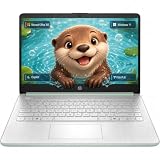
- Efficient Intel Processor N150 delivers reliable performance for everyday computing tasks including web browsing, document editing, video streaming, and multitasking. 4GB DDR4 RAM ensures smooth operation when running multiple applications simultaneously. Perfect for students, home users, and professionals who need dependable performance for productivity work, online learning, video conferencing, and entertainment without lag or slowdowns.
- 128GB UFS storage provides fast boot times and quick application loading while offering ample space for documents, photos, videos, and essential software. Includes one-year subscription to Microsoft Office 365 Personal with Word, Excel, PowerPoint, Outlook, and 1TB OneDrive cloud storage—everything you need to create professional documents, spreadsheets, presentations, and manage email right out of the box.
- 14" HD (1366 x 768) anti-glare display delivers clear, comfortable viewing for extended work sessions with reduced eye strain. Narrow bezels maximize screen real estate for immersive content consumption. Integrated Intel UHD Graphics handles everyday visual tasks, HD video playback, and light photo editing. Ideal screen size balances portability with productivity—large enough for comfortable multitasking yet compact enough to carry anywhere.
- Comprehensive connectivity includes Wi-Fi 6 (802.11ax) for faster wireless speeds and improved network efficiency, Bluetooth 5.0 for wireless peripherals, USB-C port for modern accessories and fast data transfer, USB 3.2 ports, HDMI output for external displays or projectors, and 3.5mm audio jack. HD webcam with integrated microphone enables crystal-clear video calls for remote work, online classes, and staying connected with family and friends.
- Windows 11 Home operating system provides intuitive interface with enhanced productivity features, improved security, and seamless integration with Microsoft services. Full-size keyboard with numeric keypad for efficient data entry. Lightweight and portable design makes it easy to work from anywhere—home, office, classroom, or coffee shop. Long battery life supports all-day productivity. Backed by HP’s quality and reliability with customer support available.
Check the everyday features you will use
- Battery: Compare independent details only when available, and treat manufacturer runtime claims as estimates. Microsoft notes that battery life varies with settings, usage and other factors.
- Weight and screen: A compact 13–14-inch laptop is easier to carry; a larger screen can be more comfortable for creative work but usually means carrying a larger device. Balance portability with usable workspace.
- Keyboard and touchpad: If possible, try them in person. You will use them for notes, essays and online work every day.
- Webcam, microphone and Wi-Fi: Check that they meet your school’s requirements for video calls and online classes. Bob Jones University, for example, specifies 802.11ac or newer Wi-Fi plus a webcam and microphone.
- Ports: Check whether you need connections for a monitor, projector, storage device or other course equipment, and whether adapters would be necessary.
Account for software, support and total cost
Before paying for bundled office software or cloud storage, check what your school provides. The University of Hertfordshire says most of its students receive Microsoft applications and OneDrive access through the university; that benefit is institution-specific, not guaranteed elsewhere. Some manufacturers offer education discounts, and Microsoft Education lists discounts on select devices and programs for eligible institutions. Confirm current eligibility and terms directly before relying on an offer.
Compare the full cost of the configuration that meets your requirements, not just the starting price. Consider warranty coverage and accidental-damage protection as optional costs; Wharton Computing recommends considering warranty coverage for repair or replacement after an accident or technical problem. There is no dependable price range established here, so check current local prices and available student offers.
Quick Recap
A quick checklist before you buy
- Find your school, department and course laptop requirements.
- Confirm required operating system, applications and processor architecture.
- Match memory and storage to your workload; use 16 GB RAM and a 256–512 GB SSD as a general starting point only when your courses do not specify otherwise.
- Check portability, display, battery expectations, webcam, microphone, Wi-Fi and ports.
- Confirm what software, cloud storage, support and student pricing your school or vendor actually provides.
- Compare the exact configuration and its total cost before ordering.
Product prices and availability are accurate as of the date/time indicated and are subject to change. Any price and availability information displayed on Amazon at the time of purchase will apply.

