
Choose a CRM with built-in AI agents by starting with a specific workflow—not the word “agent.” Define what the software must do, check that it can use the right customer data and take only permitted actions, verify availability in your exact product edition, and trial it on representative records before comparing total cost. Vendor documentation describes capabilities, but it does not establish which CRM performs best or delivers the greatest return for every business.
Start with the work you want the agent to do
Write a short workflow specification before looking at product demos. An agent that can update a CRM record or trigger a configured workflow is different from an assistant that only summarizes information or drafts text. Vendors use these terms in different ways, so assess the actual actions available in the product and edition you would buy.


- Trigger: What starts the work—a user request, a meeting, a new record, or another event?
- Inputs: What customer records, fields, emails, meetings, or knowledge sources does the agent need?
- Output: What should it produce, such as a summary, a draft, an updated field, or a workflow action?
- Allowed changes: Which records or fields may it read or write? Which actions must remain with a person?
- Success test: What would count as a correct and useful result for this workflow?
HubSpot’s Breeze Assistant agent-building guidance prompts users to consider the outcome, information the agent should use, and what it should do with the result. Those are useful questions regardless of which CRM you are evaluating.
Check what each shortlisted product can actually do
Ask vendors to distinguish actions that are built in from those that require configuration, extra permissions, licenses, or connected tools. “Can use AI” is not enough: you need to know whether the product can read the relevant context, draft an answer, change a CRM record, or initiate the next step.
Recommended Free Tools
#1 Best Overall
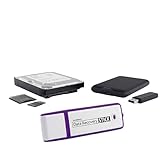
- The Data Recovery Stick requires no technical skills — simply plug it into your Windows computer, click Start, and the software automatically begins scanning and recovering lost files within minutes. Compatible with Windows Vista, 7, 8, 10, & 11, it's designed to be a reliable first step when accidental deletion occurs.
- Recover photos (JPG, BMP, PNG, TIFF), Microsoft Office documents (Word, Excel, PowerPoint, Publisher, Access), Open Office files, MP3 music files, PDFs, RTF documents, AutoCAD files, and HTML web pages. Whether it's personal memories or critical business files, the Data Recovery Stick covers the file types that matter most.
- Works with hard drives, USB drives, SD cards, memory sticks, and other common storage formats that use FAT or NTFS file systems — making it a single solution for hard drive recovery, USB drive recovery, SD card recovery, and more. Note: a media reader is required for micro SD cards and some mass storage devices.
- No Installation Required - The Data Recovery Stick runs entirely from the USB drive with no software installation on your computer — helping prevent new data from overwriting the files you're trying to recover. This also makes it ideal for use across multiple computers or in emergency situations where installation isn't practical.
- Use the Data Recovery Stick on as many computers as often as needed — simply clear the recovered data between uses to free up storage space. Software updates keep the tool compatible with newer systems and devices, backed by 25+ years of data software expertise from Paraben Consumer Software.
| Product or capability | What vendor documentation describes | What to verify for your workflow |
|---|---|---|
| Salesforce Agentforce | Salesforce describes CRM-native agents as operating with access to customer data, workflow permissions, and record-writing capabilities. Its Help documentation says Agentforce respects standard Salesforce access controls, while noting that some agent types or actions need specific licenses or permissions. | Confirm which agent type and actions your use case needs, which licenses and permissions apply, and what records the agent can change. |
| HubSpot Breeze agents | HubSpot documents configurable agents and agent actions. Creating or customizing agents requires Super Admin or agent-builder permissions; particular goals may need further permissions. | Confirm that the specific agent and actions are available in your HubSpot setup. The cited guidance does not provide a complete plan-by-plan entitlement comparison, so do not assume every agent feature is included in every plan. |
| Microsoft Sales agent and Copilot in Dynamics 365 Sales | Microsoft describes a Sales agent in Microsoft 365 Copilot that works across Microsoft 365 apps and supports Dynamics 365 Sales and Salesforce CRM. Copilot in Dynamics 365 Sales is built into that application and supports Dynamics 365 Sales only. Described Sales agent tasks include summarizing account and meeting information, grounding insights in customer data, drafting sales emails, capturing meeting takeaways, and updating CRM fields. | Identify which of the two experiences you mean, which CRM it must support, and which Microsoft 365 apps your team uses. Verify the specific actions and licenses required. |
These are vendor descriptions, not independent performance comparisons. A feature list can establish what a vendor says a product supports; it cannot show whether the feature will be accurate or useful with your data and process.
Trace the agent’s context and where it works
For the workflow you defined, list the records, fields, and interactions the agent must consult. Then ask whether that information is available to it at the right time and whether it can use external knowledge sources if the workflow requires them. A polished answer based on incomplete or stale context can still lead to a bad update or follow-up.
Also map where employees will interact with the agent. It may operate inside the CRM, in email or calendar tools, in chat, or across several applications. Microsoft’s product distinction is a useful example: its Sales agent in Microsoft 365 Copilot is described as working across Microsoft 365 apps and supporting Dynamics 365 Sales and Salesforce CRM, whereas Copilot in Dynamics 365 Sales is built into Dynamics and supports Dynamics 365 Sales only. Do not treat those offerings as interchangeable.
Rank #2
![MixPad Free Multitrack Recording Studio and Music Mixing Software [Download]](https://m.media-amazon.com/images/I/71ltIxIuz1L._SL160_.jpg)
- Create a mix using audio, music and voice tracks and recordings.
- Customize your tracks with amazing effects and helpful editing tools.
- Use tools like the Beat Maker and Midi Creator.
- Work efficiently by using Bookmarks and tools like Effect Chain, which allow you to apply multiple effects at a time
- Use one of the many other NCH multimedia applications that are integrated with MixPad.
Make permissions, review, and recovery part of the evaluation
Ask for a demonstration using the roles and access boundaries your staff actually have—not only an administrator account. Check whether the agent’s access follows user permissions, whether actions need separate authorization, and how an administrator can govern AI access and data sharing.
The Tool Desk
Outbyte PC Repair FREERepair Windows errors before they cause bigger problemsFix Now →Outbyte Driver Updater FREEFix the driver behind crashes, sound loss and screen glitchesFind Drivers →Salesforce says Agentforce respects access controls such as licenses, permissions, field-level security, and sharing settings, with some agent types or actions requiring additional licensing or permissions. HubSpot says administrators can configure AI feature access and shared data; agent creation requires Super Admin or agent-builder permissions, and some goals require extra permissions. Confirm how these controls apply to the exact configuration you are considering.
- Can a user limit the agent to particular records, fields, or actions?
- Can a person review a draft or proposed change before it is applied?
- Can administrators inspect what the agent did and correct a mistaken update?
- What happens if the agent lacks context, encounters conflicting information, or cannot complete an action?
- Can the workflow stop safely and hand the decision back to a person?
For consequential changes, evaluate the review and recovery path as carefully as the happy-path demonstration. A useful agent should fit the team’s controls, not require the team to bypass them.
Verify availability in your edition and environment
Ask the vendor to confirm availability for your geography, edition, tenant configuration, and required licenses. Establish whether each capability is generally available, in preview, or dependent on configuration, and whether an administrator must enable it. Microsoft’s Dynamics 365 AI capabilities overview warns that some AI features may not appear in every model-driven app or may need enabling; it labels the agent feed, which shows agent activity for human-agent collaboration, as preview. Check the current status of each feature you intend to rely on rather than assuming an overview applies uniformly across apps.
Get the confirmation in writing or in the relevant product documentation for your proposed setup. A feature shown in a demonstration may not be available in your tenant or included in the licenses you plan to purchase.
Trial a representative workflow before buying
Run a small, controlled trial with realistic records and the same permission boundaries you expect to use in production. Include ordinary cases and cases where relevant information is missing or ambiguous. Score outcomes against your success test rather than judging the agent by a fluent response.
- Specify the workflow: Record its trigger, needed inputs, desired result, and actions the agent may take.
- Prepare representative cases: Use records that reflect normal work as well as incomplete, conflicting, or edge-case information.
- Set the intended permissions: Test under the roles and access controls that will apply to users and administrators.
- Run the workflow: Check whether the output is supported by the available customer context and whether the agent takes only permitted actions.
- Inspect the outcome: Review drafts, field changes, workflow actions, and available activity records. Test what happens when you reject or correct a result.
- Compare with the current process: Assess usefulness, review effort, failure handling, and operational fit alongside license and usage costs.
This is a buyer’s evaluation method, not a claim that any product has passed an independent accuracy or return-on-investment test. Vendor materials reviewed here do not provide independent head-to-head performance evidence.
Independent reader supportYour contribution helps us test, update, and keep practical guides available for everyone.Calculate total cost for expected usage
Build a cost estimate around the workflow, not just a CRM seat price. Include the CRM plan, agent or AI entitlements, consumption charges, implementation, and any required adjacent product licenses. Model expected use and a higher-usage case so a consumption-based arrangement does not come as a surprise.
Salesforce’s Agentforce pricing page, accessed in 2026, lists several arrangements. It states that an Agentforce action consumes 20 Flex Credits and a Voice action consumes 30 Flex Credits; it lists Flex Credits at $500 per 100,000 credits, an Agentforce User License at $5 per user per month requiring Flex Credits, and certain add-ons at $125 per user per month. These are vendor-listed figures, not a comparable total-cost estimate across CRM vendors. Confirm current applicability, included entitlements, and contract terms with Salesforce before relying on them; the cost for a real deployment depends on the selected arrangement and usage.
Do these 3 things before closing this tab:
1Scan for outdated or missing drivers - takes under a minute2Repair Windows errors before they cause bigger problems3Fix the driver behind crashes, sound loss and screen glitchesBest Value
Ask each shortlisted vendor for a quote that names the required licenses and explains how usage is counted. Compare the same workflow and assumptions across vendors; the available product materials do not establish a comparable cross-vendor total cost.
Use a decision checklist to make the choice
- Is the intended workflow specific, measurable, and valuable enough to evaluate?
- Can the product access the necessary CRM objects, fields, interactions, and other context?
- Can it take the required actions, and are those actions configurable and permissioned appropriately?
- Does it work in the CRM and other applications your team already uses?
- Are the required features available in your edition, geography, and tenant, with preview status clearly understood?
- Can people review, audit, correct, and recover from agent actions?
- Does a representative trial show useful results under realistic records and roles?
- Does the full cost make sense under both expected and higher usage?
Choose the CRM-agent combination that demonstrates fit for your workflow, governance requirements, and budget. The “built-in AI agent” label alone is not evidence of accuracy, suitability, or return.
Quick Recap
Product prices and availability are accurate as of the date/time indicated and are subject to change. Any price and availability information displayed on Amazon at the time of purchase will apply.

