
To capture content that appears after a page first loads, add GetScreenshot’s Take Screenshot module to your Make scenario, set its Additional Wait Time in advanced settings, and choose an appropriate Wait Until condition. For an initial test on a slow page, the vendor recommends adding roughly 3,000–5,000 ms; enable scrolling first if the page lazy-loads images or sections.
Set up the GetScreenshot module in Make
-
In your Make scenario, add the GetScreenshot app’s Take Screenshot action. The app listing also includes Take Element Screenshot for a CSS-selected element, along with email-delivery and usage actions. See the GetScreenshot integration listing.
# Preview Product Price 1 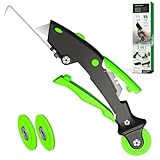
King&Charles Versatile Screen Roller Tool, 3pcs Different Roller+Hook+Trim $12.99 Buy on Amazon -
Create a GetScreenshot account and API key, then create a connection in the Make module using that key. The vendor guide says the integration requires a Hamilton plan or higher; check your account for current plan access because plan details can change. GetScreenshot’s Make guide.
-
Map the webpage URL into the module. Select full-page capture or set the viewport and output options to suit the destination and the content you need.
Recommended Free Tools
Special offer. See more information about Outbyte and uninstall instructions. Please review EULA and Privacy policy.#1 Best Overall
King&Charles Versatile Screen Roller Tool, 3pcs Different Roller+Hook+Trim- --- 𝐏𝐀𝐓𝐄𝐍𝐓 𝐀𝐏𝐏𝐋𝐈𝐄𝐃 𝐅𝐎𝐑---
- 🏡【𝐊𝐢𝐧𝐠&𝐂𝐡𝐚𝐫𝐥𝐞𝐬 𝐑&𝐃 𝐈𝐧𝐭𝐞𝐧𝐭𝐢𝐨𝐧】Versatile Screen Tool - combines the core functions of multi-size roller, hidden hooks, and replaceable blades, and designed this multifunctional screen tool. It solves the problems of traditional screen installation tools with single functions, lack of safety and adaptability. It truly realizes multiple uses of one tool, making screen replacement time-saving, labor-saving, and worry-free. One-time purchase can meet your installation or replacement needs.
- 🏡【𝟑 𝐒𝐢𝐳𝐞𝐬 𝐈𝐧𝐭𝐞𝐫𝐜𝐡𝐚𝐧𝐠𝐞𝐚𝐛𝐥𝐞 𝐑𝐨𝐥𝐥𝐞𝐫𝐬】Flexible Adaptation - In view of the differences in thickness of different window splines, we gift the roller into three specifications: Convex 0.13", Concave 0.13", and Concave 0.18", ensuring perfect matching with the mainstream rubber strip sizes on the market. Feature①: The roller is made of high-hardness plastic, which is strong and durable while avoiding the risk of traditional metal rollers scratching the screen mesh. Feature②: Metal bearing design - smoother rotation, even pressure without deviation. TIPS: you can use the provided Allen wrench to quickly disassemble and replace them.
- 🏡【𝐁𝐥𝐚𝐝𝐞 𝐅𝐮𝐧𝐜𝐭𝐢𝐨𝐧-𝐑𝐞𝐭𝐫𝐚𝐜𝐭𝐚𝐛𝐥𝐞&𝐒𝐭𝐨𝐫𝐚𝐠𝐞&𝐑𝐞𝐩𝐥𝐚𝐜𝐞𝐚𝐛𝐥𝐞】①Retractable-When in use, just hold button, blade will slow rollout, convenient trimming and cutting. Blade can be retracted to prevent Accident scratches. ②Blade has double locking device: it automatically locks to prevent retraction during work and is completely closed to prevent accidental touch when retracted. Ansure your safety. ③Replaceable - A separate button is provided for changing the blades. ④Blade is made of steel-sharp, durable and won't rust. ⑤Storage-Handle has built-in blade storage design to place complimentary blade.Extra equipped 2xreplacement blades- increase service life of tool.
- 🏡【𝐇𝐢𝐝𝐞𝐚𝐛𝐥𝐞 𝐑𝐞𝐦𝐨𝐯𝐚𝐥 𝐇𝐨𝐨𝐤】The hooks are sharp and can hook out the aged spline. The removal hook can be stored and hidden in the handle slot box. OPEN the box cover, take out the hook and insert it into the groove for use. can RETRACT after use to prevent the hook tip from scratching clothes or tool boxes. Hook made of Stainless steel material won't rust.
-
Open the module’s advanced settings. Set Additional Wait Time and select a suitable Wait Until condition. For a page whose content appears late, test with the vendor’s suggested 3,000–5,000 ms additional wait, then adjust based on the result.
-
Turn on Scroll Page First if images or sections load only as a visitor scrolls. Without scrolling, lazy-loaded content may not exist when the capture is taken.
-
Connect the screenshot output to the next module—for example, cloud storage, email, or a team-sharing destination—and run a test with the actual target page.
Choose a wait condition and tune the delay
A fixed additional wait gives scripts and third-party widgets extra time after the capture service’s normal rendering flow. A Wait Until condition instead tells the browser which navigation or network state to wait for. Rasterwise documents load, domcontentloaded, networkidle0, and networkidle2 for its API, with networkidle2 as the documented default. A stricter network-idle condition can help when content continues arriving after DOM readiness, but persistent network requests may prevent the page from reaching strict idle.
Rasterwise’s API reference describes timewait as extra milliseconds after its own rendering flow: the documented default is 2,000 ms, and the vendor recommends starting at 5,000 ms and increasing in 1,000 ms increments if content is still missing. These API figures help explain the tuning approach; follow the labels and options exposed in the Make module. Rasterwise API overview.
Longer waits can make captures more complete, but they also increase elapsed time and timeout risk. The vendor documents a 30-second endpoint timeout. Its 2026 operating figures—8,000–12,000 ms average response time for simple sites and 15,000–22,000 ms for complex sites—are vendor-published, not independent benchmarks. Test the target page rather than treating those averages as a guarantee.
Troubleshoot missing content and failed captures
-
Late content is missing: Increase Additional Wait Time in small increments and try a stricter Wait Until condition. Verify that the target content appears in an ordinary browser session before changing the scenario.
-
Lazy-loaded images or sections are missing: Enable Scroll Page First, then run another capture. Scrolling gives the page an opportunity to request content that is triggered by entering the viewport.
Special offer. See more information about Outbyte and uninstall instructions. Please review EULA and Privacy policy. -
The capture is blank: The vendor suggests trying a longer wait—such as 5,000 ms or more—and another Wait Until condition. Some pages depend on JavaScript to render; verify the page is accessible and not blocked before increasing the delay repeatedly.
-
The capture times out: Reduce page complexity or shorten the additional wait, and keep the vendor’s 30-second endpoint timeout in mind. For longer-running captures, Rasterwise documents webhook delivery as an option in its Make integration guide.
-
The page requires login: Rasterwise documents experimental login automation, but says it is not guaranteed. Avoid sending a regular personal password to a third-party capture service; if authentication is essential, use an appropriately restricted credential and assess the security implications first.
Use Make HTTP for a custom API route
If you need direct control over API parameters, Make’s HTTP app can call an HTTPS endpoint with or without authentication. It supports API-key credentials and configurable request timeouts from 1 to 300 seconds. Make also provides a Download a file module for retrieving an image URL returned by an API. Use Make’s dedicated credential or keychain fields for secrets when the API’s authentication method supports them, rather than placing a key in ordinary headers or query parameters. Make HTTP app documentation.
Rasterwise’s API uses a GET endpoint and documents timewait and waituntil. In a custom scenario, configure the HTTP request with the endpoint and parameters, then map the response into the following module. This path offers more parameter control but requires you to handle the request, response, file retrieval, and errors yourself; the dedicated GetScreenshot app is the more direct starting point for a standard screenshot workflow.
Consider the other screenshot app listed in Make
Make’s HTML to Image API app lists a Capture Website Screenshot action, as well as image and PDF generation. Its public Make documentation is limited, so whether it offers an equivalent delayed-render control is not established there. Confirm its wait settings with the vendor before choosing it for a page that renders late. HTML to Image API integration listing.
Or skip the browser setup
ScreenshotNeo is a website screenshot API and MCP server for developers. Make can call it through an HTTP request; its one-call GET endpoint returns an image or PDF. The example below saves a WebP capture of Stripe:
curl -G "https://api.screenshotneo.com/v1/shot" -d access_key=YOUR_API_KEY --data-urlencode url=https://stripe.com -o shot.webpFor Make, use the same endpoint and map your access key and target URL as query parameters in its HTTP request. The ScreenshotNeo API documentation describes the endpoint and options.
The Tool Desk
Outbyte Driver Updater FREEScan for outdated or missing drivers - takes under a minuteDriver Scan →Outbyte PC Repair FREEClear out junk files and repair common Windows errorsFree Scan →-
Cookie and consent banners, newsletter popups, and chat widgets are handled before the shot; each of these steps can be turned off.
-
Bot checks or CAPTCHAs, blank pages, timeouts, failed loads, and cache hits cost nothing; the response identifies the page verdict and billing status in headers.
-
An MCP server provides
take_screenshot,get_page_info, andcapture_pdftools for Claude, Cursor, and other MCP clients. -
The Free plan includes 1,000 screenshots a month with no card; paid plans start at $5 for 3,000 screenshots.
Windows Errors? Fix Them Before They Spread
Repair common Windows errors and clear accumulated junk for a smoother, more stable PC - no reinstall needed.Free scan · no reinstallOutdated Drivers Are Slowing You Down
One free scan finds every outdated or missing driver and matches the right update for your exact hardware.Free scan · exact hardware matchSpecial offer. See more information about Outbyte and uninstall instructions. Please review EULA and Privacy policy.
Sign up for ScreenshotNeo to try the free monthly allowance without a card.
Quick Recap
Product prices and availability are accurate as of the date/time indicated and are subject to change. Any price and availability information displayed on Amazon at the time of purchase will apply.

