
iTechGuides is reader-supported. When you buy through links on our site, we may earn an affiliate commission. As an Amazon Associate I earn from qualifying purchases. Learn more
Deploy voice AI as a real-time media and telephony system, not as a chatbot with a phone number. Use WebRTC for browser and mobile sessions, SIP/PSTN for telephone and PBX traffic, and a stateful media layer that keeps ICE, DTLS and SRTP sessions attached to the process handling each call. Continuous audio streaming, explicit barge-in cancellation, secure handoff and measurable operations are the foundations of a dependable customer-experience (CX) deployment.
What a production voice-AI system must do
A CX voice agent has to perform several time-sensitive jobs at once: establish a media session, receive an uninterrupted audio stream, recognize speech, generate a response, speak it back, react when the caller interrupts, invoke business systems and transfer to a person when automation is not appropriate. A design that handles only model inference can still fail at the points customers notice most: a call that never connects, a long silence, a missed interruption, a one-way audio path or a transfer that drops the caller.
Think in five layers:
- Client and carrier edges: WebRTC connects browsers and mobile apps; SIP trunks or a provider SIP interface connects PSTN callers and existing PBXs.
- Media and session termination: This layer owns ICE negotiation, DTLS keys, SRTP media and the mapping between network packets and the call process.
- Inference and orchestration: Streaming ASR, the conversational model and streaming TTS operate on the live audio path, while authenticated tools reach CRM, order, identity and workflow systems.
- Operations: Telemetry records setup, media quality, model timing, transfers, failures and regional/provider health.
- Reliability and safety: Redundant carriers and regions, graceful degradation, fraud controls, recording governance and human escalation protect customers and the business.
OpenAI’s engineering guidance describes WebRTC as an open standard for sending low-latency audio, video and data between browsers, mobile apps and servers. The same guidance emphasizes that, for AI, audio must arrive as a continuous stream. That principle applies whether the first hop is a browser, a mobile SDK or a telephone carrier.
Free tools Windows power users keep installed
One-click scans. No signup required.
Choose WebRTC, SIP or both
The right transport follows the way a customer enters the conversation. Most CX platforms eventually need both transports, but they should not be forced into one undifferentiated path.
Popular on Amazon

- [Natural Audio Clarity] Operated with frequency response of 50Hz-16KHz, the podcasting XLR mic delivers balanced audio range, likely to resonate with your audience. Directional cardioid dynamic microphone corded will not exaggerate your voice, while rejects unwanted off-axis noise for vocal originality and intelligibility during your PS5 gaming streaming video recording. (Tips: Keep the top of end-addressing XLR dynamic microphone AM8 facing audio source, and suggested recording range is 2 to 6 in.)
- [XLR Connection Upgrade-Ability] To use XLR connection, connect the podcast microphone to an audio interface (or mixer) using a separate XLR cable (NOT Included) . Well-connected and smooth operation improves audio flexibility to make you explore various types of music recording singing. The streaming mic isolates the pristine and accurate sound from ambient noise with greater no interference and fidelity. (RGB and function key on mic are INACTIVE when using XLR connection.)
- [USB Connection with Handy Mute] Skip the hassle of setting something up and plug the cable to play the dynamic USB microphone directly, which suits for beginner creators or daily podcast. You can quickly control the gamer mic with tap-to-mute that is independent of computer/Macbook programs to keep privacy when live streaming. LED mute reminder helps you get rid of forgetting to cancel the mute. (RGB and function key are only available for USB connection, but NOT for XLR connection)
- [Soothing Controllable RGB] RGB ring on the desktop gaming microphone for PC, with 3 modes and more than 10 light colors collection, matches your PC gears accessories for gaming synergy even in dim room. You can control the RGB key button of the dynamic microphone USB directly for game color scheme gaming or live streaming. Configured memory function, the streaming microphone RGB no need to repeated selections after turnning off and brings itself alive when power on. (Only available for USB connection)
- [More Function Keys] Computer microphone with headphones jack upgrades your rhythm game experience and gets feedback whether the real-time voice your audience hear as expected. Get the desired level via monitoring volume control when gaming recording. Smooth mic gain knob on the PC microphone gaming has some resistance to the point, easily for audio attenuation or boost presence to less post-production audio. (Only available for USB connection)
| Traffic type | Recommended edge | Why it fits | Important engineering concerns |
|---|---|---|---|
| Browser or mobile app | WebRTC | Native low-latency media, device permissions and NAT traversal for app users | ICE candidate exchange, corporate firewalls, microphone permission, DTLS/SRTP state and reconnect behavior |
| Public telephone numbers | SIP trunk or provider SIP interface to PSTN | Reaches ordinary phone networks and supports carrier features | TLS signaling, SRTP media, RTP firewall ranges, carrier interoperability, toll fraud and regional routing |
| Existing PBX or contact-center platform | SIP trunk or SIP interconnect | Preserves established extensions, queues, transfer logic and recording controls | Codec and header compatibility, authentication, source allowlists, transfer semantics and session ownership |
| Mixed digital and phone journeys | WebRTC plus SIP/PSTN | Lets one agent serve authenticated app users and callers without accounts | Consistent identity, policy, observability and handoff behavior across two media edges |
WebRTC does not replace SIP when your customers or PBX live on the telephone network. SIP does not provide the browser permission, NAT traversal and device integration that a web or mobile client expects. A shared orchestration layer can make the conversation logic common while each edge uses the protocol it is designed for.
Design the media and session layer around state
ICE and DTLS are stateful. The process that answers the ICE checks and terminates DTLS must continue to own the session for its lifetime, or a call can become one-way, silent or impossible to renegotiate. Use deterministic session routing (for example, a call identifier mapped to one media worker) rather than sending packets to any available instance.
One-to-one agent sessions
For a single customer and a single AI agent, a transceiver or equivalent stateful terminator is usually simpler than a full multiparty conference server. Keep the public UDP footprint small and relay packets to the process that owns ICE and DTLS state. This relay-plus-transceiver pattern is described in OpenAI’s documented real-time architecture.
Also popular on Amazon

- [Convenient Setup] Plug and play recording USB microphone for PC, with 5.9-Foot USB cable included for computer PC laptop, is connected directly to USB-A port for recording music, computer singing or podcast. The office condenser microphone for computer is easy to use and install. (NOT compatible with Xbox and Phones)
- [Durable Metal Design] Solid sturdy metal construction design, the computer microphone for Zoom meetings with stable tripod stand is convenient when you are doing voice overs or livestreams on YouTube. Durable material extends the service life of the voice-over microphone.
- [Mic Volume Knob] Gaming condenser USB mic compatible for PS4 with additional volume knob itself has a louder or quieter adjustment and is more sensitive. Your voice would be heard well enough through the zoom microphone USB when gaming, skyping or voice recording. Also, you can adjust your volume to zero and protect your privacy.
- [Widely Use] USB-powered design, the condenser microphone for recording no need the 48v Phantom power supply, works well with Cortana, Discord, voice chat and voice recognition. The podcast microphone for Mac, with USB-B to USB-A/C cable, is compatible with desktop, laptop or PS4/PS5, which meets most of your daily recording needs.
- [Clear Output Voice] Cardioid condenser microphone for PC captures your voice properly, producing clear smooth and crisp sound. Great computer recording mic for gamers/streamers/youtubers focus on the main source and reduces background noise. The streaming microphone does the job well for broadcast ,OBS and teamspeak.
Multiparty, recording and handoff sessions
An SFU (selective forwarding unit) can simplify sessions that include a customer, AI agent, supervisor and recording participant. It forwards media without mixing every stream in one process, making it easier to add a human, a compliance recorder or a quality-assurance observer. Decide whether the SFU or the endpoint owns encryption termination, and keep that choice consistent with your recording and data-residency policy.
Keep media continuous
Do not wait for an entire utterance before sending audio to ASR. Stream small frames continuously, preserve timestamps and apply backpressure rather than silently dropping data when inference slows. Continuous input lets speech detection and generation begin earlier and gives interruption handling a chance to cancel output before a caller talks over a long response.
Build interruption and latency into the call flow
There is no universal latency SLO for voice AI. Results depend on geography, carrier, browser or device, model, TTS voice, codec and workload, so measure the complete path for your own traffic. Break the path into timestamps:
Also popular on Amazon

- Custom three-capsule array: This professional USB mic produces clear, powerful, broadcast-quality sound for YouTube videos, Twitch game streaming, podcasting, Zoom meetings, music recording and more
- Blue VO!CE software: Elevate your streamings and recordings with clear broadcast vocal sound and entertain your audience with enhanced effects, advanced modulation and HD audio samples
- Four pickup patterns: Flexible cardioid, omni, bidirectional, and stereo pickup patterns allow you to record in ways that would normally require multiple mics, for vocals, instruments and podcasts
- Onboard audio controls: Headphone volume, pattern selection, instant mute, and mic gain put you in charge of every level of the audio recording and streaming process
- Positionable design: Pivot the mic in relation to the sound source to optimize your sound quality thanks to the adjustable desktop stand and track your voice in real time with no-latency monitoring
- Call or WebRTC setup start and completion.
- First audio packet received at your edge.
- First speech detected and first ASR partial.
- Model request start and first token or audio chunk.
- First TTS audio generated and first audio played to the customer.
- Round-trip media latency while the conversation is active.
- Time from a barge-in signal to cancelled playback and resumed listening.
Design the response pipeline for cancellation. When speech detection identifies a customer interruption, stop queued TTS audio, cancel the in-flight generation where supported, mark the prior turn as interrupted and return the microphone to the listening state. If cancellation is only best effort, cap buffered audio so an old response cannot continue for several seconds after the customer has changed the subject.
The Tool Desk
Outbyte PC Repair FREEClear out junk files and repair common Windows errorsFree Scan →Outbyte Driver Updater FREEFix the driver behind crashes, sound loss and screen glitchesFind Drivers →A useful operational target is not a borrowed number but a measured distribution: report median and high-percentile setup, first-audio and barge-in times by region, carrier and device class. AWS’s Stream Vision Agents reference architecture cites sub-500-millisecond browser audio playback as an implementation characteristic; it is not a general industry guarantee or a promise for every voice-AI stack.
Connect an existing PBX or SIP trunk safely
- Choose the interconnect. Obtain a provider SIP interface or trunk that supports your required inbound numbers, outbound caller ID, codecs and transfer features. For a private PBX, confirm whether traffic uses a public address, VPN or a private interconnect.
- Map call control. Document how an INVITE reaches the agent, how DTMF is represented, which headers carry identity, and how blind, attended and warm transfers are requested. Do not assume a PBX’s transfer behavior matches a carrier’s.
- Secure signaling and media. Use TLS for SIP signaling and SRTP for media. Twilio’s SIP documentation specifically recommends allowing its documented signaling and RTP ranges through the firewall; apply the equivalent provider guidance for your chosen carrier.
- Pin the media session. Route each dialog to the worker that owns ICE/DTLS or the SIP/RTP state. Load balancing must happen before session assignment, not per packet.
- Test codecs and early media. Verify negotiated codecs, ringback, announcements, comfort noise, hold and resume. Test both directions of audio through the PBX, carrier and AI gateway.
- Implement the human path. Decide whether the AI remains in the bridge during a warm transfer, what context is sent to the agent desktop and what happens if the destination is busy or unavailable.
Start with a test number and a non-production PBX route. Validate inbound, outbound, transfer, hang-up, timeout and retry behavior before exposing a primary customer queue.
Also popular on Amazon
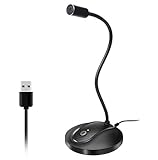
- 360 Degree Position Adjustable Gooseneck Design --Plug and play USB microphone Pick up the sound from 360-degree with high sensitivity, in the best possible location for sound to your PC gaming, dragon voice dictation, and talk to Cortana
- Mute Button & LED Indicator --One-click to mute/unmute your microphone for pc, Build-in LED indicator tells you the working status at any time
- Intelligent Noise-Canceling Tech --Premium omnidirectional condenser microphone with noise-canceling technology can pick up your clear voice and reduce background noise and echo
- USB Plug&Play(1.8/6ft USB Cable) -- No driver required. Just need to plug & play for the microphone to start recording, well compatible with Windows(7, 8, 10 and 11) and macOS. (NOT compatible with Xbox/Raspberry Pi/Android)
- Solid Construction--Adopting premium metal pipe and heavy-duty ABS stand to make sure that you will be satisfied with our computer mic quality
Place media close to customers and fail deliberately
Media termination should be near the users and carriers it serves. A shorter first hop reduces exposure to jitter and packet loss, while regional placement helps keep conversational turn-taking responsive. Keep orchestration and data services separate when that improves security or residency; the media edge can remain regional while authenticated tool calls go to approved backends.
Regional and carrier redundancy
- Use at least two carrier routes where telephone availability is critical, with health-aware routing and documented failover numbers.
- Deploy media workers in more than one region, but do not move an active session between workers unless the protocol and state model support a controlled migration.
- Make new-call routing deterministic and retain a clear mapping of session, region, carrier and worker.
- Define what happens when a model, TTS provider, carrier or tool service is degraded: shorten the response, switch to keypad or callback, play a transparent status message or transfer to a person.
Graceful handoff
Human transfer is a product capability, not an exception path. Trigger it for explicit requests, authentication failure, repeated misunderstanding, sensitive topics, policy boundaries and tool outages. Pass a concise conversation summary, customer identity and relevant verification state to the human system without exposing secrets that the receiving agent does not need.
Do these 3 things before closing this tab:
1Fix the driver behind crashes, sound loss and screen glitches2Clear out junk files and repair common Windows errors3Scan for outdated or missing drivers - takes under a minuteSecure the signaling, media and business tools
Voice infrastructure has both communications risk and data risk. Apply controls at every boundary:
Also popular on Amazon
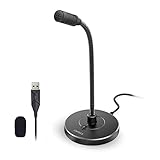
- 【Crystal Clear Audio Quality】Our Omnidirectional pattern condenser microphone accurately captures your voice, making it perfect for dictation, online classrooms, and more.
- 【Active Noise-Cancelling】Come in CMTECK CCS2.0 SMART CHIP with Omnidirectional Polar Pattern, which can effectively block the background noise. The pop filter prevents plosives from overloading the microphone, ensuring only your voice is heard.7
- 【Convenient Mute Button with LED Indicator】You can quickly mute/un-mute the microphone with the Mute Button and the built-in LED light lets you know the working status(Greenlight: Connected; Red light: Mute mode).
- 【Easy to use】 No drivers needed, just plug and record without external power supply, directly connect the microphone to a USB compatible device, well compatible with Windows(7, 8 and 10), Mac OS and PS4 (NOT compatible with Raspberry Pi/Linux/Android)
- 【Mini size with Adjustable Gooseneck】Adopted flexible and adjustable gooseneck metal pipe, easily adjust position 360 degrees to suit user comfort. The compact and stable base maximizes your desktop space.
- SIP and media: TLS protects SIP signaling; SRTP protects media. Enforce certificate validation and reject unexpected sources.
- Network edge: Use IP ACLs, strict source validation, rate limits and narrowly scoped firewall rules for signaling and RTP. Keep the public UDP surface as small as the architecture permits.
- Authentication: Use strong digest authentication or equivalent provider credentials, rotate secrets and separate credentials for carriers, model access, tools and recording services.
- Fraud and abuse: Detect toll-fraud patterns, unusual destinations, rapid call creation and telephony denial-of-service attempts. Apply spending and destination controls before an attacker can generate a large bill.
- Tool authorization: Put CRM, payment, order and account systems behind authenticated service boundaries. Give the agent only the operations and fields needed for the current task.
- Recording governance: Obtain explicit consent where required, define retention periods, redact sensitive content and keep recordings in approved regions. Apply the same policy to transcripts, summaries and debug audio.
Observability: measure the customer experience, not just uptime
A green process metric can coexist with a broken call. Correlate every call identifier across carrier, media, model, tool and transfer systems, and record:
| Area | Metrics to collect | What a change can reveal |
|---|---|---|
| Setup | WebRTC/SIP setup time, failed negotiations, permission failures | ICE, certificate, firewall, carrier or browser problems |
| Media quality | Jitter, packet loss, one-way audio, round-trip latency | Congestion, poor routes, overloaded edges or bad NAT mappings |
| Conversation | First ASR partial, first response audio, interruption detection and cancellation time | Slow inference, excessive buffering or missed barge-ins |
| Business flow | Tool latency and errors, authentication outcomes, transfer success and abandonment | Backend or workflow failures that masquerade as model problems |
| Reliability | Call-failure rate, reconnects, regional and provider health | Capacity, routing and dependency incidents |
Keep packet-level and audio diagnostics separate from customer content where possible. Sample or redact sensitive payloads, restrict access and document who can inspect recordings or transcripts. Alert on customer-impacting thresholds and percentile shifts rather than only host CPU or process restarts.
Test the paths that fail in production
Before launch, run a matrix covering:
- Desktop and mobile browsers, microphone permission denial, device changes and backgrounding.
- Corporate firewalls, restrictive NAT, VPNs and networks that block or reshape UDP.
- Different carriers, regions, codecs, caller-ID formats and PBX versions.
- Normal speech, noise, overlapping speech, long pauses, rapid barge-ins and DTMF.
- Model, TTS, tool, carrier and recording outages, including recovery after a timeout.
- Warm and blind transfers, agent refusal, queue overflow and customer hang-up during transfer.
- Repeated calls, abandoned calls, suspicious destinations and rate-limit enforcement.
Use synthetic calls and controlled human sessions. Verify that a failure produces an intelligible customer outcome, a traceable event and no stranded media or billable loop.
What’s actually slowing this PC down?
Pick the symptom - the matching free tool is one click away.
Plan capacity and cost without false precision
Capacity is constrained by concurrent media sessions, packet processing, ASR and TTS streams, model turn rate, tool latency and recording bandwidth. Size each independently, then load-test the combined path with your target geography, carrier mix, device population and call distribution. No source establishes a universal concurrency limit or cost benchmark for all CX voice-AI systems.
Track recurring carrier and number charges, media and egress, model and speech usage, recording storage, observability, redundancy and human-agent licensing. A cheaper single-region design can cost more after outages or toll fraud; a redundant design should show its failover coverage and operating assumptions explicitly.
A practical launch sequence
- Define supported channels, regions, languages, codecs, transfer rules and recording policy.
- Build the WebRTC and SIP edges independently, then connect both to one authenticated orchestration contract.
- Implement stateful session routing, continuous streaming and cancellable TTS before adding complex tools.
- Instrument setup, media, conversation, tool and transfer timestamps from the first test call.
- Lock down TLS, SRTP, ACLs, authentication, rate limits, fraud detection and least-privilege credentials.
- Exercise firewall, NAT, browser, carrier, PBX and outage scenarios with synthetic and human calls.
- Launch with a limited region or queue, review percentile latency and barge-in data, and expand only after failover and handoff meet your acceptance criteria.
The result is an agent that behaves like dependable telephony: it connects predictably, speaks without long dead air, stops when the customer interrupts, protects media and data, and reaches a person when automation should end.
Quick Recap
Product prices and availability are accurate as of the date/time indicated and are subject to change. Any price and availability information displayed on Amazon at the time of purchase will apply.

