
To schedule YouTube livestream events with Node.js, create liveBroadcast resources with liveBroadcasts.insert; to organize videos in a playlist, use the separate playlists and playlistItems resources. A playlist is an ordered collection of videos, not a timetable: changing an item’s position does not start the next livestream.
What “livestream playlist schedule” means in YouTube’s API
YouTube models a scheduled event and its audiovisual feed as different resources. A liveBroadcast represents the scheduled event and video, while a liveStream represents the feed sent by an encoder. A broadcast binds to one stream. Google describes the relationship this way: “Using the API, you can schedule events (broadcasts) and associate them with video streams, which represent the actual broadcast content.”
Playlist membership is separate. A playlist contains video resources; each playlistItem identifies a video in a playlist, and its position controls order within that collection. Use broadcast scheduled times to plan events, and playlist-item operations to organize videos viewers can browse.
| Goal | YouTube resource / operation | What it does |
|---|---|---|
| Set when an event is scheduled | liveBroadcast via liveBroadcasts.insert |
Creates a broadcast with details including title, scheduled start time, and privacy status. |
| Send the audiovisual feed | liveStream, bound to a broadcast |
Represents the stream feed used by the broadcast. |
| Arrange videos in a collection | playlistItem via playlistItems.insert |
Adds a video resource to a playlist; position is playlist ordering metadata. |
Prepare Node.js and channel-owner OAuth
Google’s Node.js YouTube Data API quickstart walks through enabling the API, creating OAuth credentials, installing googleapis and google-auth-library, and running a command-line sample. That sample uses a read-only scope and retrieves channel information; it is useful for client setup, but it is not a write-enabled scheduler.
Recommended Free Tools
#1 Best Overall

- Precision Control: The feel, shape, and sensitivity of the DualShock 4’s analog sticks and trigger buttons have been enhanced to offer players absolute control for all games on PlayStation 4.
- Sharing at your Fingertips: The addition of the Share button makes sharing your greatest gaming moments as easy as a push of a button. Upload gameplay videos and screenshots directly from your system or live-stream your gameplay, all without disturbing the game in progress.
- New ways to Play: Revolutionary features like the touch pad, integrated light bar, and built-in speaker offer exciting new ways to experience and interact with your games and its 3.5mm audio jack offers a practical personal audio solution for gamers who want to listen to their games in private.
- Charge Efficiently: The DualShock 4 Wireless Controller can easily be recharged by plugging it into your PlayStation 4 system, even when on standby, or with any standard charger with a micro-USB port.
- Enable the YouTube Data API for your Google Cloud project and configure OAuth credentials as shown in the quickstart.
- Install the packages with
npm install googleapis google-auth-library. - Adapt the quickstart’s OAuth flow to request a scope that permits the broadcast and playlist changes your application makes. Consult the current liveBroadcasts methods reference and playlistItems reference when choosing scopes and implementing requests.
- Authorize as the Google account associated with the channel owner. The Live Streaming API does not support the service-account authorization flow; see Google’s Live Streaming API authentication guide.
Keep OAuth tokens and client secrets out of source control. Recheck current scopes, fields, authorization behavior, and account-specific livestream eligibility before deploying; channel eligibility requirements are not established by the API workflow alone.
Create a scheduled broadcast
Use liveBroadcasts.insert to create each scheduled event. Google’s insert method reference documents a request with broadcast details such as title, scheduled start time, and privacy status.
Rank #2
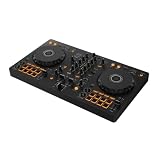
- The All-Rounder to Learn On: A simple, user-friendly layout inherited from pro Pioneer DJ gear makes it easy to start and grow
- No Beatmatching Skills Needed: Smart Fader auto-adjusts volume, bass, and BPM so you can blend genres by moving one fader
- Room to Grow: 2-channel, 2-deck control with 16 Performance Pads for Hot Cues, Pad FX, Beat Jump, and Sampler
- Built for Streaming and Streaming Out: Mix from Apple Music, Tidal, and Beatport, and live-stream or MC from a single device
- Plug In Anywhere: Connects to PC, Mac, iPhone, iPad, or Android by USB or Bluetooth with a built-in sound card for speakers
- Decide the event title, intended scheduled start time, and visibility before making the request. Privacy status is a publishing choice, not a playlist setting.
- Build the request body according to the current
liveBroadcasts.insertreference, including the required snippet and status fields and the parts requested by the method. - Send the insert request using the authenticated YouTube API client, then retain the returned broadcast ID for subsequent operations.
- Use the API’s broadcast methods as needed to list, update, delete, bind to streams, or transition broadcast state. Validate field requirements and allowed state transitions against the live method reference rather than assuming every operation is interchangeable.
Use explicit timestamps and time-zone handling in your scheduler: the event’s start time belongs to the broadcast resource. A playlist’s ordering cannot substitute for it.
Choose how to associate streams with recurring events
YouTube documents two workable patterns for scheduled broadcasts. The right choice depends on whether events share an encoder configuration or need independent stream setups.
Rank #3

- The All-Rounder to Learn On: A simple, user-friendly layout inherited from pro Pioneer DJ gear makes it easy to start and grow
- No Beatmatching Skills Needed: Smart Fader auto-adjusts volume, bass, and BPM so you can blend genres by moving one fader
- Room to Grow: 2-channel, 2-deck control with 16 Performance Pads for Hot Cues, Pad FX, Beat Jump, and Sampler
- Built for Streaming and Streaming Out: Mix from Apple Music, Tidal, and Beatport, and live-stream or MC from a single device
- Plug In Anywhere: Connects to PC, Mac, iPhone, iPad, or Android by USB or Bluetooth with a built-in sound card for speakers
| Pattern | How it works | Operational consideration |
|---|---|---|
| Reuse one stream | Create a stream and bind scheduled broadcasts to it. One stream can be bound to up to three broadcasts. | Suited to recurring events using the same stream configuration; observe the documented three-broadcast limit. |
| Create a stream per broadcast | Create a separate stream resource for each scheduled event and bind it to that event. | Provides per-event stream configuration; the documentation presents it as an alternative, not a universally better approach. |
In either pattern, each broadcast binds to exactly one stream. See Google’s broadcasts and streams architecture guide for the documented relationship and reuse options.
Add livestream videos to a YouTube playlist
Once you have the video resource identifier for the item to organize, use playlistItems.insert with the target playlist ID and video resource. Google’s playlist implementation guide describes retrieving the playlist ID and then adding an item; the playlistItems reference documents the resource and methods.
Rank #4

- Keep your Atom iOS controller updated with the latest firmware in the Turtle Beach Atom app available in the App store
- Convenient, Compact Shape Magnetically Fuses Together
- Low Latency Bluetooth Connection to iPhones
- Built for Cloud Gaming on GeForce Now, Steam Link, and More
- Ergonomic shape with familiar controls for a comfortable, console-style gaming experience on mobile
- Choose or create the playlist that should contain the video, and obtain its playlist ID.
- Call
playlistItems.insertwith the playlist ID and the video resource identifier in the request body, following the current method reference. - If order matters, set or update the playlist item’s position using the documented playlist-item fields and method behavior.
- Use
playlistItems.listto retrieve the collection when needed; handle page tokens if more results are available.
Playlist-item position changes only the order of videos in that playlist. It does not schedule a broadcast, bind a stream, or trigger the next event.
Independent reader supportYour contribution helps us test, update, and keep practical guides available for everyone.Build a reliable scheduler and watch API usage
A local command-line prototype can use the OAuth setup in Google’s quickstart. Keeping a scheduler running continuously on a server or other hosting environment is a deployment choice, not a requirement imposed by the API. Whichever deployment you choose, store credentials securely, record broadcast and playlist IDs, and handle failed API responses so a transient error does not silently leave an event unscheduled.
Do these 3 things before closing this tab:
1Fix the driver behind crashes, sound loss and screen glitches2Clear out junk files and repair common Windows errors3Scan for outdated or missing drivers - takes under a minuteBest Value

- Built-in 5.5” LCD Screen: Customer can check the Multi-View easily,advanced new interface design,all the shortcut keys built on the panel, like On-Air,REC,LUMA,PTZ control,Pat,etc.
- Professional Cellphone &PC control: It can be controlled by your Cellphone and iPad and computer,fast and easily,and user can upload the different logo ,background pics by Cellphone ,and also support to set your layer through USB flash driver.
- Support control 4*PTZ Cameras: Support 4*PTZ camera control at same time also Support save the positions of each PTZ camera uses can adjust the Zoom,iris, focus and so on ,users can use Cinelive C1 in all the different applications.
- Video Recording function: This video switcher Support video recording function(H.264),users can Recording and streaming at same time.you can Recording your livestream in to the SSD.
- RTMPs live-streaming ,one key streaming: The video switcher is available for RTMPs live-streaming,just enter the streaming link and keys into IP control page, can easily livestreaming on youtube,tiktok ,Instagram ,Zoom,Vmix,Facebook etc,you can live stream in two platforms at same time.
The current playlistItems.list method reference reports a quota cost of 1 unit per call. Cache or retain playlist data where appropriate rather than making unnecessary repeated list requests, and implement pagination for larger playlists. Verify current quota allocation and method behavior before release because API quotas and fields can change.
Troubleshoot common implementation problems
- The quickstart works, but inserts fail: its sample is read-only. Reconfigure OAuth for a write scope that supports the intended method and authorize the channel-owner account.
- Service-account authorization is rejected: the Live Streaming API does not support that flow. Use OAuth authorization associated with the YouTube channel owner.
- A video appears in a playlist but the event is not scheduled: playlist membership and broadcast scheduling are different operations. Create the broadcast with
liveBroadcasts.insertand its scheduled time. - A playlist reorder does not start another livestream: position is ordering metadata only. Schedule the event through the broadcast resource.
- A stream cannot be reused for another event: a stream may be bound to up to three broadcasts. Check existing bindings and, if necessary, use a separate stream for the event.
- A playlist is only partly returned: process pagination tokens from
playlistItems.listrather than assuming one response contains every item. - The channel cannot create or run the intended live event: check YouTube’s current live-stream feature eligibility for that channel; eligibility is separate from having a valid API client.
Or let it run in the cloud
If your goal is to keep uploaded videos playing as a 24/7 YouTube livestream rather than build and operate a Node.js scheduler, StreamNeo runs the loop in the cloud. Upload a recording or build a playlist, add your YouTube stream key once, and go live. Your computer and home connection do not need to stay on; it supports any uploaded quality up to 4K 60fps at one flat price per slot, automatically recovers if YouTube drops the stream, and the first day is free with no card. Monthly: $9.99 per month.
Quick Recap
Start your free StreamNeo day.
Product prices and availability are accurate as of the date/time indicated and are subject to change. Any price and availability information displayed on Amazon at the time of purchase will apply.

