
Free tools Windows power users keep installed
One-click scans. No signup required.
iTechGuides is reader-supported. When you buy through links on our site, we may earn an affiliate commission. As an Amazon Associate I earn from qualifying purchases. Learn more
A workable trading plan starts with the loss you can accept, not with an entry signal. Set a per-trade risk budget, a daily loss limit and an overall exposure cap; define exactly when a trade idea is invalid; calculate shares or contracts from the distance to that invalidation level; and write the entry, stop, target and management rules before sending the order. Then record the result and review whether you followed the process.
What a complete trading plan contains
A trading plan is a set of decisions made before market pressure arrives. It tells you what you trade, when you may enter, how much you may lose, how you will exit and how you will evaluate the result. A signal by itself is not a plan: without a defined stop and position size, the same signal can create a small, survivable loss one day and an account-threatening loss the next.


CME Group separates objectives from methodology in its trade-plan curriculum. Use that distinction to build two layers:
Windows Errors? Fix Them Before They Spread
Repair common Windows errors and clear accumulated junk for a smoother, more stable PC - no reinstall needed.Free scan · no reinstallCrashes, No Sound, or Screen Glitches?
Random freezes, missing sound and display glitches usually trace back to one bad driver. Find and replace yours safely.Free scan · under a minute- Objectives: the account purpose, acceptable drawdown, time commitment and performance measure. A realistic objective is process-based, such as following the rules on every qualified trade, rather than a promised monthly return.
- Methodology: the instruments, timeframes, setups, entry trigger, invalidation condition, exits and review procedure that make a trade eligible.
Write the plan in language another person could follow. “Buy when it looks strong” is not testable. “Buy only after a daily close above the prior range high, provided the next resistance level leaves at least 2R of room” is a rule that can be logged and reviewed.
#1 Best Overall

- My Trading Journal for Stock Market, Forex, and Crypto: Precisely track and analyze every trade. This log book is essential for improving your trading performance and decision-making skills.
- Comprehensive Day Trading Planner: Record and review 80 guided trades with 8 review sections, perfect for traders aiming to refine their strategies and maximize profits.
- Customizable Trading Setup: Tailor your trading approach by documenting your setups, analyzing results, and adjusting strategies based on market conditions.
- For All Types of Traders: Whether you're trading stocks, forex, or crypto, My Trading Journal supports your unique trading style and helps you achieve consistent success.
- Premium Quality and Durability: Made with high-quality materials, this A5-sized journal is perfect for daily use and designed to withstand the rigors of active trading.
Step 1: Define the markets, timeframes and permitted setups
Choose the instruments
List the stocks, exchange-traded products, futures, options or currencies you are allowed to trade. Record the contract or unit value, minimum price increment, trading hours, typical spread and whether the instrument can gap while you are unable to exit. A plan for shares cannot be copied unchanged to futures: a one-point move has a different dollar value for every contract.
Set the operating timeframe
State whether decisions are made from, for example, five-minute, hourly or daily bars, and when an order may be placed. Specify what happens around scheduled events, market opens and overnight sessions. If you do not intend to monitor a position continuously, prohibit entries that require constant supervision or use an order and alert structure that matches your availability.
Describe only qualified setups
For each setup, document the market condition, trigger, confirmation and disqualifiers. Disqualifiers might include a spread above your maximum, insufficient distance to the next resistance or support level, an earnings or economic release inside your holding window, or a stop that would exceed your risk budget. Fewer clearly defined setups make the trade log more useful than a long list of loosely named patterns.
Step 2: Set account-level risk limits before looking for an entry
Per-trade risk
Choose the maximum planned loss for one position as both a percentage and a dollar amount. CME Group’s 2018 position-sizing lesson uses 1% to 3% of account equity as a modest educational range for new traders; it is not a universal prescription. A smaller percentage may be appropriate for a volatile instrument, a new strategy or an account that cannot tolerate a large drawdown.
Calculate the dollar budget from current equity, not from the amount originally deposited. For example, CME Group’s 2022 worked example uses 3% of a $10,000 account: $10,000 × 0.03 = $300 permitted loss. Decide whether equity includes unrealized profit and loss, and apply that definition consistently.
Daily and weekly loss limits
Write a maximum loss for the trading day and, if useful, for the week. Include realized losses, estimated costs and open-position risk. When the limit is reached, stop opening new trades; do not increase size to recover. A daily limit protects you from a sequence of individually acceptable trades made during a period of poor judgment or unusual market conditions.
Open-position and correlation limits
Set a maximum number of simultaneous positions and a maximum account exposure. A trade can fit its own risk budget while several highly correlated positions create a much larger portfolio loss. Group positions that depend on the same market driver, such as several instruments tied to one index or currency, and cap their combined planned loss. Decide whether a new trade is blocked when the sum of current worst-case losses exceeds the exposure limit.
What’s actually slowing this PC down?
Pick the symptom - the matching free tool is one click away.
Use risk capital only
The U.S. Commodity Futures Trading Commission advises using only money you can afford to lose, checking that a dealer is registered with the CFTC and National Futures Association where applicable, and reading account and risk disclosures. Requirements and protections differ by instrument and jurisdiction. Confirm the rules that apply to your residence, account type and product before trading live.
Step 3: Place the stop at thesis invalidation
Define what would prove the idea wrong
A stop belongs at the price where the reason for the trade no longer holds. For a long position, that might be below a market structure low; for a short, above a structure high. Other invalidation points can be a failed breakout, a volatility-adjusted threshold or a time condition such as “exit if the expected move has not begun after three sessions.” The level must come from the setup, not from the number of shares you hope to buy.
Avoid arbitrary round numbers and normal noise
A stop placed at a convenient round price may sit inside ordinary fluctuations and be hit before the thesis is tested. Examine the instrument’s spread and recent movement when selecting the level. If a logical stop is too far away for your permitted dollar risk, reduce the position size or skip the trade; moving the stop closer merely to accommodate a larger position changes the setup.
Rank #2
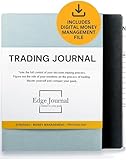
- FOR SERIOUS TRADERS: Track every entry, exit, position size, P&L, and setup with a structured layout designed for forex, stocks, options, futures, and crypto traders who want to identify what actually works in their strategy. NEUROSCIENCE-BASED DESIGN that encourages Growth Mindset and accountability
- TRADER PSYCHOLOGY FOCUS: Built on proven cognitive science principles, each page guides you through emotion tagging, bias recognition, and post-trade reflection to rewire reactive decision-making and build the disciplined mindset top-performing traders rely on
- COMPLETE 2026 TRADING LOG BOOK: Undated 12-month layout with performance summaries and goal tracking for day traders, swing traders, and long-term investors building consistent and serious results
- PERFORMANCE METRICS THAT DRIVE GROWTH: Dedicated sections for win rate, risk-reward ratio and strategy backtesting help you turn raw data into actionable insights, so every losing trade becomes a lesson and every winning trade becomes a repeatable system
- DIGITAL MONEY MANAGEMENT FILE INCLUDED : calculate your risk/reward ratio and win rate to find out whether you have a mathematical edge on the market, or not.
Measure stop distance correctly
For shares, calculate the absolute difference between planned entry and stop. For a long trade, stop distance = entry price − stop price. For a short trade, stop distance = stop price − entry price. Include a realistic allowance for spread and fees when deciding whether the resulting risk is acceptable.
Step 4: Calculate position size from the risk budget
Shares or units
For a long share or unit position, use:
size = floor(permitted dollar risk ÷ (entry price − stop price))
For a short position, use:
size = floor(permitted dollar risk ÷ (stop price − entry price))
The floor function rounds down to a whole share or unit. If commissions, exchange fees or expected slippage are material, reserve that amount from the permitted risk before dividing. Never round up simply to use more of the budget.
Worked share example
Assume an account of $20,000 and a chosen risk rate of 1%, giving a $200 loss budget. A planned long entry is $50 and the invalidation stop is $47.50, so the stop distance is $2.50. The unadjusted size is floor($200 ÷ $2.50) = 80 shares. If you reserve $20 for estimated costs and slippage, divide the remaining $180 by $2.50 and round down to 72 shares. The order is rejected if the required capital, margin or liquidity does not support the calculated quantity.
Do these 3 things before closing this tab:
1Clear out junk files and repair common Windows errors2Scan for outdated or missing drivers - takes under a minute3Repair Windows errors before they cause bigger problemsFutures and other contracts
Multiply the stop distance in ticks or points by the contract’s tick or point value. CME Group’s 2018 example shows a 50-tick stop with a $10 tick value: 50 × $10 = $500 risk per contract. If the contract’s tick value is $5, two contracts create the same $500 stop risk. The contract count is therefore:
contracts = floor(permitted dollar risk ÷ (stop ticks × dollar value per tick))
Check the exchange specification for the exact tick size, multiplier, currency conversion and margin requirement. Margin is not the same as the amount you can afford to lose: a position can require modest margin and still carry a large stop loss.
Options and leveraged products
Use the product’s actual payoff and multiplier, not the displayed premium alone. A stop on an option can fill differently from a stop on the underlying, and gaps or changing implied volatility can make the option’s loss larger than a simple underlying-price calculation suggests. If you cannot express the maximum plausible loss in dollars under your plan, the position is not sized well enough to trade.
Recommended Free Tools
Step 5: Write the entire trade before entering
CME Group advises writing exit points down; a mental stop does not count. Complete this record while the trade is still hypothetical:
Rank #3
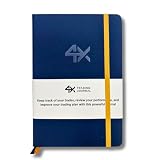
- BUILT FOR YOUR MARKET, FUTURES, STOCKS, FOREX, OPTIONS & CRYPTO: 4X is a mindset and process journal, not a strategy tool tied to one instrument. The plan, the trade log, the deep dive and the weekly review work the same whether you trade ES, EURUSD, SPY or BTC. Traders use it across all five markets every day.
- THE 2026 EDITION, REBUILT FROM TRADER FEEDBACK: Same trusted system, better in every way. An extra daily page for more room to log the session. Weekly reviews now grouped with each week's trades, so no more flipping back and forth. Crisp, darker print that's easy on the eyes after hours on a screen. A Quick-Start QR that scans straight to step-by-step instructions.
- NOT A NOTEBOOK, A COMPLETE 12-WEEK SYSTEM: Start with a one-time 9-part Trading Plan (your market, setups, risk rules and discipline checklist). Then twelve identical weeks: five Daily Logs, five Deep Dive trade pages, and a two-page Weekly Review. 189 guided pages, roughly 80 trades. Guided prompts walk you through every step. You never stare at a blank page.
- RATE YOUR EXECUTION, NOT YOUR RESULT: Your platform tracks the P&L. Nothing tracks the why. Log energy, sleep and mindset before the open; grade every trade A to F on whether you followed your plan, not on whether it won; then face the pattern every weekend with START / STOP / IMPROVE / CONTINUE. That review habit is the edge. You're 42% more likely to hit a goal you've written down.
- BUILT TO LAST, ARRIVES GIFT-READY: Vegan-leather hardcover, 100gsm bleed-resistant paper, two ribbon markers and an elastic closure band. Bound to lay flat so you're not fighting the spine while you write. 189 pages, 5.75" x 8.5", carries in a bag. Ships in a premium gift box: the gift every trader in your life actually wants.
- Instrument, direction and setup name.
- Planned entry trigger and order type.
- Invalidation stop and the reason that level invalidates the thesis.
- Stop distance, unit or contract value, permitted dollar risk and calculated quantity.
- Profit target or target zones, with the expected reward expressed in risk units (R).
- Rules for scaling out, moving a stop, holding overnight and exiting on a time failure.
- Maximum day-loss remaining and the account exposure after the order is filled.
- The exact condition that cancels the trade before entry.
If the entry fills at a materially different price, recalculate the stop distance and size. Do not accept a worse fill while pretending the original risk calculation still applies.
Stop, stop-limit and trailing-stop orders
Stop order
The U.S. Securities and Exchange Commission explains that a stop order becomes a market order when its stop price is reached. The stop price is not a guaranteed execution price. In a fast market, a gap, wide spread or thin order book, the fill can be significantly worse than the trigger. A stop order prioritizes the likelihood of an exit over control of the exact price.
Stop-limit order
A stop-limit order activates a limit order at the stop trigger. It controls the worst acceptable price but may not fill if the market moves beyond that limit. An unfilled order can leave you exposed to a loss much larger than the planned stop. Use it only when you understand the broker’s activation rules and have a separate response for a non-fill.
The Tool Desk
Outbyte PC Repair FREERepair Windows errors before they cause bigger problemsFix Now →Outbyte Driver Updater FREEScan for outdated or missing drivers - takes under a minuteDriver Scan →Trailing stop
A trailing stop adjusts in the favorable direction and remains fixed during an adverse move. The distance may be a fixed price, percentage or other broker-supported setting. Availability, trigger source and whether the trail uses last trade, bid, ask or another quote vary by broker. A trail is a management rule, not a substitute for defining the initial invalidation level.
Written order versus mental stop
A written plan can specify a manual exit, but a mental promise is vulnerable to hesitation, connection problems and rapidly changing prices. If you use a protective order, verify that it was accepted, remains active for the intended session and has the quantity you expect. Monitor fills and order status rather than assuming the platform handled the instruction.
Compare the key sizing and exit choices
| Choice | What stays constant | Main advantage | Main risk or limitation |
|---|---|---|---|
| Fixed share or contract count | Quantity | Simple execution and familiar exposure | Dollar risk changes whenever stop distance or volatility changes |
| Risk-based sizing | Planned dollar loss, approximately | Comparable risk across trades with different stops | Quantity can become very small, and slippage or gaps can exceed the estimate |
| Single-trade risk cap | One position’s planned loss | Prevents one setup from dominating the account | Does not prevent several correlated positions from combining into excessive exposure |
| Portfolio exposure cap | Combined open risk or notional exposure | Limits concentration and correlation | Requires identifying shared drivers and updating the calculation as trades change |
| Stop order | Exit activation, not execution price | Usually prioritizes getting out in a fast move | Fill can be worse than the stop trigger |
| Stop-limit order | Acceptable execution-price range | Controls the limit price | May remain unfilled while the loss continues |
Account for slippage, gaps and costs
The calculated risk is an estimate, not a guarantee. The SEC’s stop-order explanation makes this explicit: the trigger is not the execution price. Add a practical buffer for the instrument’s spread, commissions, exchange fees, expected slippage and overnight gaps. In a market that can gap through the stop, a smaller position may be appropriate even when the mathematical stop distance appears acceptable.
Do not widen a stop after entry merely to avoid realizing the planned loss. If new information invalidates the thesis, exit and record the reason. If the original stop was placed too close for normal noise, classify that as a planning error to correct in future trades, not as a reason to remove discipline from the current one.
Define profit-taking and in-trade management
Targets and risk units
Set a target or target zone before entry and express its distance in multiples of the initial risk, where 1R is the planned loss at the stop. This lets you compare outcomes across instruments and position sizes. A target is not a promise that price will reach it; it is a predeclared decision point.
Scaling out
If you scale out, specify the quantity and trigger in advance. State whether the remaining position keeps the original stop, moves to a new level or follows a trailing rule. Changing these decisions mid-trade without a written condition makes the results difficult to evaluate.
Moving the stop
Define an objective reason for a stop adjustment, such as a new confirmed swing point or a specified favorable movement. Never move a stop farther from the invalidation level to prevent a loss. A stop may be tightened, but understand that doing so can increase the chance of being stopped by ordinary volatility.
Time and thesis exits
A trade can be wrong without touching its price stop. Include a time exit when the setup depends on movement within a known window, and an immediate exit condition for a fundamental or market event that directly contradicts the thesis. Record which rule caused the exit.
Use a pre-trade worksheet
Copy this checklist into a spreadsheet, journal or paper notebook and complete every field before sending an order:
- Account equity: ______
- Permitted risk percentage: ______
- Permitted dollar risk after cost allowance: ______
- Instrument, direction and setup: ______
- Planned entry and order type: ______
- Invalidation stop and rationale: ______
- Stop distance: ______
- Unit, tick or point value: ______
- Calculated size, rounded down: ______
- Estimated spread, commissions and slippage: ______
- Profit target and management rules: ______
- Maximum day-loss remaining: ______
- Portfolio exposure after entry: ______
- Exact condition that cancels the trade: ______
A calculator can handle the arithmetic, but a spreadsheet or broker sizing tool is useful when it shows the formula and preserves an audit trail. Check the result manually the first times you use any automated tool.
Keep a trade log and review adherence
CME Group includes a trade log as a dedicated part of its trade-plan process. Record the setup, entry, intended risk, actual size, stop, target, fills, result and every rule deviation. Add the result in R, maximum favorable and adverse movement if your platform provides it, and whether slippage or a gap changed the outcome.
Review a meaningful sample rather than reacting to one winner or loser. Separate execution errors from a strategy result: entering without confirmation, using the wrong quantity or failing to place the stop is a process problem; a correctly executed trade that loses at the planned stop is not automatically a plan failure. Look for repeated patterns such as stops inside normal noise, oversized correlated positions, late entries that reduce reward-to-risk, or exits made from fear. Change one rule at a time and continue logging so the effect can be evaluated.
Common failure modes and corrections
Choosing size first
Symptom: You decide to buy a preferred number of shares, then move the stop to make the loss fit.
Correction: Mark invalidation first, calculate the stop distance, then divide the risk budget by that distance. If the quantity is too small, skip the trade or choose a different setup; do not distort the stop.
Using the same stop distance everywhere
Symptom: Every trade has a $1 or 2% stop regardless of the instrument’s volatility or structure.
Correction: Anchor the stop to the thesis and market structure, then let risk-based sizing determine quantity.
Quick wins for a faster PC:
Repair Windows errors before they cause bigger problemsFix Now →Fix the driver behind crashes, sound loss and screen glitchesFind Drivers →Clear out junk files and repair common Windows errorsFree Scan →Ignoring combined exposure
Symptom: Each position is below the single-trade cap, but a common market move produces a large account loss.
Correction: Group correlated trades, calculate their combined planned loss and block new entries when the portfolio limit is reached.
Assuming a stop guarantees the price
Symptom: The post-trade loss is larger than the calculated risk and is treated as a broker error.
Correction: Recheck stop-order mechanics, spreads, liquidity, gaps and the order’s trigger source. Reduce size when the market can move through the stop quickly.
Quick wins for a faster PC:
Scan for outdated or missing drivers - takes under a minuteDriver Scan →Repair Windows errors before they cause bigger problemsFix Now →Widening after entry
Symptom: The stop is moved farther away because the trade is losing.
Correction: Keep the original invalidation level or exit. Record the mistake and address the planning or execution cause in review.
Trading beyond the daily limit
Symptom: New trades are opened to recover a loss after the day’s risk cap has been reached.
Correction: Make the daily stop operational: disable new orders, close the platform or require a written review before trading resumes.
Broker and platform checks before going live
- Confirm support for stop, stop-limit, trailing-stop and, where useful, bracket orders.
- Read how the broker determines a trigger: last trade, bid, ask, midpoint or another quote.
- Check whether stops remain active overnight, during extended hours and after a partial fill.
- Verify contract specifications, multipliers, tick values, margin and currency conversion.
- Confirm commissions, exchange fees, data charges and any minimum order size.
- Use paper trading if available to test order activation, cancellation, partial fills and position-size calculations.
- Verify the dealer’s registration and review the account and risk disclosures required in your jurisdiction.
Paper trading can validate mechanics, but it cannot reproduce every live fill, gap or liquidity condition. Treat a live position as higher risk until you have observed the platform’s behavior with small, affordable size.
A practical decision sequence
- Is the instrument and setup permitted? If not, do nothing.
- Where is the thesis invalid? If no objective level exists, do not enter.
- Does the stop distance fit the market? Reject levels likely to be hit by ordinary noise.
- What is the dollar risk? Convert the distance using the unit or contract value and include costs.
- What quantity fits the budget? Round down and verify margin, liquidity and exposure.
- Are exits written? Record stop, target, management and time-failure rules.
- Does the portfolio remain within limits? Include correlated open positions and remaining daily loss.
- Can you monitor and execute the order as planned? If not, cancel or use a tested order structure that matches your availability.
This sequence turns a trading idea into a controlled experiment. The plan cannot remove losses, slippage or uncertainty; it can make the maximum intended loss explicit, prevent an oversized position and produce records that show whether the method deserves continued use.
Quick Recap
Product prices and availability are accurate as of the date/time indicated and are subject to change. Any price and availability information displayed on Amazon at the time of purchase will apply.

