
Do these 3 things before closing this tab:
1Fix the driver behind crashes, sound loss and screen glitches2Repair Windows errors before they cause bigger problems3Scan for outdated or missing drivers - takes under a minuteTo build a browser game with WebRTC data channels, create an RTCPeerConnection in each player’s browser, use an application signaling service to exchange session descriptions and ICE candidates, then send a small game-specific message protocol through an RTCDataChannel. Configure delivery reliability around what each message means, and plan for relay connectivity, queue backpressure, and untrusted peer data.
Understand the pieces before writing game code
A data channel carries text or binary data between peers; MDN specifically lists game status messages as a use case. It does not define your game protocol or find another player by itself. Each browser uses an RTCPeerConnection to establish connectivity, while your application provides signaling to exchange the information needed to set up that connection.
- Game client: Creates the connection and channel, sends game messages, and updates the interface when the channel changes state.
- Signaling service: Routes offers, answers, and ICE candidates between players. It can use HTTP, WebSocket, or another mechanism; WebRTC does not prescribe one.
- ICE servers: Help browsers discover and establish a network path. STUN helps discover possible connectivity; TURN can relay traffic when a direct peer path does not work.
- RTCDataChannel: Transports your application’s messages once the peer connection is ready.
WebRTC.org puts the signaling boundary plainly: “The WebRTC specification includes APIs for communicating with an ICE (Internet Connectivity Establishment) Server, but the signaling component is not part of it.” WebRTC.org’s peer-connection guide describes the distinction. A TURN server is not guaranteed to be unnecessary: whether peers can connect directly depends on their network conditions.
Choose delivery semantics from the game messages
Decide what the game sends before choosing channel options. A reliable ordered channel retransmits data and preserves order. Unreliable delivery can permit loss and out-of-order arrival; the W3C API also supports partially reliable options such as limiting retransmissions or a packet’s lifetime. Reliability and ordering are creation-time channel choices, not settings to switch later.
What’s actually slowing this PC down?
Pick the symptom - the matching free tool is one click away.
#1 Best Overall
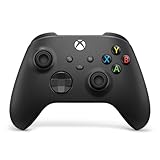
- MODERNIZED DESIGN — Experience the modernized design of the XBOX Wireless Controller with sculpted surfaces and updated geometry that enhances comfort and control during long gaming sessions.
- PRECISION PERFORMANCE — Stay on target with a hybrid D-pad and textured grips on triggers, bumpers, and back case for improved accuracy and handling.
- SHARE BUTTON: Seamlessly capture and share content such as screenshots, recordings, and more with the new Share button.
- VERSATILE CONNECTIVITY — Connect via USB-C for plug-and-play on console and PC, or quickly pair and switch between supported devices with XBOX Wireless and Bluetooth support.
- BUILT-IN AUDIO SUPPORT — Plug in compatible headsets using the 3.5mm audio jack for direct voice chat and immersive in-game sound.
| Message kind | Typical delivery choice | Why |
|---|---|---|
| Player commands or durable state changes | Often reliable and ordered | Missing or reordered commands can change the game’s outcome. Your application still needs to define how it handles duplicates or stale commands. |
| Frequent position or state snapshots | May use unreliable delivery if the protocol tolerates loss and reordering | A newer snapshot can make an older one irrelevant. Include a tick or sequence identifier when the receiver needs to recognize stale updates. |
| Room readiness or chat | Choose according to whether omission and ordering matter | Some room-state transitions must arrive; a transient notification may have different requirements. |
These are application design choices, not rules imposed by WebRTC. Create separate channels only when different message classes genuinely need different behavior; otherwise, a single appropriately configured channel can be simpler.
Set up the peer connection and signaling flow
- Create an
RTCPeerConnectionwith ICE configuration. Supply the ICE servers your deployment intends to use. Creating a data channel does not, by itself, establish connectivity across the public internet. - Start a signaling exchange. When one peer creates an offer, set it as its local description and send the resulting session description through your room or match service. The other peer applies it as the remote description, creates and sets an answer, and sends that answer back for the first peer to apply as its remote description.
- Exchange ICE candidates. Forward candidates gathered by each peer through the same signaling path and apply received candidates with
addIceCandidate(). Apply candidates only after the corresponding remote description has been set; MDN notes that applying them earlier can fail. - Pass session descriptions through as protocol data. Avoid manually editing SDP unless you have a specific advanced reason and understand the consequences.
MDN’s WebRTC connectivity guide explains ICE configuration and candidate handling. Its signaling and calling guide describes the offer/answer exchange. The signaling transport is your application’s responsibility; it is separate from the peer-to-peer data path.
Rank #2

- Compatible with Windows and Android.
- 1000Hz Polling Rate (for 2.4G and wired connection)
- Hall Effect joysticks and Hall triggers. Wear-resistant metal joystick rings.
- Extra R4/L4 bumpers. Custom button mapping without using software. Turbo function.
- Refined bumpers and D-pad. Light but tactile.
Create the channel and handle its lifecycle
One peer creates a channel with createDataChannel(). The other receives it through the peer connection’s datachannel event. A channel moves through connecting, open, closing, and closed states.
- On
open, enable the game’s network actions and begin sending permitted messages. - On
message, parse and validate input before applying it to game state. - On
errororclose, update the UI and stop treating the peer as connected.
Expose connection status to players rather than silently accepting input that cannot be sent. See MDN’s RTCDataChannel reference for channel events and properties.
Rank #3

- With broad game support, the Logitech Gamepad F310 works with old standbys to today's biggest titles, so it's easy to set up and use with your favorite games.
- Profiler software allows the gamepad to be programmed to perform keyboard and mouse commands for games without gamepad support.* * Requires software installation.
- A familiar control layout that doesn't require a learning curve to be able to use, with all the same buttons as on an Xbox 360.
- The unique floating D-pad rests on four switches-instead of a single pivot point-making it responsive to quick changes in direction.
- The six-foot cord lets you lean back and play a comfortable distance from your PC monitor.
Define a compact, validated game protocol
WebRTC transports data; it does not specify message names, fields, or game rules. Define an envelope that lets each client interpret messages unambiguously. For example, a message might contain a type, a tick or sequence number where relevant, and a payload. JSON is straightforward to inspect and debug; a binary encoding can be more compact, but the official sources cited here do not establish a performance winner. Choose based on the game’s needs and measure your implementation.
Validate each received message before changing game state. Check that the type is known, values are within acceptable ranges, message size is reasonable, and the requested state transition is legal. DTLS encrypts RTCDataChannel traffic, but encryption does not prove that a remote player’s claimed score, position, or other game state is honest. For games where cheating, persistence, or competitive integrity matters, decide whether peers should be trusted at all or whether a server-authoritative design is more appropriate; WebRTC connectivity alone does not settle that architecture question.
Rank #4

- Feel physically responsive feedback to your in-game actions through haptic feedback
- Experience varying levels of force and tension at your fingertips with adaptive triggers
- Chat online through the built-in microphone and connect a headset directly through the 3.5mm jack
- Switch voice capture on and off using the dedicated mute button
- Play on more devices using the USB Type-C cable or Bluetooth to connect easily to Windows PC and Mac computers, Android and iOS mobile phones as well as your PlayStation 5
Keep messages moderate and control backpressure
MDN says most modern browsers support messages of at least 256 kilobytes. That is a minimum-support statement, not a recommended message size or a guarantee for every browser configuration. MDN recommends moderate messages because a large message can delay other traffic when message interleaving is unavailable.
The channel’s bufferedAmount reports bytes queued for outbound sending. Rather than continually adding data to an ever-growing queue, set bufferedAmountLowThreshold and resume a send loop in response to bufferedamountlow. Sending can fail if a message is too large or the buffer has no room. Prefer small deltas or replaceable latest-state snapshots over repeatedly queueing large world snapshots when older updates have become obsolete. MDN documents these properties in its RTCDataChannel reference and discusses message-size behavior in its data-channel guide.
Quick wins for a faster PC:
Scan for outdated or missing drivers - takes under a minuteDriver Scan →Repair Windows errors before they cause bigger problemsFix Now →Best Value

- Tri-mode Connectivity: Wired for Xbox, 2.4G & Wired for PC, and Bluetooth for Android. The G7 Pro supports seamless connectivity across Xbox, PC, and Android. Effortlessly switch between modes using the convenient physical mode switch.
- TMR Sticks: The G7 Pro features GameSir's Mag-Res TMR sticks, combining Hall Effect durability with traditional potentiometer performance. This advanced technology delivers stable polling rates for smooth, drift-free gaming with low power consumption.
- Hall Effect Analog Triggers: The GameSir precision-tuned Hall Effect analog triggers provide unmatched smoothness and linear input for precise control. Featuring clicky Micro Switch trigger stops, gamers can easily switch based on their preferences.
- 1000Hz Polling Rate on PC: Experience ultra-responsive gaming with a 1000Hz polling rate on PC, available through both wired and 2.4G wireless connections. This ensures instantaneous input registration, reducing lag and optimizing your performance for the most competitive gameplay.
- GameSir Nexus App: The G7 Pro is compatible with the upgraded GameSir Nexus app, which brings a significant upgrade over the original. It introduces powerful new features such as gyro settings, stick curve adjustments, and button-to-mouse mapping, giving you deeper customization and more control than ever before.
Test connectivity and browser behavior
Test the browser versions you intend to support and exercise more than one network route, including a case that requires relay connectivity. MDN marks RTCDataChannel as widely available across browsers since January 2020, while noting that some API details vary. That broad availability does not replace testing your game’s actual setup, signaling, and recovery behavior in supported browsers.
Quick Recap
- Verify that a player can join a room, exchange descriptions and candidates, and reach the channel’s
openstate. - Test a route that uses TURN, not only a favorable direct connection.
- Exercise channel closure, reconnect or room-rejoin behavior, malformed messages, and a busy send queue.
- Measure latency, player capacity, and failure rates in the game itself before making claims about them; the cited browser and standards documentation does not provide game-specific performance results.
Product prices and availability are accurate as of the date/time indicated and are subject to change. Any price and availability information displayed on Amazon at the time of purchase will apply.

