
Free tools Windows power users keep installed
One-click scans. No signup required.
To run a 24/7 nature-sounds stream on YouTube with FFmpeg, create a concat-demuxer playlist of compatible video files, loop that playlist, and encode it to YouTube Live using settings suited to your source and connection. The concat demuxer sequences packets; it does not fix mismatched files or inaccurate durations, so validate your clips and test the stream before relying on it to run continuously.
What you need before building the stream
- FFmpeg installed on a computer that can remain online and running for the duration of the broadcast.
- Nature-sounds video files stored locally or at paths the FFmpeg process can read.
- A YouTube channel with live streaming enabled, plus its ingest address and stream key. Treat the key like a password; do not publish it or share it in a playlist or command that others can access.
- A stable upload connection with enough capacity for the chosen video bitrate, plus room for overhead and normal network variation.
This guide uses RTMP/RTMPS-style publishing with H.264 and AAC as a practical example. YouTube also supports H.265 or AV1 video and MP3 audio, but your FFmpeg build, source media, and chosen ingest protocol must support the combination.
| # | Preview | Product | Price | |
|---|---|---|---|---|
| 1 |

|
New Raspberry Pi 3 Model B+ Board (3B+) Raspberry PI 3B+ (1GB) (3B Plus) | $54.00 | Buy on Amazon |
| 2 |

|
CanaKit Raspberry Pi 4 4GB Starter PRO Kit - 4GB RAM | $159.99 | Buy on Amazon |
| 3 |
|
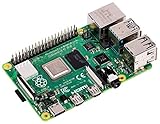
Raspberry Pi 4 Model B (2GB) | $83.00 | Buy on Amazon |
| 4 |

|
Raspberry Pi 5 8GB | $199.95 | Buy on Amazon |
| 5 |

|
CanaKit Raspberry Pi 5 Starter Kit PRO - Turbine Black (128GB Edition) (8GB RAM) | $259.95 | Buy on Amazon |
Prepare compatible clips
The concat demuxer works best when every file has the same stream layout and compatible codecs and time bases. It joins packets in sequence and adjusts timestamps; it does not standardize resolution, frame rate, codecs, audio layout, or other differences for you. FFmpeg explicitly warns that all files must have the same streams, including codecs and time bases (FFmpeg concat demuxer documentation).
Check the source files
- Use files with matching video and audio stream layouts and compatible codec parameters.
- Check that each file is complete and that its duration is accurate. A bad stored duration, including one caused by truncation or an estimate, can shift timestamps for later files.
- Decide how the visual sequence should work. A stream may be technically continuous while a cut between scenes or changes in sound is noticeable.
- If the clips do not meet the demuxer’s compatibility requirements, make compatible copies first or use FFmpeg’s concat filter, which is intended for workflows that require re-encoding. The filter involves decoding and encoding rather than packet-level joining (FFmpeg FAQ: concatenating video files).
Create the concat playlist
Save a plain-text file named playlist.ffconcat. The first line identifies the format; each following file line names one clip, in playback order:
What’s actually slowing this PC down?
Pick the symptom - the matching free tool is one click away.
ffconcat version 1.0
file '/media/nature-01.mp4'
file '/media/nature-02.mp4'
file '/media/nature-03.mp4'
Replace the sample paths with paths on your machine. Quote paths carefully if they contain spaces or special characters. Keep the playlist under your control: the example command below uses -safe 0, which allows paths outside the demuxer’s restricted safe subset. Do not feed it an untrusted file list.
Choose YouTube Live encoder settings
YouTube currently lists RTMP/RTMPS ingestion, H.264, H.265, or AV1 video, AAC or MP3 audio, and constant-bitrate encoding among its live encoder options. It recommends a two-second keyframe interval and says not to exceed four seconds (YouTube Live encoder settings).
Rank #2
- Includes Raspberry Pi 4 4GB Model B with 1.5GHz 64-bit quad-core CPU (4GB RAM)
- Includes Pre-Loaded 32GB EVO+ Micro SD Card (Class 10), USB MicroSD Card Reader
- CanaKit Premium High-Gloss Raspberry Pi 4 Case with Integrated Fan Mount, CanaKit Low Noise Bearing System Fan
- CanaKit 3.5A USB-C Raspberry Pi 4 Power Supply (US Plug) with Noise Filter, Set of Heat Sinks, Display Cable - 6 foot (Supports up to 4K60p)
- CanaKit USB-C PiSwitch (On/Off Power Switch for Raspberry Pi 4)
Example settings for an H.264 1080p30 stream
YouTube lists 10 Mbps as its recommended H.264 video bitrate for 1080p30. That is a platform recommendation for that resolution and frame rate, not a universal setting for every source. Match the output resolution and frame rate to your material and choose a bitrate your upload connection can sustain. YouTube also recommends testing with representative audio and movement and monitoring stream health (YouTube Live encoder settings).
- Video: H.264, 1080p30, 10 Mbps as YouTube’s listed recommendation for that configuration.
- Rate control: constant bitrate (CBR), as YouTube recommends.
- Keyframes: every two seconds; do not exceed four seconds.
- Audio: AAC is used in the example command. YouTube also lists MP3 as a supported option.
- Protocol: YouTube recommends RTMPS, a secure extension to RTMP. HLS is another ingest route for supported use cases, but YouTube notes its higher latency because it transmits video in segments rather than as a continuous RTMP stream (YouTube Live encoder settings; YouTube Help: live streaming with HLS).
If the source is not 1080p30, do not assume the 10 Mbps example is right for it. Select a matching output profile and check YouTube’s current settings for that profile. A speed test can help determine whether your connection can support the planned stream reliably.
Rank #3
- Broadcom BCM2711, Quad core Cortex-A72 (ARM v8) 64-bit SoC @ 1.5GHz
- 1GB, 2GB, 4GB or 8GB LPDDR4-3200 SDRAM (depending on model)
- 2.4 GHz and 5.0 GHz IEEE 802.11ac wireless, Bluetooth 5.0, BLE Gigabit Ethernet
- 2 USB 3.0 ports; 2 USB 2.0 ports.
- Raspberry Pi standard 40 pin GPIO header (fully backwards compatible with previous boards)
Build and start the looping FFmpeg stream
The following is an illustrative command, not a tested universal configuration. It assumes compatible playlist inputs and a YouTube ingest URL and stream key supplied by you. The video settings correspond to the 1080p30 H.264 example above.
ffmpeg -re -stream_loop -1 -f concat -safe 0 -i playlist.ffconcat
  -c:v libx264 -preset veryfast -b:v 10M -maxrate 10M -bufsize 20M
  -g 60 -c:a aac -b:a 128k -ar 44100
  -f flv 'rtmps://YOUR_INGEST_URL/YOUR_STREAM_KEY'
Understand the command
-rereads file input at real-time pace rather than as fast as the computer can process it.-stream_loop -1requests repeated input playback. Confirm loop behavior and option placement against the documentation for your installed FFmpeg build.-f concat -safe 0 -i playlist.ffconcatselects the concat demuxer and reads the playlist. Use-safe 0only with a playlist and paths you trust.-c:v libx264encodes video with H.264. The bitrate and buffer options are illustrative for the stated profile.-g 60sets a 60-frame GOP, which is a two-second interval at 30 fps. If your frame rate changes, recalculate the GOP size to preserve a two-second interval.-c:a aac -b:a 128k -ar 44100selects AAC audio with the shown bitrate and sample rate.-f flvselects the output container used for this RTMP-style example. Replace the final placeholder with your own YouTube ingest endpoint and key; do not expose the real key in public scripts, screenshots, or logs.
Before starting, create or schedule the live stream in YouTube Studio and obtain the stream key and server URL shown for that stream. Paste the destination into the command locally, then start FFmpeg. Confirm that YouTube receives the feed and that audio and video look and sound right before relying on the stream. For a long-running broadcast, keep the process and its host computer online; if FFmpeg exits, the source files become unavailable, or the connection fails, the broadcast can stop.
Rank #4
- Raspberry Pi 5 with 8GB RAM: Model SC1112 featuring a quad-core ARM Cortex-A76 processor running at 2.4GHz. Enhanced Connectivity: Includes dual 4K micro HDMI ports, USB-C power input, and high-speed USB 3.0 ports. PCIe Expansion Support: FPC connector enables M.2 NVMe SSDs when using compatible adapters. Fast Storage Options: Works with microSD cards for booting, or optional NVMe storage for advanced projects. Built for Projects & Learning: Ideal for programming, home labs, DIY electronics, automation, and Linux-based development.
Validate continuity and troubleshoot failures
Run a test using the same kind of audio and movement intended for the broadcast, then monitor YouTube’s stream health while it is running. YouTube specifically advises testing before going live and monitoring stream health (YouTube Live encoder settings).
| Symptom | Likely cause | What to check or do |
|---|---|---|
| FFmpeg refuses a later file or reports stream mismatch | Inputs differ in stream layout, codec, or time base. | Inspect the files and make their streams compatible, or use the concat filter and re-encode. |
| Gap, jump, or timing problem at a clip boundary | Files do not have exactly matching lengths, or a stored duration is inaccurate. | Verify file integrity and duration. FFmpeg’s duration directive can override a stored duration, but use it only when you know the correct duration; it does not repair damaged media. |
| YouTube does not receive the feed | Incorrect ingest URL or stream key, unsupported output settings, or a connection problem. | Recheck the destination copied from YouTube Studio, confirm the key is current and private, and review FFmpeg output and YouTube stream health. |
| Buffering or unstable stream health | The upload connection may not reliably sustain the selected bitrate. | Run a speed test, reduce the output bitrate or profile if needed, and test again with the intended program material. |
| FFmpeg stops after a while | The host computer, process, storage, or network may have stopped functioning. | Check the machine’s power and sleep settings, FFmpeg logs, available disk and source-file access, and connection stability. A local FFmpeg setup depends on the computer staying on. |
| The stream restarts but playlist timing drifts | Incorrect duration metadata can affect timestamp adjustment across concatenated files. | Correct the source duration or provide an accurate concat duration directive, then test transitions and overall timing again. |
Keep the stream safe for YouTube and viewers
Use nature recordings and video you own or are licensed to stream. A 24/7 schedule does not grant rights to ambient recordings, music, footage, or other material included in the stream. Also consider whether a stream made largely from repeated or minimally changed material provides enough original value for your channel’s goals and applicable YouTube policies. Review YouTube’s current rules before broadcasting, especially if you plan to monetize; this guide does not determine whether a specific channel or program will qualify.
Best Value
- Includes Raspberry Pi 5 with 2.4Ghz 64-bit quad-core CPU (8GB RAM)
- Includes 128GB Micro SD Card pre-loaded with 64-bit Raspberry Pi OS, USB MicroSD Card Reader
- CanaKit Turbine Black Case for the Raspberry Pi 5
- CanaKit Low Noise Bearing System Fan
- Mega Heat Sink - Black Anodized
Keep the stream key private, test the complete playback loop, and check that the audio does not contain abrupt volume changes or unintended silence at transitions. Continuous availability is not the same as seamless content: inspect repeated boundaries and monitor the live feed after launch.
Or let it run in the cloud
If you want a YouTube channel to loop uploaded nature videos without leaving a home computer on, StreamNeo is a cloud service that runs the stream for you. Upload a recording or build a playlist, add your YouTube stream key once, and go live. It streams to YouTube only and plays uploaded videos; it is not a camera-based live broadcast.
- Nothing has to stay on at home: StreamNeo loops from the cloud.
- Any quality up to 4K 60fps as uploaded, at one flat price per slot, with no re-encode or quality tiers.
- Automatic recovery if YouTube drops the stream.
- The first day is free with no card. The monthly option is $9.99 per month.
See StreamNeo for details, or start your free first day.
Quick Recap
Product prices and availability are accurate as of the date/time indicated and are subject to change. Any price and availability information displayed on Amazon at the time of purchase will apply.

