
iTechGuides is reader-supported. When you buy through links on our site, we may earn an affiliate commission. As an Amazon Associate I earn from qualifying purchases. Learn more
The affordable price of a car is not its advertised price or even its loan payment. Build two budgets before you shop: an upfront-cash budget for the out-the-door price, deposit, taxes, title, registration, dealer charges, and chosen add-ons; and a monthly ownership budget for the loan, insurance, fuel, maintenance, tires, repairs, and depreciation. Buy only when both budgets still work after a higher insurance quote, a costly repair month, and a shorter loan term.
Consumer.gov lists registration, sales tax, insurance, gas, and maintenance as costs to consider. The Consumer Financial Protection Bureau (CFPB) describes the true cost as the vehicle price and features plus interest, insurance, routine maintenance, taxes, titles, and dealer fees, less a down payment or trade-in. There is no universal deposit percentage or fixed monthly maintenance amount: the right figures depend on your location, vehicle, mileage, credit, insurer, and financing offer.


Start with two separate budgets
Keeping purchase costs and ownership costs on separate lines prevents a low monthly payment from hiding an unaffordable vehicle. The first budget answers, How much cash must I have before I can drive away? The second answers, How much will this car consume every month and every year?
Windows Errors? Fix Them Before They Spread
Repair common Windows errors and clear accumulated junk for a smoother, more stable PC - no reinstall needed.Free scan · no reinstallOutdated Drivers Are Slowing You Down
One free scan finds every outdated or missing driver and matches the right update for your exact hardware.Free scan · exact hardware matchBudget A: cash needed at purchase
Use the out-the-door amount rather than the window sticker. A practical worksheet is:
#1 Best Overall
Out-the-door price = vehicle price + sales tax + title + registration + dealer fees + delivery or market adjustments + selected add-ons
Then calculate:
Cash due at signing = out-the-door price − cash down payment − net trade-in equity + any amount you choose to roll into the loan
A trade-in reduces the amount you finance only by its net equity: its agreed value minus any loan payoff. If the payoff is larger than the trade value, the negative equity increases the amount that must be paid or financed.
Budget B: recurring ownership cost
Track the payment and the costs that continue after the sale:
- Principal and interest on the auto loan.
- Insurance premiums and any lender-required coverage.
- Fuel or charging based on your expected mileage.
- Scheduled service, fluids, filters, and inspections.
- Tires, including seasonal or specialty tires where relevant.
- Unexpected repairs and deductibles.
- Depreciation, which is not a monthly bill but is a real ownership cost and matters when you sell or trade.
Your household budget must also leave room for existing debts, an emergency fund, housing, food, utilities, and irregular expenses. A car that fits only when every month is average is not affordable.
Build an accurate out-the-door worksheet
List every purchase line
| Line item | What to record | Negotiability or qualification |
|---|---|---|
| Vehicle price | The agreed price for the exact stock number, trim, equipment, and mileage | Usually negotiable, depending on the seller and market |
| Sales or use tax | The rate and taxable base required in your state, province, or local jurisdiction | Government-set; generally not negotiable |
| Title fee | The charge to issue or transfer legal ownership | Government-set; generally not negotiable |
| Registration and license | Initial registration, plates, and any local charges | Government-set; generally not negotiable |
| Documentation or preparation fee | The dealer’s document, processing, preparation, or administrative charge | May be negotiable or subject to local limits |
| Delivery, destination, or market adjustment | Freight, delivery, dealer-installed preparation, or an added market adjustment shown on the buyer’s order | Ask what it covers; dealer-added amounts may be negotiable |
| Optional products | Service contracts, protection packages, accessories, coatings, and other extras you elect to buy | Optional; remove any item you do not value |
| Trade-in payoff | The current lender’s payoff quote, not your estimate of the remaining balance | Not a fee, but it changes the amount you must cover |
Ask for this complete list in writing before you negotiate the monthly payment. A low advertised price can be offset by a high documentation fee, a market adjustment, or products added late in the process.
Separate mandatory charges from negotiable charges
The CFPB states that taxes, title, and registration fees set by state or local government cannot be negotiated. Dealer preparation, documentation, delivery, and market-adjustment charges may be negotiable, although local rules can limit how they are presented or changed. Request an itemized buyer’s order and ask the seller to explain every unfamiliar line.
Quick wins for a faster PC:
Clear out junk files and repair common Windows errorsFree Scan →Scan for outdated or missing drivers - takes under a minuteDriver Scan →Repair Windows errors before they cause bigger problemsFix Now →Do not confuse a deposit with a down payment
A down payment is an upfront payment toward the vehicle’s total cost. It can be cash, net trade-in proceeds, or both, and it reduces the amount financed. A deposit can instead mean money paid to reserve a vehicle before the final contract. Its refundability depends on the written agreement and local law. Before transferring money, confirm whether it is refundable, when it is applied, and what happens if financing is declined or the vehicle fails an inspection.
There is no evidence-based percentage that fits every buyer. A larger down payment lowers the amount financed and can reduce interest, but draining emergency savings leaves you exposed to a repair, job interruption, medical bill, or insurance deductible. Set a cash floor first, then decide how much of the money above that floor can go toward the purchase.
Choose a financing amount and compare the total cost
Calculate the amount financed
Use the signed out-the-door figure, not the sticker price:
Amount financed = out-the-door price − down payment − net trade-in equity + financed fees or add-ons
The Tool Desk
Outbyte Driver Updater FREEFix the driver behind crashes, sound loss and screen glitchesFind Drivers →Outbyte PC Repair FREEClear out junk files and repair common Windows errorsFree Scan →Ask whether taxes, fees, an extended service contract, or negative trade-in equity are being rolled into the loan. Financing those items increases both the principal and the interest charged over time.
Get an outside preapproval
- Gather proof of income, employment details, housing payment, identification, and the amount you expect to borrow.
- Request a preapproval from a bank or credit union before visiting the dealer. Record the approved amount, APR, term, expiration date, and any membership or origination conditions.
- Ask the dealer for its financing offer using the same amount financed and term. A dealer may arrange a loan through a third-party lender, so read the final lender and APR rather than assuming the dealer is the creditor.
- Compare both offers on APR, finance charge, monthly payment, number of payments, and total of payments. The CFPB recommends comparing total cost rather than choosing solely by the lowest monthly payment.
- Check the contract for optional products, late-payment terms, prepayment conditions, and whether the rate or payment can change. Do not sign until the figures match the written offer.
Understand the term trade-off
For the same amount financed and APR, a longer term normally produces a lower required payment but more total interest and a longer period of owing money. A shorter term generally raises the payment while reducing the number of interest-bearing months. Test the shortest term that remains comfortable after adding insurance, fuel, and maintenance.
| Comparison item | Why it matters | Record it as |
|---|---|---|
| APR | Measures the annual borrowing rate used to compare offers | Percentage shown on the loan disclosure |
| Finance charge | Total interest and specified credit costs over the scheduled term | Currency amount on the disclosure |
| Loan term | Determines the number of payments and how long the debt remains | Months |
| Monthly payment | Tests whether the payment fits cash flow, but does not reveal total cost alone | Currency per month |
| Total payments | Principal plus finance charge over the contract | Currency amount |
| Amount financed | Shows how much debt the contract creates after your cash and trade equity | Currency amount |
Price insurance before you sign
Insurance is specific to the exact vehicle and driver profile. Obtain quotes using the vehicle identification number or an accurate year, make, model, trim, address, drivers, annual mileage, coverage limits, deductible, and claims history. A small trim or engine difference can change the premium.
Rank #3
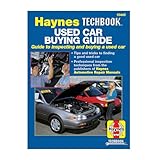
- Step-by-step procedures written from a complete teardown and rebuild, giving you the confidence to tackle repairs at any skill level.
- Over 700+ clear photos and diagrams that simplify complex systems, helping you complete jobs faster and with fewer mistakes.
- Comprehensive troubleshooting and fault-finding guides to quickly diagnose problems and reduce costly downtime.
Put the quoted premium into the monthly budget rather than treating it as a one-time registration expense. Comprehensive and collision coverage are commonly required by lenders on a financed vehicle; the precise requirements are in your loan contract. If required coverage lapses, the lender may place insurance on the vehicle and charge you. Force-placed coverage can cost more and may protect the lender rather than provide the same benefits as your own policy.
Compare quotes on matching liability limits, comprehensive and collision deductibles, rental reimbursement, roadside assistance, uninsured-motorist protection, and exclusions. A cheaper quote with materially lower coverage is not an equivalent comparison. Ask when the first premium is due and whether paying monthly creates an installment fee.
Create a maintenance and repair reserve
Estimate scheduled service for the exact car
Use the manufacturer’s maintenance schedule for the vehicle’s engine, transmission, drivetrain, age, and mileage. Record oil or fluid services, filters, spark plugs, belts, inspections, brake work, and other time- or mileage-based items. A used car near a major service interval needs a different reserve from a newer car with warranty coverage.
Budget for tires and wear items
Tires are predictable but irregular. Estimate the replacement price for the correct size and rating, then divide by the expected replacement interval to create a monthly sinking-fund contribution. Include mounting, balancing, alignment, disposal, and seasonal storage if those apply to your location.
Keep an unexpected-repair contingency
Scheduled maintenance is not the same as repairs. Age, condition, mileage, warranty coverage, inspection findings, and the vehicle’s complexity affect repair risk. Keep a separate contingency so a transmission, cooling-system, electrical, or collision-related bill does not compete with the money reserved for routine service.
Recommended Free Tools
For a used car, the Federal Trade Commission advises an independent inspection. Arrange it before the purchase is final, and make the sale contingent on your right to receive the report and cancel or renegotiate when it identifies safety or major mechanical problems. An inspection cannot predict every failure, but it can reveal leaks, worn tires, brake problems, accident damage, or deferred service that should change your budget.
Include fuel and depreciation in the ownership picture
Fuel or charging
Estimate annual distance from your actual commute, errands, and trips rather than a generic mileage figure. Then use the vehicle’s expected fuel economy and a conservative local fuel-price assumption:
Annual fuel cost = annual miles ÷ expected miles per gallon × price per gallon
For an electric vehicle, replace the fuel calculation with electricity consumption, your utility rate, public-charging use, and any charging-network fees. Recalculate if your commute or energy price changes.
Do these 3 things before closing this tab:
1Scan for outdated or missing drivers - takes under a minute2Repair Windows errors before they cause bigger problems3Fix the driver behind crashes, sound loss and screen glitchesDepreciation
Depreciation reduces the vehicle’s value even though it is not withdrawn from your bank account each month. Track it when comparing a new vehicle with a used one, deciding how long to keep the car, or estimating the cost of selling early. The amount depends on model, age, condition, mileage, accident history, market demand, and local market conditions, so do not treat a generic percentage as a promise.
AAA’s 2024 Your Driving Costs fact sheet illustrates a broad ownership-cost method. Its study, published annually since 1950, uses five top-selling models in each of nine vehicle categories and includes depreciation, finance, fuel, insurance, license or registration and taxes, maintenance, repair, and tires. Its category averages are a comparison framework, not a personalized quote for your vehicle or location.
Independent reader supportYour contribution helps us test, update, and keep practical guides available for everyone.Use a comparison table before choosing a car
| Decision factor | Vehicle or offer A | Vehicle or offer B | Question to answer |
|---|---|---|---|
| Out-the-door price | Write the complete amount | Write the complete amount | Which price includes fewer surprises? |
| Cash required at signing | Down payment plus non-financed charges | Down payment plus non-financed charges | Does either option drain emergency savings? |
| APR and total interest | Record both from the disclosure | Record both from the disclosure | Which offer costs less for the same term? |
| Loan term and payment | Months and monthly payment | Months and monthly payment | Does the shorter term survive a stress test? |
| Insurance | Quote for exact trim and driver | Quote for exact trim and driver | Are coverage limits and deductibles equivalent? |
| Fuel or charging | Expected monthly cost | Expected monthly cost | What happens if mileage or energy prices rise? |
| Scheduled maintenance | Manufacturer schedule and local prices | Manufacturer schedule and local prices | Which major services are due soon? |
| Tires | Replacement cost and expected interval | Replacement cost and expected interval | Are specialty tires or seasonal sets required? |
| Repair risk | Age, condition, warranty, inspection | Age, condition, warranty, inspection | What evidence supports the reserve amount? |
| Depreciation | Expected resale or trade timing | Expected resale or trade timing | Will selling early create a loss or negative equity? |
Worked example: turn quotes into a monthly decision
The following numbers are illustrative, not a recommended budget or a market quote. Suppose a buyer considers a vehicle priced at $28,000. In one jurisdiction, the buyer’s written worksheet shows $2,240 in sales tax, $250 for title, $180 for registration, and a $500 dealer documentation fee, with no optional products. The out-the-door price is therefore $31,170.
The buyer plans to pay $5,000 in cash and has no trade-in. The amount financed is $26,170. At an illustrative 7% APR for 60 months, the scheduled payment is approximately $519 per month; the buyer must use the lender’s disclosure for the exact finance charge and total payments. A quote for the exact driver and vehicle adds $180 per month for insurance. The household estimates $160 per month for fuel, $120 per month for scheduled service and tires, and keeps a separate repair contingency.
The recurring cash budget before the separate repair contingency is therefore about $979 per month: $519 loan payment + $180 insurance + $160 fuel + $120 maintenance and tires. The buyer should also track depreciation and verify that the $5,000 cash contribution leaves the emergency fund intact. If the insurance quote rises, fuel use is higher than expected, or a shorter loan term pushes the payment beyond the household ceiling, the correct response is to choose a less expensive vehicle, increase savings, or delay the purchase—not to hide the difference in a longer loan.
Stress-test the plan before signing
- Replace the initial insurance quote with a higher quote from another insurer and keep the same coverage limits.
- Increase the fuel or charging assumption to reflect a price spike or heavier-than-planned driving.
- Add a repair month containing a deductible, tire replacement, or a major service item.
- Recalculate the loan with a shorter term and the same down payment.
- Remove optional add-ons and compare the resulting amount financed.
- Check that the remaining cash after signing still covers your emergency-fund target and ordinary household obligations.
If the budget fails any realistic test, change one of the high-impact inputs: vehicle price, cash contribution, financing term, insurance coverage choice, or purchase timing. Do not solve a recurring shortfall by relying on overtime, an uncertain bonus, or a payment deferral unless that income is dependable and documented.
Common budgeting mistakes and fixes
- Shopping by monthly payment only: Ask for APR, finance charge, term, amount financed, and total payments. A payment can be reduced by extending the term or increasing the amount owed.
- Using the sticker price as the budget: Obtain an itemized out-the-door price including taxes, title, registration, dealer fees, and chosen add-ons.
- Assuming every fee is negotiable: Government-set taxes, title, and registration generally are not negotiable; focus questions on dealer-added charges and optional products.
- Emptying savings for a target deposit: Set an emergency-fund floor before deciding how much cash to put down.
- Waiting to price insurance: Quote the exact vehicle before signing. Coverage requirements and premiums can change the decision.
- Combining routine service and repairs in one vague number: Use the maintenance schedule for predictable work and a separate contingency for failures.
- Skipping an independent used-car inspection: Have a qualified inspector examine the car before the transaction becomes final.
- Ignoring negative trade equity: Obtain the lender’s payoff quote and subtract it from the trade value so the financed amount is not understated.
- Treating an average as a promise: Published ownership-cost studies describe selected vehicles and assumptions. Your location, mileage, credit, insurer, and condition determine your actual cost.
Purchase-day checklist
- Household income and existing obligations are written down.
- An emergency-fund minimum remains after the planned cash contribution.
- The written out-the-door price includes every mandatory charge and selected add-on.
- Taxes, title, and registration are identified separately from dealer fees.
- The deposit agreement states whether the money is refundable and how it is applied.
- A bank or credit-union preapproval is available for comparison.
- Dealer financing is compared using the same amount financed and term.
- The contract shows APR, finance charge, term, payment, amount financed, and total payments.
- Insurance for the exact vehicle and driver is quoted, with matching limits and deductibles.
- The manufacturer maintenance schedule, tire cost, warranty, and inspection findings are recorded.
- Fuel, maintenance, tires, repairs, and depreciation are included in the ownership plan.
- The budget still works after the stress tests.
The decision is sound only when the complete out-the-door price is known, the cash contribution preserves financial resilience, the financing is compared by total cost, and the recurring ownership budget survives plausible increases in insurance, fuel, and repairs.
Quick Recap
Product prices and availability are accurate as of the date/time indicated and are subject to change. Any price and availability information displayed on Amazon at the time of purchase will apply.
Free tools Windows power users keep installed
One-click scans. No signup required.

