
Before consulting the I Ching, name the situation, decide what uncertainty matters to your next choice, and phrase one clear question about it. If timing matters, include a timeframe. Write the question down before casting so you can return to it while interpreting the response.
How to phrase a useful I Ching question
- Name the situation plainly. Focus on a real decision, relationship, or circumstance rather than asking about everything at once.
- Choose the uncertainty that matters now. Ask what you most need to understand to decide what to do next.
- Ask one focused question. Keep it specific and unambiguous. If timing matters, make the timeframe explicit.
- Write it down before casting. Re-read the wording afterward to keep your interpretation connected to the inquiry you actually made. The UAYA Foundation’s guide to asking a question recommends clarity, focus, defining a relevant timeframe, and recording the question beforehand.
For example: “How should I approach the conversation with my colleague this week?” This identifies a situation, keeps attention on your own response, and limits the question to a useful timeframe. It is an illustrative modern example, not a traditional quotation.
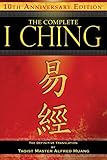


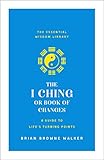
Open-ended or yes-or-no: which wording should you use?
For a reflective reading, an open-ended prompt can invite consideration of the situation and possible responses rather than forcing a binary result. Contemporary guides commonly suggest starting with “what” or “how.” Examples include:
- “What is the nature of this situation?”
- “What do I need to understand about this relationship right now?”
- “How should I approach this decision?”
This is practical advice, not a universal historical rule. In “The Oracle Book,” Hellmut Wilhelm describes the I Ching’s earlier use as an oracle for precisely worded questions and recounts that it was originally used to answer yes-or-no questions before the method developed beyond a simple binary form. His account appears in Understanding the I Ching: The Wilhelm Lectures on the Book of Changes, published by Princeton University Press in 1988. So a closed question is not inherently outside the I Ching’s history; an open question is simply often better suited to readers seeking interpretive depth or reflection.
Quick wins for a faster PC:
Scan for outdated or missing drivers - takes under a minuteDriver Scan →Repair Windows errors before they cause bigger problemsFix Now →Fix the driver behind crashes, sound loss and screen glitchesFind Drivers →#1 Best Overall
Keep the question centered on your situation
A question about your own understanding or conduct gives you something within your control to reflect on. For instance, “How can I approach this conversation?” focuses on your choices. “What does my colleague secretly intend?” instead asks for certainty about another person’s hidden thoughts. Contemporary decision-making advice favors the first kind of framing; it is a modern practical recommendation, not a claim that every tradition imposes the same rule.
When you have several questions
If several concerns come to mind, choose the one whose answer would matter most to your next decision and ask that one first. This applies the guidance to keep an inquiry focused; it does not mean that every tradition forbids follow-up questions.
Rank #2
What you need before casting
Question wording matters more than choosing a particular casting tool. Coins and yarrow stalks are associated with casting methods, but neither is needed to make an inquiry clearer. An English-language book can help you study the text and its hexagrams; one option is Understanding the I Ching: The Wilhelm Lectures on the Book of Changes, listed by JSTOR as an introduction to the I Ching. The JSTOR catalogue entry identifies the Princeton University Press edition as published in 1988.
Quick Recap
Best Value
Rank #4
Rank #3
Product prices and availability are accurate as of the date/time indicated and are subject to change. Any price and availability information displayed on Amazon at the time of purchase will apply.
The Tool Desk
Outbyte Driver Updater FREEFix the driver behind crashes, sound loss and screen glitchesFind Drivers →Outbyte PC Repair FREEClear out junk files and repair common Windows errorsFree Scan →
