
Crashes, No Sound, or Screen Glitches?
Random freezes, missing sound and display glitches usually trace back to one bad driver. Find and replace yours safely.Free scan · under a minutePC Slower Than It Used to Be?
A free scan shows the junk files, broken settings and background clutter dragging Windows down - then fixes them in one click.Free scan · Windows 10 & 11Apple Home can test beta Matter accessory firmware, but there is no general consumer beta opt-in. Apple’s documented route is a developer workflow using firmware registered in the Distributed Compliance Ledger (DCL), an Apple home hub, and—when testing through TestNet DCL—Apple’s OTA configuration profile. The accessory maker must publish an eligible update; Home cannot create or expose firmware that its maker has not made available.
What you need before an update can appear
Apple’s Matter OTA guide describes a test process for accessory developers, not a consumer enrollment feature. Its revision R5, dated February 12, 2026, gives iOS 16.5 beta 3 and tvOS 16.5 beta 3 or later as the baseline for the procedure. That is the guide’s stated test baseline, not a complete compatibility list for every current Apple device or software release.
- A supported Apple home hub: Apple TV, HomePod, or HomePod mini. The primary home hub acts as the OTA Provider; only that hub supplies the update. A Thread accessory requires a hub with Thread support.
- A maker-published update: The accessory developer must register the firmware URL and required metadata in the appropriate DCL. The Home app cannot independently fetch an unpublished beta.
- The right DCL environment: MainNet is used by default. Testing uncertified firmware requires TestNet DCL and Apple’s OTA profile.
- A compatible Matter firmware image: Apple requires the image to follow the Matter software-image format and include required OTA header values: SoftwareVersion, VendorID, ProductID, SoftwareVersionString, PayloadSize, ImageDigest, and ImageDigestType.
Apple says you do not need a certified Matter accessory simply to test OTA. An uncertified accessory can be added to Home by choosing “Add Anyway,” but uncertified firmware updates must use TestNet DCL. Apple’s separate platform overview says Matter support began with iOS 16.1, iPadOS 16.1, macOS Ventura, watchOS 9.1, tvOS 16.1, and HomePod software 16.1; those platform milestones should not be confused with the OTA test procedure’s baseline. Accessories intended for distribution or sale need CSA certification, according to Apple’s home development overview.
How to access a TestNet beta update
- Have the accessory maker register the update. The developer enters the OTA URL and required version, product, and vendor information in TestNet DCL. The image must meet Matter’s format requirements; Apple’s guide describes generating a Base64 checksum for TestNet entries and checking that the DCL model-version field has Software Version Valid set to true.
- Install Apple’s OTA profile. Install it on the home hubs and controllers that participate in testing. The profile selects TestNet DCL data; without it, Apple Home uses MainNet DCL. Apple says no profile is needed for MainNet OTA testing, but TestNet requires one.
- Reboot the hubs and controllers. Apple instructs developers to reboot those devices after profile installation. Confirm that the profile has not expired; if it has, Apple recommends filing feedback through Feedback Assistant.
- Check the accessory in Home. Open the Home app, open the accessory’s settings, and look for the new firmware version or an update prompt. Apple’s guide identifies Accessory settings as the place to inspect the update.
- Apply the update according to the home’s setting. If automatic updates are off, developer consent is required and the developer taps Update. Home may display Update, then Requested, then Installing; Requested means the hub has not yet finished transferring the image to the accessory. If automatic updates are on, the primary home hub applies the update automatically.
Why the update may not show in Home
Check the conditions that determine whether Apple Home can discover and deliver the developer’s published update:
#1 Best Overall

- [Multi-Protocol Hub with Matter Bridge] The M3 is a versatile hub supporting Aqara Zigbee and Thread devices. It integrates third-party devices into the Aqara Home app. Supports advanced Matter bridge functionality, enabling Aqara-exclusive scenes and signals to sync with Matter ecosystems such as Home Assistant for seamless integration. Supports up to 127 Aqara Zigbee devices (** Not third-party Zigbee devices) and 127 Thread devices (Repeaters are needed).
- [Edge Compatibilities and Local Automations] The M3 serves as an Edge Hub, prioritizing local control and automation. Upon integration, it supersedes existing Aqara hubs, shifting the automations among them to local operation (Some cloud-based notifications still require internet). Upgrade-friendly, it supports migrating Zigbee devices from older Aqara hubs.
- [Smart IR Blaster with Feedback and Learning] The 360°IR blaster not only sends commands but also provides accurate status updates by detecting traditional remote use. It connects IR air conditioning units to Matter, functioning as an AC thermostat when paired with an Aqara Temperature and Humidity Sensor. (Note: Only one AC device can be exposed to Matter. Functionality may vary based on the Matter integration app. For Apple Home exposure, use Matter integration instead of HomeKit.)
- [Optimal Wired and Wireless Connectivity] Offering both wired and wireless solutions, the smart home hub M3 provides dual-band Wi-Fi (2.4/5 GHz) with advanced WPA3 security, and a Power over Ethernet (PoE) port. The addition of a USB-C port allows for mini-UPS and power bank connections, delivering unparalleled stability. (2A USB power adapter is not included. ) . Note: To ensure a stable connection, place the Hub M3 between 6 to 19 feet from the router.
- [Privacy-Focused with Encrypted Storage, Easy Setup and Versatile Placement] The M3 prioritizes privacy by excluding microphone or camera components. It boasts 8GB end-to-end encrypted local storage, for device lists, configuration parameters, and automation configuration data. Additionally, it includes a mount and screws for flexible placement on flat surfaces, walls, or ceilings. Magic Pair technology ensures effortless detection by the Aqara Home app upon power-up.
- Confirm the software baseline. Check that the primary hub, not just a secondary hub, meets the software baseline in Apple’s OTA guide. The primary hub is the provider.
- For TestNet, verify profile coverage. The profile must be installed on the participating home hubs and controllers, remain unexpired, and be followed by a reboot of those devices.
- Allow for DCL propagation and transfer. Apple says a TestNet update notification may appear within 24 hours of entering the firmware version in TestNet DCL. It recommends waiting 48 hours for the update to be applied, assuming the accessory uses the default OTA Requestor implementation. These are procedural estimates, not guarantees.
- Validate the firmware registration. Ask the developer to check the Matter image format, checksum, required OTA metadata, and whether Software Version Valid is true in the TestNet DCL model-version field.
- Check automatic-update behavior. With automatic updates disabled, the update may require developer consent and a manual tap on Update.
- Verify accessory support with its maker. The title does not identify a particular accessory or firmware release, and eligibility depends on the manufacturer’s OTA publication. Ask the maker whether that exact model and firmware version are available for Apple Home OTA testing.
Apple OS betas are a separate program
Signing up for the Apple Beta Software Program does not, by itself, enroll a Matter accessory in a firmware beta. Apple’s public FAQ concerns pre-release Apple operating-system software; its OTA guide instead describes installing a specific profile to route Apple Home testing through TestNet DCL. Apple advises installing beta software only on non-production devices that are not business-critical, and distinguishes the public beta program from the Apple Developer Program. Neither should be treated as a documented consumer-access path to accessory firmware.
Quick Recap
Rank #4
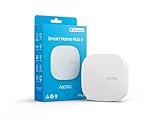
- Powered by SmartThings: Connect, monitor, and automate your home through the SmartThings app. Build a reliable, unified smart home using Samsung's proven ecosystem
- Matter + Zigbee Smart Home Hub: Supports the newest Matter standard plus Zigbee for lighting, sensors, plugs, switches, thermostats, and more - thousands of compatible devices. PLEASE NOTE: Z-Wave not supported
- Easy Setup with Wi-Fi or Ethernet: Get started in minutes using Wi-Fi or a wired Ethernet connection for apartments, houses, and expanding smart home systems - Z-Wave not supported
- Automations That Work for You: Create custom routines for security, lighting, comfort, and energy savings. Many local automations continue working even if your internet goes offline
- Wide Device Compatibility: Connect compatible smart devices from Aeotec and many other brands to build a unified system for lighting, voice control, energy management, and climate settings
Rank #3

- [Multi-Protocol Hub with Matter Bridge] The Aqara Hub M200 is a versatile smart hub that supports multiple advanced features, acting as a Matter Controller, Thread Border Router, and Matter Bridge. It integrates third-party devices into the Aqara Home app. With advanced Matter bridging functionality, it syncs Aqara-exclusive features with ecosystems like Home Assistant, Apple HomeKit, Alexa, and Google Home for seamless integration. Supports up to 40 Aqara Zigbee devices and 40 Thread devices.
- [Smart IR Blaster with Feedback and Learning] The 360°IR blaster not only sends commands but also provides accurate status updates by detecting traditional remote use. It connects IR air conditioning units to Matter, functioning as an AC thermostat when paired with an Aqara Temperature and Humidity Sensor. (Note: Only one AC device can be exposed to Matter. Functionality may vary based on the Matter integration app. For Apple Home exposure, use Matter integration instead of HomeKit.)
- [Wired & Wireless Connectivity with PoE Support] Enjoy flexible setup with dual-band Wi-Fi (2.4/5 GHz) using advanced WPA3 security, and Power over Ethernet (PoE), making the M200 a versatile PoE Ethernet Smart Home Hub. The USB-C port supports mini-UPS or power bank connections for uninterrupted operation, ensuring your energy-saving and security automations stay online. (*2A USB power adapter is not included. )
- [Home Automation and Alarm System] Works with all Aqara devices to create a comprehensive, smart home automation system. The Aqara Hub M200 is equipped with a built-in speaker that can be used in a variety of ways: security alerts, doorbell, alarm clock, and custom audio messages. (** 𝐍𝐨𝐭 𝐭𝐡𝐢𝐫𝐝-𝐩𝐚𝐫𝐭𝐲 𝐙𝐢𝐠𝐛𝐞𝐞 𝐝𝐞𝐯𝐢𝐜𝐞𝐬)
- [Local Automation for Reliable Performance] Supports local execution of automations for Zigbee and Matter devices, ensuring smooth operation even without Wi-Fi or cloud access. Enjoy millisecond response times for a more stable and reliable smart home experience. (Some automation, such as cloud push notifications, will still require the cloud connection to be executed.)
Rank #2

- Multi-Protocol Smart Hub with Matter Bridge – The M100 is a versatile smart hub compatible with Thread devices and Aqara Zigbee (** Not third-party Zigbee devices), supporting up to 20 Aqara Zigbee devices and 20 Thread devices. As a Matter Bridge, it connects Aqara Zigbee products to other smart home ecosystems, compatible with Apple Home, Amazon Alexa, Home Assistant, etc. Note: Use a 5V⎓0.5A power adapter (not included) and keep the product continuously powered during use.
- Advanced Matter Bridging for Seamless Smart Home Integration – The M100 enables Aqara’s unique features, such as facial recognition and complex automation, to work across Home Assistant and other Matter ecosystems. Expand your smart home with Aqara or third-party Matter devices (requires a Matter-enabled hub). Currently supports lights, thermostats, plugs, switches, buttons, and various sensors (motion, light, door/window, temperature/humidity), with more devices to be added in the future.
- Local Automation for Reliable Performance – Supports local execution of automations for Zigbee and Matter devices, ensuring smooth operation even without Wi-Fi or cloud access. Enjoy millisecond-level response times for a more stable and reliable smart home experience. (Some automation, such as cloud push notification, will still require the cloud connection to be executed.)
- Flexible Power & Small Size – Features a universal USB-A port for power and data, allowing connection to power banks, wall outlets, PCs, or routers for a simple and quick setup. The Hub M100's shaft can be adjusted within a 210-degree range, making its placement extremely flexible.
- 2.4GHz Wi-Fi 6 for Faster & Security—This product supports a 2.4GHz Wi-Fi 6 wireless network connection, which enables more efficient connections with advanced WPA3 security. Wi-Fi 6 ensures smoother performance even in high-traffic environments, allowing multiple devices to connect without compromising speed or reliability. Note: To ensure a stable connection, place the Hub M100 between 6 to 19 feet from the router.
Product prices and availability are accurate as of the date/time indicated and are subject to change. Any price and availability information displayed on Amazon at the time of purchase will apply.

