
The Texas Instruments TMDSEVM6657 Lite Evaluation Module is a development board for getting started with KeyStone-based TMS320C665x DSP designs. It carries one C6657 processor, which has two C66x DSP CorePacs, and TI positions the EVM for development with the C6657, C6655, and C6654. Its value is a ready-made platform for early software, memory, clock, boot, and interface work—not proof that a custom design will meet its performance, power, or thermal targets.
Which C665x evaluation board is this?
The title refers to TI’s TMDSEVM6657 Lite Evaluation Module. TI describes it as a cost-efficient development tool that can operate as a standalone board or in an AMC form factor. The board has a single onboard TMS320C6657 processor and connectivity intended to support development around the C665x family.
TI announced the availability of two KeyStone-based TMS320C665x EVMs on July 10, 2012. That announcement establishes the historical launch, not present-day inventory or purchasing availability. Check current stock, lifecycle status, and regional purchasing options before making a procurement decision.
What is included and what can you do with it?
TI’s EVM description identifies software and debug resources intended to reduce first bring-up work. The listed software bundle includes Code Composer Studio v5 and MCSDK components; those are historical versions and should not be mistaken for a statement about current tool support.
Recommended Free Tools
#1 Best Overall

- High-performance foundation line, ARM Cortex-M4 core with DSP and FPU, 512 Kbytes Flash, 180 MHz CPU, ART Accelerator, Dual QSPI
- On-board ST-LINK/V2-1 debugger/programmer with SWD connector
- Can be powered from USB
- Three LEDs, Two Push-buttons
- Support of wide choice of Integrated Development Environments (IDEs) including IAR, ARM Keil, GCC-based IDEs
- Board support and low-level software: a board support package and Chip Support Library.
- Startup checks: a power-on self-test and out-of-box demonstrations.
- Operating-system and networking elements: SYS/BIOS and the Network Development Kit.
- Debug access: XDS200 emulation capability and an option for an external JTAG-emulator header.
In a first-pass workflow, the onboard processor can be used to check board-level clocks, memory access, boot behavior, and peripheral connectivity, then to bring up software against the EVM’s available support. These checks help expose integration problems early; they do not establish that a different board layout, memory topology, or application workload will behave identically.
Can you start a C6655 design on the C6657 EVM?
Yes, as a family-development starting point: TI says the TMDSEVM6657 is intended to help start designs using the C6657, C6655, or C6654. But the board itself contains a C6657, not a C6655. C6655 has one C66x DSP CorePac, whereas C6657 has two. Software and early interface work on the EVM can inform a C6655 project, but C6655-specific behavior and final system performance should be verified on the intended processor and target hardware.
Rank #2

- Complete ADAU1401 Single-Chip Module: Built around the ADAU1401 with embedded 28 / 56-bit processing, analog-to-digital and digital-to-analog conversion, microcontroller-style control interfaces — all on compact board for quick prototyping
- Self-Booting from Onboard Storage: The module loads its program independently from onboard non-volatile storage at power-up and can save current parameters back to storage on shutdown, eliminating the need for an external main controller in standalone setups
- Expandable via I2C and 4-Wire Ports: All function ports are out, including digital I2S input / output, push-button inputs, drive, auxiliary analog inputs for volume controls, and rotary — letting users extend the board as needed
- 98.5 Dynamic Range for Clear Sound Output: Two analog input channels and four output channels deliver 98.5 of analog-to-analog dynamic range, with digital input and output ports for linking additional conversion in the chain
- Stable Across Wide Temperature Range: for a working span from minus 40 to 105 degrees Celsius, this board suits both casual desktop use and more demanding environments where temperature stability is important
| Device or platform | Core configuration | How to use it in a design decision |
|---|---|---|
| TMS320C6655 | One C66x DSP CorePac | Use as the single-core family option; validate the actual device and system configuration for the target workload. |
| TMS320C6657 | Two C66x DSP CorePacs | Use where the application can benefit from two DSP cores, subject to workload, memory, and interconnect constraints. |
| TMDSEVM6657 Lite | One onboard C6657 processor | Use for C665x development and early validation; it is not a C6655-equipped board. |
Which KeyStone interfaces and resources matter?
KeyStone combines C66x processing with shared memory, peripherals, and interconnects. For board planning, begin with the data paths and external connections the application actually requires, rather than treating a long interface list as a guarantee that every feature is available in a particular board configuration.
- High-speed links: the C665x datasheet lists PCI Express Gen2, RapidIO 2.0, Gigabit Ethernet, and HyperLink. TI’s C665x datasheet Rev. D (2019) specifies HyperLink up to 40 Gbaud.
- External memory and expansion: the datasheet lists DDR3-1333 and a 16-bit EMIF. Confirm the memory organization, timing, and board-level routing required by your design.
- Control and peripheral connections: listed resources include UART, McBSP, I²C, SPI, and GPIO. Map the required signals and boot/debug connections against the specific EVM and custom-board documentation.
TI describes the architecture’s Multicore Navigator as a packet-based manager controlling 8192 queues, and its product material reports a two-Tbps TeraNet switched central-resource capacity. These are TI-published architecture figures, not independent measurements of application throughput. The practical benefit depends on how the software, memory system, and transfers are organized.
What’s actually slowing this PC down?
Pick the symptom - the matching free tool is one click away.
Rank #3

- Powerful Processor: Equipped with ESP32-S3R8 Xtensa 32-bit LX7 dual-core processor, up to 240MHz main frequency. Supports 2.4GHz Wi-Fi (802.11 b/g/n) and Bluetooth 5 (LE), with onboard antenna. Built-in 512KB of SRAM and 384KB ROM, with onboard 8MB PSRAM and an external 16MB Flash memory.
- Driver and Touch LCD: Onboard 1.83inch IPS Capacitive Touch Display, 240 × 284 resolution, 65K color. Built-in ST7789P display driver and CST816D capacitive touch chip, using SPI and I2C communication respectively, effectively saving the IO resources. Adopts Type-C port to improve user convenience and device compatibility.
- Supports Offline Speech recognition and AI Speech Interaction: Allows access to online large model platforms such as ChatGPT, DeepSeek, Doubao, etc. Onboard ES8311 audio codec chip and ES7210 echo cancellation circuit to meet daily audio application scenarios.
- Multifunctional Sensor: Onboard QMI8658 6-axis IMU (3-axis accelerometer and 3-axis gyroscope) for detecting motion gestures, counting steps, etc; PCF85063 RTC chip connected to the battry via the AXP2101 for uninterrupted power supply; Onboard PWR and BOOT programmable buttons for easy custom function development.
- Rich Peripheral Interface: Reserved 1 × I2C, 1 × UART and 1 × USB pads for external device connection and debugging, enabling flexible peripheral configuration. Onboard TF card slot for extended storage and fast data transfer, suitable for applications such as data recording and media playback, simplifying circuit design.
How to decide whether the EVM fits your project
Use the evaluation board to answer early design questions, then judge production readiness against the actual target. A C6657 EVM is most useful when its processor family, interfaces, software starting point, and debug access overlap with the project’s needs.
- Core count and clock target: the C6655 is single-core and the C6657 dual-core. The C665x family offers device clock options up to 1.25 GHz according to TI’s datasheet Rev. D (2019); this is a family-level maximum, not a promise that every part or EVM configuration runs at that rate.
- Memory and I/O: check required external memory capacity and organization, high-speed links, and control interfaces against the specific device and board implementation.
- Boot, software, and debug: assess whether the EVM’s documented board support, MCSDK elements, demonstrations, and emulation path suit the toolchain and bring-up process you intend to use.
- System constraints: separately validate power, thermal behavior, and performance on the intended production design; an evaluation board does not by itself establish those limits.
- Lifecycle and procurement: the 2012 launch announcement is not evidence of current availability. Confirm lifecycle and regional supply before basing a schedule on the EVM.
TI’s C665x product material also describes Multicore Navigator, TeraNet, the Multicore Shared Memory Controller, and HyperLink as parts of the KeyStone approach to moving work and data. These architectural resources help frame design questions, but the EVM should be treated as a development platform rather than an application benchmark.
Quick Recap
Best Value
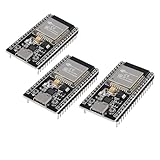
- ESP32 CP2012 USB C (Type-C) core board, it has 38 pins and more features than a 30-pin module. Narrower width, can be connected to the breadboard very well.
- ESP32 integrates antenna, switches, RF balun, power amplifiers, low noise amplifiers, filters and power management modules.
- Support many kinds of interfaces such as UART/SPI/I2C/PWM/DAC/ADC.
- With 2.4GHz WiFi+Bluetooth Dual-mode, support STA/AP/STA+AP mode, universal AT command, easy to use.
Rank #4

- TMS320F2812 DSP Development Board System Board Core Board
Product prices and availability are accurate as of the date/time indicated and are subject to change. Any price and availability information displayed on Amazon at the time of purchase will apply.

