
Sanctions can disrupt transport and manufacturing in two ways: by legally restricting particular vessels, ports, goods, services, companies or transactions, and by adding due-diligence work that slows shipments and procurement. They do not automatically close a route or prohibit every shipment in a sector. The effect depends on the applicable jurisdiction, the parties and goods involved, any relevant ownership or control rules, and whether a license or exception applies.
How do sanctions affect shipping routes and freight?
A route can remain physically open while a particular shipment becomes legally restricted or difficult to arrange. A rule might apply to a vessel, a port call, cargo, a trading party, or a service used to move or finance the goods. Even when no direct prohibition is apparent, companies may need to investigate counterparties, cargo details, routing and documents before proceeding.
Sanctions are jurisdiction-specific. A restriction imposed by one government does not, by itself, establish that the same transaction is prohibited under every other government’s rules. Businesses need to determine which rules apply to their activities and to the people and companies involved.
| Example | What the source establishes | Geography and date | What it does not establish |
|---|---|---|---|
| UK transport restrictions | Restrictions can concern ship ownership, registration, movement or port access. | United Kingdom; the cited transport guidance’s date is not stated. | That the same restrictions apply in every jurisdiction or to every vessel. |
| OFAC maritime warning signs | Gaps in AIS transmissions, abnormal voyage patterns and possible location-data manipulation can call for additional scrutiny. | United States; OFAC communiqué, October 2024. | That one warning sign proves evasion or automatically makes a voyage unlawful. |
| Iran rail and automotive action | The U.S. Treasury announced additional sectoral determinations targeting Iran’s rail and automotive sectors and action against foreign suppliers or facilitators. | United States; October 1, 2026. | That every rail shipment involving Iran, every rail operator, or all car trade is prohibited. |
| Hormuz-related logistics changes | The WTO describes operators exploring multimodal services that combine sea transport with inland road or rail, hubs and land bridges. | Separate Strait of Hormuz disruption; changes described since March 2026. | That sanctions caused the route disruption. |
How can sanctions affect shipping and maritime freight?
Restrictions can apply to the vessel, port, cargo or transaction
UK transport guidance describes restrictions affecting ship ownership, registration, movement and port access. Separately, freight can be exposed through the goods being carried, the shipper or consignee, or services and transactions that support the movement. A vessel’s route being available does not settle whether a particular cargo or transaction is permitted.
#1 Best Overall

- Material: Plastic, ABS.
- Reference Scale: 1:87, Suitable for HO scale.
- Package included: 8pcs uncolored containers.
- Notice: The flat car is not included.
- Pure Color, you can print the logo you need.
Routing and paperwork can raise warning signs
UK freight guidance on Russia-related sanctions recommends checks at consignment level and says that using screening databases alone is not a defence. It identifies concerns such as unusual transit countries, atypical route requests, unexplained handoffs, opaque parties, destinations that do not fit the goods, and vague or inconsistent documents. The guidance is Russia-specific, although it says some advice may apply to other countries sanctioned by the UK.
These are indicators to investigate, not proof that a party is evading sanctions. A route change may have a legitimate operational explanation; assess the transaction as a whole rather than treating one anomaly as conclusive.
Rank #2

- Material: Plastic, ABS.
- Reference Scale: 1:87, Suitable for HO scale.
- Package included: 9pcs uncolored containers.
- Notice: The flat car is not included.
- Pure Color, you can print the logo you need.
AIS gaps merit scrutiny, not an automatic conclusion
In an October 2024 communiqué, the U.S. Treasury’s Office of Foreign Assets Control (OFAC) highlighted extended periods without Automatic Identification System (AIS) transmissions, abnormal voyage patterns and possible vessel-location manipulation as maritime warning signs. OFAC recommends added diligence to establish cargo origin and destination. An AIS gap alone does not establish sanctions evasion.
Can sanctions stop rail freight?
They can restrict particular rail-related transactions, but a reference to a sector does not mean that every train, operator or shipment connected with it is prohibited. Measures may apply to named entities, goods, services, or businesses supporting a targeted sector. Their practical reach depends on the specific measure and the parties and activities involved.
Recommended Free Tools
Rank #3
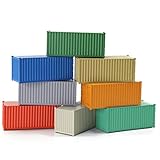
- Pure Color,you can print the logo you need.
- High quanlity.It is a great gift for your children or home decor.
- Size: 7cm*3cm*2.8cm/2.76in*1.18in*1.1in.
- 1: 87 HO scale model
- Package included:8pcs different colors containers.
On October 1, 2026, the U.S. Treasury announced additional sectoral determinations targeting Iran’s rail and automotive sectors and said it was also targeting foreign suppliers and facilitators. That is a dated, U.S.-specific example of how action can reach beyond a local operator into supplier and support networks. It should not be read as a blanket ban on all rail freight involving Iran.
Rail freight can also become operationally relevant when companies shift cargo away from a disrupted maritime route. That kind of mode change is a response to a physical logistics problem; it does not, by itself, show that sanctions caused the problem or that the replacement route is legally restricted.
Rank #4
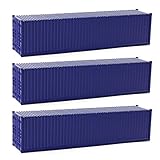
- Pure Color,you can print the logo you need.
- High quanlity.It is a great gift for your children or home decor.
- Size: Approx. 5.51*1.1*1.26inch (L*W*H)
- 1: 87 HO scale model
- Package included:3pcs deep bule containers.
Why can sanctions disrupt auto supply chains?
Vehicle production depends on connected businesses: manufacturers, component suppliers, transport providers and other intermediaries. A measure affecting a company or sector can therefore prompt checks or changes across procurement and logistics, even where the rule does not prohibit every car or component transaction.
The U.S. Treasury’s October 1, 2026 announcement concerning Iran illustrates this network effect: it described action targeting the automotive sector as well as foreign suppliers and facilitators supporting Iranian firms. What a particular business must do depends on the applicable jurisdiction, the designated parties, relevant goods, ownership or control rules, licenses, and the facts of the transaction. A sectoral determination should not be converted into a claim that all global automotive trade is prohibited.
Free tools Windows power users keep installed
One-click scans. No signup required.
Best Value
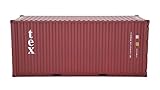
- MATERICAL:The Shipping Container made of ABS Resin,The floor of the container is made of wood.
- SCALE:1/20 20GP shipping container. The weight approximately 800g.
- SIZE: 11.8L x 4.92W x 5.31H inch (30L x 12.5W x 13.5H cm)
- HIGH SIMULATION:This container model is high simulation with the real container, it is in accordance with 20 GP container drawings.This miniature scale container model with Nano metal paint&Nano printing&hand assembled.
- ACCEPT CUSTOM:This container model accept custom,we can printed your LOGO on the container model.This Mini container can become your private gifts and better show your brand.
How should a company check whether cargo, a ship or a transaction is restricted?
Official freight guidance points to a transaction-level review rather than reliance on a single database result. These are general compliance steps, not legal advice; consult qualified counsel if a planned transaction may be restricted.
- Identify the applicable rules. Establish which jurisdictions’ sanctions may apply to the company, shipment, parties, vessel, services and payment. Do not assume that one country’s rules answer the question for all others.
- Check the parties and the goods. Review the shipper, consignee and other relevant counterparties, as well as the cargo description and any license requirements that may apply. Consider whether ownership or control rules are relevant.
- Review the vessel and itinerary. Where maritime transport is involved, examine vessel information, port calls and voyage patterns. Investigate unexplained route changes or AIS anomalies instead of treating an alert as a finding.
- Compare the documents with the transaction. Look for vague or inconsistent descriptions, unexplained intermediaries or handoffs, and destinations or transit points that do not fit the goods and stated commercial purpose.
- Recheck when circumstances change. A changed counterparty, route, cargo description or other material detail can alter the risk assessment. Record questions raised, explanations received and any escalation.
- Pause and seek qualified advice when needed. If the rules, parties, license status or transaction facts leave a material restriction question unresolved, do not treat a database match or the absence of one as a complete legal assessment.
UK freight guidance expressly places responsibility for a company’s own due diligence on that company; external screening databases alone do not provide a defence. Its cited advice is Russia-specific, though the guidance says some points may apply to other UK-sanctioned countries.
Are route disruptions the same as sanctions?
No. Sanctions are legal measures; conflict, safety conditions or a chokepoint disruption can physically interrupt transport independently of sanctions. The WTO’s live portal on the Strait of Hormuz describes shipping companies and regional logistics operators exploring, since the disruption in March 2026, Gulf services combining sea transport with inland road or rail, regional gateway hubs and land-bridge corridors. This is an example of logistics adapting to a separate route shock, not evidence that sanctions caused the disruption.
The distinction matters when assessing a delay or rerouting. A physical disruption can change which routes or modes are practical; sanctions analysis asks whether the resulting parties, goods, services and transactions are permitted under applicable rules. Both issues can affect one shipment, but one does not prove the cause or legal status of the other.
The Tool Desk
Outbyte Driver Updater FREEFix the driver behind crashes, sound loss and screen glitchesFind Drivers →Outbyte PC Repair FREEClear out junk files and repair common Windows errorsFree Scan →Quick Recap
Product prices and availability are accurate as of the date/time indicated and are subject to change. Any price and availability information displayed on Amazon at the time of purchase will apply.

