
A phone can use a satellite when it has no usable cell or Wi-Fi connection, but the feature is not universal satellite internet. Your handset must support a particular satellite service, that service must be available where you are, and the phone needs a workable path to the satellite—usually a clear view of the sky. Some services are designed for emergency messages; carrier-linked services may support texting and selected apps.
How does satellite connectivity work on my phone?
In a satellite connection, the phone sends data to a satellite, which relays it to ground infrastructure. From there, the message can be routed to emergency services or through a mobile-network partner. The satellite is moving and much farther away than a cell tower, so the phone may need to be aimed toward it and the exchange can take longer than ordinary cellular messaging.
Apple says its Emergency SOS via satellite uses Globalstar low-Earth-orbit satellites and spectrum designated for mobile-satellite service. Apple’s 2022 launch announcement described a 24-satellite network and cited an Apple Advanced Manufacturing Fund investment of $450 million to support infrastructure. Those are historical launch-era figures, not a current satellite count or estimate of the service’s total cost. Apple’s 2022 announcement explains the launch architecture.
Direct-to-device (D2D) is the broader term for a satellite communicating directly with a consumer device such as a phone, without specialized satellite hardware or a large ground antenna. In the United States, the Supplemental Coverage from Space framework allows satellite operators to use spectrum held by a partner mobile operator. The U.S. Spectrum Innovation Hub describes D2D as a way to supplement terrestrial networks where cell towers are unavailable or impractical—not replace them. T-Mobile T-Satellite with Starlink is one consumer example of this carrier-linked approach. U.S. Spectrum Innovation Hub: D2D Development and the FCC’s Supplemental Coverage from Space overview describe the model.
#1 Best Overall
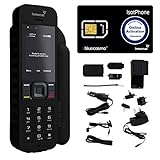
- Global Coverage: No Roaming Charges - Make and receive voice calls, SMS, track your position with GPS from anywhere on the globe.
- Complete Kit: Includes Inmarsat IsatPhone 2.1 satellite phone handset, Lithium-ion battery, International AC wall charger, Automobile DC charger, Holster with belt clip, Hands free earpiece, Lanyard, USB cable, USB thumb drive with documentation, Quick start guide, SIM card and 18 month warranty.
- Durable Design: Withstands dirt, dust and jets of water from every direction; IK04 shock resistance rating and an ingress rating of IP65; Operational temperature range of -20°C to +55°C.
- World Class Support: Get expert assistance from the BlueCosmo team for any satcom needs; Choose from various service options to fit your budget.
- Long Battery Life: 8 hours talk time and 160 hours standby; Lithium-ion battery provides longest lasting power for your satellite phone.
What can a satellite-connected phone actually do?
Capabilities depend on the service, phone, and location. Emergency satellite messaging is not the same as a phone gaining ordinary broadband internet. Apple lists Emergency SOS, roadside assistance, Messages, and Find My among its satellite features, subject to feature and regional availability. T-Mobile describes texting and access to selected apps through T-Satellite; text-to-911 has its own eligibility details. Check the provider’s current service page for what works on your device and plan.
| What to compare | Handset-specific satellite features: Apple | Carrier direct-to-device: T-Mobile T-Satellite with Starlink |
|---|---|---|
| Network relationship | Apple documents Globalstar and third-party satellite network operators. | Satellite access is linked to a mobile operator and an eligible phone. |
| Service scope | Emergency SOS, roadside assistance, Messages, and Find My, depending on feature and regional availability. | Texting and selected apps; text-to-911 eligibility is separate. |
| Availability checks | Supported iPhone, supported country or region, software, no cellular or Wi-Fi coverage, and local approvals. | Eligible device, service location, plan or add-on, and local signal conditions. |
| Physical conditions | A clear view of sky and horizon; obstructions may delay or prevent connection. | T-Mobile says service depends on location and recommends a clear sky view. |
| Cost terms | Apple says features are included free for two years after activation of iPhone 14 or later; check current terms. | T-Mobile lists a $10 per-line monthly add-on for some plans and says some qualifying plans include the service; check current terms. |
This is a comparison of the two documented service examples, not a ranking of all satellite networks. Apple’s eligibility and pricing terms should not be assumed to apply to another provider. See Apple’s satellite feature availability and requirements and T-Mobile’s T-Satellite page for current details.
Rank #2

- GLOBAL COVERAGE: NO ROAMING CHARGES – make and receive voice calls, SMS, track your position with GPS from anywhere on the globe – never pay roaming charges. Your coverage area is EARTH (except the extreme north and south polar regions).
- EVERYTHING YOU NEED WITH 18 MONTH WARRANTY: Inmarsat IsatPhone 2.1 satellite phone handset, Lithium-ion battery, International AC wall charger with international plugs, Automobile DC charger, Holster with belt clip, Hands free earpiece, Lanyard, USB cable, USB thumb drive with documentation, Quick start guide, SIM card & 18 MONTH WARRANTY exclusively from BlueCosmo Satellite Communications.
- RESISTS WATER AND DUST: SHOCK RESISTANT: TOUGH AND RELIABLE: IK04 shock resistance rating and an ingress rating of IP65: the IsatPhone2 can withstand dirt, dust and jets of water from every direction. It has a humidity tolerance of 0 to 95%, and an operational temperature range of -20°C to +55°C (-4°F to +131°F). An innovative transflective display technology provides enhanced daytime visibility. Longest lasting batteries of any satellite phone with 8 hours talk time and 160 hours standby.
- WORLD CLASS SUPPORT AND SERVICE: When you purchase your IsatPhone 2 satellite phone from BlueCosmo, you get a team of professionals who have been deploying satellite communications around the world for the most demanding customers since 2003. Our IsatPhone service options can fit any budget and we can get you up and running for all your critical satcom needs. Anytime. Anywhere.
Where can a phone connect to a satellite?
There is no single worldwide coverage map for “phone satellite.” Availability depends on the handset and satellite network, the country and local regulations, the carrier or service provider, and the user’s surroundings.
Apple Emergency SOS via satellite
Apple lists Emergency SOS via satellite for iPhone 14 or later in Andorra, Australia, Austria, Belgium, Canada, France, Germany, Iceland, Ireland, Italy, Japan, Luxembourg, Mexico, the Netherlands, New Zealand, Norway, Portugal, Spain, Switzerland, the U.K., and the U.S. Users must be somewhere without cellular and Wi-Fi coverage. Apple says availability in additional places depends on government approvals and market requirements, so consult its live availability page rather than assuming that a nearby country is covered. Apple’s availability page is the current reference.
Do these 3 things before closing this tab:
1Scan for outdated or missing drivers - takes under a minute2Repair Windows errors before they cause bigger problems3Fix the driver behind crashes, sound loss and screen glitchesRank #3

- FLEXIBLE AIRTIME OPTIONS FOR GLOBAL USE - The Inmarsat IsatPhone 2 satellite phone includes a free SIM card. Before using your Inmarsat satellite phone, you must purchase an airtime plan for the SIM provided. Prepaid plans offer a set number of minutes for a one-time payment, with the option to add more anytime. Postpaid plans provide continuous service for a fixed monthly fee, ensuring uninterrupted use. We will provide information on the various plans available following your purchase.
- NEAR GLOBAL SATELLITE COVERAGE – Stay connected almost anywhere with the Inmarsat IsatPhone 2, offering reliable voice calls, SMS, and GPS tracking worldwide, excluding polar regions. Ideal for remote areas, off-grid adventures, and emergency preparedness.
- RUGGED & LONG-LASTING PERFORMANCE – Built for extreme conditions with shock, dust, and splash resistance, plus an impressive battery life of up to 8 hours talk time and 160 hours standby, ensuring dependable communication when you need it most.
- EMERGENCY & SAFETY FEATURES – Includes a one-touch assistance button to send GPS location data to emergency contacts, plus incoming call alerts even with the antenna stowed, so you're always reachable in critical situations.
- EXPERIENCED CUSTOMER SUPPORT – We have supported more than 50,000 customers across 130+ countries and our knowledgeable and friendly support team is always ready to support you, seven days a week, 365 days a year. We offer an online portal for activations, top-ups and extensions and offer a range of prepaid and postpaid airtime plans to suit any requirement.
Carrier direct-to-device services
Carrier services have their own eligible devices, service areas, plans, and supported features. T-Mobile says T-Satellite automatically connects on eligible phones, with availability dependent on location and a clear sky view. Its service page lists a $10 monthly add-on for some plans and says some qualifying plans include access; pricing, plan eligibility, and features can change. Confirm the current details with T-Mobile before relying on them.
Independent reader supportYour contribution helps us test, update, and keep practical guides available for everyone.Why can satellite coverage fail even when a satellite is overhead?
A coverage map indicates where a service may be offered; it does not guarantee a useful connection at every spot. Buildings, trees, terrain, and other obstructions can block the signal. Device eligibility, outages, local spectrum rules, and the particular service’s limitations also matter. Apple advises users to get a clear view of the sky and horizon; heavy foliage or other obstructions can prevent a connection. Apple’s support guidance explains the conditions for its satellite features.
Rank #4
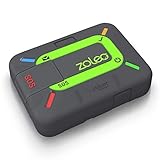
- Global satellite messaging: Stay connected beyond cell coverage, use ZOLEO with your smartphone to transmit text messages and e-mails over the Iridium satellite network, cellular or Wi-Fi using the lowest-cost network available (service plan required)
- Emergency SOS: Send an SOS alert with your GPS location to 24/7 emergency monitoring center if something goes wrong, or access Medical Assist for non-emergency help
- Optional Travel Risk Management Coverage: Feel more secure wherever you go with a Field Rescue Membership from Global Rescue. Affordably priced, this travel risk management add-on offers immediate medical coverage for safe extraction and transportation to the nearest capable medical facility.
- Dedicated SMS number: An assigned ZOLEO SMS number and email enables contacts to reach out directly when you're off the grid
- Check-in: Send unlimited check-ins via the ZOLEO device or app, included in your plan
- Sky view: Open surroundings are more favorable than dense trees, buildings, or steep terrain.
- Device and service: The phone must support the specific feature, and the feature must be available in that country or service area.
- Local conditions: Signal quality, satellite position, network status, and message length can affect whether and how quickly a message gets through.
How long does a satellite message take?
Apple Support, on a page dated September 30, 2026, estimates that a satellite message may take 30 seconds or more to send in ideal conditions, with a direct view of the sky and horizon. Under light or medium foliage, at higher latitudes, or in other signal-degrading conditions, Apple says sending may take several minutes. Heavy foliage or obstructions can prevent a connection. These are Apple’s estimates for its service, not a performance guarantee for every provider or message. Apple Support’s timing guidance also notes that message length and satellite network status affect connection time.
How to use iPhone Emergency SOS via satellite
- Try an emergency call first. Apple instructs users to call emergency services; if the call does not connect, use emergency texting. In the U.S., an iPhone may first try other available carrier networks.
- Move to an open area if possible. Find a clear view of the sky and horizon. Foliage, buildings, and terrain may slow or block the connection.
- Follow the iPhone’s on-screen instructions. Use the satellite alignment prompts and answer the emergency questionnaire so responders receive relevant details.
- Send the message and wait for the relay. Emergency services may receive information such as your location, including elevation, along with your questionnaire answers. Timing varies with conditions.
These steps describe Apple’s feature, not an instruction for every phone or satellite provider. For device-specific directions and supported features, use Apple’s emergency satellite support page.
Quick Recap
What to check before relying on phone satellite service
- Exact phone model and software version: support for one satellite feature does not guarantee support for another.
- Country or service area: verify the provider’s current coverage and local availability.
- Feature scope: distinguish emergency messaging from texting, selected apps, or other services.
- Plan and eligibility: check carrier terms, add-on requirements, and any separate rules for emergency functions.
- Physical surroundings: plan for a clear view of the sky and understand that obstructions or local conditions can defeat a connection.
Product prices and availability are accurate as of the date/time indicated and are subject to change. Any price and availability information displayed on Amazon at the time of purchase will apply.

