
Recommended Free Tools
iTechGuides is reader-supported. When you buy through links on our site, we may earn an affiliate commission. As an Amazon Associate I earn from qualifying purchases. Learn more
Need a server to try this on? Antihost offers Linux VPS plans with NVMe storage, full root access and a 14-day free trial.
In 2026, running Home Assistant yourself usually costs about $201–$207 for the first year with a Home Assistant Green and no cloud subscription, before tax. Add the optional Home Assistant Link annual plan and the first-year total is about $266–$272. Electricity is only a few dollars per year; the hardware is the main expense.
The Home Assistant software can be self-hosted without a mandatory monthly fee, but you still need an always-on computer, its power supply and storage, and possibly radio hardware for Zigbee or Thread devices. A Raspberry Pi build is no longer an automatic bargain once the required SSD, case and power supply are included.
What you are actually paying for
“How much does Home Assistant cost?” has three different answers because the software, the host computer and optional online services are separate costs:
- Host hardware: a dedicated Home Assistant Green, a Raspberry Pi, or another computer you already own.
- Electricity: the host runs continuously, but its low power draw keeps this part small.
- Optional services and accessories: Home Assistant Link (formerly Home Assistant Cloud), storage, a power supply, a case and radio adapters.
There is no universal household average. Your total depends on whether you already have suitable hardware, your electricity tariff, local taxes and the wireless protocols used by your devices. The figures below use the 2026 suggested prices and published power measurements available for the Green and Raspberry Pi 5.
Popular on Amazon
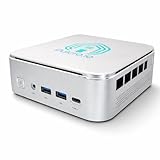
- 🌍 𝗔𝘀𝘀𝗲𝗺𝗯𝗹𝗲𝗱 𝗶𝗻 𝘁𝗵𝗲 𝗨𝗦𝗔 – Built and quality-checked in Texas with a 2-Year US-Based Limited Warranty for dependable long-term support.
- 🏠 𝗛𝗼𝗺𝗲 𝗔𝘀𝘀𝗶𝘀𝘁𝗮𝗻𝘁 𝗢𝗦 𝗣𝗿𝗲𝗶𝗻𝘀𝘁𝗮𝗹𝗹𝗲𝗱 – Ready to power your smart home locally with fast, reliable automation and no mandatory cloud dependence. A truly powerful smart home hub.
- ⚙️ 𝗗𝗲𝘀𝗶𝗴𝗻𝗲𝗱 𝗳𝗼𝗿 𝗖𝗼𝗻𝘁𝗶𝗻𝘂𝗼𝘂𝘀 𝗢𝗽𝗲𝗿𝗮𝘁𝗶𝗼𝗻 – Built for reliable 24/7 performance powering virtualization, automation, containers, storage, and professional workloads.
- 🧠 𝗖𝗵𝗼𝗼𝘀𝗲 𝗬𝗼𝘂𝗿 𝗣𝗿𝗼𝗰𝗲𝘀𝘀𝗼𝗿 𝗣𝗲𝗿𝗳𝗼𝗿𝗺𝗮𝗻𝗰𝗲 – Available with AMD R2314 (efficient 4-core), AMD R2514 (8-thread multitasking), or Intel Core i3-1215U (hybrid 6-core performance) to match your workload.
- 💾 𝗘𝘅𝗽𝗮𝗻𝗱𝗮𝗯𝗹𝗲 𝗥𝗔𝗠 & 𝗨𝗽 𝘁𝗼 𝟰𝗧𝗕 𝗡𝗩𝗠𝗲 𝗦𝘁𝗼𝗿𝗮𝗴𝗲 – Dual SO-DIMM slots support up to 64GB RAM. Dual NVMe SSD slots support up to 4TB total storage. Select installed memory and storage based on your needs.
Home Assistant Green price in 2026
Home Assistant Green has a 2026 suggested retail price of $199 USD or €179. The USD suggested price excludes tax; the EUR suggested price includes applicable taxes. Retailers can charge more or less, and European listings in particular vary considerably.
That is a major change from the device’s 2023 launch price of $99. Nabu Casa said the component cost of building a Green had nearly doubled since production began. The price increase took effect in January 2026, and the announcement was updated on April 24, 2026.
Free tools Windows power users keep installed
One-click scans. No signup required.
| Item | 2023 launch | 2026 suggested price | Important qualification |
|---|---|---|---|
| Home Assistant Green | $99 | $199 USD | USD excludes tax; retailer prices vary |
| Home Assistant Green (euro pricing) | Not stated | €179 | Applicable taxes included in the suggested EUR price |
The Green is a ready-to-run appliance, so its price includes the computer platform in one product rather than requiring you to source a board, storage and power accessories separately. It does not include a built-in Zigbee or Thread radio, however. If your devices use either protocol, plan for a compatible USB coordinator or other radio hardware at an additional, locally determined cost.
DIY Raspberry Pi cost: why the gap is small
A Raspberry Pi can host Home Assistant, but compare a complete, reliable build rather than the bare board price. A 2026 guide cited a ready-to-run Raspberry Pi 4 setup at about €140, compared with €179 for a Green. That difference is only indicative: local availability and bundles change the numbers.
A Raspberry Pi 5 build also needs an NVMe SSD, a case and a 27 W power supply. Once those parts are included, the total is roughly comparable to a Green. The exact amount depends on the prices where you live, and no single verified Pi 5 total applies to every market.
| Approach | What must be included | 2026 cost position | Best fit |
|---|---|---|---|
| Home Assistant Green | Appliance, storage and power hardware supplied as one product; add a radio if needed | $199 / €179 suggested retail | Want the simplest dedicated installation |
| Ready-to-run Raspberry Pi 4 | Complete bundle, not only the board | About €140 in one 2026 guide; local price varies | Already have compatible parts or find a genuine bundle discount |
| Raspberry Pi 5 DIY | Board, NVMe SSD, case and 27 W power supply | Roughly comparable to Green after accessories; exact total not fixed | Prefer modular hardware and are comfortable assembling it |
The practical saving from DIY is therefore much smaller than older guides suggest. A bare-board comparison understates the cost because Home Assistant needs dependable storage and power for an always-on service.
Electricity: only a few dollars a year
Published measurements put a Home Assistant Green at about 1.7 W idle and 3 W under load. Assuming it runs 24 hours a day, 365 days a year (8,760 hours), that equals:
- 1.7 W: approximately 14.9 kWh per year.
- 3 W: approximately 26.3 kWh per year.
At an illustrative electricity rate of $0.15–$0.30 per kWh, the Green costs about $2.24–$7.89 per year. The range is an arithmetic estimate, not a utility quote; replace the assumed rate with your tariff.
Also popular on Amazon

- 【All in One Control Panel With】 Enjoy a larger view with the 4.7-inch display that Control your home with just a tap—whether it’s monitoring energy use, viewing live cameras, adjusting the thermostat, managing your lighting or even browsing the web
- 【Home Security】Customize 3 modes by setting different arming devices. When a sensor is triggered, the panel will sound an alarm and send a notification to your phone
- 【Power Consumption】 You can select devices with energy statistics functions to track their daily energy consumption over a week
- 【Camera Viewer】 NSPanel Pro can be used as a display and supports adding the following four types of cameras for live monitoring, allowing real-time views of your living room, garage, bedroom, and more
- 【Explore Webpages】Listening to music, watching videos, or checking out the latest advice? Save the address in NSPanel Pro’s Webpages, start it quickly with one click, and relax anytime
A 2026 guide estimates a Raspberry Pi 5 at about 2.7–3.0 W idle. That corresponds to approximately 23.7–26.3 kWh annually, or about $3.55–$7.89 per year at the same $0.15–$0.30 assumptions. Actual consumption changes with attached USB devices, HDMI, Ethernet activity and other peripherals.
| Host and condition | Power used | Annual energy at 24/7 operation | Annual cost at $0.15–$0.30/kWh |
|---|---|---|---|
| Green, idle | 1.7 W | 14.9 kWh | $2.24–$4.47 |
| Green, under load | 3 W | 26.3 kWh | $3.95–$7.89 |
| Raspberry Pi 5, idle estimate | 2.7 W | 23.7 kWh | $3.55–$7.11 |
| Raspberry Pi 5, upper estimate | 3.0 W | 26.3 kWh | $3.95–$7.89 |
Electricity is consequently a small share of ownership cost. The purchase price and any subscription dominate the first year.
The Tool Desk
Outbyte PC Repair FREERepair Windows errors before they cause bigger problemsFix Now →Outbyte Driver Updater FREEScan for outdated or missing drivers - takes under a minuteDriver Scan →Home Assistant Link: the optional recurring charge
Home Assistant Link, previously called Home Assistant Cloud, costs $6.50 per month or $65 per year before tax on the published US pricing. A 31-day free trial is available, and the annual plan is roughly equivalent to receiving two months free compared with paying twelve monthly charges.
The subscription is optional. It packages:
- Remote access to your Home Assistant instance.
- Offsite backups.
- Alexa and Google Home voice-control integration.
- Cloud speech processing.
Pricing depends on location, currency and billing period. A community user reported €7.50 per month and €75 per year in the EU including VAT, but that is a user-reported regional price rather than a universal rate. Check the price shown for your country before subscribing. Third-party pages that quote about $8 per month may be outdated or may reflect a different region.
Nabu Casa has scheduled the name change from Home Assistant Cloud to Home Assistant Link for December 2, 2026. It is the same subscription, not a second service or a change to the underlying features.
What happens if you do not subscribe?
Local automations, dashboards and device control continue to run on your own installation without Link. For remote access, alternatives include a VPN, port forwarding with dynamic DNS, Cloudflare Tunnel or Tailscale. Those methods were not assigned prices here, so treat their cost as dependent on your chosen service and setup rather than assuming they are free or paid.
Worked first-year budgets
Green without Home Assistant Link
Using the $199 suggested US hardware price and the estimated $2–$8 annual electricity range:
- Hardware: $199.
- Electricity: approximately $2–$8.
- First year: approximately $201–$207 before tax.
This is the closest answer to “run Home Assistant yourself” when you use local control and manage remote access independently.
Also popular on Amazon

- Only mount plastic mount is included. Home assistant device is not included.
- Made In USA from High Quality Materials.
- Secure Mounting — Uses #6 flat head screws (Not Included) for a stable, reliable installation.
- Easy Access Ports: Design ensures all bottom ports are fully accessible for power, network, and peripheral connections.
- Cooling-Friendly Design: Open structure allows airflow around cooling fins to help maintain optimal operating temperature.
Green with the annual Link plan
- Hardware: $199.
- Home Assistant Link annual plan: $65 before tax.
- Electricity: approximately $2–$8.
- First year: approximately $266–$272 before tax.
The subscription is therefore most of the recurring cost. In later years, once the hardware has already been purchased, a subscriber’s predictable recurring portion is about $65 plus electricity, before any tax or regional price difference.
DIY Raspberry Pi 5
A Pi 5 build has no single verified total because board, NVMe SSD, case, 27 W power supply and local taxes vary. After those components are added, the hardware outlay is roughly comparable to the Green, followed by similar low single-digit annual electricity costs. Any Link subscription is the same optional charge regardless of which computer runs Home Assistant.
Windows Errors? Fix Them Before They Spread
Repair common Windows errors and clear accumulated junk for a smoother, more stable PC - no reinstall needed.Free scan · no reinstallOutdated Drivers Are Slowing You Down
One free scan finds every outdated or missing driver and matches the right update for your exact hardware.Free scan · exact hardware matchHow to calculate your own total
- Choose the host. Use $199 or €179 as the Green’s 2026 suggested reference, or list every component for a Pi build: board, storage, case and power supply.
- Add radio hardware. The Green has no built-in Zigbee or Thread radio. Count a compatible USB coordinator if your devices require one. Do not assume a radio is included in the appliance price.
- Check tax treatment. The USD suggested price excludes tax, while the EUR suggested price includes applicable taxes. Your retailer may apply different tax rules.
- Estimate electricity. Multiply watts by 8,760 hours, divide by 1,000 to get kWh, then multiply by your local per-kWh rate. For example, 3 W × 8,760 ÷ 1,000 = 26.3 kWh per year.
- Decide how remote access will work. Add $65 per year before tax for Link if you want its bundled service, or select and price a self-managed method.
- Separate one-time and recurring costs. Hardware and accessories are primarily upfront; electricity and a subscription recur. Keeping those columns separate prevents a low-power host from looking cheaper than it really is.
Costs people commonly miss
Storage and power on DIY systems
Comparing only a Raspberry Pi board with the Green ignores the NVMe SSD, case and 27 W power supply required for a practical Pi 5 installation. These parts are why a complete DIY system can end up near the appliance price.
Wireless protocol hardware
Zigbee and Thread devices need a coordinator or radio. Because the Green has no integrated radio, add that hardware to your budget. The available information does not establish one reliable worldwide price, so use the current price of the specific compatible model in your market.
Taxes, currency and retailer markups
Suggested prices are not guaranteed checkout totals. USD excludes tax, EUR includes applicable taxes, and local stores may charge above or below the suggestion. Currency conversion can also make an imported system more expensive than a local alternative.
Electricity assumptions
The $2–$8 annual figures assume continuous operation and electricity at $0.15–$0.30 per kWh. A higher tariff, a power-hungry USB accessory or a host that draws more than the quoted measurement will increase the result.
Quick wins for a faster PC:
Scan for outdated or missing drivers - takes under a minuteDriver Scan →Clear out junk files and repair common Windows errorsFree Scan →Fix the driver behind crashes, sound loss and screen glitchesFind Drivers →Is self-hosting Home Assistant free?
The Home Assistant software itself does not force you to buy a cloud subscription, but “free” is not the same as “zero cost.” You need an always-on computer and electricity, and many installations need radio hardware. A person who already owns a suitable low-power computer may spend very little beyond power; someone buying a new Green or a complete Pi kit pays the upfront hardware cost.
Home Assistant Link is likewise a convenience option, not a requirement for local automations. Its value is concentrated in managed remote access, offsite backups, voice-assistant integration and cloud speech processing. If those services matter more than minimizing recurring charges, include the $65 annual US reference price in your budget.
Which setup makes financial sense?
- Choose Green if you want one supported appliance and do not want to source storage, cooling, a case and a power supply separately. At $199 or €179 suggested retail, it is no longer a $99 bargain, but its all-in simplicity can justify the difference from a similarly complete Pi build.
- Choose a Raspberry Pi if you already own compatible parts, can buy a complete bundle at a meaningful discount, or specifically want modular hardware. Recalculate after adding the SSD, case and 27 W supply.
- Skip Link if local-only operation or a self-managed remote-access method meets your needs.
- Add Link if you want the bundled remote-access, backup and voice features and prefer a predictable service rather than maintaining those pieces yourself.
For most new buyers in 2026, the realistic baseline is about $201–$207 in the first year for a Green running locally, or about $266–$272 with the annual Link plan, before tax and before any Zigbee or Thread radio. Electricity remains a minor line item; hardware choice and the optional subscription determine the budget.

