
Motorola’s BiStatix proposal put a small radio-frequency identification (RFID) chip and a printed antenna into paper or cardboard packaging, allowing a reader to identify a box wirelessly. Announced with International Paper in April 2000, the smart-box project was intended to automate inventory control and shipment tracking. Its stated launch date was a target, not proof that the product reached the market.
What were Motorola’s BiStatix smart boxes?
They were cardboard shipping boxes designed to carry an embedded RFID chip. Motorola would provide its BiStatix technology, while International Paper planned to manufacture the packaging. The companies described the boxes as a way to automate inventory and shipment processes, with possible uses including identification, routing, tracking, and security against theft or counterfeiting. EDN’s April 2000 report and Computerworld’s coverage describe the announcement and its intended uses.


How could a cardboard box communicate wirelessly?
The concept combined an RF chip with a conductive antenna printed on a paper or cardboard surface. A compatible reader could communicate with the chip without a wired connection; the chip was described as supporting wireless reading and modification of stored data. This differs from RFID constructions that use a metal coil and resonant capacitor: BiStatix aimed to use a printed, ink-based antenna instead.
Motorola and International Paper presented the approach as suitable for corrugated containers, folding cartons, beverage packages, labels, forms, and other non-conductive materials. Motorola’s patent record also describes antennas integrated into substrates such as paper, cardboard, coated cardboard, plastic, labels, boxes, and envelopes. Motorola’s patent record provides technical detail on the substrate and antenna concept.
Do these 3 things before closing this tab:
1Clear out junk files and repair common Windows errors2Scan for outdated or missing drivers - takes under a minute3Repair Windows errors before they cause bigger problems#1 Best Overall

- Compact & Portable Design: Each package includes 50 NFC tags with a 1.0-inch round NTAG215 card, as small as a quarter coin, making it easy to carry and store. The adhesive backing ensures effortless attachment to various surfaces
- Durable & Waterproof: Made of high-quality PET material, these NFC tags are waterproof, durable, and designed to withstand wear and tear. They function perfectly even in wet conditions, ensuring reliable performance wherever you use them
- Easy Setup & User-Friendly: Simply hover your NFC-enabled device over the tag to initiate data transfer. Equipped with 504 bytes of NDEF memory, these tags allow quick writing and sharing of information. They also feature a read-write lock function for flexible use.(NOTE*. - It can not be edited or reset after setting it as a read-only tag. )
- Wide Compatibility: These NFC tags are compatible with devices such as NFC-enabled phones and TagMo Amiibo. They are rewritable, so you can store and update different data as needed. Note: Amiibo tags can only be edited once and cannot be reused
- Versatile Applications: Ideal for creating Amiibo cards, sharing social media links, music, connecting to Wi-Fi, or automating smart home tasks. These tags enable quick and easy data sharing for a variety of uses, from gaming to daily convenience
What could the chip store, and what was it meant to do?
EDN reported that the proposed EEPROM held 1,000 bits of nonvolatile data and could be read or modified wirelessly. That small amount of memory could support an identifier or other limited item information; it should not be confused with the capacity of a modern shipping label or a system that stores a full shipment record on the box itself.
- Identify: associate a box with a product, shipment, or inventory record.
- Route and track: help supply-chain systems register packages as they move through relevant checkpoints.
- Control inventory: make it possible to read package information without opening the box or manually scanning a printed code.
- Support security: provide a potential way to help detect theft or counterfeiting, as described in period reporting; the announcement does not establish the effectiveness of such protections.
RFID can make identification more convenient, but a chip in a box does not by itself provide a complete tracking service. Readers, compatible software, and supply-chain processes would still be needed to capture and use the data.
Rank #2
What did Motorola and International Paper claim in 2000?
The figures below are historical statements or projections reported around the announcement. They are not current prices, verified product specifications, or proof of a commercial launch.
| Claim | Qualification |
|---|---|
| 1,000 bits of EEPROM | Capacity reported by EDN in 2000 for the proposed chip; wireless read and modification were also described. EDN |
| First-quarter 2001 availability | Expected timing stated in the 2000 announcement, not a confirmed launch. EDN |
| Substantially below $1 per chip | Motorola’s RFID director’s projection reported by EDN in 2000; not a current or confirmed selling price. EDN |
| Less than 30 cents per printed tag | Period estimate reported by EE Times in 2001 for the ink-based antenna approach, not a present-day price. EE Times |
| $250 billion in annual U.S. distribution waste | Estimate cited by International Paper’s consumer-packaging executive in 2000, not an independently verified outcome of the project. EDN |
| $70 billion in annual U.S. retail-counterfeiting losses | Estimate attributed to International Paper officials in period reporting. Computerworld |
Can RFID still be integrated into cardboard packaging?
Yes. A 2021 study from Hasselt University demonstrated a related modern approach: researchers connected a flexible 13.56 MHz HF chip to screen-printed antennas and integrated the labels into reusable cardboard packaging. They evaluated 76 paper substrates before selecting materials for the antenna work. This supports the broader feasibility of RFID-enabled cardboard packaging, but it does not mean the modern labels are Motorola BiStatix products or compatible with the original proposal. Hasselt University’s Packaging Technology Center
The Tool Desk
Outbyte Driver Updater FREEScan for outdated or missing drivers - takes under a minuteDriver Scan →Outbyte PC Repair FREERepair Windows errors before they cause bigger problemsFix Now →Rank #3
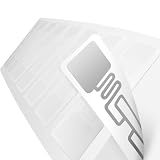
- Protocol: ISO18000-6C, EPC Class1 Gen2
- Reading distance: 0~8m(According to the chip types & RFID card reader)
- Frequency:Ultra High Frequency 860-960mhz Compatible
- Chip:Alien Higgs 9 . EPC: 96 - 496 Bits ,TID: 48 Bits User: 688 Bits
- RFID READER CONFIGURATION NOTICE – Tag data display may vary depending on RFID reader hardware, software, and memory-bank settings. For full unique tag identification, compatible readers should support complete EPC and/or full-length TID memory reading.
Material choice matters. The study notes that paper properties and the conductivity of printed ink affect antenna performance, and that 13.56 MHz operation can limit read range. Anyone evaluating a packaging system should check the operating frequency, practical read range, memory and read/write needs, antenna construction, material compatibility, recyclability, durability, reuse plans, tag cost, and integration requirements for the carton-conversion line. The study establishes a research demonstration, not a universal performance or cost result for every carton or production line.
Independent reader supportYour contribution helps us test, update, and keep practical guides available for everyone.Are Motorola BiStatix smart boxes available today?
The available historical reporting describes a planned product and an expected first-quarter-2001 launch; it does not verify that the launch occurred. No evidence establishes that the original Motorola BiStatix smart-box product is commercially available today. The 2021 packaging study shows a modern research example of RFID in cardboard, but it is not evidence of an ongoing Motorola offering.
Rank #4
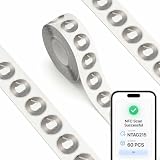
- Set of 60 blank NFC tags: This package includes 60 pieces of 1-inch (25mm) round nfc stickers with a strong self-adhesive backing. Each nfc tags sticker easily attaches to plastic, wood, or glass surfaces. Use these ntag215 nfc stickers for your daily organization. (Note: Not designed for metal surfaces).
- Compatible with TagMo: These ntag215 nfc tags work seamlessly with popular NFC-enabled gaming consoles. You can program these nfc cards to unlock features in supported games. Simply tap the nfc tag to your device to read data. (Note: TagMo game data can only be written once).
- 504 bytes of NDEF memory: Built with a reliable nfc chip, these programmable nfc tags feature 504 bytes of capacity. The nfc chips are fully rewritable for over 100,000 cycles or can be permanently locked as read-only. Edit your data anytime.
- Smart home app automations: Functioning as versatile rfid tags, these nfc stickers programmable via apps work seamlessly with iOS and Android smartphones. Tap these rfid stickers to automate smart home devices, trigger shortcuts, or create an nfc business card.
- Waterproof PVC construction: Crafted from durable white PVC material. Every nfc sticker in this set resists abrasion and defends against accidental water splashes, keeping data on your nfc tags safe. It is a reliable rfid tag choice for indoor projects, including nfc tags for 3d printing.
For a present-day search, “13.56 MHz HF RFID tags for cardboard packaging” is a useful description of the general product category. That category should be treated separately from BiStatix: the cited study does not identify Motorola as the supplier, establish compatibility with Motorola’s original system, or provide a current commercial price.
Quick Recap
Best Value
Product prices and availability are accurate as of the date/time indicated and are subject to change. Any price and availability information displayed on Amazon at the time of purchase will apply.

