
Short answer: Nike gives no mileage rating for the Pegasus specifically. Its general advice for running shoes is to consider replacement around 300–500 miles, but that is a broad guideline—not a promise that every Pegasus pair will last that long. Use mileage alongside the shoe’s cushioning, wear pattern, and how it feels to run in.
What does Nike say about Pegasus mileage?
Nike’s general running-shoe guidance says experts typically recommend replacing running shoes every 300–500 miles. Nike also says there is no set replacement rule, and it does not publish a Pegasus-specific lifespan or guarantee. Treat the range as a reference point, not a deadline: an individual pair may show signs of wear sooner or remain comfortable beyond it.
| # | Preview | Product | Price | |
|---|---|---|---|---|
| 1 |
|
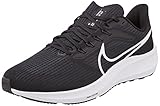
Nike Men's Air Zoom Pegasus 39 Men's Road Running Shoes, Black White Grey Dk Smoke Grey, 11 | $106.68 | Buy on Amazon |
| 2 |

|
Nike Men's Pegasus Trail 5 Black/White/Anthracite/Wolf Grey 10.5 Medium | $135.00 | Buy on Amazon |
Nike summarizes an October 2011 review in Footwear Science covering 18 years of research as suggesting that high-quality running shoes can last more than 600 miles. That is a secondary account of a broad research review, not a Pegasus-specific expectation or a recommendation to run every pair that far. Nike’s general mileage and replacement guidance explains the range and its limits.
How can you tell when a pair is wearing out?
Look at the shoe’s ride and structure, not only the number on your running app. Cushioning can fade before the outsole looks fully worn.
The Tool Desk
Outbyte Driver Updater FREEScan for outdated or missing drivers - takes under a minuteDriver Scan →Outbyte PC Repair FREEClear out junk files and repair common Windows errorsFree Scan →#1 Best Overall
- Nike Men's Air Zoom Pegasus 39 Road Running Shoes
- Flywire technology
- Nike React Technology
- Cushioning and ride: A midsole that feels hard or flat, less bounce, or a heavier-feeling stride can signal that the cushioning has declined.
- Tread and wear pattern: Check for worn tread, especially in a concentrated strike area, and for noticeably uneven wear between sides.
- Shape: Set the shoes on a flat surface. If one slumps or leans instead of sitting upright, its structure may have deteriorated.
- Comfort: New foot pain or soreness in the hips or knees may be a reason to reassess the shoes, but wear alone cannot diagnose the cause. Seek appropriate professional advice for new or persistent pain.
Consider the overall pattern: mileage, visible wear, and a change in comfort or feel. There is no single sign or odometer reading that decides the question for every runner. Nike’s replacement guidance lists these kinds of wear and comfort indicators.
Why does lifespan vary from runner to runner?
Two people can wear through the same model at different rates. Nike identifies factors including runner size, shoe design, running style, weekly mileage, running surface, and climate. Pavement and concrete can cause more damage over time than softer track or trail surfaces; extreme heat or cold can accelerate degradation. Nike Austria also notes that trail shoes used on pavement may break down faster and that pronation patterns can affect wear. These are general considerations, not a way to predict an individual shoe’s exact lifespan.
Weekly mileage can help translate the broad range into a rough calendar estimate, but Nike’s regional pages use different categories. The examples below are from its US guidance and are planning estimates, not Pegasus-specific expiry dates:
Rank #2
- We placed mesh with tighter woven fabric in high-wear areas, like the toes. Mesh combines with open holes on the upper for breathability. Plus, Flywire technology integrates with the laces to help secure your midfoot.
| Training pattern in Nike US guidance | Approximate replacement interval |
|---|---|
| Casual running, up to 10 miles per week | 7.5–12.5 months |
| Up to 15 miles per week while training for a 5K or 10K | 5–8 months |
| Half-marathon training at 20-plus miles per week | 4–6 months |
| Marathon training at 40-plus miles per week | 2–3 months |
Nike Austria provides somewhat different mileage bands and intervals, so don’t combine the two pages into a supposedly exact formula. The estimates are useful for planning inspections and budgeting, while the shoe’s condition and feel remain important. See Nike’s US guidance and Nike Austria’s regional guidance.
Quick wins for a faster PC:
Fix the driver behind crashes, sound loss and screen glitchesFind Drivers →Clear out junk files and repair common Windows errorsFree Scan →What do tests say about the Pegasus 41?
RunRepeat’s laboratory review of the Pegasus 41 measured outsole abrasion with a Dremel. It reported a 0.9 mm dent, compared with a 1.1 mm average for its comparison group, and measured outsole rubber at 3.0 mm, compared with a 3.1 mm average. The review characterized the abrasion result as suggesting decent lifespan, but neither measurement translates into a number of real-world running miles.
Those findings apply to the Pegasus 41 tested in that review. They are not evidence for every Pegasus generation, and they should not be transferred to the Pegasus Plus 2. Nike’s announcement for the Pegasus Plus 2 describes a different design, including ZoomX foam, a curved forefoot Air Zoom unit, and a waffle outsole, but gives no mileage rating or wear test. There is no verified comparable mileage figure across these versions. Read the Pegasus 41 laboratory review and Nike’s Pegasus Plus 2 announcement with that distinction in mind.
Quick Recap
How should you track mileage and decide?
- Record the pair’s starting point. Log the date and mileage when you begin using the shoes for running; note if you also wear them for walking or daily use.
- Use 300–500 miles as a check-in window. It is Nike’s general advice for running shoes, not a required retirement point for Pegasus shoes.
- Inspect the midsole, outsole, and shape. Check for a flatter or harder ride, reduced bounce, concentrated or uneven tread wear, and a shoe that no longer sits upright.
- Make the call using the whole picture. If the ride or comfort has changed, or the shoe shows substantial wear, consider replacing it rather than waiting for a particular mileage total. If you have new or persistent pain, seek appropriate professional advice instead of assuming worn shoes are the cause.
Product prices and availability are accurate as of the date/time indicated and are subject to change. Any price and availability information displayed on Amazon at the time of purchase will apply.

