
What’s actually slowing this PC down?
Pick the symptom - the matching free tool is one click away.
iSCSI multipathing gives a Linux host more than one usable route to the same storage device. The host’s multipath layer presents those routes behind one virtual device, selects paths for I/O, and can redirect eligible I/O when a path fails. To understand how that works, keep three things separate: iSCSI endpoints, protocol sessions, and host-visible block-device paths.
What is iSCSI multipathing?
iSCSI carries SCSI storage commands over IP networks. With multipathing, a host can reach the same logical storage device through multiple routes. Routes may use different host interfaces, networks, target portals, or combinations of these, and they often involve multiple iSCSI sessions. Linux device-mapper multipath groups the resulting block-device paths and exposes a virtual device to applications.
Think of the I/O stack in this order: application → multipath virtual device → one of several SCSI block-device paths → iSCSI session and connection → target portal → target storage. A path is the host’s usable route to the logical unit as represented by an underlying block device; it is not another name for a session.
Storage architecture can complicate the physical picture. A distributed array may accept a session at one member and forward an I/O internally to another member. A host-visible path therefore does not necessarily terminate at the controller or member that physically serves a particular block. The Linux kernel’s dm-switch documentation describes this kind of arrangement, including multiple sessions over multiple host and target interfaces.
#1 Best Overall

- Full-Scale Professional Network-Attached Storage – Business storage solution with hard drives included and optimized to store, share, and back up data for environments of any size.
- Advanced Hardware and Firmware – Product designed for stability and security, capable of handling heavy data loads without dropping performance.
- Purpose-Built for Data Protection – Secure NAS on closed system with 256-bit drive encryption, two-factor authentication, and flexible backup features to keep your data safe.
- Snapshots for Instant Data Backup and Recovery – Snapshots can be created and used to recover data near instantaneously, with little or no system disruptions, and mitigate ransomware.
- Fast Data Transfers – Native 10GbE port for high-speed file transfers with no cable upgrade needed.
What do initiator, target, portal, session, and connection mean?
The iSCSI terms describe different parts of the communication, as defined in RFC 7143:
- Initiator: the endpoint that requests access to storage.
- Target: the endpoint that provides access to storage.
- Portal: an addressable route to a target, associated with a network address and transport endpoint.
- Session: the protocol association between an initiator and a target.
- Connection: a communication channel within a session. A session and its connections are protocol objects, not synonyms for the host’s multipath block-device paths.
In Linux open-iscsi, there is an additional terminology wrinkle: iscsiadm uses “node” for a saved record referring to a portal on a target. That usage differs from the RFC’s definition of an iSCSI node. The Debian Bookworm iscsiadm manual documents the utility’s terminology and modes.
Rank #2

- Full-Scale Professional Network-Attached Storage – Business storage solution with hard drives included and optimized to store, share, and back up data for environments of any size.
- Advanced Hardware and Firmware – Product designed for stability and security, capable of handling heavy data loads without dropping performance.
- Purpose-Built for Data Protection – Secure NAS on closed system with 256-bit drive encryption, two-factor authentication, and flexible backup features to keep your data safe.
- Snapshots for Instant Data Backup and Recovery – Snapshots can be created and used to recover data near instantaneously, with little or no system disruptions, and mitigate ransomware.
- Fast Data Transfers – Native 10GbE port for high-speed file transfers with no cable upgrade needed.
How do multiple sessions provide more than one path?
A host can use multiple initiator interfaces to reach multiple target portals. Those combinations can establish multiple iSCSI sessions and yield multiple SCSI block devices for the same logical unit. Device-mapper multipath recognizes the paths as belonging to one storage device, groups them according to the available path information and configuration, and presents a single multipath device to applications.
The distinctions matter operationally: a discovery record is not proof of a logged-in session, and a logged-in session is not itself proof that a usable multipath block path is present. The actual mapping depends on the host’s interfaces and networking, target configuration, storage design, and Linux distribution.
Rank #3

- Full-Scale Professional Network-Attached Storage – Business storage solution with hard drives included and optimized to store, share, and back up data for environments of any size.
- Advanced Hardware and Firmware – Product designed for stability and security, capable of handling heavy data loads without dropping performance.
- Purpose-Built for Data Protection – Secure NAS on closed system with 256-bit drive encryption, two-factor authentication, and flexible backup features to keep your data safe.
- Snapshots for Instant Data Backup and Recovery – Snapshots can be created and used to recover data near instantaneously, with little or no system disruptions, and mitigate ransomware.
- Fast Data Transfers – Native 10GbE port for high-speed file transfers with no cable upgrade needed.
How does Linux choose a path?
Linux device-mapper multipath uses a path selector to decide among paths in the applicable path group. Selectors apply different decision rules; they are not guarantees of a particular performance outcome. Array-exposed path groups and priorities, workload characteristics, and vendor or platform guidance also affect which policy is appropriate.
| Selector | Decision it makes | What that means |
|---|---|---|
| queue-length | Selects the path with the least number of in-flight I/Os. | It compares outstanding I/O counts. See the Linux kernel’s queue-length documentation. |
| service-time | Estimates service time using the size of I/O already in flight plus incoming I/O, relative to the path’s configured throughput value. | A path with zero relative throughput is not selected while positive-throughput paths are available. See the Linux kernel’s service-time documentation. |
These examples describe how selectors make decisions, not which one is universally best. Use the policy supported and recommended for the deployed host and array rather than assuming round robin, queue-length, or service-time will suit every workload.
Rank #4

- Synology DiskStation DS620slim, made for a variety of server roles such as iSCSI targets backup, file storage, email servers, and domain controllers!
- Intel Celeron J3355 Dual-Core 2.0GHz 2MB CPU, Up To 2.5GHz Turbo; 6GB DDR3L Synology SDRAM Memory; 1TB (2 x 500GB) SATA III Solid State Drives for Ultra Fast Storage; 2 x RJ-45 1GbE LAN Port (with Link Aggregation / Failover support)
- 2 x USB 3.0 Port; Btrf File System for Advanced LUN iSCSI Service
- Synology NAS chassis comes in a sealed box.
- Hard drives and memory upgrades included separately NOT installed, installation required.
What happens when a path fails?
When a route becomes unusable, the multipath layer can mark its path failed and direct eligible I/O over other active paths. The result depends on host, target, and application behavior; the mechanism does not guarantee that every application will experience seamless recovery.
Device-mapper reports PATH_FAILED and PATH_REINSTATED events. The event fields identify the affected path and the valid-path count, as described in the Linux kernel’s device-mapper uevent documentation. The cited documentation does not establish one recovery interval that applies to every deployment.
Recommended Free Tools
Best Value
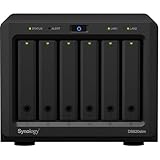
- Synology DiskStation DS620slim, made for a variety of server roles such as iSCSI targets backup, file storage, email servers, and domain controllers!
- Intel Celeron J3355 Dual-Core 2.0GHz 2MB CPU, Up To 2.5GHz Turbo; 6GB DDR3L Synology SDRAM Memory; 2TB (4 x 500GB) SATA III Solid State Drives for Ultra Fast Storage; 2 x RJ-45 1GbE LAN Port (with Link Aggregation / Failover support)
- 2 x USB 3.0 Port; Btrf File System for Advanced LUN iSCSI Service
- Synology NAS chassis comes in a sealed box.
- Hard drives and memory upgrades included separately NOT installed, installation required.
How do I check iSCSI sessions and paths in Linux?
Start by checking the distinct layers rather than treating discovery, login, and multipath status as interchangeable. The exact commands and output can vary by distribution and installed tools; consult the local manuals and inspect the deployed host.
- Review discovery and saved node records. Use
iscsiadmdiscovery and node modes to inspect portals and saved login information. A discovered portal or node record alone does not establish an active session. - Check logged-in sessions and connections. Use
iscsiadmsession mode to display active iSCSI sessions and their connections. Compare what is logged in with the interfaces and target portals the configuration is intended to use. - Check the block paths and multipath device. Inspect the host’s SCSI block devices and multipath status using the tools available on that distribution. Confirm that the expected paths map to the same logical unit and that the multipath device reports usable paths.
- Rescan or log in only as needed. The manual documents login and rescan operations. Follow the storage vendor’s and distribution’s procedures, since changing discovery or login state can affect active storage access.
The iscsiadm manual documents discovery, node, interface, and session modes. It notes that multiple interfaces can be specified for discovery, while each node-mode invocation accepts one interface. Verify the behavior on the distribution actually in use.
Does iSCSI multipathing improve performance?
It can give the host more than one path over which the multipath policy can distribute eligible I/O, but the presence of multiple paths alone does not establish a particular throughput or latency improvement. The selectors described above use queue depth or an estimated service-time calculation; actual results depend on the array’s path groups and priorities, the host and network configuration, workload, and supported policy. The cited documentation explains selector mechanisms, not a generally transferable performance gain.
Quick Recap
Product prices and availability are accurate as of the date/time indicated and are subject to change. Any price and availability information displayed on Amazon at the time of purchase will apply.

