
Industrial IoT platforms connect factory equipment to data and AI applications. They collect and organize signals from machines, process them near the production line or in the cloud, and help factories use AI for tasks such as detecting defects, predicting maintenance needs, and guiding workers.
What an industrial IoT platform does
An industrial IoT platform is the connective and data layer between physical production assets and business or AI applications. It gathers information from heterogeneous machines and control systems, puts that information into usable context, and makes it available for monitoring, analytics, maintenance, quality inspection, and AI-assisted work.
That context matters. A machine reading becomes more useful when connected to the asset that produced it, its operating state, and the production process around it. Without reliable connectivity and contextualized data, an AI model may receive incomplete or inconsistent inputs.
How AI moves from factory signals to production decisions
A common pattern is a closed loop: collect shop-floor data, prepare it for analysis, train or update a model, deploy it for inference, monitor its results, and improve it over time. Some steps happen close to equipment; others use cloud or enterprise services.
#1 Best Overall

- Multi-Protocol Support: Integrates with industrial systems and supports multiple communication protocols, including Modbus RTU/TCP, BACnet, OPC UA, OPC XML-DA, and IEC 104, enabling seamless connection with diverse industrial devices to meet different automation needs.
- Cloud Data Connectivity: Functions as an MQTT, HTTP, and Socket client, providing reliable data transmission and automatic reconnection to maintain continuous data flow for IoT applications.
- JS Script Programming Support: Offers flexibility through JavaScript scripting, allowing users to customize and extend the gateway's capabilities to meet specific application needs.
- Alarm and Event Management: Allows users to set trigger conditions, enabling event triggers and releases based on state transitions.
- Easy Configuration and Management: User-friendly graphical configuration software simplifies setup, allowing easy access to real-time and historical data through an HTTP server interface.
- Collect: Capture machine signals, control-system data, or images from inspection equipment.
- Prepare: At the edge, filter or preprocess data and associate it with the relevant equipment and production context.
- Train: Use scalable cloud or enterprise infrastructure to store data and train or update models.
- Deploy: Send a model to an edge device or plant system so it can evaluate new data where the work happens.
- Monitor and improve: Track model performance and operational results, then use new data to refine the model or its deployment.
Amazon Web Services reports that Siemens Electronics Factory Erlangen used Siemens Industrial Edge and AWS services for this cloud-to-edge lifecycle. In that case, edge deployment allowed the factory to bring model inference close to production while using cloud services in the wider model workflow.
What belongs at the edge and what belongs in the cloud
The edge is computing infrastructure near factory equipment. It can connect to local systems, preprocess data, and run inference without sending every task to a distant service. Cloud and enterprise services are suited to shared storage, fleet-scale management, model training, governance, and integration with business applications. The split depends on the use case, connectivity, response-time needs, and plant requirements.
| Layer | Typical responsibilities | Role in AI-enabled manufacturing |
|---|---|---|
| Equipment and control systems | Produce machine readings, process signals, and inspection images. | Supply the operational data AI applications may use. |
| Factory edge | Connect protocols, preprocess and contextualize data, aggregate locally, and run deployed applications. | Supports local inference and near-equipment data handling. |
| Cloud or enterprise services | Provide broader storage, model training, fleet management, governance, and application integration. | Support model development and coordination across sites or systems. |
Siemens describes Industrial Edge as a secure gateway for vendor-agnostic equipment, supporting MQTT, OPC UA, and REST APIs, with factory-level aggregation and links to cloud LLM platforms. Protocol support helps connect diverse systems; it does not by itself guarantee that every legacy device will work without configuration or integration effort.
Rank #2

- Multiple Internet access methods is offered: Global frequency LTE 4G/3G & Ethernet port & ADSL.
- Router fucntion is supported: Routing, VPN and firewall.
- Super Powerful Edge Computing Capabilities
- Support graphical programming (Node-RED) to quickly develop edge computing functions to meet unique functional requirements.
- Suitable for a variety of industrial IoT scenarios, supporting Modbus RTU/TCP protocol conversion and other popular PLC common protocols.
How factories connect older machines to cloud AI
Factories do not necessarily need to replace every machine to start collecting operational data. An edge gateway can serve as an integration point between equipment and higher-level services, provided the equipment exposes data through a supported protocol or can be connected through an appropriate adapter. The gateway can then aggregate and contextualize selected data before sending it onward.
For brownfield environments, the practical work is often less about choosing a model and more about mapping assets, interpreting signals, aligning timestamps and production context, and establishing secure access between operational technology (OT) and information technology (IT) systems. A proof of concept should include representative legacy equipment and test the actual data path, not just demonstrate a dashboard on clean sample data.
Where factories use AI
Predictive maintenance
Models can analyze equipment data for patterns associated with maintenance needs. The value depends on connecting alerts to maintenance workflows and measuring whether the intervention reduces downtime or cost, rather than counting alerts alone.
Rank #3
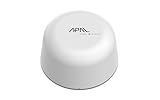
- SATELLITE CONNECTIVITY WHERE OTHERS FAIL: Eliminate dead zones in Agriculture, Forestry, and Mining. Unlike standard LoRaWAN or Cellular networks that require nearby gateways, the Hestia A1 connects directly to the 3GPP NTN Satellite network for deep mountains or open oceans where terrestrial signals cannot reach
- MODBUS PROTOCOL COMPATIBILITY: Built as Modbus Slave Device, Hestia can be connected to most Modbus IoT Host systems to enable satellite connectivity for industrial applications
- PLUG-AND-PLAY VIA RS485/MODBUS: Simple Python script integration with Python samples for Modbus/MQTT available on GitHub. Open custom code architecture provides flexibility for developers without black box limitations
- INCLUDES 3-MONTH SATELLITE DATA PLAN (30KB): Start your remote monitoring project immediately with a free 30KB / 3-Month satellite data plan via the CeresGate platform (Email registration required). Comes with Python sample code on GitHub for easy integration with Raspberry Pi, Linux, and Modbus devices
- TWO-WAY SATELLITE COMMUNICATION & CONTROL: Supports bidirectional data transmission allowing you to receive telemetry from remote sensors and send commands back to control equipment such as opening valves or resetting devices from the cloud without needing complex LoRaWAN infrastructure
Quality inspection
Computer-vision systems can assess production images for defects or other quality conditions. They need suitable image data and a way to manage false calls: an alert that flags acceptable output can create extra inspection work, while a missed defect can carry production or customer consequences.
Worker and engineering assistance
AI assistants can help engineers and frontline workers find information, interpret process data, or work through tasks. Siemens and Microsoft describe Industrial Copilot as combining Siemens domain knowledge with Azure OpenAI Service for engineering and manufacturing work. Microsoft’s intelligent-factory guidance also covers KPI monitoring, safety and quality support, frontline-worker guidance, root-cause analysis, corrective actions, and unifying edge and cloud data.
Do these 3 things before closing this tab:
1Clear out junk files and repair common Windows errors2Scan for outdated or missing drivers - takes under a minute3Repair Windows errors before they cause bigger problemsThese applications have different risk profiles. An assistant that summarizes information is not the same as a system authorized to change a machine process. Factories should define what each application can access and what actions require human review.
Rank #4

- 【Built-in 4G LTE Module】 With a standard SIM card slot that supports the 4G LTE network. It can move into 4G LTE wireless network if the Ethernet Internet fails, in order to ensure constant data transmission in the critical facilities. (Not support Verizon Network in the US)
- 【Industrial Hardware】 Qualcomm QCA9531 chipset provides stable performance, it is commonly used within the industry, which is perfect for industrial users to avoid breakdown. The Built-in hardware watchdog ensures the stability. It’s dedicated hardware that can detect and trigger a processor reset if necessary.
- 【Open Source & Secure】 OpenWrt pre-installed. Perfect for developers or IoT integration development. It supports 30+ VPN service providers, including OpenVPN & WireGuard.
- 【Compact Design】 Its aluminum alloy shell, optional wall-mounted design, and wide range of operating temperature are designed for easy installation, storage, and operation in tough industrial environments.
- 【Easy Configuration】 Supports AT command, manual/automatic dial number, and signal strength checking in our new admin panel for better management and configuration.
Reported results from two factory deployments
The following figures come from AWS-published customer case studies. They are outcomes reported for those deployments, not independently controlled benchmarks for other factories.
| Deployment and source | Reported result |
|---|---|
| Siemens Electronics Factory Erlangen; AWS case study | 80% reduction in machine-learning deployment time; more than 50% reduction in false-call rate; and over 90% storage cost savings compared with on-premises storage. |
| Siemens Energy Connected Factory; AWS case study | 18 factories and 30 custom use cases onboarded; 50% less time spent on data collection; 25% lower asset-maintenance costs; and a 15% increase in machine availability. |
For the Erlangen example, process engineer and computer-vision application owner Marvin Herchenbach described model configuration or retraining taking roughly five minutes up to deployment, compared with about 30 minutes manually before the system. That is a reported workflow improvement from this factory, not a general estimate for model deployment elsewhere.
For Siemens Energy, Chapter Lead Industrial IoT Mario Pilz said AWS IoT SiteWise Edge provided a managed suite of tools and incorporated protocols to support digitization across internal operations. The reported scale and operational results illustrate what one multi-factory program achieved; they do not establish a universal payback period.
Recommended Free Tools
Best Value
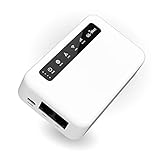
- 【SMART 4G TO WI-FI CONVERTER】Come with a standard nano-SIM card slot that can transfer 4G LTE signal to Wi-Fi networking. Up to 300Mbps (2.4GHz ONLY) Wi-Fi speeds. It can move into a 4G LTE wireless network if the Ethernet Internet fails, in order to ensure constant data transmission.
- 【OPEN SOURCE & PROGRAMMABLE】OpenWrt pre-installed, unlocked, extremely extendable in functions, perfect for DIY projects. 128MB RAM, 16MB NOR + 128MB NAND Flash. Dual Ethernet ports, USB 2.0 port, Antenna SMA mount holes reserved.
- 【SECURITY & PRIVACY】OpenVPN & WireGuard pre-installed, compatible with 30+ VPN service providers. With our brand-new Web UI, you can set up VPN servers and clients easily. IPv6, WPA3, and Cloudfare supported. Level up your online security.
- 【Easy Configuration with Web UI and GoodCloud】GoodCloud allows you manage and monitor devices anytime, anywhere. You can view the real-time statistics, set up a VPN server and client, manage the client connection list, and remote SSH to your IoT devices. The built-in 4G modem supports AT command, manual/automatic dial number, SMS checking, and signal strength checking in Web UI for better management and configuration.
- 【PACKAGE CONTENTS】GL-XE300-AF 4G LTE Portable IoT Gateway (2-year Warranty) X1, Ethernet cable X1, 5V/2A power adapter X1, User manual X1, Quectel EC25-AF 4G module pre-installed. Please refer to the online docs for first set up.
How to evaluate an industrial IoT platform
Compare platforms against the factory’s actual equipment, operating constraints, and target outcomes. A useful evaluation includes:
- Brownfield connectivity: Confirm support for the protocols and control systems present in the plant, and test representative older equipment.
- Edge preprocessing and resilience: Determine what can run locally, how data is handled during a network interruption, and how applications recover.
- Data modeling and fleet management: Check how assets and production context are represented and how data and applications are managed across sites.
- Model lifecycle: Assess how models are trained, deployed, monitored, updated, and rolled back.
- OT/IT interoperability: Examine how the platform works with existing control systems, enterprise software, and other vendors’ tools.
- Security and governance: Review identity, access controls, data handling, and oversight for applications that can influence production decisions.
- Implementation effort and scale: Estimate integration work and operational ownership for both a pilot line and wider deployment.
- Outcome evidence: Define how the project will measure quality, maintenance, availability, energy, or labor outcomes against a baseline.
Before scaling, choose a bounded use case with a measurable operational objective. Record the baseline, include integration and ongoing model-management effort in the business case, and verify that the relevant teams can act on the system’s output. A technically successful model is not enough if it does not fit production workflows.
What the reported benefits do—and do not—show
Customer case studies from AWS, Siemens, and Microsoft provide examples of platform architectures and reported outcomes. They are useful directional evidence, but the cited cases are vendor-published and do not provide a standardized, independently controlled comparison across factories. They also do not establish a single payback period or universal accuracy improvement. Results depend on equipment, data quality, workflow, implementation, and the outcome being measured.
Quick Recap
Product prices and availability are accurate as of the date/time indicated and are subject to change. Any price and availability information displayed on Amazon at the time of purchase will apply.

