
What’s actually slowing this PC down?
Pick the symptom - the matching free tool is one click away.
iTechGuides is reader-supported. When you buy through links on our site, we may earn an affiliate commission. As an Amazon Associate I earn from qualifying purchases. Learn more
An AI planner that excels at chess or Go cannot simply be moved to poker, Stratego, Bridge, or Liar’s Dice. In a perfect-information game, the position at a search node is known. In an imperfect-information game, the same visible history can fit many hidden states, and opponents may be reasoning about those same possibilities. A useful planner must therefore maintain uncertainty, anticipate information revealed by its own actions, and choose a strategy whose value can depend on how often each action is taken.
Perfect information gives a planner a single state to search
Chess and Go expose the position
In chess, every piece, legal move, and relevant board feature is visible to both players. Go has the same property for stones already played and the board’s current occupancy. A search algorithm can represent a node as one concrete state, generate legal successors, estimate their outcomes, and back up values through a tree. If the rules and the opponent model are adequate, deeper or better-guided lookahead directly improves the decision.
Hidden information creates an information set
In poker, your observation includes public cards, your private cards, betting history, and the actions taken by other players, but not their hole cards. In Stratego, the identities of most opposing pieces remain concealed. Every complete arrangement consistent with what you have seen is a possible underlying state. The collection of those states is an information set; a planner that acts as if one sampled arrangement were certainly true can make a decision that is excellent for that arrangement and poor for the others.
Quick wins for a faster PC:
Fix the driver behind crashes, sound loss and screen glitchesFind Drivers →Repair Windows errors before they cause bigger problemsFix Now →The planning state must consequently include a probability distribution, range, or other representation of possible hidden states. It must also account for what the opponent knows. Two positions that look identical to you may differ in the opponent’s information, and two players can hold different beliefs about the same public history.
#1 Best Overall
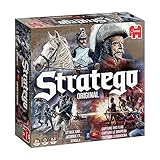
- Stratego is the strategic game where you challenge your opponents in the heat of battle
- Your task is to capture your opponent’s flag while defending your own
- Lead your men into battle, every move is crucial
- Includes 2 x 40 pre-printed playing pieces, Game board, Screen and 2 sorting trays for the pieces
- Suitable for 2 players, aged 8+
Why the value of an action can depend on its frequency
Bluffing is a planning problem, not just a prediction problem
Suppose a poker player bets with strong hands and occasionally bluffs with weak ones. If the bet is always strong, an opponent can fold whenever a bet appears; if it is always a bluff, the opponent can call or raise profitably. The value of the bet depends on the mixture of hands that produce it. A planner must select both an action and an appropriate frequency, while anticipating that the opponent will infer information from that frequency.
This differs from ordinary one-ply search, where an action is assigned a value as though the opponent simply responds from a known state. In an imperfect-information game, changing the probability of an action changes the opponent’s beliefs and therefore changes the value of future actions. ReBeL illustrates this point with a modified Rock-Paper-Scissors setting in which strategic mixing, rather than a deterministic best move, is essential. Its framework combines public-belief-state learning with search; its formal convergence claim is for two-player zero-sum games, not for every multiplayer or general-sum game. The ReBeL paper describes the representation and its guarantees.
Information has strategic value
An action can be useful because of what it reveals, conceals, or induces. A poker bet may extract a call, force a fold, or reveal how an opponent divides its range. In Stratego, attacking a piece can identify it, but the exchange also changes material, mobility, and the opponent’s future uncertainty. Planning must value these information consequences alongside immediate reward.
Free tools Windows power users keep installed
One-click scans. No signup required.
Why ordinary Monte Carlo tree search and AlphaZero-style transfer break down
Determinization can produce inconsistent plans
A tempting adaptation is determinization: sample one complete hidden state, run a perfect-information search, and repeat for other samples. This can be useful, especially when combined with additional safeguards, but independent searches may recommend incompatible actions. A move that is best against one sampled deal may be exploitable when the opponent recognizes that your action itself conveys information. Sampling can also miss rare but strategically important states, and a fixed opponent model may fail when the opponent deliberately changes its strategy.
Rank #2
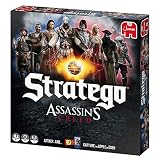
- Test your skill with Stratego, a classic game of battlefield strategy
- Let battle commence between Assassins and Templars in this ‘Stratego Assassins Creed’ special edition
- Attack and be the first to capture your opponent’s Apple of Eden Play three exciting variations of the game: Classic, Duel, and Special
- Includes 30 red playing pieces, 30 blue playing pieces, game board, screen, and sticker sheet
- Suitable for 2 players, aged 8+
Perfect-information methods such as AlphaZero learn from complete states and use search to compare actions under that state description. They do not automatically represent a distribution over hidden states, the opponent’s information set, or an equilibrium frequency for actions. The issue is not that tree search is useless; it is that the nodes, values, and backups must respect information sets rather than treating each hidden-state sample as an independently knowable position.
Stratego combines uncertainty with an enormous horizon
Stratego makes the transfer problem unusually severe. Each player secretly arranges 40 pieces; the arrangement is initially hidden, and identities are generally revealed only when pieces meet. A typical game can last approximately 1,000 turns. Google DeepMind describes about 1066 possible starting configurations and a game-tree complexity around 10535, scales at which ordinary Monte Carlo tree search is not viable for a direct full-game search. Its explanation states: “Both players start by arranging their 40 playing pieces in whatever starting formation they like, initially hidden from one another as the game begins.” Google DeepMind’s Stratego overview also explains why methods successful in perfect-information games are not easily transferred.
The counts describe different aspects of the problem: starting configurations measure initial setups, while game-tree complexity counts possible move sequences. A 2026 Nature article’s indexed summary additionally refers to more than 1033 possible Stratego piece configurations; because the full page and metric definition were not available, that figure should be treated as a separately reported estimate rather than combined with the other counts. Nature’s article is a signal of continuing work on larger imperfect-information benchmarks.
Recommended Free Tools
How current planners handle hidden states
Belief-state planning
A belief state records which hidden states remain possible and how likely they are. After every observation, the planner updates that belief: an opponent’s move may make some deals or piece layouts less plausible, while a revealed card or combat result can eliminate them. Search then evaluates actions across the belief rather than from one guessed state. Exact beliefs can be too large, so systems use abstractions, sampled particles, learned representations, or public information that both players share.
Rank #3
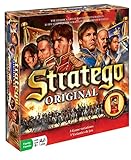
- The classic game of battlefield strategy!
- It's a light strategy game for two players
- Command your Army, devise plans using strategic attacks and clever deception!
- Be the first player to capture the other Army's flag to win!
- For ages 8 and up
Libratus: an offline blueprint plus online subgame solving
Libratus addressed heads-up no-limit Texas Hold’em by building an abstract-game blueprint and repeatedly solving more detailed subgames during play. The blueprint supplies a broad strategic plan; online refinement concentrates computation where the current betting sequence requires it. The system also improves its blueprint over time. This decomposition illustrates why poker planning often separates expensive strategic computation from real-time adaptation instead of searching the entire hidden game tree at every decision. The IJCAI 2017 Libratus paper documents this architecture and its poker scope.
ReBeL: public beliefs combined with learning and search
ReBeL treats the public belief state as the state shared by the players: the public history plus a structured account of possible private states. Self-play reinforcement learning estimates strategic values, while search uses the learned model to refine decisions at particular information sets. This design makes beliefs part of the planning state and supports equilibrium-oriented analysis in two-player zero-sum games. It is not a universal guarantee for games with more players, asymmetric objectives, or changing rules.
AlphaZe**: adapting familiar search frameworks
AlphaZe** adapts AlphaZero-like learning and search with Perfect Information Monte Carlo variants. Sampling a hidden state lets a familiar model-based framework operate on imperfect-information board games, but the approach remains sensitive to how states are sampled and how opponents are modeled. Its reported results provide a strong baseline on Stratego and DarkHex, yet do not match DeepNash’s stronger reported Stratego results. The authors identify better sampling and opponent modeling as open directions rather than claiming a general solution. The Frontiers in Artificial Intelligence paper gives the game evaluations and limitations.
DeepNash: learning a strategy without explicit opponent-state search
DeepNash uses game theory and model-free deep reinforcement learning for Stratego. Instead of explicitly maintaining the opponent’s private piece identities during play, it learns a strategy intended to remain robust against the uncertainty and long horizon. This choice reflects a computational trade-off: when explicit tree search over hidden states is too expensive, a policy learned from self-play can encode how to act under uncertainty without enumerating every possible arrangement.
Rank #4
- Strategy Board Game
- Players: 2
- Age: 8 and up
Method comparison
| System | How uncertainty is handled | When search or solving occurs | What it demonstrates |
|---|---|---|---|
| Libratus | Abstract-game blueprint with detailed subgame solving | Large offline computation plus real-time refinement | Decomposition can make heads-up no-limit poker tractable |
| ReBeL | Public belief state shared by self-play and search | Learning and search are combined during decision making | Belief-aware planning and equilibrium analysis for two-player zero-sum games |
| AlphaZe** | Perfect Information Monte Carlo sampling adapted to AlphaZero-style methods | Model-based search around sampled hidden states | Familiar frameworks can be useful, but sampling and opponent modeling limit robustness |
| DeepNash | Game-theoretic, model-free policy learning | Strategy learned through training rather than explicit opponent-state tree search during play | Long-horizon hidden-information games may favor learned robust policies over direct search |
A practical planning loop for an imperfect-information game
The implementation details differ by game, but a useful planner must answer the following questions at every decision:
- What is publicly known? Encode the complete observable history, legal actions, turn order, and any revealed cards, pieces, or combat outcomes.
- Which hidden states remain possible? Generate or represent private deals, piece identities, or opponent parameters consistent with that history. Remove states contradicted by observations.
- What does each player know? Track your private information separately from public information and avoid evaluating an action with facts the acting player cannot observe.
- How will the action change beliefs? Include the information revealed by the action, the opponent’s likely response, and the future states that response makes more or less likely.
- Should the policy mix actions? If predictability lets an opponent exploit the strategy, learn or calculate a frequency distribution rather than selecting the same move whenever a local score is highest.
- How much computation belongs online? Use offline abstraction or self-play for broad strategy, then reserve online search for the current public subgame when the game’s time and state limits allow it.
- How will the result be evaluated? Test against varied opponents, including agents that adapt, and report exploitability or head-to-head performance with the game, rules, and opponent set clearly specified.
What changes across common games
Poker
Private cards, betting history, and bluffing make ranges and action frequencies central. A planner must reason about the opponent’s likely holdings and about how its own bet sizes alter those beliefs. Subgame solving is practical because a betting decision can be isolated from the full game through an abstract blueprint.
Stratego
Piece identities are hidden, combat reveals information gradually, and the game can run for a long sequence of moves. The planner must balance scouting, material exchanges, mobility, and the risk that an action discloses a valuable piece. The very large state and game-tree scales make exhaustive online search unrealistic.
The Tool Desk
Outbyte Driver Updater FREEFix the driver behind crashes, sound loss and screen glitchesFind Drivers →Outbyte PC Repair FREEClear out junk files and repair common Windows errorsFree Scan →Bridge
Each partnership has private hands, but bids and plays communicate information to both sides. Planning therefore includes a model of partner conventions and opponent inference, not merely a probability distribution over cards. Multiplayer and partnership objectives also fall outside guarantees stated only for two-player zero-sum settings.
Best Value

- Brand New in box. The product ships with all relevant accessories
- Includes gameboard, armies with 4 Infantry, 12 Cavalry, and 8 Artillery each, deck of 56 Risk cards, 1 card box, 5 dice, 5 cardboard war crates, and game guide.
- PLAY USING ALEXA SKILL: Players have the option of playing this Risk game using Alexa. (Alexa device sold separately. ) Note: sound comes from paired Echo device.
- DRAGON TOKEN: This Risk game includes a dragon token. Players must destroy the dragon before it destroys their troops. A lucky roll can subdue the dragon and get it out of a player's territory
Liar’s Dice
Dice are private, bids are public, and each bid changes beliefs about the total dice count. The game is smaller than Stratego, making it a useful test of belief-aware search and strategic mixing, but a method that succeeds there should not automatically be expected to scale to a thousand-turn board game.
How to judge a claimed breakthrough
- Check the game and opponents: A win rate against a fixed benchmark population does not establish universal superiority.
- Check the information model: Ask whether the system searches public beliefs, samples determinizations, learns a policy, or uses another representation.
- Check the timing of computation: Distinguish an offline blueprint, online subgame solving, and training-time self-play.
- Check the guarantee’s scope: A convergence or exploitability statement for two-player zero-sum games should not be extended to multiplayer or general-sum games.
- Check robustness: Rule changes, altered information patterns, and opponents that adapt can expose weaknesses hidden by a single benchmark.
Why there is no single recipe
Belief-state search is attractive when the public state can be represented compactly and online computation is available. Blueprint methods are useful when a game has repeatable substructures that can be abstracted offline. Sampling-based adaptations can reuse mature perfect-information infrastructure, but they inherit sampling and opponent-modeling errors. Model-free learning can avoid an impossible tree search, yet it may require extensive self-play and careful evaluation to show that the learned policy is robust rather than narrowly tuned.
The central design choice is therefore not “search or no search.” It is how a system represents uncertainty, whose beliefs it models, when it spends computation, and what strategic property it optimizes. Results from poker, Stratego, DarkHex, or Liar’s Dice answer different questions because their player counts, horizons, branching factors, and information patterns differ.
Bottom line
Imperfect information turns planning into decision-making over beliefs and strategic reactions. An AI must act without knowing the true state, account for what every player can infer, and sometimes randomize deliberately so its actions cannot be exploited. Libratus, ReBeL, AlphaZe**, and DeepNash show complementary ways to manage that burden, not interchangeable solutions. A planner that succeeds in chess or Go supplies valuable machinery, but transferring it to hidden-information games requires a different state representation, evaluation target, and computational trade-off.
Quick Recap
Product prices and availability are accurate as of the date/time indicated and are subject to change. Any price and availability information displayed on Amazon at the time of purchase will apply.

