
Do these 3 things before closing this tab:
1Scan for outdated or missing drivers - takes under a minute2Clear out junk files and repair common Windows errors3Fix the driver behind crashes, sound loss and screen glitchesDoorDash’s GenAI platform evolved from a service aimed mainly at ML engineers into a broader, API-first platform for teams building product workflows. In their QCon AI Boston 2026 presentation, Swaroop Chitlur and Siddharth Kodwani described a practical lesson for platform teams: start with customer needs, make useful workflows easy to adopt, and revisit architectural choices as usage and constraints change.
What the presentation covers
Swaroop Chitlur and Siddharth Kodwani delivered “Building GenAI Platform at DoorDash” at QCon AI Boston on June 2, 2026, at 10:20 a.m. EDT. The session focuses on the transition from GenAI demonstrations to production products: how to provide model access, routing, tools, identity, evaluation, observability, cost attribution, governance, and optimization. QCon’s session page identifies the talk’s scope and platform components.


The account of DoorDash’s internal platform strategy and adoption figures comes from a transcript hosted by a third party, rather than an independently audited DoorDash report. The figures below are therefore attributed to the presenters. The presentation transcript describes their experience starting with a blank-slate GenAI Platform team in 2023.
Start with the teams and the work they need to do
The presenters’ initial principles were to focus on customer teams and use cases, build products and complete workflows rather than isolated systems, make good practices easy, and demonstrate value. Chitlur summarized the approach as: “Be customer obsessed. Focus on the teams and the use cases.”
Recommended Free Tools
#1 Best Overall
One important shift was in the platform’s intended customer. The team began by serving ML engineers, then broadened its focus to engineers across the company. That change favored APIs and SDKs as the main interfaces over notebooks and direct infrastructure access. It also made adoption and onboarding platform concerns, rather than assuming every user would be comfortable working close to the underlying infrastructure.
Prioritize product impact over a generic chatbot
The speakers describe looking for business-impacting product use cases rather than building another general-purpose chatbot. They group early opportunities around automation, recommendations, and personalization. For product teams, the platform’s value proposition was to help balance accuracy, latency, and cost—not to maximize one metric in isolation.
The platform components described at QCon
QCon’s session description names four components. Together, they suggest a platform organized around shared access and workflow capabilities, with reusable starting points for product teams:
| Component | Role described in the session |
|---|---|
| LLM Gateway | Routes requests and provides observability and fallback handling. |
| Batch Inference platform | Supports batch inference workloads. |
| Agentic Gateway | Supports multi-step LLM workflows. |
| ADK templates | Provide templates for common patterns. |
The session also surfaces the practical concerns that accompany those capabilities: provider rate limits, cost attribution, prompt caching, scheduling against cost and service-level requirements, streaming protocols such as MCP, authentication, state management, and scaffolding. The available session description does not specify implementation details or provide a comparative benchmark, so these are best understood as areas the presenters addressed—not proof that one particular design or vendor is superior.
The Tool Desk
Outbyte Driver Updater FREEScan for outdated or missing drivers - takes under a minuteDriver Scan →Outbyte PC Repair FREEClear out junk files and repair common Windows errorsFree Scan →How the platform’s priorities changed
The speakers describe beginning with a vendor-first model approach, then facing pressures that made portability more important: cost, provider quotas, and model deprecations. Supporting more use cases also raised the value of being able to adapt rather than relying on a single fixed choice. Their experience illustrates why an initial model-access decision should be judged against later needs as well as the first use case.
They describe a similar progression in agent support. Rather than assuming in advance what every product team would build, the platform team watched teams experiment, supported MCP servers, and then broadened its direction toward an agent gateway and multiple protocols and agent experiences. QCon frames the larger decision as determining which infrastructure product teams should own, what to centralize, and when to buy versus build.
Trade-offs to evaluate
The presentation offers decision axes, not a measured ranking of architectures or vendors. Teams weighing shared GenAI infrastructure can use these questions to make the trade-offs concrete:
- Team velocity: Does the platform help product teams onboard and ship workflows without requiring them to become infrastructure specialists?
- Reliability and visibility: Can teams observe requests and handle failures, including provider problems?
- Portability and limits: How difficult is it to respond to rate limits, model changes, or provider deprecations?
- Cost and performance: Can the organization attribute spend and make choices that account for both latency and accuracy?
- Identity and governance: Are authentication and the controls around platform access addressed as usage expands?
- Maintenance: Does centralizing a capability reduce repeated work, or create an ongoing shared-system burden that outweighs the benefit?
The presenters’ framing is to learn from vendor products where useful, then build or adapt when requirements justify it. That is a more flexible decision rule than treating either buying or building as the default.
What’s actually slowing this PC down?
Pick the symptom - the matching free tool is one click away.
Best Value
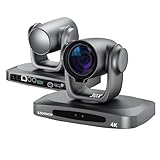
- PTZ Camera 4K Ultra HD Quality: Equipped with the latest high-quality CMOS sensor with 8.42 million effective pixels, this camera supports 2160P 4K Ultra HD resolution, ensuring every detail is captured with stunning clarity, making your conference experience more vivid and lifelike.
- 30x Optical Zoom HDMI PTZ Camera: Featuring 30X optical zoom, this camera allows you to easily capture both wide-angle views and detailed close-ups. Whether you need a panoramic shot or a detailed focus, this camera meets all your conferencing needs.
- AI Tracking Camera: The 4K PTZ camera integrates advanced artificial intelligence algorithms and high-performance processing chips to support automatic body tracking. The autofocus technology ensures fast, accurate and stable locking on the subject.
- The 4K Live Streaming camera is equipped with a variety of professional interfaces, including HDMI, USB3.0 (C), SDI, RJ45 network interface, and one Line audio input. It supports multiple control protocols (232/422/485/UVC) and network protocols,offering strong compatibility and ease of use.
- Supports up to 255 preset positions, which can be quickly accessed via remote control or code commands. The 4K PTZ Conference Camera also supports preset position freeze functionality, allowing for seamless transitions between different scenes.
What the reported adoption figures do—and do not—show
In the 2026 presentation transcript, Chitlur and Kodwani reported more than 5,000 internal users, 45 new users onboarding each day, and 40% of users being non-engineers. They also recalled that the team had more than 25 agent projects in 2025. These are presentation-reported figures; the cited QCon materials do not independently verify them. The user counts and daily onboarding figure describe the platform as characterized in the talk, not a live or independently confirmed dashboard.
The reported non-engineer share reinforces the rationale for broadening the platform beyond ML specialists, but it does not establish which specific interfaces or support practices caused adoption. The presentation’s clearer transferable point is to treat the intended customer and the work they need to complete as inputs to platform design.
The central lesson: keep reevaluating decisions
DoorDash’s case is less a fixed blueprint than a sequence of adjustments: broaden the customer base, make APIs and SDKs the primary interface, organize capabilities around product workflows, and respond to changing constraints around models and agents. The talk’s closing advice from Chitlur is: “The worst thing you can do now is make a decision and not reevaluate it.” For platform teams, that means revisiting what to centralize, which model and protocol choices remain suitable, and whether shared infrastructure still serves the needs of the teams using it.
Quick Recap
Product prices and availability are accurate as of the date/time indicated and are subject to change. Any price and availability information displayed on Amazon at the time of purchase will apply.

