
Free tools Windows power users keep installed
One-click scans. No signup required.
Graphics-card memory (VRAM) heats up when the card is working, and demanding workloads can raise its temperature. Poor airflow, dust, a malfunctioning fan, or overclocking can make cooling less effective. Whether a temperature is too high depends on the exact card and the sensor being reported: GPU-core temperature is not a VRAM limit, and not every card exposes a memory-temperature reading.
What makes graphics-card memory overheat?
VRAM produces heat during operation. Gaming, video editing, transcoding, and large data-processing workloads can increase temperatures as the GPU works harder. A rise under load alone does not prove a fault; it matters whether the reading exceeds the card maker’s specification or is accompanied by throttling, instability, or unusual noise.
Restricted airflow, dust, and fan problems
Heat cannot escape efficiently if the case does not supply enough cool air to the graphics card. Dust, hair, and debris can obstruct fans, vents, or heatsinks, while a blocked, damaged, or worn fan can reduce cooling. ASUS recommends checking ventilation and fan operation, cleaning accumulated dust, and avoiding enclosed or hot locations. Its guidance also suggests opening the case side panel as a diagnostic: if temperatures noticeably fall, case airflow or ambient heat may be contributing. ASUS cooling guidance
NVIDIA’s general support guidance also identifies poor case airflow and dust buildup around fans as cooling concerns. If a GPU reaches its maximum operating temperature, NVIDIA says improved system cooling, including an added PC fan, may help. NVIDIA temperature guidance An additional case fan can help address inadequate case airflow, but it will not necessarily fix a problem with the graphics card’s own cooling assembly.
#1 Best Overall

- COOLING PERFORMANCE: GDSTIME's universal GPU cooler fits most graphics cards VGA video card; These graphics card coolers offers efficient cooling to GPU, Memory, and VRM; Not only lower the GPU temperature significantly but mainly increases the graphics card's service life
- EASY TO INSTALL: GPU cooler Overall Size (L x W x H): 185 x 125 x 30 mm / 7.28 x 4.92 x 1.18 in. (please check the size to make sure your pc has enough space.) Sturdy metal bracket/grills provide strong and long-lasting support with PCI mount design for easy installation
- 92MM FANS x2 pcs: Speed: 1800RPM x 2; Air flow: 39.8 CFM x 2; Noise: 24.8dBA; Graphics Card Cooler comes with two 92mm fans, combined into one interface, can be connected to the motherboard's 3-pin or 4-pin interface and you only need to access one interface to run all the fans
- Multiple Voltage Options: The GPU cooler allows you to control the fan speed by motherboard control, or simply use the included 4 pin Molex adapter that has 2 12v 1 7v and 1 5v wire, choose different voltage to minimize noise or maximize airflow
Overclocking and fan settings
Overclocking can add heat. If you changed the card’s clock settings, restore the defaults while troubleshooting; do not increase clocks or voltage to diagnose a thermal issue. ASUS also recommends checking fan operation and ventilation. AMD Radeon WattMan documents automatic fan adjustment in response to workload and temperature, as well as optional fan-curve controls and a histogram for GPU temperature, power, fan speed, and clock speeds. AMD Radeon WattMan documentation
How to tell whether VRAM is actually too hot
First identify which sensor the software is showing. GPU-core temperature, hotspot temperature, and memory temperature are different readings; a GPU-core value cannot establish a VRAM temperature. NVIDIA’s nvidia-smi reference lists GPU current temperature separately from memory current temperature and notes that the memory reading is available only on supported products. It also describes a memory maximum-operating T.Limit on supported products; this is a margin relative to a maximum, not an absolute temperature. NVIDIA nvidia-smi reference
Rank #2
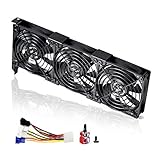
- 3 x 92mm fans combined into one interface, can be connected to the motherboard's 3-pin or 4-pin interface and you only need to access one interface to run all the fans
- This cooling fan's total size is 11in(L) x 4.72in(W) x 1.18in(H), designed for most universal graphic card video card VGA cooling,just please check the size to make sure your pc has enough space
- D-type interface cable included four interfaces, three voltages: 5V, 7V and 12V; different voltages with different airflow, speed and noise. You can select the appropriate voltage interface to start the fan
- The double ball bearing has a service life of 65,000 hours, and the 7 blades produce strong airflow to keep the computer case cool
- packing list: 3 x 92mm fans (PCI bracket screwed), 1 x multi-voltage cable ,1 x mini screwdriver,1 x fixing screw
There is no single safe or overheating cutoff that applies to every graphics card. NVIDIA says maximum operating temperature varies by GPU, and its memory-temperature reporting depends on product support. Check the exact card’s published specifications and support guidance rather than applying a generic threshold. NVIDIA GPU temperature guidance NVIDIA Support gives a broad typical graphics-card temperature range of 40°C to 90°C, but that is not a VRAM junction limit or a diagnosis for a particular model. NVIDIA general temperature guidance
A missing memory reading does not mean the memory is cool. Sensor availability varies by product. ASUS GPU Tweak III’s VRAM Thermal Map uses embedded sensors but is supported only on specified ROG Matrix and ROG Astral models. ASUS GPU Tweak III
Do these 3 things before closing this tab:
1Repair Windows errors before they cause bigger problems2Fix the driver behind crashes, sound loss and screen glitches3Clear out junk files and repair common Windows errorsRank #3

- Double Protection: Asiahorse graphic card cooler is designed with 3 * 80mm fan blade and GPU brace support, can generate strong airflow to support cooling of the graphics card, while provides strong and long-lasting support to protect the motherboard from being damaged by the weight of graphics card.
- Quickly Cooling: Pwm fan control Function, allows dynamic speed adjustment between 800-3000 RPM, Noise level up to 25 DBA, minimizing noise or maximizing airflow.
- Swirl Blade Design: The gpu cooling fan adopts swirling fan structure to enhance and direct the airflow, with a maximum air pressure of 50CFM to provide better heat dissipation.
- Argb Led Frame Design: Built in 13 independent RGB LEDs in every fan, supporting 5V 3PIN ARGB motherboard SYNC, offering a variety of ARGB light effect mode to easily add vivid LED lighting to your system.
- Convenient Adjustment: Easy installtion, the support arm slides and locks in place to cool the graphics card directly in parallel or vertical with three high air flow RGB Fans, providing the easiest adjustment to allow you easily using various graphics card and PC case combinations.
Troubleshoot in a safe order
- Check for unexpected workload. Look in Task Manager or your GPU utility for a process using substantial resources that you did not expect.
- Check the fans. Confirm they are unobstructed and operating as expected. Some graphics cards intentionally stop their fans under light load, so consult the maker’s fan-mode explanation before treating a stationary fan as broken. If a fan appears faulty, ASUS recommends service-center inspection or replacement. ASUS fan and cooling troubleshooting
- Check case ventilation. Keep the PC’s intake and exhaust unobstructed, and avoid placing it in an enclosed space or on a soft surface that blocks airflow. If it is safe for your setup, compare temperatures with the side panel open; a noticeable drop suggests case airflow or room heat may be involved.
- Remove dust and debris. Clean the case, fans, and heatsinks using a suitable method and the product maker’s guidance. NVIDIA cooling guidance
- Undo overclocking. Restore default clock settings if you changed them, then check whether the problem persists.
- Contact the card maker or an authorized repair provider if the issue remains. Provide the exact card model, workload, sensor name and reading, fan behavior, and any throttling, instability, or unusual noise. ASUS recommends contacting its service center when its troubleshooting steps do not resolve the issue. ASUS support guidance
When to seek service instead of replacing thermal pads
Do not treat a high reading as proof that thermal pads need replacement. Pad thickness and placement depend on the exact card and its cooling assembly, and an incorrect repair can cause damage. Before opening the card, check its specific service instructions and warranty terms. ASUS notes that some damage caused by listed factors may not receive warranty service and identifies authorized repair service as an option. ASUS warranty and service guidance
NVIDIA’s statement that a GPU driver throttles performance when the GPU reaches its maximum temperature refers to GPU temperature behavior; it does not establish a universal memory-junction threshold. NVIDIA overheating guidance
Quick Recap
Best Value

- 【Durable & Compact Design】This cooling fan is built with high-quality materials for enhanced durability. Its compact size makes it easy to install in tight spaces, providing reliable active cooling for graphics cards or server components
- 【Broad Compatibility for High-Performance Hardware】Ideal for graphics cards and other server hardware that require additional cooling. Perfect for use in consumer chassis with limited airflow to improve system stability and performance
- 【Adjustable Fan Speed for Custom Airflow】With a speed range of 1500–3000 RPM, the fan allows you to fine-tune airflow based on your cooling needs. Whether you prioritize silent operation or maximum cooling, this fan gives you full control
- 【Flexible Power Options with USB & 4-Pin Support】Comes with a USB to 4-PIN PWM cable for easy 12V power connection. The fan can be turned on or off manually, offering flexible control
- 【Complete Kit, Ready to Install】Includes 1 x cooling fan, 1 x USB to 4-PIN cable, and 1 x mounting screw. Everything you need for a quick and hassle-free installation—no additional parts required
Rank #4
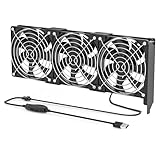
- 【Durable & Compact Design】This cooling fan is built with high-quality materials for enhanced durability. Its compact size makes it easy to install in tight spaces, providing reliable active cooling for graphics cards or server components
- 【Broad Compatibility for High-Performance Hardware】Ideal for graphics cards and other server hardware that require additional cooling. Perfect for use in consumer chassis with limited airflow to improve system stability and performance
- 【Adjustable Fan Speed for Custom Airflow】With a speed range of 1500–3000 RPM, the fan allows you to fine-tune airflow based on your cooling needs. Whether you prioritize silent operation or maximum cooling, this fan gives you full control
- Flexible Power Options with USB & 4-Pin Support】Comes with a USB to 4-PIN PWM cable for easy 12V power connection. The fan can be turned on or off manually, offering flexible control
- 【Complete Kit, Ready to Install】Includes 1 x cooling fan, 1 x USB to 4-PIN cable, and 1 x mounting screw. Everything you need for a quick and hassle-free installation—no additional parts required
Product prices and availability are accurate as of the date/time indicated and are subject to change. Any price and availability information displayed on Amazon at the time of purchase will apply.

