
A shot count tells you what happened to the ball; combining match events with player tracking can show what the teams were doing around it. That distinction is changing how soccer is analyzed: data can reveal patterns in space, movement and pressure that a basic match stat cannot—but only when its definitions and collection methods are understood.
How is big data changing soccer?
“Big data” in soccer is not one definitive number. It is the collection and interpretation of several kinds of information: records of match actions, the positions of players, and video that helps analysts see those actions in context. Combining them can make tactical patterns easier to describe, from how a pass bypasses a defensive unit to how a team’s shape changes when it does not have the ball.
| # | Preview | Product | Price | |
|---|---|---|---|---|
| 1 |
|
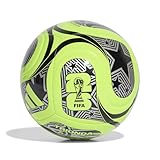
Adidas Unisex-Adult World Cup Soccer Ball, Lucid Lemon/Black/Silver Metallic, 5 | $24.99 | Buy on Amazon |
| 2 |

|
adidas Starlancer Club Soccer Ball, 1 Pack | $12.58 | Buy on Amazon |
| 3 |

|
adidas Unisex-Adult Tango Glider Soccer Ball, White/Black, 5 | $24.99 | Buy on Amazon |
FIFA describes distinct data streams that can be combined, while its football data ecosystem connects collection and standards with uses such as team analysis, broadcast graphics and digital products. FIFA’s overview of the football data ecosystem explains how information can flow from providers into those applications.
What kinds of soccer data are collected?
Event data records what happens
Event data describes actions such as passes, shots, goals and tackles. It can answer questions such as how often a team attempted a particular action or where a shot originated. But an event record alone may not explain the movement and positioning that shaped the action.
Quick wins for a faster PC:
Fix the driver behind crashes, sound loss and screen glitchesFind Drivers →Clear out junk files and repair common Windows errorsFree Scan →#1 Best Overall
- Inspired by the world's largest soccer matchup, the adidas FIFA World Cup 26 soccer ball pairs design with performance. A seamless TSBE surface enhances touch. The butyl bladder ensures consistent shape retention for every match or practice session.
- TSBE TECHNOLOGY: Seamless surface for better touch and lower water uptake
- KEEPS ITS SHAPE: Butyl bladder for best air retention
- REQUIRES INFLATION: Ships flat, pump not included
- FIFA QUALITY AND OFFICIALLY LICENSED: Officially licensed by FIFA, the ball passed FIFA tests on circumference, weight, rebound and water absorption
Player tracking records where players are
Player tracking captures player locations over time, allowing analysts to relate positions to match events. It can help describe what defenders or off-ball attackers were doing while the ball moved elsewhere. A tracking system may use specialized equipment or other collection methods; the exact setup depends on the competition and provider.
Video supplies visual context
Video lets analysts examine how a recorded event unfolded and check whether a metric represents the play as intended. FIFA and UEFA describe analysis approaches that use data alongside footage and expert interpretation, rather than treating a number as a complete account of a match.
How FIFA’s Enhanced Football Intelligence turns data into insight
FIFA’s Enhanced Football Intelligence (EFI) initiative for the 2022 World Cup in Qatar is a clear example of the process. FIFA said it combined event data with player-tracking data, so the positions of players around an event could be used by algorithms to produce additional metrics. FIFA presented the tournament program as an effort to pair analytics with technical expertise, not as a replacement for expert judgment. FIFA’s 11 November 2022 announcement describes the tournament-specific introduction.
Example: a pass that breaks a line
A simple pass count cannot say whether a pass penetrated a defensive unit. FIFA’s Training Centre describes a line break as a pass that cuts through a whole unit of the defending team. Its approach can classify whether the pass went through, around or over defenders. Adding player positions makes it possible to describe the defensive shape around the pass, not just the ball carrier’s action. FIFA Training Centre’s explanation of data science and interpretation gives this example.
Do these 3 things before closing this tab:
1Scan for outdated or missing drivers - takes under a minute2Repair Windows errors before they cause bigger problems3Fix the driver behind crashes, sound loss and screen glitchesExample: “In contest” time
Conventional possession percentages divide play between the teams, but some moments do not have clear possession. FIFA used “In contest” to represent periods when neither side clearly controlled the ball, adding another way to describe the match rather than forcing those moments into a team’s possession total.
Rank #2
- A recreational soccer ball with a resilient butyl bladder for casual games
- SOFT AND DURABLE: Machine-stitched construction ensures a soft touch and high durability
- KEEPS ITS SHAPE: Butyl bladder for best air retention
- REQUIRES INFLATION: Ships flat, pump not included
What the Qatar 2022 metrics covered
FIFA announced 11 new metrics for the 2022 World Cup EFI program. The tournament-specific set included possession control, ball recovery time, line breaks, defensive line height and team length, final-third entries, forced turnovers, pressure on the ball, expected goals, team shape, receptions behind lines and phases of play. This list describes that initiative; it does not mean every competition or broadcast currently supplies all these metrics.
How do soccer teams use data analytics?
Coaches and analysts prepare and review
Teams can use data to study opponents, inspect tactical patterns, assess performance and consider technical, tactical and physical demands. A metric can help analysts locate a pattern in a match; footage and coaching expertise help explain why it happened and whether it matters.
Players can review performance
FIFA said tournament insights from the 2022 EFI program were made available to teams and players. FIFA’s football data solutions also describe a player app that gives players performance data. The details available depend on the product and competition. FIFA’s football data solutions page outlines its data and video products.
The Tool Desk
Outbyte Driver Updater FREEScan for outdated or missing drivers - takes under a minuteDriver Scan →Outbyte PC Repair FREEClear out junk files and repair common Windows errorsFree Scan →UEFA connects analysis with coach development
UEFA describes a performance-analysis program that provides clubs and associations with tactical footage, post-match data and reports. Technical observers contribute expert analysis that can inform discussion across a season, while the material also supports coach development. In other words, analysis is used not just to describe one result but to help coaches discuss the choices and patterns behind it. UEFA’s performance-analysis information describes this work.
Broadcasters and fans get more context
FIFA describes data products that can support broadcast graphics and digital experiences. Visualizations can help viewers see aspects of how a game unfolds—such as a team’s shape or the way an attack progresses—that may be difficult to infer from a scoreline or a basic possession figure. The metrics available to viewers vary by product and competition.
Rank #3
- Regulation-size soccer ball
- Machine-stitched construction for high durability
- Butyl bladder for best air retention
- Size 5 ball (official size) suggested for ages 12 plus
- Requires inflation
How accurate are soccer statistics?
There is no single accuracy figure for soccer data. Reliability depends on what is being recorded, how the provider defines an event, how data is collected, and how the result is checked. Even familiar categories such as a successful tackle can depend on operational definitions that are not identical across providers.
In a 2019 article, FIFA described a comparison of leading providers using data from the 2018 FIFA Club World Cup. FIFA reported discrepancies between providers “upwards of 50%” for selected subjective indicators, including successful tackles and completed crosses. That figure applies to particular indicators in that comparison; it is not a general error rate for all soccer statistics, tracking data or providers. FIFA also noted at the time that much provider data still relied on manual processing, and urged caution when comparing competitions or periods. This is a dated assessment, not a current audit of every provider. FIFA’s 4 May 2019 article on quantifying football sets out the comparison and its limitations.
Free tools Windows power users keep installed
One-click scans. No signup required.
Questions to ask when comparing data
- What is captured? Is the figure based on on-ball events, player tracking, video, or a combination?
- How is the event defined? Check what the provider counts as a successful tackle, completed cross or other recorded action.
- How is it collected and validated? Collection may be manual, automated or hybrid; ask what checks are performed.
- Are the datasets comparable? Different definitions or processes can make comparisons across providers, competitions or seasons misleading.
- Can the result be checked against the play? Video and tactical expertise help determine what a metric does—and does not—say about an event.
FIFA’s ecosystem materials emphasize standards and consistent definitions, including the FIFA Football Language initiative intended to make football terminology clearer and more consistent. That work addresses an important part of comparability, but it does not make every metric interchangeable across providers or competitions.
What data analytics can—and cannot—tell you
Analytics can make patterns visible that a basic count misses: how a pass relates to defensive lines, how a team is positioned away from the ball, or when control is unclear. The number is still a description built from a particular definition and collection process, not an automatic explanation of a team’s decisions or a guarantee of performance. The strongest reading combines the metric with video and people who understand the game.
Quick Recap
Product prices and availability are accurate as of the date/time indicated and are subject to change. Any price and availability information displayed on Amazon at the time of purchase will apply.

