
An automated license plate reader (ALPR) photographs passing vehicles, uses software to read visible plate characters, and can save each observation with its time and location. Depending on the system, the record may also include a vehicle image or other descriptive details; what is kept, for how long, and who can search it varies.
How does an automated license plate reader work?
An ALPR system turns a camera image into a searchable record. A scan is an observation of a vehicle at a particular place and time—not, by itself, evidence that the driver did anything wrong.
- Capture: A fixed roadside camera or a camera mounted on a vehicle images vehicles passing through its field of view. A system can capture vehicles even when their plates are not on a watch list.
- Read: Software identifies the plate area in the image and attempts to recognize its characters. The resulting text is associated with the detection; depending on the system, an image may be retained for later review.
- Add context: The record commonly includes the scan’s date, time, and camera location. Some systems also classify visible characteristics such as make, model, or color.
- Compare or search: Software may compare the plate with a “hot list” or another database of vehicles of interest. Authorized users may also search available historical detections, subject to the system’s permissions and configuration.
- Store and manage: Records may be held locally or in a vendor-hosted service, shared under agency settings or agreements, and deleted according to applicable law, policy, contract, or system terms.
What data can an ALPR collect?
The core record is a plate reading associated with a time and place. The California State Auditor’s 2019 report describes ALPR data as including the plate number, date, time, and location, sometimes accompanied by a partial vehicle image. The American Civil Liberties Union likewise describes plate, date/time, and location as core information.
- Plate characters: The text the software reads from the plate image. Recognition can depend on the system and conditions; no single accuracy rate applies across all cameras, software, plate formats, and circumstances.
- Time and location: When and where the camera recorded the vehicle. Taken together over many scans, these records can show patterns of vehicle movement that a single detection cannot.
- Image: A retained image may show the plate and some or all of the vehicle. The precise image captured and kept varies by deployment.
- Vehicle descriptions: Some platforms generate or support searches using features such as make, model, color, or other distinguishing characteristics. These capabilities are not universal.
A vehicle image does not necessarily identify who was driving. Nor does the presence of a record mean the vehicle or its occupant was suspected of an offense when the scan occurred.
Recommended Free Tools
#1 Best Overall
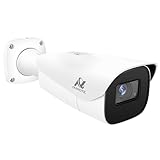
- Compatibility-- Only Work With ONWOTE TD Series NVR (PNT-808, PNA-8016-T, PNT-1232).
- LPR-- License Plate Recognition IP Network PoE Camera.
- 4MP Resolution-- 2592×1520 @30fps for sharp and fluid video.
- 1/1.8" Low-Light Image Sensor-- Ensuring clear images even in dim conditions.
- 8-32mm Motorized Varifocal Lens @F1.6 for adjustable field of view.
What does an ALPR “hit” mean?
A hit means a scan appears to match a watch-list entry or query criterion. It is a lead for a person to assess, not a finding that a driver committed a crime. Because ALPRs can record vehicles not suspected of wrongdoing, a match should be checked in context before anyone acts on it. The available sources do not establish one accuracy figure that applies to every deployment.
What do agencies use ALPR data for?
Uses and permitted purposes depend on the agency’s policy and applicable law. The Los Angeles County Sheriff’s Department lists purposes including criminal investigations, locating wanted people, crime analysis, recovering stolen vehicles, developing leads, and missing-person or lifesaving efforts. Those are purposes stated by that department, not a universal list of permissions for every ALPR network.
Rank #2

- LICENSE PLATE RECOGNITION CAMERA - Features 8mm - 32mm lens for an 15° - 40° Viewing Angle. F1.6 Max Aperture, 1/1.8" 4-Megapixel CMOS Image Sensor and License Plate Recognition Distance 26.25ft - 98.43ft. Supports recognizing vehicle type, vehicle color, and license plate details. Supports IVS, Tripwire & Intrusion as well as displaying vehicle plate, vehicle path & loitering detection.
- SMARTER SECURITY – Query and review license plate details professionally on a PC using a web browser. Works with most standard web browsers however for an optimal experience it is recommended to use Microsoft Edge in IE mode as the camera may require the use of a .exe plugin. Supports storage to a MicroSD Card (up to 256GB), PC/Windows only supports SFTP, IE mode in Microsoft Edge, Firefox, Chrome (limited query options).
- ACTIVE DETERRENTS – This outdoor POE IP LPR camera features a heavy-duty metal weatherproof IP67 housing as well as 4 IR LEDs for night vision up to 98 feet, includes red/blue warning LEDs which can be used as an active deterrent. Dual H.265/H.264 compression allows for maximum encryption with the latest technology as well as backwards compatibility with legacy platforms.
- SIMPLE, RELIABLE, SECURE – This Amcrest POE camera features a secure connection. At Amcrest, we want to ensure the safety of our customers, their loved ones, homes and businesses. Compatible with the following Amcrest AI NVR's for live view purposes only: B0C381YK91, B0CDHDHPR8, B0CBL8W9NY, B0D464HMBB, B0D47X8WJJ
How long is ALPR data kept, and who can access it?
There is no single retention period for all ALPR systems. Law, agency policy, vendor contracts, and system settings can result in different schedules and exceptions. Sharing also depends on local arrangements and access controls, so the agency operating a camera network is the best starting point for understanding a particular deployment.
| Example | What was reported | How to read it |
|---|---|---|
| City of Palo Alto policy | The city describes a 30-day retention limit and data-sharing agreements with other agencies. | A local policy example, not a general U.S. rule. |
| Flock Safety announcement reported by the Associated Press on August 13, 2026 | The AP reported that Flock announced a change from a standard 30-day retention window to seven days, with longer preservation for data tied to a case number. | A dated report of an announced change; vendor statements and individual agency configurations may differ. |
| U.S. Department of Justice, Office of Justice Programs guidance published in 2012 | Five survey respondents (13%) said they retained ALPR data indefinitely. | A historical survey result from that publication, not a current estimate of agencies nationwide. |
What safeguards are worth checking?
To understand a specific network, look for the operating agency’s current policy, applicable state and local laws, vendor contract, and data-sharing agreements. The California State Auditor’s 2019 review found that audited agencies had weaknesses in clearly specifying access, oversight, and destruction safeguards; that finding concerns the agencies and period reviewed, not every department today.
Do these 3 things before closing this tab:
1Repair Windows errors before they cause bigger problems2Fix the driver behind crashes, sound loss and screen glitches3Clear out junk files and repair common Windows errorsRank #3

- 𝐄𝐧𝐡𝐚𝐧𝐜𝐞𝐝 𝐃𝐮𝐚𝐥-𝐂𝐚𝐦𝐞𝐫𝐚 𝐂𝐥𝐚𝐫𝐢𝐭𝐲 𝐚𝐭 𝐔𝐩 𝐭𝐨 𝟒𝟎 𝐟𝐭 (𝟏𝟐 𝐦): Capture every event around your home in ultra-clear 3K resolution. Enjoy sharp, detailed visuals with 8× zoom to see what matters most.
- 𝐒𝐨𝐥𝐚𝐫-𝐏𝐨𝐰𝐞𝐫𝐞𝐝, 𝐈𝐧𝐬𝐭𝐚𝐥𝐥 𝐎𝐧𝐜𝐞 𝐚𝐧𝐝 𝐢𝐭 𝐑𝐮𝐧𝐬 𝐅𝐨𝐫𝐞𝐯𝐞𝐫: Experience constant peace of mind with this solar-powered security camera that's easy to set up and always on, thanks to its removable solar panel.
- 𝟑𝟔𝟎° 𝐆𝐮𝐚𝐫𝐝𝐢𝐚𝐧, 𝐍𝐨 𝐁𝐥𝐢𝐧𝐝 𝐒𝐩𝐨𝐭𝐬: Say goodbye to blind spots with full home coverage by installing the product vertically. Enjoy 360° Pan & Tilt Surveillance , check your front porch, monitor your backyard, and keep an eye on the driveway with ease.
- 𝐕𝐞𝐫𝐬𝐚𝐭𝐢𝐥𝐞 𝐈𝐧𝐬𝐭𝐚𝐥𝐥𝐚𝐭𝐢𝐨𝐧, 𝐄𝐟𝐟𝐨𝐫𝐭𝐥𝐞𝐬𝐬 𝐒𝐞𝐭𝐮𝐩: Experience the convenience of a 7-minute installation with its compact size and wire-free design.
- 𝐑𝐞𝐬𝐭 𝐚𝐬𝐬𝐮𝐫𝐞𝐝 𝐬𝐞𝐫𝐯𝐢𝐜𝐞: you can enjoy a worry-free experience, all backed by our professional customer service team.
- What information and images are captured, and which fields are searchable?
- How long are routine detections retained, and who can approve an exception?
- Which users can run searches, and must they record a reason?
- Can records be shared with outside agencies, and under what agreements?
- Are searches and sharing logged and audited, with consequences for misuse?
- Who controls and stores the data, and how is deletion verified?
- Which state and local laws limit collection, retention, access, or sharing?
These details determine how a set of individual scans can become a searchable history of past vehicle locations—and what checks constrain that use.
Quick Recap
Product prices and availability are accurate as of the date/time indicated and are subject to change. Any price and availability information displayed on Amazon at the time of purchase will apply.

