
Quick wins for a faster PC:
Clear out junk files and repair common Windows errorsFree Scan →Scan for outdated or missing drivers - takes under a minuteDriver Scan →Google no longer plans to eliminate third-party cookies across Chrome. Instead, users can manage their choice in Chrome’s Privacy and security settings; Incognito mode still blocks third-party cookies by default. The reversal did not preserve every Privacy Sandbox proposal: Google’s August 14, 2026 status page marks several advertising APIs for deprecation or removal.
Did Google stop blocking third-party cookies in Chrome?
Google stopped pursuing the planned Chrome-wide phase-out, not every form of third-party-cookie blocking. In January 2024, Chrome restricted third-party cookies for 1% of users as a test to support ecosystem testing. That was an experiment, not a permanent global block.
On July 22, 2024, Google said it would not deprecate third-party cookies as planned. It proposed letting people make an informed choice that applied across web browsing and could be changed later. On April 22, 2025, Google clarified that it would maintain its existing approach to user choice and would not introduce a new standalone prompt for third-party cookies. Users can manage the choice in Chrome’s Privacy and security settings.
That means Chrome’s approach is not a universal ban, nor a guarantee that every site can use third-party cookies in every context. A person’s browser choice and the browsing mode matter. Google has not published an authoritative opt-in or opt-out percentage in the cited updates, so there is no supported rate to use when forecasting how many visitors will allow cookies.
What’s actually slowing this PC down?
Pick the symptom - the matching free tool is one click away.
#1 Best Overall

- FOR HOME, WORK, & SCHOOL – With an Intel processor, 14-inch display, custom-tuned stereo speakers, and long battery life, this Chromebook laptop lets you knock out any assignment or binge-watch your favorite shows.
- HD DISPLAY, PORTABLE DESIGN – See every bit of detail on this micro-edge, anti-glare, 14-inch HD (1366 x 768) display (1); easily take this thin and lightweight laptop PC from room to room, on trips, or in a backpack.
- ALL-DAY PERFORMANCE – Reliably tackle all your assignments at once with the quad-core, Intel Celeron N4120—the perfect processor for performance, power consumption, and value (2).
- 4K READY – Smoothly stream 4K content and play your favorite next-gen games with Intel UHD Graphics 600 (3) (4).
- MEMORY AND STORAGE – Enjoy a boost to your system’s performance with 4 GB of RAM while saving more of your favorite memories with 64 GB of reliable flash-based eMMC storage (5).
What changed in Google’s cookie plan?
The original Privacy Sandbox plan centered on phasing out third-party cookies in Chrome and developing alternatives. The July 2024 reversal changed the role of those technologies: rather than a single replacement deadline, Privacy Sandbox became a collection of technologies with different adoption levels and lifecycles.
Google’s October 17, 2025 update said it was retiring a number of low-adoption APIs after considering ecosystem feedback. It also said CHIPS and FedCM had broad adoption and would continue to be supported. The later status inventory, last updated August 14, 2026, gives a more current view of which technologies Google lists as continuing, slated for removal, or discontinued.
Which Privacy Sandbox APIs are still supported in 2026?
Google’s August 14, 2026 status page separates technologies it plans to continue supporting from those marked for deprecation and removal or discontinuation. These are Google’s listed statuses, not a guarantee of support in every browser or a promise that an API will suit a particular site.
Rank #2
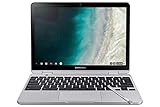
- TWEIGHT 2-in-1 DESIGN At just under 3 pounds, the Chromebook Plus is incredibly lightweight. You can easily fold it into tablet mode for comfortable viewing and browsing
- BUILT-IN PEN Experience the power of the incredibly precise built-in pen that never needs charging. It's always ready to write, sketch, edit, magnify and even take screenshots
- DUAL CAMERA Fold your laptop into tablet mode to capture clear shots and even zoom in for a closer look with the revolutionary 13MP world-facing camera with autofocus
- CHROME OS AND GOOGLE PLAY STORE Create, explore and browse on a bigger screen with the tools you use every day —all on the secure Chrome OS
- POWER AND PERFORMANCE Tackle anything with a long-lasting battery and Intel Celeron processor. Store more with 64GB of built-in memory and add up to 400GB with a microSD card.Bluetooth v4.0
| Google’s status | Technologies listed | What that means for site teams |
|---|---|---|
| Continue to support | CHIPS; FedCM; Storage Access; storage and network state partitioning; bounce-tracking mitigations; User-Agent Client Hints; User-Agent reduction | These remain in Google’s supported set according to the August 14, 2026 inventory. Check browser and implementation requirements before relying on one. |
| Deprecate and remove | Attribution Reporting; Fenced Frames; Private Aggregation; Protected Audience; Related Website Sets; Shared Storage; Topics | Do not treat these as guaranteed long-term replacements for cookie-dependent advertising or measurement workflows. |
| Discontinue | IP Protection; Partitioned Popins | Do not plan a new dependency on these as current Chrome features based on this status inventory. |
The October 2025 retirement announcement named several related items in more detail, including On-Device Personalization, Protected App Signals, SelectURL, SDK Runtime, requestStorageAccessFor and Related Website Partition. The 2026 inventory does not list each of those names as a separate row, so the table reflects the categories and statuses that Google does list there rather than inferring additional status details.
The Tool Desk
Outbyte PC Repair FREEClear out junk files and repair common Windows errorsFree Scan →Outbyte Driver Updater FREEFix the driver behind crashes, sound loss and screen glitchesFind Drivers →What should website owners and developers do?
Plan for users who block third-party cookies, and choose a replacement based on the specific job the cookie performs. A cross-site embed, an identity flow and ad measurement are different requirements; no single Privacy Sandbox API is a universal substitute.
- Inventory cookie dependencies. Identify where your pages, embedded services and scripts set or read third-party cookies, and what user-facing function depends on them.
- Test with cookies blocked. Use Google’s dedicated cookie-testing workflow and test the actual critical journeys, including embedded content, sign-in and checkout where relevant. Check for failures and degraded behavior rather than assuming that a page rendering successfully proves the flow works.
- Choose a state mechanism that fits the use case. For an embedded service that needs cross-site state, evaluate CHIPS: partitioned cookies give each top-level site a separate cookie jar. If a legitimate user-mediated flow needs unpartitioned storage, evaluate the Storage Access API and its permission model.
- Review identity separately. For federated identity, assess FedCM where the relevant browsers and identity provider support it. It requires implementation work and should not be assumed to reproduce every behavior of an existing third-party-cookie integration.
- Recheck advertising and measurement dependencies. Treat APIs marked for deprecation, removal or discontinuation in Google’s 2026 status inventory as migration risks, not durable fallbacks. Google says it will continue working with browser makers and the W3C on interoperable attribution standards, but that is not the same as a confirmed replacement API for a specific workflow.
What does the reversal mean for users?
Users retain a browser-level choice about third-party cookies rather than facing a new standalone prompt from Google. Incognito mode continues to block third-party cookies by default. The availability of a cookie-dependent feature can therefore differ with a person’s settings or browsing mode, and websites should provide a usable fallback when a feature does not work.
Quick Recap
Product prices and availability are accurate as of the date/time indicated and are subject to change. Any price and availability information displayed on Amazon at the time of purchase will apply.

