
Gamification can improve learning on average, but the results are not a reliable forecast for any particular class or workplace. It is most useful when game elements support a defined learning goal and give learners meaningful feedback. Simulation is a different tool: it lets people practise decisions or tasks in a scenario, ideally with guidance and a way to learn from mistakes. Choose between them—or combine them—based on the skill learners need to use, not on how entertaining the activity looks.
What counts as gamification, a game, or a simulation?
These terms describe different kinds of learning activity. Calling every interactive lesson “gamified” obscures what learners actually do and makes results harder to interpret.
| Approach | What it means | What learners do |
|---|---|---|
| Gamification | Game-design elements are applied to an activity that is not itself necessarily a game. | For example, learners might earn points for completing practice tasks or receive progress feedback while taking a course. |
| Game-based learning | A game or game-like content is used to meet instructional goals. | Learners engage with the game as the learning activity, with its content or decisions tied to the intended learning. |
| Serious game | A game designed primarily for a purpose beyond entertainment. | In a corporate setting, that purpose may be learning or training. |
| Simulation | A scenario represents decisions or tasks for practice. | Learners respond to a situation that resembles a target task; it may include game elements, but it is not automatically a game. |
The distinction between gamification and game-based learning is discussed in Zainuddin and colleagues’ 2020 review. Larson’s review addresses serious games in corporate learning. When describing an intervention, specify the actual activity, mechanics, and practice—not just the label.
Does gamification improve learning?
Several educational reviews report positive average effects, but they do not establish that any particular badge, points system, or leaderboard will improve a new course. The pooled estimates differ across reviews and populations, and the findings are moderated by factors such as learner type, discipline, design, duration, and learning environment.
Free tools Windows power users keep installed
One-click scans. No signup required.
#1 Best Overall

- TURN MATH INTO AN ADVENTURE! – Make math practice fun with this interactive math board game for kids! This addition and subtraction game is perfect for preschool, 1st, 2nd, and 3rd graders, and family game night.
- LEARNING THROUGH PLAY – No boring worksheets! With Number Hunter kids board game, kids embark on a fun expedition around the world, learning addition, subtraction, and even and odd numbers without even realizing it.
- EASY TO LEARN, FUN TO PLAY – Roll the dice, add or subtract the numbers, and move forward. Land on a star tile to complete a fun action or math challenge. Be the first to reach the finish line to win!
- BUILD EARLY STEM SKILLS – This number game for kids 5-7 supports early math learning, critical thinking, and problem-solving in a playful, stress-free way.
- HOMESCHOOL ESSENTIAL – This kids game is a great choice for parents and teachers looking for a fun number game that can be used as part of homeschool supplies.
| Review | Evidence and reported result | How to interpret it |
|---|---|---|
| Meta-analysis indexed by PubMed, 2023 | 41 studies, 49 independent samples, and more than 5,071 participants; overall effect g = 0.822 (95% CI 0.567–1.078), reported as significant and large. | This is a pooled estimate across the included studies, not a prediction for an individual course. The review also found moderation by user type, educational discipline, design principles, duration, and learning environment. |
| Bai, Hew, and Huang, 2020 | 30 independent interventions and 3,202 participants; medium effect favoring gamification, Hedges’ g = 0.504 (95% CI 0.284–0.723). | Qualitative findings help explain variation: learners valued enthusiasm, performance feedback, recognition, and goal setting; some disliked limited additional utility and reported anxiety or jealousy. |
| Zainuddin and colleagues, 2020 | Systematic review of 46 empirical papers published from 2016 to 2019. | Positive themes included engagement and motivation, academic achievement, and social connectivity. The review also noted contradictory findings and weak theoretical foundations in much of the literature. |
Engagement is useful to measure, but participation alone does not show that learners understood, retained, or can apply what they practised. The practical test is whether the activity supports the intended learning outcome and whether learners can use the knowledge or skill beyond the activity.
What simulations add—and why guidance matters
A simulation gives learners a chance to practise decisions or tasks in a scenario without exposing them to real-world consequences. This can be valuable when the target skill involves responding to conditions, making choices, or rehearsing a process. It does not make the activity effective by itself: practice needs enough structure for learners to understand what happened and how to improve.
Rank #2

- BUILD YOUR OWN SENTENCES!: Turn sentence and grammar building skills into a fun adventure with this hands-on activity! Young learners will gain confidence in reading and writing while exploring creative ways to form sentences.
- INCLUDES: 120+ color-coded word tiles (1.3 x 1 inches) organized by parts of speech, 20 wooden sentence builder tiles, 2 cloth bags, and an easy-to-follow instruction manual.
- HOW TO PLAY: Lay out the wooden sentence builder tiles and place all the colored tiles in one bag. Draw 10 colored tiles from the bag, read them aloud with your child, and work together to create sentences. Toss the used words into the second bag and refresh with new ones to keep the activity going!
- LOOKING FOR FUN WAYS TO LEARN? Designed by educators, this engaging activity helps kids focus on building sentences step-by-step, improving their vocabulary, grammar, and overall language development.
- STEP-BY-STEP GUIDE: The included instruction manual provides a clear, step-by-step guide to building sentences and introduces basic sentence-building rules, helping kids learn essential grammar concepts in a fun and interactive way.
A 2015 simulation-based-training review included 32 studies and 2,482 trainees. Compared with supervised interventions, unsupervised interventions were associated with poorer immediate post-test outcomes (pooled effect size −0.34, p = 0.09; 19 studies) and negligible delayed-retention effects (0.11, p = 0.63; 8 studies). The review’s estimated small benefits for self-regulated-learning supports were statistically uncertain. These results suggest that unstructured practice may be insufficient; they do not show that supervision alone guarantees better learning.
How to choose an approach for a learning goal
Start with what learners should be able to do afterward. Then choose the activity that provides the right kind of practice and evidence of learning.
Rank #3

- Educational Journey: Embark on an exciting educational journey with the Scholastic Race Across the USA Game. Explore the diverse geography of our country while having fun with this engaging board game.
- State-Hopping Adventure: Visit six states, answer geography questions, and race back to your home state to claim victory! The game combines learning and entertainment, making it an ideal choice for educational play.
- Grade-Appropriate Questions: Tailored to each player's grade level, the game ensures that questions are suitable for their educational stage. Enjoy a personalized learning experience that adapts to the unique needs of players.
- Inclusive Gameplay: Designed for kids aged 8 and up, this game allows children from different grades to play together on an even field. Foster friendly competition and collaboration as players of various ages join forces in this educational adventure.
- Perfect for Group Play: Whether it's a family game night or a classroom setting, the Scholastic Race Across the USA Game encourages group play. Bring kids together for a shared learning experience that promotes camaraderie and knowledge sharing.
- Define the target outcome. State the knowledge, decision, or job task learners should demonstrate outside the lesson. Avoid objectives that amount only to completing a game or earning a score.
- Match the activity to the task. Use game elements when progress, feedback, goals, or recognition help sustain useful practice. Use a simulation when learners need to rehearse decisions or tasks in a scenario. A simulation can also include game elements if they serve the objective.
- Build in feedback and a path to improve. Give learners information they can use to understand a result, make another attempt, or correct a misunderstanding. For scenario practice, consider what support learners need while practising and how they will reflect on decisions.
- Check audience and context fit. Consider learner characteristics, subject matter, duration, access needs, and—for workplace learning—organizational culture and actual work conditions. Competition or public rankings may suit some groups and unsettle or exclude others.
- Evaluate learning beyond participation. Measure the outcome the activity is intended to change. Include transfer to a real or representative task and, when retention matters, a later check rather than relying solely on immediate scores or engagement.
These decisions reflect the moderators reported in educational reviews, learner-reported benefits and dislikes, workplace conditions described in the 2025 review, and findings on guidance in simulation-based training. They are design considerations, not guarantees of a particular effect.
Where gamification may fit in corporate learning
Workplace reviews discuss gamification and serious games in organizational learning, but corporate evidence should not be treated as interchangeable with classroom evidence. A 2023 systematic review of organizational learning synthesized reviews and selected studies published from 2010 to 2020, organizing design around mechanics, dynamics, aesthetics, affordances, and functions. A 2025 Journal of Workplace Learning review covered 49 empirical studies published from 2014 to 2024. It reported potential for engagement, motivation, knowledge retention, and performance while emphasizing design quality, contextual fit, learner characteristics, and organizational culture. It also characterized corporate learning research as comparatively underexplored and fragmented.
Rank #4

- Flags, Capitals & Location - Show the country on the map, recognize the flags of the world or name the capital city. All 194 countries & a world map included.
- Family Board Game - Find the strongest fact about the country and win. Train your memory and brain while having fun.
- For Kids & Adults - For all stages of knowledge. One of the best educational board games for kids 8-12. Smart birthday / Christmas gift idea for teen boys and girls.
- Up-to-date Geography Game - An award-winning world learning card game. Can also be used as flash cards or trivia. Country's data is updated regularly.
- Fun & Educational - The more you play the more you know. Take it on a travel or road trip. For 2 to 5 players ages 8 and up.
Possible applications include onboarding, compliance practice, product or process training, and scenario rehearsal. For each, connect the activity to a defined performance objective: for example, which decision or task a new hire should handle, or which steps an employee should follow in a process. The reviews identify relevant areas of study; they do not demonstrate that a specific platform or vendor is effective or that gamification will produce company-wide productivity gains.
If evaluating a workplace learning tool or activity, examine whether it lets learners practise the relevant task, provides useful feedback, works for the intended audience, and fits actual workflows and culture. Set measures for transfer, retention, and performance before rollout so that an increase in activity completion is not mistaken for improved job performance.
Best Value
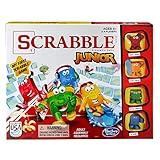
- Letter-matching fun for your little one
- Features cute character tokens for score keeping
- Features cute character tokens for score keeping
- Players create their own words in the advanced level
- Scrabble Junior is letter-matching fun for your little one
What can go wrong?
- Rewarding activity instead of learning: Points or completion badges can show participation without establishing mastery or transfer.
- Adding mechanics without a learning purpose: Game elements that do not help learners practise, receive feedback, or pursue a relevant goal may add little utility.
- Making performance too public: Competition and rankings can create anxiety or jealousy for some learners. Consider whether recognition should be individual, private, team-based, or omitted.
- Assuming every learner responds the same way: Results vary with learner type, subject, design, duration, environment, and workplace culture.
- Leaving simulation practice unsupported: Scenario rehearsal without suitable structure or feedback may not deliver the immediate or lasting learning intended.
The central design choice is not “make it fun” versus “keep it serious.” It is whether the activity gives learners appropriate practice and evidence that the intended learning carries over to a real task.
Quick Recap
Product prices and availability are accurate as of the date/time indicated and are subject to change. Any price and availability information displayed on Amazon at the time of purchase will apply.

