
Windows Errors? Fix Them Before They Spread
Repair common Windows errors and clear accumulated junk for a smoother, more stable PC - no reinstall needed.Free scan · no reinstallOutdated Drivers Are Slowing You Down
One free scan finds every outdated or missing driver and matches the right update for your exact hardware.Free scan · exact hardware matchiTechGuides is reader-supported. When you buy through links on our site, we may earn an affiliate commission. As an Amazon Associate I earn from qualifying purchases. Learn more
There is no universal winner. Choose G-SYNC Pulsar when your priority is the clearest motion during fast competitive play and you are willing to tune a backlight-strobing mode. Choose FreeSync Premium Pro when HDR behavior, mandatory low-framerate compensation (LFC), and a broad pool of certified monitors matter more. The badge is only a starting point: the monitor’s actual VRR range, panel response, HDR performance, GPU, connection, refresh rate, price, and the games you play determine the better purchase.
What G-SYNC Pulsar and FreeSync Premium Pro actually are
Both technologies are designed to keep a display’s refresh timing aligned with a game’s changing frame rate. That reduces tearing and makes uneven frame delivery look smoother than a fixed-refresh display. They approach the problem from different directions, however, and their certification labels do not describe equivalent hardware.
G-SYNC Pulsar: variable refresh plus variable-frequency strobing
NVIDIA describes G-SYNC Pulsar as an extension of G-SYNC variable refresh that adds variable-frequency backlight strobing. The backlight flashes in coordination with the panel’s changing refresh timing, with the goal of reducing the eye-tracking blur that remains even when a game is tear-free.
The strobing is the distinctive part of Pulsar. A conventional VRR display can present frames at the right time yet still look soft when objects move quickly. Pulsar attempts to preserve VRR smoothness while using a strobe-like backlight to make those moving objects easier to track. NVIDIA says Pulsar models can deliver “over 1000Hz effective motion clarity.” That is NVIDIA’s effective-clarity description, not the panel’s physical refresh rate and not an independent head-to-head measurement.
Popular on Amazon
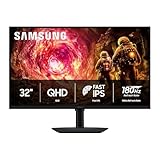
- Samsung’s 32” Odyssey G5 QHD Gaming Monitor delivers brilliant visuals for exhilarating gameplay that’s more immersive than ever before.
- QHD resolution (2560 x 1440) boasts incredibly detailed, pin-sharp images.
- With a wide 178° viewing angle, the IPS panel consistently delivers crisp, clear hues from various viewpoints.
- 180Hz Refresh Rate and 1ms response time (GtG) allow fast reactions for ultra-smooth gaming, plus G-Sync compatibility syncs the GPU and panel to reduce choppiness, screen lag, and image tearing.
- HDR10 provides brighter highlights and nuanced shadows for added depth.
Because the backlight is being modulated, Pulsar is also a display mode with trade-offs. Some people notice flicker or prefer the brighter, steadier appearance of a non-strobed mode. Your sensitivity, the game’s frame-rate stability, and the monitor’s controls matter as much as the label.
FreeSync Premium Pro: AMD’s upper-tier certification
AMD defines FreeSync Premium Pro as a certified display tier. Its criteria include tear-free operation, low latency, low-framerate compensation, and AMD FreeSync HDR requirements. The tier tells you that a monitor passed AMD’s certification conditions; it does not make every certified model identical in panel type, brightness, contrast, response behavior, or real-world HDR quality.
Premium Pro therefore describes a package of requirements rather than one special backlight technique. A certified monitor can use different panel technologies and have very different local-dimming performance or HDR brightness from another Premium Pro model.
Quick comparison: where each technology has an advantage
| Decision factor | G-SYNC Pulsar | FreeSync Premium Pro |
|---|---|---|
| Core emphasis | Variable refresh combined with variable-frequency backlight strobing for motion clarity. | Certified tier covering VRR, low latency, LFC, and HDR-related requirements. |
| Motion clarity | Distinctive strobing mode is intended to reduce perceived blur during fast movement. | Depends on the individual monitor’s pixel response, overdrive tuning, and whether it offers a separate strobing mode. |
| HDR | The Pulsar label alone does not establish a common HDR specification. | AMD’s Premium Pro criteria include FreeSync HDR requirements; AMD says the baseline exceeds HDR 400 and targets at least twice the perceived color volume of SDR. |
| Low frame rates | Check the exact monitor’s VRR behavior and low-end range. | AMD says Premium and Premium Pro displays require LFC. |
| Resolution and refresh criterion | Varies by model; check the monitor specification. | AMD lists at least 200 Hz below 3440 horizontal pixels and at least 120 Hz at or above 3440 pixels for Premium Pro monitors. |
| GPU and connection | Confirm the monitor’s G-SYNC support, GPU, DisplayPort or HDMI mode, and driver. | AMD says FreeSync works over DisplayPort and HDMI on compatible devices. Some NVIDIA GPUs with DisplayPort Adaptive-Sync are expected to work, but AMD advises confirming with the GPU maker. |
| Best initial fit | Competitive players who value the sharpest tracking of fast targets. | Buyers prioritizing HDR criteria, LFC, and a wider choice of certified displays. |
Those are category-level differences. They do not prove that every Pulsar monitor beats every Premium Pro monitor, or vice versa. A well-tuned Premium Pro display can look better in HDR than a Pulsar model with weak contrast, while a Pulsar screen can make a fast shooter easier to follow even if another monitor carries a stronger HDR specification.
Motion clarity: why Pulsar is the more unusual feature
VRR removes tearing; strobing addresses eye-tracking blur
Variable refresh rate (VRR) changes the panel’s refresh timing to match the frame rate being delivered by the GPU. That prevents a new frame from being displayed halfway through a scan, which is the usual cause of tearing. VRR also avoids the judder that occurs when a fixed refresh rate repeatedly waits for a late frame.
Also popular on Amazon
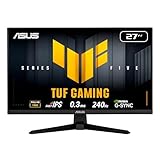
- 27-inch Full HD Fast IPS Display: Features a 1920 x 1080 resolution Fast IPS panel with 240Hz refresh rate for fast paced gameplay
- Ultra-Fast Response Time: ASUS Fast IPS technology enables a 0.3ms (min) response time for sharp gaming visuals with high frame rates
- Adaptive Sync Technology: FreeSync Premium and G-Sync compatible delivers a seamless, tear-free gaming experience
- Advanced Motion Blur Reduction: ASUS Extreme Low Motion Blur Sync (ELMB SYNC) technology enables ELMB together with variable refresh rate, eliminating ghosting and tearing for sharp gaming visuals with high frame rates
- Convenient Monitor Control: DisplayWidget Center enables easy OSD access and monitor settings adjustments with a mouse
VRR does not automatically eliminate motion blur. A sample-and-hold display keeps each frame visible until the next refresh, so your eyes continue moving while the image remains on screen. Pulsar’s variable-frequency backlight strobing briefly illuminates each refreshed image instead of leaving it continuously lit. In principle, that reduces the time your eyes see each frame while it is moving across the screen.
What “over 1000Hz effective motion clarity” does and does not mean
NVIDIA’s product page uses “over 1000Hz effective motion clarity” to describe Pulsar’s perceived clarity. The claim should be read as a vendor metric for motion clarity, not as a 1000Hz panel. The launch models described by NVIDIA have a physical 360 Hz refresh rate, and no independent test in the available material establishes a universal advantage over a named Premium Pro monitor.
When strobing can be the wrong choice
- Unstable frame rates: Strobing is easiest to tune when frame delivery is consistent. Large swings can produce visible brightness changes or less convincing clarity.
- Flicker sensitivity: Some viewers notice the pulsing backlight. If it causes discomfort, use ordinary VRR or a non-strobed mode.
- Brightness and image controls: Strobe modes can change brightness and may restrict some settings. Compare the monitor’s available controls rather than assuming the mode is always active.
- Game type: The benefit is most obvious when you track fast targets. Slower strategy, role-playing, and productivity workloads may gain more from HDR contrast or brightness than from strobing.
HDR: Premium Pro has a defined tier, not identical HDR output
What AMD’s Premium Pro HDR criteria mean
AMD says Premium Pro’s baseline HDR requirements exceed HDR 400 and target at least twice the perceived color volume of SDR. Those are AMD’s certification specifications. They indicate that HDR capability is part of the tier, but they do not guarantee that two Premium Pro displays will have the same peak brightness, black level, contrast, color calibration, or local-dimming behavior.
AMD also says that, with Premium Pro, the display passes specifications and data directly to the PC so games can tone-map to the display without bulky intermediate steps, reducing input latency. That is AMD’s description of the signal path; it should not be treated as an independently established latency comparison between all Premium Pro and Pulsar monitors.
How to evaluate HDR beyond the badge
- Check the manufacturer’s measured or stated peak brightness and whether it applies to a short highlight or a sustained full-screen window.
- Look for the panel’s native contrast and local-dimming hardware. A certification tier cannot tell you whether dark scenes will have blooming or gray blacks.
- Verify which refresh rates, inputs, and color formats are available in HDR. A monitor may expose different limits over HDMI and DisplayPort.
- Read independent measurements for the exact model when HDR is a major reason to buy. The Premium Pro label is not a substitute for those results.
Low-framerate compensation: the Premium Pro requirement
AMD states that Premium and Premium Pro displays are certified for mandatory LFC. When a game’s frame rate falls below the monitor’s minimum VRR frequency, LFC repeats frames so the display can continue refreshing inside its supported operating range. For example, if a monitor accepts VRR only above a certain lower threshold, the display can show repeated copies of a frame at a higher refresh interval rather than dropping out of VRR immediately.
Also popular on Amazon

- High-Resolution QHD Gaming Display: 27-inch QHD (2560 x 1440) gaming monitor with 180Hz refresh rate designed for professional gamers and immersive gameplay
- ASUS Extreme Low Motion Blur Sync Technology: ELMB Sync technology enables ELMB and variable-refresh-rate technologies to work simultaneously to eliminate ghosting and tearing for sharp gaming visuals with high frame rates
- Advanced Synchronization Technologies: FreeSync Premium, G-Sync compatible and AdaptiveSync technology delivers a seamless, tear-free gaming experience by enabling VRR (variable refresh rate) by default
- High Dynamic Range Support: HDR technology supports HDR-10 format to enhance bright and dark areas for improved visual depth and contrast
- Package Contents: DisplayPort cable, L-shaped Screwdriver, Power cord, Power adapter, Quick start guide, Warranty Card
LFC does not create additional game frames and cannot hide severe performance problems. It is most useful when frame rate moves around the low end of a monitor’s range. Check the exact VRR range in the monitor’s manual or specification sheet; the label alone does not tell you the practical floor or how the model behaves near it.
Refresh rate and resolution: verify the actual model
AMD lists a Premium Pro criterion of at least 200 Hz for displays below 3440 horizontal pixels and at least 120 Hz for displays at or above 3440 horizontal pixels. Those are certification thresholds, not a promise that every model runs at the same refresh rate in every mode. Resolution, color depth, HDR, and the selected input can change the maximum available refresh.
NVIDIA’s first announced Pulsar displays were described as 27-inch, 2560×1440 IPS monitors with a 360 Hz refresh rate and 500 nits peak HDR brightness. Treat those as launch specifications for the initial products, not as specifications for every future Pulsar display.
GPU, cable, and driver compatibility
AMD says FreeSync works over DisplayPort and HDMI on compatible devices. AMD also says some NVIDIA GPUs that support DisplayPort Adaptive-Sync are expected to work, while advising users to confirm compatibility with the GPU maker. “Expected to work” is not the same as a guarantee for every monitor, port, firmware version, or refresh-rate mode.
Before buying, confirm all four parts of the chain:
Do these 3 things before closing this tab:
1Repair Windows errors before they cause bigger problems2Fix the driver behind crashes, sound loss and screen glitches3Clear out junk files and repair common Windows errorsAlso popular on Amazon

- 27” FULL HD IPS DISPLAY: Experience crisp 1920x1080 resolution and vibrant colors on a 27-inch widescreen IPS panel with wide 178° viewing angles and a 16:9 aspect ratio.
- 240Hz Native / 260Hz Overclocked Refresh Rate & 0.5ms MPRT Response Time: Dominate fast-paced games with ultra-smooth motion and razor-sharp visuals, thanks to a 240Hz native refresh rate with up to 260Hz overclocking over both HDMI and DisplayPort, plus an ultra-fast 0.5ms (MPRT) response time.
- ADAPTIVE-SYNC TECHNOLOGY: Enjoy tear-free, stutter-free gameplay with Adaptive-Sync support that keeps visuals fluid and synchronized with your GPU.
- ILT-ADJUSTABLE & VESA COMPATIBLE: Customize your setup with tilt functionality (-3° ~ 21°) and 100x100mm VESA mount support for ergonomic flexibility.
- FLICKER-FREE + LOW POWER USAGE: Flicker-Free technology helps reduce eye strain during long sessions, and Eco Mode keeps power usage efficient (22W typical).
- GPU: Check the exact graphics card model and its supported VRR standards.
- Monitor input: Verify whether the desired VRR range and refresh rate are available through DisplayPort, HDMI, or both.
- Cable and bandwidth: Use a cable rated for the resolution, refresh rate, and color mode you intend to run.
- Driver and firmware: Install a current graphics driver and check the monitor maker’s firmware notes before diagnosing a VRR problem.
On a new installation, enable VRR in the monitor’s on-screen display first, then enable the corresponding adaptive-sync or G-SYNC option in the GPU control panel. Test at the intended resolution and refresh rate, and confirm that HDR is enabled in the operating system and game when you are evaluating HDR behavior.
Announced G-SYNC Pulsar monitors and what their specifications tell you
NVIDIA’s January 2026 launch announcement named Acer, AOC, ASUS, and MSI as makers of the first G-SYNC Pulsar displays. The announcement listed a US starting price of $599. That was the launch price statement; retailer pricing, stock, taxes, and regional availability can differ.
| Model or launch detail | Information stated by NVIDIA |
|---|---|
| Initial screen format | 27-inch, 2560×1440 IPS displays |
| Initial refresh rate | 360 Hz |
| Initial peak HDR brightness | 500 nits |
| Announced US starting price | $599 at the January 2026 launch announcement |
| Acer Predator XB273U F5 | 2560×1440 resolution; 1–360 Hz variable-refresh range |
| Other models listed on NVIDIA support pages | AOC AGON PRO AG276QSG2; ASUS ROG STRIX Pulsar XG27AQNGV; MSI MPG 272QR X36 |
See NVIDIA’s launch announcement, monitor specifications, and firmware support page for the listed launch and support information. The named models are examples of the category, not independent recommendations. Verify current stock, firmware, inputs, and pricing before purchase.
Independent reader supportYour contribution helps us test, update, and keep practical guides available for everyone.How to choose between Pulsar and Premium Pro
Choose Pulsar when motion tracking is the deciding factor
Pulsar is the stronger starting point if you play competitive shooters or racing games where identifying a moving target matters more than maximizing HDR impact. Its variable-frequency strobing is the feature that separates it from an ordinary VRR implementation. You should still confirm that the monitor’s strobe mode works across the frame-rate range you actually achieve and that you are comfortable with its brightness and flicker characteristics.
Quick wins for a faster PC:
Clear out junk files and repair common Windows errorsFree Scan →Fix the driver behind crashes, sound loss and screen glitchesFind Drivers →Repair Windows errors before they cause bigger problemsFix Now →Choose Premium Pro when HDR and low-frame behavior come first
Premium Pro is the more logical category when you want a display with AMD’s HDR-related certification criteria and mandatory LFC, or when you are comparing many models at different resolutions and prices. The certification can narrow your search, but you must then compare each model’s measured HDR performance, VRR range, response behavior, and input limits.
Also popular on Amazon
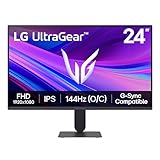
- Vivid Color, Fast Response, Total Control - The 24" UltraGear FHD gaming monitor delivers vivid HDR10 color, ultra-smooth 120Hz speed, and 1ms MBR clarity. G-SYNC compatibility & FreeSync keep gameplay tear-free. The sleek, slim design keep you focused and in control.
- Vivid Color That Puts You in the Action - Step onto the battlefield with HDR10 visuals and up to 99% sRGB color gamut coverage. The IPS display delivers rich, vivid tones, so every explosion, shadow, and landscape appears exactly as the developers intended.
- 120Hz Native Speed (144Hz Overclock) - Enjoy fluid, crystal-clear gameplay with a 120Hz native refresh rate, boosted to 144Hz when overclocked. Minimized motion blur keeps every frame sharp, so you can stay locked in on the action.
- 1ms MBR: Fast-Paced Speed to Victory - 1ms Motion Blur Reduction (MBR) keeps gameplay smooth and sharp, cutting blur and ghosting so fast-moving action stays clear—helping you stay competitive when every millisecond counts.
- NVIDIA G-SYNC Compatible & AMD FreeSync - NVIDIA G-SYNC Compatible and AMD FreeSync deliver smooth, tear-free, low-latency gaming with high refresh rates—so every frame stays sharp.
Choose by the complete monitor, not the logo
Use this order when two displays look similar on paper:
- Set your target resolution and the frame rates your GPU can sustain in your main games.
- Check the exact VRR range and whether LFC is documented for the model.
- Compare measured response times and overshoot at the refresh rates you will use.
- Evaluate HDR brightness, contrast, local dimming, and color behavior if HDR matters.
- Confirm the required refresh rate and HDR mode work through the port and cable you have.
- Check firmware support, warranty terms, current price, and return policy.
- Only then use Pulsar or Premium Pro as the tie-breaker for motion clarity or certification breadth.
Common buying and setup mistakes
Assuming a badge guarantees identical image quality
Certification establishes a set of requirements, not a shared panel or a shared HDR experience. Two Premium Pro monitors can differ substantially in contrast and brightness, just as two Pulsar monitors can differ in tuning, inputs, and strobe usability.
Confusing effective clarity with refresh rate
Pulsar’s “over 1000Hz effective motion clarity” wording is not a claim that the display refreshes at 1000 Hz. Compare the monitor’s physical refresh rate and VRR range separately from NVIDIA’s effective-clarity description.
Recommended Free Tools
Ignoring the lower edge of the VRR range
A high maximum refresh rate does not tell you how the display behaves when a demanding game slows down. Check the minimum VRR frequency and LFC behavior, then compare those figures with your real frame-rate range.
Expecting a new cable or driver to fix every limitation
A cable or driver can resolve a bandwidth or detection problem, but it cannot add HDR hardware, widen a panel’s native VRR range, or make an incompatible port support a higher mode. Confirm the monitor’s documented limits first.
Leaving the wrong mode enabled for the task
A strobe mode that is excellent for a stable competitive title may be less comfortable for desktop work or a game with large frame-rate swings. Keep a non-strobed VRR mode available and choose deliberately rather than treating one setting as universally best.
Verdict
G-SYNC Pulsar is the better fit for motion-clarity-focused competitive gaming; FreeSync Premium Pro is the better fit for shoppers who prioritize HDR criteria, LFC, and a broad certified-display ecosystem. Neither technology wins on its label alone. The exact monitor’s VRR range, response tuning, HDR implementation, resolution, refresh rate, compatibility, price, and the games you play should decide the purchase.
Free tools Windows power users keep installed
One-click scans. No signup required.
Quick Recap
Product prices and availability are accurate as of the date/time indicated and are subject to change. Any price and availability information displayed on Amazon at the time of purchase will apply.

