
A full VPS disk can prevent a 24/7 YouTube stream from writing logs, reading or processing media, or keeping its encoder running. Confirm which filesystem is full and identify what consumed its space before deleting files. Then compare the local service logs with YouTube Live Control Room, reclaim space only from a confirmed source, and restart and verify the stream.
Why did my 24/7 YouTube stream stop when my VPS disk filled?
A full filesystem can disrupt the local streaming process, but the symptom does not tell you what filled the disk or prove that storage is the only problem. An encoder or its service may fail when it cannot write required files; a separate network or YouTube ingest issue can also interrupt a stream. Treat the host and YouTube as two places to check, and match their evidence by time.
YouTube says, “The Live Dashboard and Live Control Room check for errors in the stream that you’re sending to YouTube.” Its live streaming error messages include timestamps and error-specific guidance. Use those messages alongside your VPS service state and logs; YouTube’s view of the incoming stream does not show which files are consuming space on your host.
How do I find what filled the disk on Linux?
Check the affected filesystem first
- Inspect filesystem capacity and usage with the tools available on your Linux distribution. Determine which mounted filesystem is full; the root filesystem and a separate media or log mount may have different capacity.
- Identify the largest files and directories on that specific mount before removing anything. A full-disk alert by itself does not identify the cause.
- Check whether the stream’s media, application logs, systemd journal, or another service’s data is actually using the space. Do not delete arbitrary files under
/var, stream assets, databases, or package files without establishing their purpose.
There is no universal safe deletion target or command sequence for an unknown VPS: the distribution, filesystem layout, and workload matter. If you are unsure what a file belongs to, preserve it and consult the relevant service or VPS administrator rather than guessing.
#1 Best Overall

- 【High-speed performance upgrade, goodbye to lag】Experience lightning-fast read speeds of up to 500MB/s and write speeds of 400MB/s with EDILOCA 2.5" SATA III SSD, delivering 3x faster performance than traditional HDDs. Accelerate system boot time by 60%, reduce game loading delays, and streamline large file transfers for seamless multitasking—ideal for gamers, professionals, and daily users. Backward compatible with SATA II (3Gb/s) interfaces for versatile upgrades.
- 【3D QLC NAND technology, durability and capacity combined】Engineered with advanced 3D QLC NAND flash memory, this internal SSD achieves high-density storage while ensuring extended lifespan and stable performance. Rigorously tested under heavy workloads, it guarantees 99.9% data integrity, making it reliable for long-term use. Precision components and 72-hour stress testing further enhance durability, even in demanding environments.
- 【Excellent performance, silent and resilient】Say goodbye to mechanical noise—this SSD hard drive operates silently with no moving parts. Built-in shock-resistant (1500G/0.5ms) and drop-proof (1.2m) features protect data against accidental impacts, ensuring peace of mind for laptop users on the go. Whether gaming, working, or streaming, enjoy near-instant responsiveness and consistent performance without interruptions.
- 【Universal compatibility, plug and play】Seamlessly compatible with Windows 10/11, macOS 10.4+, Linux 2.6.33+, and NAS systems. Plug-and-play design simplifies installation—simply mount the SSD and format it via Disk Management (new drives are blank, requiring initial partitioning). Perfect for upgrading laptops, desktops, or expanding storage in home servers, with no additional drivers needed.
- 【3-year service, backed by a 3-year limited warranty】Backed by EDILOCA’s 3-year limited warranty and 24/7 technical support, ensuring worry-free use. Trusted by over 2 million global users, each SSD undergoes a 72-hour stress test for quality assurance. From personal computers to professional workstations, EDILOCA delivers reliable data storage solutions with a commitment to customer satisfaction.
Check the streaming service and YouTube at matching times
- Inspect the applicable systemd unit’s state and recent logs. With journal-based logging,
journalctl -u <service>shows entries for a named unit; use the actual unit name on your host. To follow new entries as they arrive, add-f. - Compare local errors and timestamps with the health indicator and error timeline in YouTube Live Control Room. YouTube’s live stream metrics also show real-time stream information. Platform health is evidence about the stream YouTube receives, not proof that the VPS has recovered.
Look for local write or no-space errors, encoder exits, and connection failures. If YouTube reports a connection or ingest problem while the filesystem has headroom, follow the platform’s error-specific instructions and investigate the network or encoder separately. For OBS users, the OBS connection troubleshooting guide identifies unstable connections to the ingest server and unsustainable bitrate as common causes of dropped frames or intermittent disconnections; those OBS-specific observations should not be assumed to diagnose every encoder.
How do I clear systemd journal logs safely?
Only use journal cleanup if you have confirmed that journal files are a material disk consumer. Journals can contain evidence needed to diagnose the interruption, so inspect or preserve relevant recent messages first when feasible. The systemd 255 journalctl manual documents these commands:
Rank #2
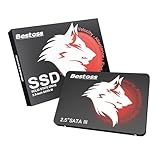
- Launch as Fast as Sirius: Replace slow HDDs with this internal SSD. 550MB/s read speeds boot systems at least 50% faster than HDDs. Open office files in seconds and load games faster with this SATA SSD for your computer storage.
- Long-Lasting Durability: Your Tough & Reliable Sky wolf Guardian: TLC chips offer longer write life than QLC. This internal SSD ensures reliable internal hard drive performance for vital data.
- Full Coverage for Multi-Scenario Use: Perfect for office, content creation, and home/ NAS systems. This 2.5 inch SSD accelerates boot times and file transfers as your trusted PC hard drive.
- Versatile Capacity Storage: Enjoy Freedom: 120GB-4TB options. This SSD internal stores files, photos, videos, games - ideal hard drive for PC storage needs.
- Multi-Device Compatibility & Plug & Play: SATA III SSD compatible with Windows/Linux laptops, desktops. A high-performance internal sata SSD solution for your pc storage.
journalctl --disk-usagereports the disk space currently used by journal files.journalctl --rotaterotates active journal files, making archived files eligible for vacuuming.journalctl --vacuum-size=<limit>removes the oldest archived journal files to try to bring journal use toward the selected size limit.
Rotation and vacuuming can be combined. Vacuuming removes archived files only; active files remain, so the reported total may not land exactly on the requested limit. These commands will not help if media, an application log outside journald, or another service’s data is filling the filesystem. Do not treat purging all logs as routine maintenance.
How do I restore and verify the stream?
- First reclaim usable space from the confirmed cause. If the filesystem remains full, restarting the encoder does not solve the underlying condition.
- Check the service state and its latest logs. Once the host has headroom, restart the named service if it is stopped or needs a deliberate recovery action; the unit name and restart method are specific to your deployment.
- Check the encoder’s output and connection messages, then confirm in YouTube Live Control Room that the incoming stream is active and its health indicator no longer reports the original unresolved error.
- Review the event timeline and the stream’s observed state. Whether YouTube continues the same live event or retains a VOD after an interruption depends on the event configuration and what the dashboard shows; a restart alone cannot guarantee continuity.
What should I do based on the evidence?
| Evidence | Branch to investigate | Next action |
|---|---|---|
| The filesystem is full and local logs show write or no-space failures | Host storage exhaustion | Identify the actual disk consumer, recover space from the confirmed source, then inspect and recover the service. |
| Journal usage is unusually large | systemd journal retention | Measure journal use, inspect relevant unit logs, rotate and vacuum archived files if appropriate, then review journal limits. |
| The disk has headroom, but YouTube reports stream or connection errors | Ingest, network, or encoder configuration | Use YouTube’s timestamped error guidance and investigate the encoder and connection rather than deleting files. |
| The local service is stopped and the disk is now healthy | Process recovery | Check the unit state and logs, then perform a deliberate restart if needed. A restart policy may help with a process exit, not storage exhaustion. |
How can I prevent another full-disk interruption?
Set journal limits based on the VPS
If journal growth caused the incident, review journald’s persistent and runtime settings, including SystemMaxUse= and SystemKeepFree=. The systemd 252 journald.conf manual describes these controls and version-specific defaults. Check the installed systemd version and which filesystems hold persistent and runtime journals before choosing values.
Quick wins for a faster PC:
Clear out junk files and repair common Windows errorsFree Scan →Fix the driver behind crashes, sound loss and screen glitchesFind Drivers →Rank #3
- Launch as Fast as Sirius: Replace slow HDDs with this internal SSD. 550MB/s read speeds boot systems at least 50% faster than HDDs. Open office files in seconds and load games faster with this SATA SSD for your computer storage.
- Long-Lasting Durability: Your Tough & Reliable Sky wolf Guardian: TLC chips offer longer write life than QLC. This internal SSD ensures reliable internal hard drive performance for vital data.
- Full Coverage for Multi-Scenario Use: Perfect for office, content creation, and home/ NAS systems. This 2.5 inch SSD accelerates boot times and file transfers as your trusted PC hard drive.
- Versatile Capacity Storage: Enjoy Freedom: 120GB-4TB options. This SSD internal stores files, photos, videos, games - ideal hard drive for PC storage needs.
- Multi-Device Compatibility & Plug & Play: SATA III SSD compatible with Windows/Linux laptops, desktops. A high-performance internal sata SSD solution for your pc storage.
Limits do not clean existing non-journal files, and journald reduces its footprint by deleting archived journal files; active files remain. A limit is not a general-purpose disk cleanup mechanism. Choose retention and free-space reserves to fit available capacity, log volume, and operational needs rather than relying on a universal number.
Monitor capacity and supervise the process
Configure disk-capacity monitoring and alerts appropriate to your VPS so you can investigate before a filesystem runs out of room. A systemd restart policy can help recover a process that exits, but it cannot make free space, repair broken inputs, fix invalid stream credentials, or resolve a YouTube-side error.
Rank #4

- Renewed server with the highest quality standards
- Ideal for a robust enterprise environment or data center
- All servers include power cords, and other parts detailed in full product description below
- Custom configurations available upon request
A public Ubuntu VPS setup example runs FFmpeg as a systemd service with Restart=always. That is one implementation pattern, not a guarantee or a universal recommendation; adapt service configuration to your encoder, unit, and failure modes.
Or let it run in the cloud
If your goal is to keep uploaded videos playing as a 24/7 YouTube stream without operating an encoder on your VPS, StreamNeo is a cloud alternative: upload a recording or playlist, add your YouTube stream key, and go live. It keeps the stream running without a computer or home connection staying on. It does not fix a full VPS disk, and it plays uploaded videos rather than broadcasting a camera.
Best Value

- 【High capacity storage】The Beelink Me Pro NAS comes with 3 x M.2 2280 PCIe3.0 SSD slots, each slot supporting up to 4TB capacity, for a total of up to 12TB capacity. In addition, the Mini PC also comes with two hard drive bays, supports 2.5-inch and 3.5-inch SATA drives, with up to 30TB capacity per drive. You can install the SSD yourself and use it to store data.
- 【Supports multiple systems】Beelink Mini PC equipped with Intel N95 CPU( 4C/4T, up to 3.4GHz),12G LPDDR5, and 128G SSD (supporting Windows/Linux systems), you can use this machine as a mini computer or install home media center systems such as JellyFin/KODI/Plex, turning this NAS into a large storage network and easily streaming photos, music, or 4K movies to your TV or other devices for sharing with your family and guests.
- 【Modular Innovative Design】Conventional Design: The motherboard is fixed inside the chassis with noreserved upgrade path, making user upgrades inconvenient or impossible. ME Pro innovation: DIY drawer-style design supports easy motherboard upgrades - compatible with Intel N-series, Intel 12th/13th/14th/15th Gen, AMD FP8 series, and ARM architectures. It allows quick dust removal with a single pull, fully user-operable.
- 【Soft Routing&Efficient Transmission】 The Me Pro PC is equipped with dual LAN, supporting soft routing functionality for network performance optimization, feature expansion, advanced network management, and resource sharing. It supports Wake On LAN, RTC Wake, and Auto Power On. At the same time, the mini PC has built-in WiFi 6 and Bluetooth 5.4, supporting wireless connection to multiple devices such as keyboards, mice, and printers, and high-speed transmission of various photos and streaming videos, providing you with a better user experience.
- 【Lifetime After-Sales Service】Beelink has been dedicated to R&D NAS for many years. All Beelink NAS have passed strict inspections before shipping. If you have any questions, please don’t hesitate to contact US. We are 100% guaranteed to solve your problems. We offer lifetime technical support, a 3-Year-free warranty, and 24/7 after-sales service. All of our products obtained FCC, RoHS, and CE Certifications.
- No computer at home has to stay on.
- Videos stream as uploaded, up to 4K 60fps, at one flat price per slot.
- Automatic recovery if YouTube drops the stream.
- The first day is free with no card, one free day per account.
The Monthly plan is $9.99 per month. Start a free day at StreamNeo registration.
Quick Recap
Product prices and availability are accurate as of the date/time indicated and are subject to change. Any price and availability information displayed on Amazon at the time of purchase will apply.

