
Do these 3 things before closing this tab:
1Repair Windows errors before they cause bigger problems2Scan for outdated or missing drivers - takes under a minute3Clear out junk files and repair common Windows errorsTo fix a lagging GStreamer stream, first identify whether frames are backing up in the encoder or pipeline, the VPS cannot encode quickly enough, or the outbound connection is unstable. Measure CPU use, output frame rate, queue behavior, and YouTube’s stream health before changing settings. Then adjust one factor at a time: reduce processing load, address blocked branches, or match YouTube’s ingest requirements. An Indian VPS alone does not identify the cause; its CPU allocation and route to YouTube need to be measured on the actual instance.
Identify what “lag” means in your pipeline
Lag can mean several different things: output frames arrive late, frames are dropped, the pipeline stalls, or viewers see buffering. Those symptoms have different causes. A delayed stream is not automatically a network-latency problem: encoder buffering or a blocked queue can hold up the pipeline even when upload capacity is adequate.
Record a baseline before tuning
- Save the complete GStreamer pipeline and note the GStreamer version.
- Record input and output resolution and frame rate, encoder and preset, bitrate or rate-control mode, and keyframe interval.
- Watch CPU utilization over time, not just at startup. Note whether output frame rate falls behind or frames are dropped or late.
- Check whether the delay is visible in pipeline output, only in YouTube playback, or both.
- During a short broadcast using representative video motion and audio, capture YouTube Live Control Room stream-health messages and test sustained upload performance.
YouTube recommends testing before a live stream and checking upload performance. Its published ingest settings are useful targets, but they do not establish the upload capacity or route quality of a particular VPS. YouTube’s live encoder settings
Check whether x264 buffering or a queue is blocking the pipeline
GStreamer’s x264enc documentation warns: “Some settings, including the default settings, may lead to quite some latency (i.e. frame buffering) in the encoder.” In a pipeline with a tee, this encoder latency can exceed the capacity of a simple queue on another branch. That queue fills, blocks upstream, and can stall the whole pipeline. GStreamer x264enc documentation
Free tools Windows power users keep installed
One-click scans. No signup required.
#1 Best Overall
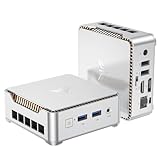
- 【Ryzen 5 3500U Processor】KAMRUI Essenx E2 Mini PC is equipped with AMD Ryzen 5 3500U (4-cores/8-threads, up to 3.7GHz) with integrated Radeon Vega 8 Graphics(1200MHz, 8 Core). The 3500U CPU operates at a base frequency of 2.1 GHz and a Boost frequency of 3.7 GHz. This DDR supports upgradable up to 32GB, SSD supports up to 2TB.(NOT INCLUED), KAMRUI E2 3500U Mini PC is ideal for light office work and home entertainment. KAMRUI E2 3500U is more than 35% more powerful and smoother in operation than the Intel N150, 33% faster than Intel N95, 28% performance boost over Intel i3-10110U, and 42% stronger processing power than AMD Ryzen 3 3200U.
- 【16GB DDR4 & 256GB SSD】The KAMRUI E2 mini computers is equipped with 16GB DDR4(Expandable up to 32GB) for faster multitasking and smooth application switching. 256GB M.2 SSD ensures fast startup times,fast file transfers and plenty of storage space,eliminating slow loading times and ensuring fast responsiveness.Storage space can RAM supports up to 32 GB, SSD supports up to 2TB (Not included)make file storage easier.
- 【4K Dual Display & USB 3.2 Type-A Port】KAMRUI E2 3500U mini desktop pc is equipped with an HDMI 2.0+DP 1.4 interfaces for faster transmission, Support Dual 4K@60Hz Display, E2 mini desktop computers is ideal for visual home entertainment, home office, conference rooms, etc. USB3.2 Gen1 Type-A Port×2 with a transfer speed of up to 5Gbps (10 times faster than USB 2.0) for efficient data transfer. The RJ45 1000M Gigabit Ethernet Port ensures a stable network connection.
- 【WiFi+Bluetooth stable connection】The Kamrui E2 micro pc have reliable and stable wireless connection, open websites in seconds, watch movies without buffering and download files smoothly, connect your monitor from WiFi or Ethernet, use a wireless keyboard and mouse through bluetooth, which will be powerful workstation for you.
- 【Versatile Ports】This KAMRUI E2 Small pc is equipped with HDMI 2.0×1(4K@60Hz)、DP1.4×1(4K@60Hz)、Gigabit Ethernet Port (RJ45, 10/100/1000Mbps) ×1、USB3.2 Gen1 Type-A Port×2(5Gbps)、USB2.0 Type-A Port×2、3.5mm Audio Jack ×1、DC In ×1、Power Button ×1
Inspect branch queues before changing them
- Find each
teeand follow every branch, including branches for recording, preview, or audio/video processing. - Observe queue levels and whether a branch stops consuming data when the stall occurs.
- If a non-x264 branch’s queue is filling because of encoder latency, test relaxing that queue’s time, size, or buffer limits, or use one
multiqueuewhere appropriate. GStreamer documents these as remedies for this kind of blocking. - Change one limit at a time and compare queue behavior, output pace, and end-to-end delay.
Do not enlarge every queue as a blanket fix. Queues can add latency, and more buffering may hide a slow branch rather than restore real-time throughput. GStreamer’s documentation describes buffering and latency in live pipelines. GStreamer latency design
When to test zerolatency
If encoder buffering is the likely bottleneck and lower latency matters, test tune=zerolatency and compare the image at the bitrate you intend to use. GStreamer describes it as a possible workaround; the trade-off can be lower overall encoding quality. Keep it only if a representative test shows acceptable quality and stable output. GStreamer x264enc documentation
Rank #2
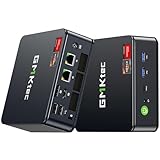
- Office Gaming Mini PC - UPGRADED GMKtec Nucbox M5 Ultra Series is equipped with the powerful AMD Ryzen 7 7730U processor, 8 Cores/16 Threads, Base 2.00GHz (Power Saving Quiet Mode) with Turbo Boost up to 4.50GHz (Performance Mode) in BIOS settings, Based on the ZEN 3+ architecture, this small but powerful mini pc delivers satisfying results in productivity, office work, and gaming. 35% Performance increase over AMD Ryzen 5 7430U/ Ryzen 7 5700U, 5600U, 5560U, 5500U.
- 16GB DDR4 RAM & 256GB PCIe SSD - Installed with DDR4 16GB RAM (1x16GB), the Nucbox M5 Ultra mini pc support expansion to 64GB RAM. Featured with 256GB M.2 2280 PCIe 3.0 SSD, support dual slot expansion to 4TB SSD. (Upgrades not included)
- DUAL NIC LAN 2.5G RJ45 - Fast Network Speeds: Enjoy up to 2500Mbps data transmission speed without worrying about lagging. Ideal for working, gaming, and surfing the internet. Great for Untangle, Pfsense or as a server office PC.
- Mini Desktop Computer with 4K Triple Screen Display - Nucbox M5 Ultra integrates AMD Radeon Graphics 8 Cores 2000 MHz GPU to deliver powerful graphics processing power to easily handle the demands of complex design software, 4K@60Hz UHD video editing, and playback. It can connect to 3 display screens simultaneously.
- Fast Internet WiFi 6E + BT5.2 Connection - GMKtec Mini PC with WiFi-6E Wireless, have 2.5G/5G/6G triple band, more faster and lower latency. Bluetooth 5.2 allowing you more quickly to connect other wireless devices (headset, mouse, keyboard, etc.) Interface features 2*USB3.2 ports, 2*USB2.0 ports, 1*HDMI 2.0 port(4K@60Hz), 1*USB-C port(PD/DP/DATA), 1*DP Port, 1*Audio 3.5mm (HP&MIC), 1*DC Power Port.
Reduce CPU demand without guessing at vCPU requirements
If the VPS cannot encode in real time, output may fall behind even when the pipeline has no queue blockage. There is no established minimum vCPU count for this workload: the result depends on the input, output format, GStreamer build, encoder settings, and the VPS’s actual CPU allocation.
Run controlled load tests
- Keep the input and network conditions comparable to your baseline.
- Lower output resolution or frame rate and check sustained CPU use, dropped or late frames, and output pace.
- If the current x264 preset cannot sustain real-time output, try a faster preset. Compare the resulting image quality and bitrate needs rather than assuming the preset is suitable.
- If the pipeline decodes a source before re-encoding it, account for decode load too. GStreamer notes that decoding can be very CPU-intensive at higher resolutions such as 1080p or 4K. Compatible hardware and plugins can offload decoding, but a VPS may not expose usable hardware acceleration, and decode acceleration does not guarantee encode acceleration. GStreamer hardware-accelerated decoding tutorial
Treat each resolution, frame-rate, or preset change as an experiment. Retest the same representative content and compare CPU headroom, output pace, image quality, and YouTube health.
PC Slower Than It Used to Be?
A free scan shows the junk files, broken settings and background clutter dragging Windows down - then fixes them in one click.Free scan · Windows 10 & 11Outdated Drivers Are Slowing You Down
One free scan finds every outdated or missing driver and matches the right update for your exact hardware.Free scan · exact hardware matchRank #3

- 【AMD Ryzen 3 5300U CPU: Outperforms N150 & 3500U】 BOSGAME E5 mini PC is powered by the TSMC 7nm FinFET architecture AMD Ryzen 3 5300U processor (4 Cores, 8 Threads, up to 3.8GHz boost, 6MB total cache). Compared to low-end Intel N150 or 3500U chips which only have 4 single threads and throttle under load, the 5300U delivers over 30% faster multi-core speed. Run 30+ browser tabs, large Excel sheets, and Zoom meetings simultaneously without system lag.
- 【8GB DDR4 RAM & 256GB NVMe SSD Storage】 Installed with high-speed 8GB DDR4 dual-channel memory and a fast 256GB M.2 2280 SSD, eliminating slow boot times and application loading delays. To accommodate growing data requirements, the upgradeable hardware design features dual SODIMM slots that allow you to expand memory up to 64GB RAM, ensuring smooth operation during heavy multitasking.
- 【High-Capacity Dual M.2 SSD Storage Expansion】 Never worry about running out of space for your business files. In addition to the pre-installed 256GB system drive, the motherboard houses an extra empty internal M.2 2280 NVMe PCIe 3.0 slot. This allows you to easily add a second solid-state drive for up to an additional 2TB of storage capacity (upgrades not included) without needing to remove or reinstall the original operating system.
- 【Radeon 6-Core Graphics & Triple 4K Displays】 Integrated with official AMD Radeon Graphics (6 Graphics Cores, 1500 MHz frequency) for casual gaming, photo editing, and crisp 4K media decoding. Featuring 1x HDMI 2.0 port, 1x DisplayPort, and 1x Full-Function Type-C port, the E5 outputs true 4K@60Hz resolution to three monitors at once. This multi-screen setup eliminates constant window-switching for traders, programmers, and office workers.
- 【Dual 2.5GbE LAN Ports for Advanced Networking】 Experience fast wired network transmission speeds up to 2500Mbps without lagging or buffering. The integration of dual 2.5 Gigabit Ethernet ports (powered by Realtek RTL8125 controller) makes this compact computer an exceptional hardware choice for tech enthusiasts. Easily configure it into software routers, hardware firewalls (pfSense, OpnSense), home NAS servers, or local homelabs.
Match the output to YouTube’s live ingest guidance
YouTube’s current live encoder guidance recommends RTMP or RTMPS, constant bitrate (CBR), and keyframes every two seconds, not more than four seconds apart. For H.264, the published bitrate recommendations include 6 Mbps for 720p30 and 14 Mbps for 1080p30; the corresponding listed minimums are 3 Mbps and 5 Mbps. These are platform recommendations, not a guarantee that a VPS can sustain the required upload. YouTube live encoder settings
| H.264 output format | YouTube recommended bitrate | YouTube listed minimum |
|---|---|---|
| 720p30 | 6 Mbps | 3 Mbps |
| 1080p30 | 14 Mbps | 5 Mbps |
Use the row for your actual output format and consult YouTube’s guidance for other resolutions, frame rates, and codecs. Do not apply a 1080p60 target to a 720p30 pipeline. If CPU or upload capacity may be constrained, lowering resolution or bitrate can be a useful controlled test; verify both visual quality and YouTube’s stream-health status afterward.
Rank #4

- 12th Intel Alder Lake N95 Processor – The GMKtec G3 S Mini PC is powered by the 12th Gen Intel N95 processor with 4 cores, 4 threads, 6MB cache and a burst frequency up to 3.4GHz. Compared with N100/N5105/N5100/N5095, the N95 delivers up to 36% overall performance improvement. Perfect for routine tasks, office work, and home entertainment, this compact mini desktop is more convenient than traditional bulky PCs.
- 8GB RAM & 256GB SSD Storage – Pre-installed with 8GB DDR4 memory and a fast 256GB M.2 2242 SSD, the G3 S mini desktop offers quicker startup, smoother multitasking, and faster file transfers. Enjoy seamless performance whether you’re working on multiple applications, browsing, or streaming content.
- Rich Interfaces & Connectivity – The G3 S mini computer comes equipped with USB 3.2 (up to 10Gbps), dual HDMI 2.0 (4K@60Hz), and a 3.5mm audio jack. With support for WiFi 5, Bluetooth 5.0, and Gigabit Ethernet (RJ45 1000MbE), it connects easily with monitors, projectors, printers, office equipment, and other peripherals, making it versatile for both home and business use.
- Dual 4K Display Support – Featuring upgraded Intel UHD Graphics (up to 1000MHz), the G3 S supports 4K video playback and AV1 decoding for a smooth viewing experience. With dual HDMI outputs, you can connect two 4K@60Hz displays simultaneously, enabling efficient multitasking for work and entertainment.
- GMKtec WARRANTY - GMKtec offers a 1-year limited GMKtec's warranty for each mini PC, starting from the date of the purchase. All defects due to design and workmanship are covered. With a professional after sales team always ready to attend to your needs, you can simply relax and enjoy your mini PC.
Check keyframe timing in context
Keyframe settings may be expressed as a frame count rather than seconds. The number of frames corresponding to two seconds depends on the output frame rate, so verify how your encoder interprets its setting. GStreamer’s gst-launch RTP example uses x264enc tune=zerolatency key-int-max=15, but that example sends RTP over UDP; it is not a YouTube RTMP(S) configuration recipe. Follow YouTube’s time-based keyframe guidance for your output. GStreamer gst-launch documentation
Distinguish network instability from local processing
Network delay can interrupt delivery and drain a playback buffer; buffering can absorb irregular delivery, but it adds delay. GStreamer’s buffering guide explains buffering behavior and watermarks mainly in the context of receiving and playing media. It does not mean that adding a player-style queue2 automatically repairs an outbound RTMP ingest problem. GStreamer buffering documentation
For a stream sent from your VPS to YouTube, compare sustained upload performance with YouTube’s stream-health feedback. If local output pace and CPU look healthy while YouTube reports connection or ingest trouble, investigate the outbound path separately. Do not assume that an Indian VPS has a particular route or upload speed: those are provider-, host-, and test-specific.
Use a repeatable test plan
- Save the existing pipeline and record CPU use, output frame rate, and YouTube stream-health status during a short test with representative motion and audio.
- Use a test pattern or known input to help separate source or decode problems from encode and network behavior. GStreamer documents
videotestsrcandfakesinkfor diagnostics. GStreamer basic tutorial - If CPU is saturated or output falls behind, test a lower resolution or frame rate, or a faster encoder preset. Change one setting per run.
- If a multi-branch pipeline stalls, inspect queue levels and branch behavior; test queue limits or
multiqueuebased on the observed blocking. - If encoder latency is the leading suspect, trial
tune=zerolatencyand judge both output stability and image quality. - Check RTMPS, CBR, keyframe timing, and the bitrate guidance for the actual output format; review YouTube’s stream-health messages.
- Repeat each run under comparable input and network conditions. Treat a setting as a fix only after the target VPS shows a measured improvement.
Troubleshoot by symptom
| Observed symptom | Likely area to investigate | Next check |
|---|---|---|
| CPU stays heavily loaded and output falls behind | Encode or decode throughput | Test a lower output resolution or frame rate, then a faster x264 preset; compare sustained CPU and output pace. |
| Pipeline stalls when a branch queue fills | Encoder latency and queue blocking | Inspect the tee branches; test documented queue-limit changes or multiqueue. |
| Local output appears steady, but YouTube reports stream-health problems | Outbound upload or ingest | Test sustained upload performance and check RTMP(S), bitrate, and YouTube health messages. |
| Viewers buffer while local output pace appears steady | Delivery path or playback buffering | Compare YouTube health feedback and outbound stability; do not assume a local playback queue fixes an ingest issue. |
| Lower latency worsens the picture | Encoder quality trade-off | Compare tune=zerolatency against the prior settings at the intended bitrate; retain it only if quality is acceptable. |
Or let it run in the cloud
If your goal is to keep uploaded video playing as a 24/7 YouTube stream rather than to troubleshoot this GStreamer pipeline, StreamNeo is a separate cloud option: upload a recording or build a playlist, add your YouTube stream key, and go live. Nothing has to stay on at home; it streams uploaded video at the quality provided, up to 4K 60fps, at one price per slot. It can automatically recover if YouTube drops the stream. The first day is free with no card. Monthly pricing is $9.99 per month. Start a free StreamNeo day.
Quick Recap
Product prices and availability are accurate as of the date/time indicated and are subject to change. Any price and availability information displayed on Amazon at the time of purchase will apply.

