
iTechGuides is reader-supported. When you buy through links on our site, we may earn an affiliate commission. As an Amazon Associate I earn from qualifying purchases. Learn more
Neither headphone is established as the soundstage, comfort or tonal winner. FiiO describes the FT1 Pro’s stage as large, and a Tom’s Guide reviewer found it clean and spacious, but the available evidence does not show that it is wider than the HIFIMAN Edition XS. The FT1 Pro is lighter on paper and FiiO calls it easy to drive; those details make it a reasonable starting point for some buyers, not a guarantee that it will fit better or work ideally from every device.
The practical choice depends on your own fit, listening level, source and local price. Below, manufacturer specifications are kept separate from reviewer impressions, and the limits of the comparison are made explicit so you can decide what to check before buying.
What the evidence can—and cannot—tell you
The FiiO FT1 Pro and HIFIMAN Edition XS are wired planar headphones with open-back designs. Both are intended for listening in a relatively quiet space where sound leaking out of the earcups is acceptable. Their published specifications offer useful points of comparison, but they do not settle how either will sound or feel to a particular person.
Windows Errors? Fix Them Before They Spread
Repair common Windows errors and clear accumulated junk for a smoother, more stable PC - no reinstall needed.Free scan · no reinstallOutdated Drivers Are Slowing You Down
One free scan finds every outdated or missing driver and matches the right update for your exact hardware.Free scan · exact hardware matchThere is a useful distinction between three kinds of information in this comparison:
Popular on Amazon
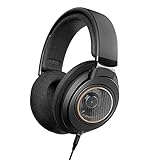
- All New Philips Shp9600 With The Perfect Blend Of Performance, Comfort, And Quality
- Open-Back Design With Spacious Sound. Ideal For Listening To Your Favorite Music Everyday At Home
- Perfectly Tuned 50 Mm Drivers Deliver Crisp Bass, Balanced Midrange, And Prstine High Frequencies.
- The Drivers Are Engineered To Fit The Ear'S Natural Geometry, Ensure No Detail Is Lost.
- Manufacturer specifications and descriptions: figures such as impedance, sensitivity and weight, plus FiiO’s description of the FT1 Pro as easy to drive and its soundstage as large.
- One reviewer’s listening account: Tom’s Guide describes the FT1 Pro’s stage and reports a five-hour listening session, as well as a change in bass after adding an external DAC/amp.
- Direct comparative evidence: the available RTINGS comparison result does not provide enough detailed findings to establish a relative stage, comfort or tonal ranking.
That last limit matters. A positive description of one headphone is not proof that it beats another. No controlled head-to-head test is established here for stage width or depth, imaging, tonal balance, comfort or amplifier performance. Treat the purchase decision as a set of things to verify—especially fit and source capability—rather than a settled contest.
Published specifications at a glance
| Published specification | FiiO FT1 Pro | HIFIMAN Edition XS |
|---|---|---|
| Design | Open-back planar headphone (FiiO) | Planar headphone; HIFIMAN describes its planar design (HIFIMAN) |
| Impedance | 20 Ω (FiiO) | 18 Ω (HIFIMAN) |
| Sensitivity | 95 dB/mW at 1 kHz; FiiO also lists 112 dB/Vrms at 1 kHz | 92 dB; HIFIMAN’s retrieved product materials do not state the same explicit unit |
| Weight | 374 g, excluding cable (FiiO) | 405 g / 14.28 oz (HIFIMAN) |
| Frequency response | 7 Hz–40 kHz (FiiO) | 8 Hz–50 kHz (HIFIMAN) |
| Fit or maintenance information | FiiO describes an adjustable headband and breathable fabric-contact earpads | HIFIMAN’s owner’s guide explains headband adjustment and ear-pad replacement |
These are manufacturer-published figures, not measurements collected under one standardized test. Sensitivity deserves particular care: FiiO gives two figures with explicit units, whereas HIFIMAN’s 92 dB figure is not accompanied by the same explicit unit in the retrieved product information. Do not treat 95 and 92 as a clean, like-for-like sensitivity comparison or conclude from that apparent difference alone that one will play louder from the same device. The impedance numbers also do not, by themselves, determine whether a particular phone, computer or audio interface can drive either headphone to your desired level.
Soundstage: what is known about width, depth and placement?
FT1 Pro: favorable descriptions, not a head-to-head result
FiiO describes the FT1 Pro’s soundstage as large. Tom’s Guide also characterizes its stage as clean, with instruments placed across the frequency range. These descriptions give a prospective buyer a reason to pay attention to spatial presentation, but they remain a manufacturer claim and one reviewer’s listening impression. They do not establish a measured width, a particular amount of depth, or a universal experience across recordings and listeners.
Do these 3 things before closing this tab:
1Scan for outdated or missing drivers - takes under a minute2Repair Windows errors before they cause bigger problems3Fix the driver behind crashes, sound loss and screen glitchesThe same review found the FT1 Pro favorable with indie, singer-songwriter and pop material. The reviewer reported that some heavier music sounded muddy in the lower mids before using an external DAC/amp. That is a useful account of one listening chain and one person’s response; it is not proof that the headphone will sound muddy for every listener, nor that an amp will correct the issue in every system.
Edition XS: no relative stage ranking is established here
The available comparison material does not provide enough detailed results to say that the Edition XS has a wider, deeper or more precise stage than the FT1 Pro—or the reverse. A direct-comparison page exists, but its retrieved result does not expose substantive findings that would support a relative ranking. It would therefore be misleading to turn familiar impressions about either model into a definitive comparison without evidence tied to the same test conditions.
Also popular on Amazon

- 250-ohm studio impedance: designed for audio interfaces and headphone amps - it needs one for full volume; not ideal straight from a phone.
- The mixing reference: the open-back sound studios have trusted for decades, for honest mixes that translate everywhere.
- Open-back design: wide, natural stereo image so you hear placement and depth while mixing and mastering.
- Velour ear pads: soft, replaceable grey velour and a spring-steel headband stay comfortable through long sessions.
- In the box: DT 990 Pro with fixed 3m coiled cable and 1/4-inch adapter. Made in Germany. Pair it with a headphone amp or interface.
When you audition them, listen for separate qualities rather than relying on the single word “soundstage”:
- Width: whether sounds seem to extend beyond the space between your ears, and whether that impression persists across different recordings.
- Depth: whether nearer and more distant layers seem distinguishable, rather than simply spread left and right.
- Imaging and localization: whether you can follow a sound’s position and movement without confusing placement with sheer spaciousness.
- Recording dependence: whether the effect appears on several familiar tracks, not just one mix that was deliberately produced to sound expansive.
Use the same source, volume and recordings for both headphones if you have an opportunity to compare them. A difference in playback level or recording can affect your impression, so a quick switch between tracks or devices is a poor basis for declaring a winner. The comparison evidence available here does not include such a controlled listening test, so your own audition or a returnable purchase is the way to resolve this question for yourself.
Comfort: the lighter figure is relevant, but not decisive
What the published fit information says
FiiO lists the FT1 Pro at 374 g excluding its cable, 31 g less than HIFIMAN’s published 405 g (14.28 oz) for the Edition XS. Weight is one practical factor during long sessions, but it cannot predict comfort by itself. How weight is distributed, how the headband or strap bears on your head, and whether the earcups clear your ears can matter just as much to an individual wearer.
FiiO describes the FT1 Pro as having an adjustable headband and breathable fabric-contact earpads. Tom’s Guide’s reviewer reported listening for five hours with little discomfort, while noting the headphone’s weight and saying that soft cushions and headband padding mitigated it in that reviewer’s case. This is a single reviewer’s experience, not a comfort guarantee or a standardized comparison with the Edition XS.
HIFIMAN’s owner’s guide explains that the Edition XS headband adjustment blocks can be moved to fit the wearer and documents how to remove and replace the ear pads. Those instructions establish adjustability and pad replaceability; they do not show that the XS fits more comfortably, or less comfortably, than the FT1 Pro. The available sources do not provide a directly comparable long-session trial for the XS.
Also popular on Amazon

- Premium, around-ear, open back headphones: Audiophile sound combined with premium design and materials
- Padded headband and luxurious velour covered ear pads perfect for long listening sessions with no pressure on the ears
- Multiple connectivity options: Robust 3 meter detachable cable and 6.3 millimeter jack and additional 1.2 meter detachable cable with 3.5 millimeter Jack
- Timeless design cues: Ivory color, matte finish together with the brown headband stitching and matte metallic detail convey quality at first glance
- Premium Components: Sennheiser engineered transducers use aluminum voice coils delivering high efficiency, excellent dynamics and extremely low distortion
Check the fit factors that specifications cannot answer
Before deciding based on weight alone, consider the points that depend on your head and normal listening habits:
Free tools Windows power users keep installed
One-click scans. No signup required.
- Head shape and support: note whether the headband or adjustment system puts pressure on a small area, shifts during movement, or feels secure without needing constant repositioning.
- Ear clearance: check whether your ears touch the inside of the pads or cups. A comfortable pad material does not help if the available space is wrong for your ears.
- Glasses: wear your usual glasses during a trial. The contact between the arms, pads and head can change perceived pressure or the seal around the ears.
- Clamp or strap pressure: notice both immediate pressure and whether it builds over time. A short try-on may not reveal the same issue as a longer listening session.
- Heat: open-back construction does not guarantee that every pad or contact material will feel cool to every wearer. Pay attention to warmth during your usual session length.
- Return terms: confirm the retailer’s current return policy before buying if you cannot try both in person. This is especially valuable when fit is a primary deciding factor.
A useful trial is to wear each candidate with your own glasses, use your normal listening posture, and give yourself enough time to notice pressure, ear contact and heat. This is a personal check, not a formal test, and it cannot turn one person’s result into a universal ranking. If only one model is available to try, focus on whether it meets your needs rather than inferring how the other one would feel.
Amplifier requirements: start with your actual source
What the published numbers do—and do not—mean
FiiO lists the FT1 Pro at 20 Ω with sensitivity of 95 dB/mW at 1 kHz, also giving 112 dB/Vrms at 1 kHz, and explicitly describes it as easy to drive. HIFIMAN lists the Edition XS at 18 Ω and 92 dB sensitivity. The units and conventions are not stated in the same way, so these specifications should not be used as a simple numerical contest or as a device-specific power requirement.
Impedance and sensitivity are useful specifications, but neither tells you exactly how loud a headphone will play from every source in every use. The source’s output capability, your chosen listening level and the headroom you need all matter. The available evidence does not include standardized power testing for either model or a set of source-by-source results that would justify naming a minimum amplifier or a particular wattage.
What the FT1 Pro reviewer heard with an external DAC/amp
Tom’s Guide’s reviewer reports that an external DAC/amp improved bass in the reviewer’s setup and describes the FT1 Pro’s bass as less satisfying without it. This observation may be relevant if bass is central to your decision, but it is an account of one chain, not a finding that the FT1 Pro always requires an amplifier. FiiO’s own “easy to drive” description and the reviewer’s report are not necessarily contradictory: a headphone can reach a usable level from a source while a reviewer still prefers the result from another chain.
What’s actually slowing this PC down?
Pick the symptom - the matching free tool is one click away.
Also popular on Amazon

- Professional open-back reference headphones with extended bass and accurate midrange provide exceptional all-around performance for demanding audio production
- Fully open-back design allows unrestricted airflow to eliminate internal resonance and provide extremely quick transient response
- Wide, realistic soundstage provides an immersive listening experience
- Durable, lightweight (207 g) construction and a new headband design ensure long-lasting comfort
- Comes with two detachable cables (3.0 m (9.8') and 1.2 m (3.9')) each with a 2.5 mm twist-lock connector at the left earcup and a 3.5 (1/8"") gold-plated stereo mini-plug, as well as a 6.3 mm (1/4"") adapter and a carrying pouch
The report also does not establish that the Edition XS needs an amp, or that it benefits in the same way. Its 92 dB sensitivity listing makes source capability a reasonable point to check, but the evidence here does not provide a standardized power test or a matched listening comparison to quantify any difference between the two.
How to decide whether your device is enough
- Use the source you actually plan to listen from. Connect the headphone to your phone, computer, interface or other intended output, rather than assuming that a specification alone predicts the result.
- Set a comfortable listening level with familiar material. Do not turn the volume up simply to test the headphone. The question is whether your usual level is available without the device being pushed to its limit.
- Listen for clean headroom. If you cannot reach your comfortable level cleanly, or you have too little usable volume range for your needs, the source may be inadequate for your setup.
- Only then consider an amplifier or DAC/amp. Treat one as a conditional solution to a demonstrated limitation in your source, not a required accessory for either model by default.
- Recheck with the same recordings and level. If you add equipment, compare at a comfortable, closely matched playback level; otherwise a louder signal can be mistaken for an improvement.
This process does not establish a universal device match, but it answers the question that matters to you: whether your intended source reaches your preferred level cleanly with the headphone you are considering. There is no evidence here to support recommending a particular amplifier model or power rating.
Independent reader supportYour contribution helps us test, update, and keep practical guides available for everyone.Which headphone should you choose?
Choose based on what you can verify
If the FT1 Pro’s lighter listed weight, FiiO’s driveability description or the favorable single-review stage account match your priorities, it is reasonable to put it on your audition list. Those points do not prove that it will fit you comfortably, sound wider than the Edition XS, or need no amplification in your own system.
If the Edition XS is the more attractive option at the price available to you, HIFIMAN’s published specifications and owner’s-guide fit and pad instructions give you useful reference points. They do not establish a comfort or soundstage advantage over the FT1 Pro. In particular, the absence of a comparable five-hour account in the available material should not be read as evidence that the Edition XS is uncomfortable; it simply leaves that comparison unanswered.
Use this decision order
- Put fit first if you listen for long sessions. Try the headphone with your glasses, normal posture and a representative session length. Favor the one that suits your head and ear clearance, not the one that wins on a scale alone.
- Audition spatial presentation using familiar recordings. Compare width, depth and placement at similar volume, and distinguish a genuinely useful presentation from a recording that is simply mixed to sound wide.
- Check your existing source before budgeting for extra gear. Confirm that it reaches your normal level cleanly. Buy an amplifier only if your source proves limiting or you have another clear reason to add one.
- Compare current local prices and return policies. Prices, stock and retailer terms change; no current price or availability comparison is established here. A return option has practical value when comfort and personal spatial impressions cannot be decided from specifications.
There is no evidence-based universal answer to “Which headphones are better?” for this pair. The supplied specifications and attributed FT1 Pro listening account help identify what to investigate, but they do not support a categorical soundstage, comfort or amplifier winner. Let the qualities that affect your own listening—especially fit, attainable level from your source and the price you can actually buy at—decide the purchase.
Quick Recap
Product prices and availability are accurate as of the date/time indicated and are subject to change. Any price and availability information displayed on Amazon at the time of purchase will apply.

