
The Tool Desk
Outbyte Driver Updater FREEFix the driver behind crashes, sound loss and screen glitchesFind Drivers →Outbyte PC Repair FREERepair Windows errors before they cause bigger problemsFix Now →iTechGuides is reader-supported. When you buy through links on our site, we may earn an affiliate commission. As an Amazon Associate I earn from qualifying purchases. Learn more
FCC fines big three carriers $196M for selling users’ real-time location data is an incomplete description of the case: on April 29, 2024, the FCC finalized nearly $196 million in forfeitures against AT&T, Verizon, T-Mobile and pre-merger Sprint for providing access to customer location information through intermediaries without valid consent and adequate safeguards.
The enforcement action concerned historical location-based-service programs, not a finding that the same programs were still operating in 2024 or 2026. The case later became a dispute over the FCC’s authority under Section 222 of the Communications Act and whether the agency could issue a forfeiture order without first providing a jury trial.
Key takeaways
- The FCC finalized four forfeiture orders on April 29, 2024, totaling approximately $196 million, rather than merely proposing penalties.
- The four legal entities were AT&T, Verizon, T-Mobile and Sprint; Sprint’s relevant conduct occurred before Sprint merged with T-Mobile.
- The carriers generally supplied access to aggregators, which passed access to location-based service providers; the FCC’s description was more precise than a direct sale of every customer’s location to bounty hunters.
- The FCC found that the programs lacked valid affirmative, express consent in the circumstances at issue and that the carriers failed to use reasonable safeguards after learning those safeguards were inadequate.
- On June 4, 2026, the Supreme Court upheld the FCC’s ability to issue forfeiture orders without a jury trial because an FCC order does not itself compel payment; collection of an unpaid penalty requires a separate civil action.
- The specific carrier location-based-service programs at issue were described as discontinued by 2019, so the 2024 penalties addressed historical conduct rather than proving that the same programs were active when the FCC announced the fines.
What did the FCC fine the big three carriers for?
The FCC found that AT&T, Verizon, T-Mobile and Sprint shared access to customers’ carrier-held location information with outside companies without ensuring valid affirmative, express consent, continued using the programs after learning that consent and security controls were inadequate, and failed to take reasonable measures to prevent unauthorized disclosure. The FCC relied principally on Section 222 of the Communications Act and related Customer Proprietary Network Information, or CPNI, rules. The FCC’s April 2024 announcement describes the findings and penalties.
Recommended Free Tools
The word “selling” needs qualification. According to the FCC’s account, each carrier sold access to aggregators, and the aggregators resold access to third-party location-based service providers. The enforcement theory therefore involved a chain of access and disclosure rather than a simple one-step transaction in which a carrier directly handed a customer’s location to an individual bounty hunter.
#1 Best Overall

- [2 Pack] This product includes 2 pack privacy screen protectors.WORKS FOR iPhone 17e/16e/14/iPhone 13/13 Pro 6.1 Inch tempered glass screen protector.Featuring maximum protection from scratches, scrapes, and bumps.[Not for iPhone 16 6.1 inch, iPhone 13 mini 5.4 inch, iPhone 13 Pro Max/iPhone 14 Pro Max/iPhone 14 Plus 6.7 inch, iPhone 14 Pro 6.1 inch]
- Specialty: to enhance compatibility with most cases, the Tempered glass does not cover the entire screen. HD ultra-clear rounded glass for iPhone 17e/16e/14/iPhone 13/13 Pro is 99.99% touch-screen accurate.
- 99.99% High-definition clear hydrophobic and oleophobic screen coating protects against sweat and oil residue from fingerprints.
- High Privacy: Keeps your personal, private, and sensitive information hidden from strangers,screen is only visible to persons directly in front of screen.Good choose when you are in the bus,elevator,metro or other public occasions.(Note: Due to this privacy cover will darken the image to prevent the peeking eyes near you, you might need to turn your device display brightness up a bit when use it.)
- Online video installation instruction: Easiest Installation - removing dust and aligning it properly before actual installation,enjoy your screen as if it wasn't there.
That distinction does not make the privacy concern minor. Every additional handoff created another opportunity for an intermediary or downstream user to rely on weak consent procedures, submit irrelevant authorization, or obtain information without the controls the carrier had promised to use.
How did the location-data pipeline work?
The basic structure described in the FCC and Supreme Court materials was:
Carrier network → aggregator → location-based-service provider → downstream user
What’s actually slowing this PC down?
Pick the symptom - the matching free tool is one click away.
| Stage | What happened | Why the stage mattered |
|---|---|---|
| Carrier network | The wireless carrier received network information that could be used to estimate a handset’s location. | The carrier held the underlying customer information and controlled access to it. |
| Aggregator | The carrier provided access to an intermediary or aggregator. | The aggregator became a gatekeeper for consent, authentication and downstream access. |
| Location-based-service provider | The aggregator resold access to a provider offering a location-related service. | The provider could request or retrieve location information under the program’s rules. |
| Downstream user | A commercial, law-enforcement or other user received a location result for an approved or claimed use. | Weak verification could allow access that was not supported by valid consent or appropriate legal authority. |
The carriers and their defenders emphasized that location services could have legitimate purposes, including roadside assistance, emergency response and fraud protection. The dispute was not whether every location-related service was inherently improper. The central question was whether the programs reliably obtained the required consent and protected carrier-held information from unauthorized disclosure. The Supreme Court’s description of the programs explains both the intended uses and the access chain.
What was the Securus location-data incident?
The FCC said public reports about a Securus-operated location-finding service helped prompt its investigation. The reported example involved a Missouri sheriff obtaining location information without the customer’s consent or other legal authorization.
The Supreme Court described a system in which law-enforcement users were theoretically required to upload authorization, such as a warrant. Reports indicated, however, that a Missouri sheriff was able to obtain location information using materials that were irrelevant to the requested access. That example illustrated the difference between a contractual requirement on paper and a verification process that actually prevents unauthorized requests.
Rank #2

- Perfect Fit for iPhone 17 Pro Max:Engineered exclusively for iPhone 17 Pro Max with seamless edge-to-edge coverage, ensuring precise alignment and reliable full-screen protection.
- Advanced Privacy Protection:Features a 28° privacy filter with smooth 2.5D curved edges, preventing side glances in public. Your screen remains visible only to you—ideal for commuting, traveling, and crowded environments.
- Effortless Installation:Equipped with an auto dust-elimination tool that delivers a fast, accurate, and bubble-free application, keeping your screen perfectly clear with minimal effort.
- Military-Grade Protection:Made of nano-reinforced 9H tempered glass, SGS certified. Provides 5X stronger scratch resistance and proven durability, withstanding thousands of pressure and impact tests.
- Smudge & Fingerprint Resistant:Hydrophobic and oleophobic coating repels fingerprints, sweat, and oil—ensuring your screen stays clean, clear, and smooth to the touch.
The incident does not establish that every location lookup through the programs was unlawful, that every law-enforcement user lacked legal process, or that every customer’s location was continuously exposed. The FCC’s enforcement theory focused on inadequate consent and safeguards within the carrier-and-intermediary arrangements.
Why is cell-site location information sensitive?
Cell-site location information is sensitive because a phone periodically connects to nearby wireless cell sites, and a carrier knows where its own cell sites are located. Those connections allow the carrier to estimate where the handset is. Because people ordinarily carry their phones, repeated location estimates can reveal where a person travels over time. The Supreme Court’s 2026 opinion explains this relationship between network connections, cell sites and a person’s movements.
| Type of information | How it is generally produced | How it differs in this case |
|---|---|---|
| Cell-site location information | Inferred from a phone’s connections to the carrier network and nearby cell sites. | This was the carrier-held location information central to the FCC case. |
| GPS location | Produced by location hardware and software in a phone, usually accessed through the operating system or an app. | GPS is not the same source as carrier network location information. |
| Location-based-service data | Location information passed to a provider for a service such as assistance, fraud prevention or emergency response. | This describes the service ecosystem through which outside providers obtained access. |
Does disabling GPS stop a carrier from locating a phone?
No. Disabling GPS can limit device-derived location data available to apps, but it is not equivalent to preventing the mobile carrier from seeing which network connections and cell sites the handset uses. A carrier can estimate a phone’s approximate location from network activity even when the phone’s GPS setting is disabled.
Does a VPN stop carrier-level location access?
No. A VPN can affect IP-based tracking and the route used for internet traffic, but a VPN does not stop a mobile carrier from observing the handset’s connection to the carrier network or the cell sites serving that connection.
What law did the FCC invoke?
The FCC relied principally on Section 222 of the Communications Act and related CPNI rules. The FCC said carriers must protect the confidentiality of covered customer information, obtain affirmative express consent before using, disclosing or allowing access to that information, and apply those obligations when working with third parties. The FCC’s forfeiture-order compilation and commissioner statements set out the agency’s legal theory and the disagreements over it.
The interpretation was contested. FCC Commissioners Brendan Carr and Nathan Simington dissented, arguing that the agency exceeded its authority and applied CPNI rules too broadly to location information unrelated to a voice call or another Title II telecommunications service. Those were dissenting views, not the majority FCC position.
Rank #3

- [3 Pack] This product includes 3 pack privacy screen protectors.WORKS FOR iPhone 16/iPhone 15/iPhone 15 Pro 6.1 Inch tempered glass screen protector. Due to the rounded edge design of the iPhone 16/iPhone 15/iPhone 15 Pro and to enhance compatibility with most cases,the tempered glass screen protectors will be slightly smaller than the phone screen.[Not for iPhone 16e 6.1 inch, iPhone 15 Plus/iPhone 15 Pro Max/iPhone 16 Plus 6.7 inch,iPhone 16 Pro 6.3 inch,iPhone 16 Pro Max 6.9 inch]
- Specialty: HD rounded glass for iPhone 16/iPhone 15/iPhone 15 Pro 6.1 Inch is 99.99% touch-screen accurate.
- 99.99% High-definition hydrophobic and oleophobic screen coating protects against sweat and oil residue from fingerprints. Featuring maximum protection from scratches, scrapes, and bumps.
- High Privacy: Keeps your personal, private, and sensitive information hidden from strangers,screen is only visible to persons directly in front of screen.Good choose when you are in the bus,elevator,metro or other public occasions.(Note: Due to this privacy cover will darken the image to prevent the peeking eyes near you, you might need to turn your device display brightness up a bit when use it.)
- Online video installation instruction: Easiest Installation - removing dust and aligning it properly before actual installation,enjoy your screen as if it wasn't there.
The carriers also argued that the FCC was improperly holding them responsible for downstream companies’ failures to obtain consent, that the services had legitimate uses, and that the agency’s interpretation of Section 222 and CPNI was legally and factually flawed. These arguments should be understood as carrier objections rather than established findings.
How much did each carrier pay?
The FCC announced approximately $196 million in total forfeitures, often rounded in public descriptions to nearly $200 million. The rounded individual figures below are the FCC’s announced amounts and should not be added as though they produce an exact mathematical total.
| Legal entity | FCC-announced penalty | Important qualification |
|---|---|---|
| AT&T | More than $57 million | The amount was unchanged from the 2020 notice of apparent liability. |
| Verizon | Almost $47 million | The amount was reduced after Verizon filed its response. |
| T-Mobile | $80 million | The amount was reduced from the earlier proposed penalty. |
| Sprint | More than $12 million | The penalty concerned pre-merger conduct; Sprint was later acquired by T-Mobile. |
The complete list contains four legal respondents even though headlines commonly refer to the “big three” national carriers. Sprint must be included because the FCC separately addressed Sprint’s conduct before the merger with T-Mobile. The FCC penalty announcement provides the agency’s rounded figures and the qualifications attached to them.
Do these 3 things before closing this tab:
1Repair Windows errors before they cause bigger problems2Fix the driver behind crashes, sound loss and screen glitches3Clear out junk files and repair common Windows errorsWas this current surveillance in 2024 or 2026?
The FCC fines concerned historical carrier programs, not a finding that the same programs were still operating when the FCC finalized the orders on April 29, 2024. The Supreme Court described the carriers’ location-based-service programs as operating until 2019, and a dissenting FCC statement said the participating carriers had ended those programs by 2019. The FCC order and statements and the Supreme Court opinion provide those historical qualifications.
That does not mean location privacy ceased to be an issue after 2019. Location providers may obtain information through other entities or technical systems, and carrier privacy policies and applicable laws can change. The narrower and supportable conclusion is that the specific carrier intermediary programs at issue were historical programs described as discontinued by 2019.
What happened in court after the FCC issued the fines?
The litigation involved two different questions: whether the FCC’s administrative forfeiture process was constitutionally permissible, and whether an unpaid penalty could ultimately be collected. The Supreme Court’s 2026 decision addressed the process question rather than creating a general federal location-privacy right.
Rank #4

- [3+3 Pack] This product includes 3 pack privacy screen protectors and 3 pack camera lens protectors with Installation Frame. Works For iPhone 16 [6.1 inch] tempered glass screen protector and camera lens protector. Featuring maximum protection from scratches, scrapes, and bumps. [Not for iPhone 16e 6.1 inch, iPhone 16 Pro 6.3 inch, iPhone 16 Pro Max 6.9 inch, iPhone 16 Plus 6.7 inch]
- Night shooting function: specially designed iPhone 16 6.1 Inch camera lens protective film. The camera lens protector adopts the new technology of "seamless" integration of augmented reality, with light transmittance and night shooting function, without the need to design the flash hole position, when the flash is turned on at night, the original quality of photos and videos can be restored.
- High Privacy: Keeps your personal, private, and sensitive information hidden from strangers, screen is only visible to persons directly in front of screen. Good choose when you are in the bus,elevator,metro or other public occasions. (Note: Due to this privacy cover will darken the image to prevent the peeking eyes near you, you might need to turn your device display brightness up a bit when use it.)
- Easiest Installation - Please watch our installation video tutorial before installation. Removing dust and aligning it properly with the help of the included installation frame before actual installation, enjoy your screen as if it wasn't there.
- 99.99% High-definition clear hydrophobic and oleophobic screen coating protects against sweat and oil residue from fingerprints, and enhance the visibility of the screen.
| Date or stage | What happened | Why it matters |
|---|---|---|
| 2018 | Senator Ron Wyden highlighted the location-data practice in a public letter, while reports concerning the Securus-related incident helped trigger FCC scrutiny. | The investigation grew out of public concern about intermediary access and verification. |
| February 2020 | The FCC issued notices of apparent liability against the carriers. | Those notices proposed penalties; they were not yet final forfeiture orders. |
| April 29, 2024 | The FCC finalized four forfeiture orders. | The penalties became final agency orders, subject to judicial review and the applicable collection process. |
| Before June 2026 | The Fifth Circuit ruled in AT&T’s favor, while the Second Circuit upheld the FCC’s process in Verizon’s case. | The differing appellate outcomes produced a constitutional procedure dispute. |
| June 4, 2026 | The Supreme Court reversed the Fifth Circuit in AT&T’s case and affirmed the Second Circuit in Verizon’s case. | The Court upheld the FCC’s ability to issue a forfeiture order without first providing a jury trial. |
| As of August 18, 2026 | The available Supreme Court docket showed T-Mobile/Sprint had received an extension until June 22, 2026, to file a certiorari petition after a D.C. Circuit ruling. | The available docket entry alone did not establish a later Supreme Court disposition for T-Mobile/Sprint. |
What exactly did the Supreme Court decide?
On June 4, 2026, the Supreme Court held that an FCC forfeiture order does not itself compel a carrier to pay. The government must bring a separate civil action to collect an unpaid penalty, and that action proceeds with a trial de novo. Because the administrative order does not itself impose an immediately enforceable payment obligation, the Court concluded that the FCC could issue the order without first providing a jury trial. Read the Supreme Court’s opinion in FCC v. AT&T and the consolidated Verizon case.
For AT&T, the Supreme Court reversed the Fifth Circuit’s decision that had vacated the FCC order and remanded the case. For Verizon, the Supreme Court affirmed the Second Circuit’s decision upholding the FCC’s process. The ruling preserved the agency’s administrative forfeiture procedure in those cases; it did not independently decide every underlying factual or statutory dispute about consent, location privacy or Section 222.
The available Supreme Court materials do not justify saying that all four penalties were finally unreviewable or that every carrier had necessarily paid. An FCC forfeiture order, judicial review, voluntary payment and a government collection action are separate events. If a penalty remains unpaid, the government’s collection action is the stage at which payment is compelled and the court conducts a trial de novo.
Are the fines a privacy settlement for customers?
No. The FCC forfeitures are regulatory penalties, not an automatic consumer settlement or damages award. The FCC announcement does not establish that customers will receive a share of the approximately $196 million, and customers should not assume that the fines create an automatic claim for compensation.
The case also did not establish a comprehensive federal privacy right covering every form of location information. The Supreme Court decided the jury-trial and collection-process issue in the AT&T and Verizon litigation. Questions about the scope of Section 222, the treatment of different types of location data and possible private remedies remain distinct legal and policy questions.
Quick wins for a faster PC:
Scan for outdated or missing drivers - takes under a minuteDriver Scan →Repair Windows errors before they cause bigger problemsFix Now →Fix the driver behind crashes, sound loss and screen glitchesFind Drivers →Why does the case matter beyond these four penalties?
The case illustrates the weakness of a privacy promise that depends on several companies passing consent and security obligations down a data chain. A carrier may provide access for a legitimate service, yet the practical privacy protection depends on whether an aggregator verifies the request, whether a provider limits use, and whether the final user supplies meaningful authorization.
Best Value
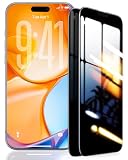
- [Industry-Leading 100% Anti-Spy Privacy Protection] Designed for iPhone 17 Pro Max. Larger iPhone screens are easier for others to glance at, so UltraGlass uses patented, SEGI-certified 25° Blackout-3 optical technology to help block side views and keep emails, banking apps, and private content visible only to you—while keeping the front view HD-clear and comfortable through hours of scrolling and streaming.
- [Unbreakable TOP 9H+ Glass, the Excellent 2nd Screen for Your iPhone] Boasting unparalleled shatter resistance and durability. And the core excellence is the top 9H+ tempered glass material, which is widely applied in aerospace and military fields for its ① Shatter-proof ② Scratch & Wear Resistance ③ Durability that is 7-8 times higher than other materials. Thus, UltraGlass builds a second tough screen for your iPhone 17 Pro Max.
- [Industry Top Military-Grade Shatterproof] Authorized by the International Military Standard with 50+ rigorous engineering tests of 220 lbs impact, 8,000+ drop tests, 25,000+ scratch tests, etc., its strength, toughness and durability perform NO.1 among all glass. By especially breaking the industry's record with a 12ft drop, the iPhone 17 Pro Max screen protector is ensured to be unbreakable from its surface to every edge and corner.
- [Invisible Armor, 1:1 Full Covers the iPhone's Screen] Mimicking the iPhone's original screen design, it uses a 1:1 3D curved reinforced black edge that wraps around every curve — case friendly — while securing even the most vulnerable edges. Seamlessly blending with the iPhone 17 ProMax screen, it's virtually invisible and feels like the original screen while offering enhanced full-screen protection.
- [0 Bubbles + 0 Dust + 0 Misaligned =100% Successful Installation] Includes everything you need with pioneering automatic positioning, dust removal, and absorption technology, making the installation just effortlessly easy in seconds. No bubbles, no troubles—transforming beginners into experts!
The case also shows the limits of sector-specific privacy law. Section 222 and CPNI rules gave the FCC a legal framework for regulating carrier-held information, but the dissenting commissioners and the carriers disputed how far that framework reaches when location information is not directly connected to a voice call or another Title II service.
Finally, the Supreme Court’s decision separates enforcement procedure from the underlying privacy debate. Preserving the FCC’s ability to issue an administrative forfeiture order does not answer whether Congress should provide broader statutory protection for location data, whether carriers should face stricter intermediary-liability rules, or whether customers should have a private right to sue.
What should wireless customers understand?
- Disabling GPS is not a complete privacy measure. A carrier can still estimate a handset’s approximate location from network connections and cell sites.
- A VPN is not a shield against carrier network location awareness. A VPN changes internet traffic routing and can affect IP-based tracking, but it does not hide the handset’s radio connection from its mobile carrier.
- The case was not about every customer being tracked continuously. The FCC orders concerned access through particular location-based-service programs and intermediaries.
- The case was historical. The specific programs at issue were described as discontinued by 2019.
- The fines do not automatically produce customer payments. A regulatory forfeiture is different from a consumer settlement or damages judgment.
For privacy-conscious users, the practical lesson is to distinguish app-level location permissions from carrier-level network location information. Reviewing operating-system and app permissions can reduce some forms of device-derived sharing, but those settings do not eliminate the carrier’s ability to observe the phone’s network connections.
Free tools Windows power users keep installed
One-click scans. No signup required.
Frequently Asked Questions
Did AT&T, Verizon, T-Mobile and Sprint directly sell customers’ locations to bounty hunters?
No. The FCC described the carriers as selling access to aggregators, which then resold access to location-based-service providers. The enforcement concern was the intermediary chain’s failure to reliably establish consent and prevent unauthorized access, not a finding that each carrier directly sold every customer’s location to an individual bounty hunter.
Can a VPN prevent my mobile carrier from knowing my approximate location?
No. A VPN can affect IP-based tracking and internet-traffic routing, but it does not prevent a mobile carrier from observing the handset’s network connections and the cell sites serving it.
Can customers recover part of the FCC’s $196 million in fines?
Not automatically. The FCC forfeitures are regulatory penalties, not a consumer settlement or damages award, and the enforcement action does not by itself entitle customers to a share of the money.
Did the Supreme Court rule that the carriers violated federal privacy law?
The June 4, 2026 Supreme Court decision addressed the FCC’s forfeiture procedure and jury-trial question in the AT&T and Verizon cases. The Court held that the FCC can issue a forfeiture order without first providing a jury trial because the order does not itself compel payment; the ruling was not a comprehensive decision on all location-privacy claims.
Outdated Drivers Are Slowing You Down
One free scan finds every outdated or missing driver and matches the right update for your exact hardware.Free scan · exact hardware matchWindows Errors? Fix Them Before They Spread
Repair common Windows errors and clear accumulated junk for a smoother, more stable PC - no reinstall needed.Free scan · no reinstallAre the carrier location-data programs still operating?
The specific carrier location-based-service programs at issue were described as discontinued by 2019. That historical conclusion does not establish that all location data-sharing practices by all companies ended, because providers may use other entities or technical systems.
The Bottom Line
Bottom line: The FCC’s nearly $196 million enforcement action was real, but “the big three sold your real-time location” is too broad. Four legal entities—including pre-merger Sprint—were penalized over intermediary location-service programs that the FCC found lacked valid consent and reasonable safeguards. The programs were historical, and the Supreme Court’s 2026 ruling upheld the FCC’s forfeiture procedure without deciding every broader question about location privacy or customer compensation.
Quick Recap
Product prices and availability are accurate as of the date/time indicated and are subject to change. Any price and availability information displayed on Amazon at the time of purchase will apply.

