
PC Slower Than It Used to Be?
A free scan shows the junk files, broken settings and background clutter dragging Windows down - then fixes them in one click.Free scan · Windows 10 & 11Outdated Drivers Are Slowing You Down
One free scan finds every outdated or missing driver and matches the right update for your exact hardware.Free scan · exact hardware matchA false-positive budget is the Type I error risk a study is willing to tolerate across a defined testing plan. It is not the probability that a hypothesis is true, nor a guarantee that a statistically significant result is correct. To use one responsibly, specify what is being tested, choose an error threshold suited to the decision, plan power and sample size around a meaningful effect, and report estimates with their uncertainty.
What does “false-positive budget” mean?
“False-positive budget” is a plain-language framing for the amount of Type I error risk tolerated within a particular testing procedure. It is not a universal statistical quantity with one standard numeric value. A threshold only makes sense after specifying the hypothesis family, the tests and decision procedure, and what decision the results will inform.



A Type I error occurs when a test rejects a null hypothesis that is true. A significance level, often written as alpha, is a prespecified decision threshold used to limit this error under the chosen model and testing procedure. The appropriate threshold depends on the study’s purpose and the consequences of incorrect decisions; a familiar convention should not be adopted automatically. The American Statistical Association (ASA) discusses thresholds and their context in its statement on p-values and its 2021 President’s Task Force statement.
What does a p-value tell you?
A p-value describes how incompatible the observed data are with a specified statistical model, assuming that model. It is not the probability that the null hypothesis is true, the probability that the alternative is true, or the probability that a result arose from “chance alone.” The ASA’s sixth principle states: “By itself, a p-value does not provide a good measure of evidence regarding a model or hypothesis.”
Recommended Free Tools
#1 Best Overall
A p-value also does not measure the size or practical importance of an effect. With a larger sample, the same estimated effect can produce a more striking p-value. Interpretation should therefore include the effect estimate, its uncertainty, study design, assumptions, and the decision context—not a cutoff alone. As ASA executive director Ron Wasserstein put it in a March 7, 2016 release: “The p-value was never intended to be a substitute for scientific reasoning.”
How do power and sample size fit together?
Power is the probability that a planned procedure will detect a specified effect under the assumptions and alternative used for planning. Sample size is one input to achieving the desired power; it does not guarantee that a result will be meaningful or that a study is free of bias.
Rank #2

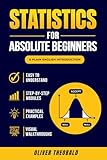
- This guide is a perfect overview for the topics covered in introductory statistics courses.
Plan around an effect that would matter scientifically or practically, rather than selecting a target after seeing the results. The sample size needed depends on the target effect, outcome variability, study design, and chosen Type I and Type II error tolerances. The 2016 explanatory guidance recommends using a relevant effect size alongside appropriate alpha and beta values. There is no single sample size suitable for every research question.
A responsible numeric calculation requires a concrete design and inputs, including outcome type, target effect, variability assumptions, allocation or sampling structure, significance threshold, and power target. Without those details, a universal sample-size number would be misleading.
The Tool Desk
Outbyte Driver Updater FREEFix the driver behind crashes, sound loss and screen glitchesFind Drivers →Outbyte PC Repair FREERepair Windows errors before they cause bigger problemsFix Now →Rank #3
How should you set the error threshold and handle multiple tests?
Choose the Type I error threshold and desired power in light of the consequences of false-positive and false-negative decisions. Thresholds can differ by discipline and purpose, so state the rationale and prespecify the choices rather than treating a convention as mandatory.
Count the planned comparisons and describe how multiplicity will be handled. Testing many hypotheses changes the false-positive context; selective reporting or omitting tests makes that context harder to assess. Adjustments for multiple testing can reduce false-positive risk, but may also reduce power. The ASA and journal guidance emphasize transparent reporting of the design, tests, and multiplicity procedure.
What should a study report?
- Define the question before analysis. State the primary question, null and alternative hypotheses, outcome, and planned analysis before examining results.
- Choose a meaningful target effect. Explain what magnitude would matter and use it in power and sample-size planning.
- Prespecify error tolerances. Identify the Type I error threshold and desired power, with a rationale tied to the study’s decision context.
- Disclose the testing plan. Report the number of planned comparisons and the procedure used to address multiplicity, including tests that were not significant.
- Present estimates and uncertainty. Give effect estimates and uncertainty alongside p-values, and discuss design quality, assumptions, limitations, and practical meaning.
How should you interpret a statistically significant result?
Statistical significance is not, by itself, evidence that an effect is large, important, reproducible, or suitable for a policy or clinical decision. Consider the size and uncertainty of the estimated effect, how the study was designed and analyzed, the assumptions behind the test, and the consequences of acting on the finding. A threshold is one part of that assessment, not a substitute for it.
Quick Recap
Best Value
Product prices and availability are accurate as of the date/time indicated and are subject to change. Any price and availability information displayed on Amazon at the time of purchase will apply.
Free tools Windows power users keep installed
One-click scans. No signup required.

