
Quick wins for a faster PC:
Fix the driver behind crashes, sound loss and screen glitchesFind Drivers →Clear out junk files and repair common Windows errorsFree Scan →iTechGuides is reader-supported. When you buy through links on our site, we may earn an affiliate commission. As an Amazon Associate I earn from qualifying purchases. Learn more
The Facebook Ad Library—officially Meta Ad Library—is a free public tool for researching active ads across Meta products. It can reveal competitors’ visible creative, copy, offers, calls to action, platforms, advertisers, and apparent start dates, but it cannot prove commercial performance or show spend, conversions, ROAS, or targeting.
That distinction determines how to use the library well. Treat each ad as observable evidence, not as a confirmed winner. The most useful workflow combines consistent ad collection, landing-page analysis, market comparison, and original campaign testing.
Key takeaways
- The Facebook Ad Library is now officially called Meta Ad Library, and its public search address is facebook.com/ads/library.
- Commercial research mainly exposes publicly searchable active ads; inactive historical access works differently for political, electoral, and social-issue advertising.
- Ordinary commercial listings do not reveal a competitor’s budget, impressions, clicks, conversions, CPA, revenue, profit, ROAS, or complete audience targeting.
- A blank result does not prove that a brand does not advertise because country selection, Page identity, campaign status, and search terms can all affect results.
- Repeated creative, offers, or messages are useful hypotheses to investigate, not proof that a competitor’s ads are profitable.
- The strongest research process records visible ad evidence separately from interpretation and converts recurring patterns into original tests.
What is the Facebook Ad Library?
The Facebook Ad Library is Meta’s public ad-transparency search tool. “Facebook Ad Library” remains the phrase many people use, while Meta’s current official name is Meta Ad Library. The tool covers advertising across Meta products rather than Facebook alone, and it lets people inspect publicly available ads without being limited to the audience the advertiser targeted.
For ordinary commercial advertising, the practical focus is on ads that are currently running. You can inspect visible elements such as the advertiser, copy, creative format, call to action, platforms, and apparent start date. The library is therefore useful for creative research, positioning analysis, offer research, and competitive intelligence.
#1 Best Overall

- CRISP CLARITY: This 23.8″ Philips V line monitor delivers crisp Full HD 1920x1080 visuals. Enjoy movies, shows and videos with remarkable detail
- INCREDIBLE CONTRAST: The VA panel produces brighter whites and deeper blacks. You get true-to-life images and more gradients with 16.7 million colors
- THE PERFECT VIEW: The 178/178 degree extra wide viewing angle prevents the shifting of colors when viewed from an offset angle, so you always get consistent colors
- WORK SEAMLESSLY: This sleek monitor is virtually bezel-free on three sides, so the screen looks even bigger for the viewer. This minimalistic design also allows for seamless multi-monitor setups that enhance your workflow and boost productivity
- A BETTER READING EXPERIENCE: For busy office workers, EasyRead mode provides a more paper-like experience for when viewing lengthy documents
Meta describes a different transparency regime for political, electoral, and social-issue advertising. Those ads can include funding disclosures, spend ranges, reach or impression ranges, and demographic information. Meta has described a seven-year retention period for applicable political ads, but its May 21, 2025 update said that the earliest seven-year-old records began leaving the archive on May 24, 2025. A guide should not promise that every political ad since the archive began remains searchable indefinitely. See Meta’s official explanation of the Ad Library for the current scope and exceptions.
How do you search the Facebook Ad Library?
To search the Facebook Ad Library, open the public Meta Ad Library, choose a country, select the relevant ad category, and search by advertiser, brand, keyword, product, problem, slogan, or offer.
- Open the library. Go to Meta Ad Library.
- Select the country or market. Choose the geography you want to investigate before interpreting the results.
- Choose the category. Select All ads for ordinary commercial research. Political, electoral, and social-issue ads have different transparency and archive rules.
- Run a specific search. Start with the exact brand or Page name, then repeat the search using product names, domain names, slogans, founder names, and offer language.
- Apply the available controls. Narrow results by the filters Meta currently presents, such as ad status, format, media type, advertiser, or country where available.
- Open individual results. Record the visible copy, creative, call to action, platform information, start date, variants, and destination page.
- Repeat the research consistently. Use the same country, date range, and comparison criteria when examining several competitors.
Meta’s interface labels and available filters can change. Use “look for” rather than assuming every reader will see identical controls, and date screenshots or annotated walkthroughs when publishing interface instructions.
How do you find a specific competitor’s ads?
The most reliable way to find a competitor’s ads is to verify the correct Page first, then search the brand through several related identities and markets.
Start with the exact brand name
Search the competitor’s exact brand name and check whether the result is the correct Page or business. Confirm the logo, website, geography, and Page identity rather than assuming that every similarly named result belongs to the same company.
Large companies may use regional Pages, product-specific Pages, franchise Pages, renamed Pages, creator accounts, agency-owned Pages, or legal entities that differ from the consumer-facing brand. Search the following separately:
- Corporate brand name.
- Product or service name.
- Domain name.
- Known slogan or recurring phrase.
- Founder or creator name.
- Offer language, such as a trial, discount, consultation, or bundle.
Use Page Transparency as a fallback
If a direct brand search does not surface the expected ads, open the competitor’s Facebook Page, find Page transparency, select See all, and look for Ads From This Page. Selecting Go to Ad Library opens the Page’s available ad results. Meta documents this Page-to-Ad-Library workflow and country-specific behavior.
Free tools Windows power users keep installed
One-click scans. No signup required.
- Open the correct Facebook Page.
- Find Page transparency.
- Select See all.
- Under Ads From This Page, select Go to Ad Library.
- Change the country and repeat the search if necessary.
A Page may show no ads because the brand has no current campaign in the selected country, because the promotion ended or was paused, because the search used the wrong Page, or because the campaign uses another advertiser identity. “No ads found” should always be qualified by country, Page identity, active status, and search completeness.
What is the Instagram fallback?
An Instagram profile may expose an Active Ads path under About This Account. That route opens the account’s ads in the Meta Ad Library. Meta says inactive, paused, or canceled promotions are not shown through that active-ads view. The Meta help page for Instagram active ads explains the route and limitation.
What can you see in a commercial ad?
A commercial Meta Ad Library result can provide a visible snapshot of the advertiser’s message and execution. The exact fields and rendering vary, but useful observations commonly include:
Rank #2
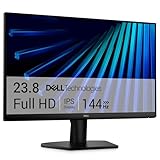
- Clear visuals. Fluid motion: A 144Hz refresh rate and 1ms MPRT deliver smooth, tear‑free motion across work, gaming, and streaming for clearer, more fluid viewing.
- Eye comfort: TÜV Rheinland 3‑star* certification reduces harmful blue light while preserving stunning color quality without compromise. *TÜV Rheinland 3-star eye comfort certification.
- Wide viewing angle: Get consistent views across a wide 178° /178° viewing angle.
- In-Plane Switching (IPS): See excellent color accuracy and consistency across wide viewing angles with In-plane Switching (IPS) technology.
- Ultra-thin bezels: Maximize your viewing experience with thin bezels.
| Visible element | What to record | What it may suggest |
|---|---|---|
| Advertiser or Page | Displayed name and verified Page identity | Which business or account appears to be running the ad |
| Primary text | Opening line, body copy, claims, objections, and proof | Problem framing, customer language, and positioning |
| Headline and description | Visible supporting text | Promise, product explanation, or offer emphasis |
| Creative | Image, video, carousel, testimonial, demonstration, or graphic | Creative format and communication style |
| Call to action | Button label or requested action | Likely funnel intent, such as learning, contacting, or buying |
| Platforms | Meta products or placements shown | Where the visible execution is presented |
| Apparent start date | Date displayed by the library | How long the ad has been visible in the library |
| Variants | Similar ads with different hooks, formats, or offers | Possible testing or localization strategy |
| Destination | Landing-page URL and page type, when accessible | Message match and funnel experience |
Third-party descriptions may list additional fields or extraction features, but third-party claims should not be confused with Meta’s official disclosures. The specialist overview of commercial ad fields is useful as a description of the research interface, not as evidence that the tool exposes campaign performance.
What does the Facebook Ad Library not show?
The Facebook Ad Library does not function as a commercial performance dashboard. For ordinary commercial ads, the listing does not ordinarily reveal the competitor’s actual budget, impressions, reach in the political-transparency sense, clicks, click-through rate, conversions, cost per acquisition, revenue, profit, or return on ad spend.
| Question | What the library may show | What it does not establish for ordinary commercial ads |
|---|---|---|
| Is the ad active? | Visible active-library presence and an apparent start date | That the ad is profitable or still receiving meaningful spend |
| What is the message? | Copy, creative, offer, headline, and CTA | Which message has the highest conversion rate |
| Who is targeted? | Clues from language, localization, and creative context | The complete audience definition, exclusions, bidding strategy, or optimization event |
| How much is spent? | Usually no ordinary commercial spend disclosure | Budget, cost per result, CPM, CPA, revenue, or ROAS |
| Is the campaign successful? | Repeated visibility or multiple variants as possible signals | Confirmed performance or business impact |
| What did the campaign look like historically? | Current public results and applicable political archive records | A complete historical record of every commercial version |
Political, electoral, and social-issue ads are the important exception: applicable listings can provide spend ranges, reach or impression ranges, demographic information, and funding disclosures. Those figures should not be generalized to commercial ads. Meta’s political-ad transparency information explains the separate archive and disclosure model.
How can you turn competitor ads into marketing insights?
The best analysis looks for patterns across multiple ads rather than treating one visible ad as a proven winner. Record what is observable first, then label your explanation as a hypothesis.
What positioning does the competitor repeat?
Ask what customer problem the brand leads with and which value it emphasizes. Common observable themes include price, speed, quality, convenience, status, risk reduction, expertise, or a specific use case.
Recommended Free Tools
Compare the first sentence, opening visual, headline, and call to action across several ads. If the same customer problem appears repeatedly, the repetition is evidence that the brand is consistently communicating that position. The repetition does not prove that the position produces the best return.
What offer strategy is visible?
Record discounts, free trials, consultations, demos, shipping incentives, bonuses, guarantees, bundles, deadlines, and scarcity language. Note whether the same offer appears across multiple creative executions or countries.
An offer repeated across several ads may be an important commercial angle, but it may also be evergreen promotion, audience-specific messaging, or a temporary campaign. Meta warns that special pricing and offer details may not apply to every viewer or market. Check the destination page and terms before treating a competitor’s offer as current or comparable.
Which creative formats and hooks recur?
Classify each ad as a static image, short-form video, founder or creator-led video, customer testimonial, product demonstration, before-and-after presentation, carousel, UGC-style creative, text-led graphic, or seasonal execution.
What’s actually slowing this PC down?
Pick the symptom - the matching free tool is one click away.
Then code the structure of the message:
- Hook: What appears in the first line or opening seconds?
- Problem: Which pain point or desired outcome is named?
- Promise: What result does the advertiser claim?
- Proof: Is there a testimonial, review, demonstration, statistic, credential, or comparison?
- Objection handling: Does the ad address price, complexity, risk, time, trust, or switching costs?
- CTA: Does the ad ask the viewer to learn, sign up, contact the business, shop, or buy?
A direct-response CTA may indicate a lower-funnel hypothesis, while educational copy and a softer CTA may indicate an awareness or consideration hypothesis. Funnel stage is an inference from message and CTA, not a fact disclosed by Meta.
Rank #3

- ALL-EXPANSIVE VIEW: The three-sided borderless display brings a clean and modern aesthetic to any working environment; In a multi-monitor setup, the displays line up seamlessly for a virtually gapless view without distractions
- SYNCHRONIZED ACTION: AMD FreeSync keeps your monitor and graphics card refresh rate in sync to reduce image tearing; Watch movies and play games without any interruptions; Even fast scenes look seamless and smooth.
- SEAMLESS, SMOOTH VISUALS: The 75Hz refresh rate ensures every frame on screen moves smoothly for fluid scenes without lag; Whether finalizing a work presentation, watching a video or playing a game, content is projected without any ghosting effect
- MORE GAMING POWER: Optimized game settings instantly give you the edge; View games with vivid color and greater image contrast to spot enemies hiding in the dark; Game Mode adjusts any game to fill your screen with every detail in view
- SUPERIOR EYE CARE: Advanced eye comfort technology reduces eye strain for less strenuous extended computing; Flicker Free technology continuously removes tiring and irritating screen flicker, while Eye Saver Mode minimizes emitted blue light
How should you inspect the landing page?
Ad research is incomplete without examining the destination page when the link is accessible. Compare the ad and landing page for:
- Headline continuity and message match.
- Offer and pricing consistency.
- Call-to-action prominence.
- Form length and friction.
- Trust signals, reviews, and testimonials.
- Product demonstrations and proof.
- Mobile usability.
- Pricing transparency.
- Answers to likely objections.
A compelling ad leading to a confusing page is a different research conclusion from a compelling ad leading to a highly coordinated funnel. The library shows only part of the customer journey.
How can localization reveal market differences?
Run the same competitor search in the markets relevant to your business. Compare language, currency, pricing, shipping promises, proof, cultural references, creative format, and CTA intensity. A difference between countries may reflect regulation, product availability, fulfillment economics, audience maturity, or simple testing rather than a universally superior strategy.
The Tool Desk
Outbyte Driver Updater FREEScan for outdated or missing drivers - takes under a minuteDriver Scan →Outbyte PC Repair FREERepair Windows errors before they cause bigger problemsFix Now →What should a competitor-ad research worksheet contain?
A worksheet makes observations reproducible and prevents guesses from being presented as facts. Record the research date and selected country because the library is a changing public view rather than a permanent campaign archive.
| Field | What to record |
|---|---|
| Advertiser | Page or business name and verified identity |
| Country | Market selected in Meta Ad Library |
| Date observed | The date you conducted the research |
| Start date shown | The apparent date displayed by the library |
| Format | Image, video, carousel, catalog, testimonial, demonstration, or other visible type |
| Hook | First sentence or opening visual |
| Problem | Pain point or need emphasized |
| Promise | Claimed outcome or benefit |
| Proof | Testimonial, review, demonstration, credential, or other evidence |
| Offer | Price, discount, trial, bonus, guarantee, or bundle |
| CTA | Visible button or requested action |
| Landing page | Destination URL and page type, when accessible |
| Hypothesis | Your explanation for why this angle may be in use |
| Confidence | Low, medium, or high confidence in the interpretation |
| Follow-up | What your own business must test or verify |
Example of observation versus inference
Observation: Three visible video ads from the same advertiser use a customer testimonial, a product demonstration, and the same free-consultation CTA.
Inference: The advertiser may be testing different proof styles while keeping the conversion offer consistent.
Test: Produce an original testimonial and demonstration, keep the landing page and audience definition consistent, and compare results using your own campaign data.
The inference remains a hypothesis because the library does not reveal the advertiser’s internal test design or results.
How can you tell whether an ad may be important?
No single Ad Library signal proves that an ad is a winner. Use several signals together, and describe the result as a reason for investigation.
- The same ad or angle remains visible across repeated research sessions.
- Several variants express the same offer or customer problem.
- The advertiser has multiple executions around one message.
- The angle appears in more than one country.
- The landing page is developed and closely aligned with the ad.
- The brand tests several hooks, formats, or calls to action around the same product.
A long apparent run may indicate evergreen acquisition, retargeting, low spend, localization, or a campaign that was left active. A new ad may be an intentional test rather than a failed campaign. Multiple variants may show systematic testing rather than multiple winners.
Rank #4

- CRISP CLARITY: This 22 inch class (21.5″ viewable) Philips V line monitor delivers crisp Full HD 1920x1080 visuals. Enjoy movies, shows and videos with remarkable detail
- 100HZ FAST REFRESH RATE: 100Hz brings your favorite movies and video games to life. Stream, binge, and play effortlessly
- SMOOTH ACTION WITH ADAPTIVE-SYNC: Adaptive-Sync technology ensures fluid action sequences and rapid response time. Every frame will be rendered smoothly with crystal clarity and without stutter
- INCREDIBLE CONTRAST: The VA panel produces brighter whites and deeper blacks. You get true-to-life images and more gradients with 16.7 million colors
- THE PERFECT VIEW: The 178/178 degree extra wide viewing angle prevents the shifting of colors when viewed from an offset angle, so you always get consistent colors
An ad that works for one business may fail for another because of audience quality, brand awareness, price, margins, fulfillment capacity, proof, sales process, or landing-page experience. Use competitor visibility to generate questions, not to copy assumptions about economics.
How should you compare competitors fairly?
Compare competitors using a consistent sample: the same country, research date, product category, funnel stage, approximate time window, and ad format where possible.
| Comparison criterion | Question to ask | Interpretation caution |
|---|---|---|
| Visible active ads | How many distinct executions are visible? | Ad count is not a reliable proxy for budget or success. |
| Message themes | Which problems, promises, and customer segments recur? | Visible copy does not reveal actual audience settings. |
| Offer aggressiveness | Does the competitor lead with price, trial, bundle, guarantee, or proof? | Offers may be market-specific, audience-specific, or expired. |
| Creative diversity | Are there several formats, hooks, and proof styles? | Variants may reflect testing or automated catalog assembly. |
| Social proof | What reviews, testimonials, demonstrations, or credentials appear? | Visible proof does not establish conversion impact. |
| CTA intensity | Is the ad educational, lead-focused, or purchase-focused? | Funnel stage is inferred from the visible message. |
| Landing-page quality | Does the destination match the ad and handle objections? | Page experience can vary by device, location, or audience. |
| Localization | What changes between countries? | Differences may reflect logistics, regulation, or availability. |
| Repeated angles | Which themes appear across multiple ads? | Repetition signals consistency, not confirmed profitability. |
| Market gaps | What customer need or objection is not addressed? | An apparent gap may be deliberate or invisible in the selected sample. |
Do not rank competitors by ad count alone. Catalog automation, account structure, regional Pages, and systematic testing can all increase the number of visible ads without indicating greater success.
Independent reader supportYour contribution helps us test, update, and keep practical guides available for everyone.What are the most common Meta Ad Library mistakes?
Interpreting a blank result as no advertising
A blank result may mean that the brand has no active ads in the selected country, the wrong Page was searched, the campaign ended or was paused, the ad uses another advertiser identity, or the search terms were incomplete. Repeat the search by country, Page, product, domain, slogan, and offer.
Assuming every historical commercial ad is available
Commercial research is mainly current-state research. Political, electoral, and social-issue ads have separate archive rules, and those records can age out. Do not describe the tool as a complete historical record of all commercial campaigns.
Do these 3 things before closing this tab:
1Clear out junk files and repair common Windows errors2Scan for outdated or missing drivers - takes under a minute3Repair Windows errors before they cause bigger problemsTreating the library as a pixel-perfect live placement
Meta warns that ads displayed across its products may use different layouts and formats from the representation shown in the Ad Library. Use the library to analyze the public creative and message, not to promise that every viewer sees the identical layout.
Trusting an offer without checking its terms
A displayed discount, price, trial, or deadline may be restricted by country, audience, inventory, date, or customer status. Inspect the destination page and terms before reproducing a claim or comparing economics.
Overlooking dynamic and catalog ads
Product-catalog or dynamically assembled ads may not appear as one stable creative. Products, text, and formats can vary according to campaign setup and viewer context, so capture the visible version and label the record accordingly.
Confusing persistence with profitability
Repeated visibility is evidence that an advertiser is using an angle consistently. Repeated visibility is not proof of profitable performance, adequate scale, or positive return on ad spend.
PC Slower Than It Used to Be?
A free scan shows the junk files, broken settings and background clutter dragging Windows down - then fixes them in one click.Free scan · Windows 10 & 11Outdated Drivers Are Slowing You Down
One free scan finds every outdated or missing driver and matches the right update for your exact hardware.Free scan · exact hardware matchCopying the competitor instead of learning from the pattern
Literal imitation can create copyright or trademark problems, brand confusion, weak differentiation, and economics that do not fit your business. Extract the underlying customer problem, proof type, offer logic, or message structure, then create original copy and creative.
Best Value

- Incredible Images: The Acer KB272 G0bi 27" monitor with 1920 x 1080 Full HD resolution in a 16:9 aspect ratio presents stunning, high-quality images with excellent detail.
- Adaptive-Sync Support: Get fast refresh rates thanks to the Adaptive-Sync Support (FreeSync Compatible) product that matches the refresh rate of your monitor with your graphics card. The result is a smooth, tear-free experience in gaming and video playback applications.
- Responsive!!: Fast response time of 1ms enhances the experience. No matter the fast-moving action or any dramatic transitions will be all rendered smoothly without the annoying effects of smearing or ghosting. A 120Hz refresh rate speeds up the frames per second to deliver smooth 2D motion scenes in gaming and video.
- 27" Full HD (1920 x 1080) Widescreen IPS Monitor | Adaptive-Sync Support (FreeSync Compatible)
- Refresh Rate: Up to 120Hz | Response Time: 1ms VRB | Brightness: 250 nits | Pixel Pitch: 0.311mm
Are paid Meta Ad Library alternatives worth considering?
Paid ad-intelligence tools can be useful after the free Meta Ad Library no longer meets the research need. Some specialist services offer saved libraries, creative tagging, collaboration, alerts, bulk analysis, broader discovery, or cross-platform workflows. Those conveniences introduce cost, coverage differences, update delays, export restrictions, and the provider’s own data-quality limitations.
| Need | Reasonable starting point | What to verify before paying |
|---|---|---|
| Occasional competitor research | Meta Ad Library | Country coverage, current results, and the correct Page identity |
| Campaign creation and measurement | Meta Ads Manager | Whether your account, tracking, budget, and measurement setup are ready |
| Stronger first-party event measurement | Meta Conversions API | Technical implementation, event quality, privacy obligations, and business need |
| Creative-team organization | A specialist creative-research platform such as Foreplay | Current pricing, saved-library limits, collaboration, exports, and source coverage |
| Broader commercial ad discovery | A service such as AdLibrary.com | Historical depth, update frequency, platform coverage, export rights, and whether claims are independently verifiable |
Foreplay’s official site is foreplay.co, and AdLibrary.com’s official site is adlibrary.com. No reliable current prices for those services were verified in the supplied research, so numerical pricing should be checked immediately before publication rather than stated from an undated source.
Meta Ads Manager is for creating, delivering, budgeting, and measuring your own campaigns; it does not replace the public Ad Library. Meta Conversions API is relevant when a business needs to connect website, app, offline, or messaging events with Meta’s optimization and measurement systems. Neither product reveals a competitor’s private performance data.
What is the best end-to-end workflow?
- Define the question. Decide whether you are researching positioning, offers, hooks, creative formats, localization, funnel stages, or landing-page practices.
- Select the market. Choose the country relevant to the campaign and repeat the search in adjacent markets when geography matters.
- Verify the advertiser. Confirm the Page, website, logo, and transparency information.
- Collect a consistent sample. Record several ads using the same date, country, category, and comparison rules.
- Code the creative. Label hook, problem, promise, proof, offer, format, CTA, and likely funnel stage.
- Inspect the destination. Check message match, offer continuity, trust signals, friction, mobile experience, and objection handling.
- Separate evidence from interpretation. Write the visible fact first and your hypothesis second, with a confidence rating.
- Identify patterns. Look for repeated customer problems, offers, proof types, formats, and gaps across multiple ads.
- Create original tests. Adapt the underlying insight to your own audience, positioning, economics, brand, and fulfillment capacity.
- Measure your results directly. Use your own campaign and first-party measurement data instead of attempting to reverse-engineer a competitor’s ROAS.
The Facebook Ad Library is most valuable when it answers a better question than “Which competitor ad should I copy?” Ask instead: “Which customer problem, promise, proof mechanism, or offer should my business test—and what evidence would confirm or reject that idea?”
Frequently Asked Questions
Is the Facebook Ad Library free to use?
The Facebook Ad Library, now officially called Meta Ad Library, is Meta’s public ad-transparency search tool and can be used to inspect publicly available ads. Interface access and account requirements can vary by region or product flow, so verify the current experience when publishing instructions.
Can you see how much a competitor spends on Facebook ads?
You generally cannot see a commercial advertiser’s actual budget, impressions, clicks, conversions, CPA, revenue, profit, or ROAS in the Meta Ad Library. Applicable political, electoral, and social-issue ads have additional transparency information, including spend and reach or impression ranges.
Why can’t I find a competitor’s ads in the Meta Ad Library?
A competitor may have no active ads in the selected country, may use a different Page or advertiser identity, or may have ended, paused, or canceled the campaign. Repeat the search by country, Page, product, domain, slogan, and offer, and use the Page Transparency route when available.
Does a long-running ad prove that the ad is successful?
A long-running ad does not prove profitability or positive ROAS. Repeated visibility is only a signal that the advertiser continues to use the angle, possibly because of evergreen acquisition, retargeting, testing, localization, low spend, or an account-management decision.
Does Meta Ad Library show every historical commercial ad?
Meta Ad Library should not be treated as a complete historical archive of commercial advertising. Commercial research primarily focuses on currently visible ads, while political, electoral, and social-issue ads follow separate archive rules and can age out after the applicable retention period.
The Bottom Line
Bottom line: Use the Facebook Ad Library as a free source of observable market signals—not as a competitor profit detector. Search the right Page and country, record multiple ads, inspect the landing pages, separate evidence from inference, and turn recurring patterns into original tests measured with your own campaign data.
Quick Recap
Product prices and availability are accurate as of the date/time indicated and are subject to change. Any price and availability information displayed on Amazon at the time of purchase will apply.
Quick wins for a faster PC:
Fix the driver behind crashes, sound loss and screen glitchesFind Drivers →Clear out junk files and repair common Windows errorsFree Scan →
