
In 2002, Maria Khorsand was trying to turn Bluetooth from a promising, well-supported standard into a component manufacturers could ship cheaply and at scale. As president of Ericsson Technology Licensing, she promoted the technology while offering companies the Bluetooth intellectual property, tools and engineering support needed to build products around it.
Who was Maria Khorsand, the Bluetooth evangelist?
Junko Yoshida’s April 11, 2002, EE Times profile described Khorsand as president of Ericsson Technology Licensing and a key advocate for broader Bluetooth adoption. Her work joined two goals: keep Bluetooth visible across the electronics industry and persuade more semiconductor makers to build it into chips for consumer products. The profile captured a period when Bluetooth was specified and proven, but adoption had not yet followed the rapid “hockey stick” curve its supporters expected. Read the EE Times profile.
Bluetooth was intended to provide a short-range, low-power, low-cost wireless connection between mobile and stationary devices. Ericsson had developed the underlying technology and helped establish the Bluetooth Special Interest Group (SIG), an industry organization intended to broaden adoption beyond one company’s products. The SIG’s history says the technology grew out of Ericsson work in the early 1990s and was commercially introduced around 2000; more than 4,000 companies had joined by the end of the SIG’s first year. Bluetooth SIG history.
Why was Bluetooth hard to build cheaply in 2002?
The challenge was not simply explaining wireless links or agreeing on a standard. Manufacturers had to implement Bluetooth in products constrained by cost, battery use, size and production volume. Khorsand put the problem directly: “But it is not so easy to build it, especially for low-cost, low-power, volume consumer products.” The 2002 profile.
The Tool Desk
Outbyte Driver Updater FREEScan for outdated or missing drivers - takes under a minuteDriver Scan →Outbyte PC Repair FREERepair Windows errors before they cause bigger problemsFix Now →#1 Best Overall

- Bluetooth 5.4 + Broad Compatibility - Provides Bluetooth 5.4 plus EDR technology and is backward compatible with Bluetooth V5.3/5.0/4.2/4.0/3.0/2.1/2.0/1.1.
- Faster Speed, Extended Range - Get up to 2x faster data transfer and 4x broader coverage compared to Bluetooth 4.0 — perfect for smooth audio streaming and stable connections.
- EDR and BLE Technology - This Bluetooth dongle is quipped with enhanced data rate and Bluetooth low energy, UB500 has greatly improved data transfer speed and operates at the optimal rate of power consumption
- Nano-Sized - A sleek, ultra-small design means you can insert the Nano Bluetooth receiver into any USB port and simply keep it there regardless of whether you are traveling or at home
- Plug & Play with Free Driver Support - Plug and play for Windows 8.1/10/11 (internet required). Supports Win7 (driver required and can be downloaded from website for free). Download the latest driver from TP-Link website to utilize Bluetooth 5.4
For a manufacturer, Bluetooth could mean designing complex chips internally, buying a fixed-function chip, or licensing reusable IP to integrate into an existing system. Those approaches trade off engineering effort and flexibility against silicon cost, power consumption, time to market, qualification and support needs, and licensing economics. The choice depended on a company’s existing chip design capability and product requirements; a standard alone did not remove the implementation work.
What did Ericsson Technology Licensing offer?
Ericsson Technology Licensing offered Bluetooth IP blocks as well as more complete implementations spanning baseband, radio and software. Its 2002 Form 20-F describes a portfolio for mass-market manufacturers that also included development tools, qualification, training and consulting. This combination aimed to reduce the amount of Bluetooth engineering each licensee had to do from scratch. Ericsson’s 2002 Form 20-F.
Rank #2

- 【Enjoy Wireless Streaming Music】This car Bluetooth adapter can be connected to non-Bluetooth car audio systems, home stereos, speakers, wired headphones via the 3.5mm AUX adapter; And equipped with a Bluetooth 5.0 chip for stable connection / fast transmission / wide signal range. Just pair it with your phone and start listening to your favorite music!
- 【Intelligent Noise Reduction Tech】Our Bluetooth audio receiver adopts the latest CVC8.0 Noise Cancellation and Digital Signal Processor (DSP) technologies, which can eliminate echo and block out intrusive background noise (such as wind, traffic, or crowds), providing you with crystal-clear calling sounds.
- 【Up to 16 Hours of Battery Life】The working time of this aux Bluetooth adapter is up to 16 hours when making calls or playing music. And it takes only 2.5 hours to fully charge the device by using a Type-C fast charging cable (Included in the package). In addition, this Bluetooth music adapter can be used while charging, which is very convenient.
- 【Hands-free Calling & Navigation】A built-in microphone and one “MFB” button to answer / redial / hang up / reject calls, help you make hands-free calls. And the Bluetooth audio adapter supports broadcasting voice notification from existed navigation App. You don’t have to look down the phone on the move. Make sure you drive safely!
- 【Dual Connection】The portable Bluetooth stereo adapter can be paired with 2 devices at the same time. You can enjoy your music and never worry about missing any calls. Once paired, the car receiver will automatically reconnect to your last paired Bluetooth devices, as long as they are within the wireless range.
The reusable-IP route could suit a semiconductor company that wanted to integrate Bluetooth into its own chip rather than build the full technology independently. A more complete solution could reduce integration work, while fixed-function chips could be simpler to adopt but offer less flexibility. The available 2002 descriptions establish Ericsson’s offerings and the broad alternatives, but do not provide comparable prices or measured performance for them.
How did Ericsson make money from Bluetooth?
Ericsson licensed its Bluetooth circuits to semiconductor manufacturers. License fees provided access to the technology, and royalties followed as licensees manufactured chips and devices. Khorsand summed up the volume-based incentive: “The more our customers sell, the more we make.” Ericsson’s 2002 account describes the licensing and royalty model as a way to benefit when Bluetooth-equipped products reached mass production. Ericsson Contact, 2002.
Free tools Windows power users keep installed
One-click scans. No signup required.
Rank #3
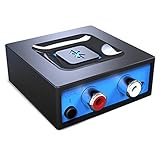
- Listen music wireless: Connect with computer speakers, home stereo systems or other speaker systems via the 3.5 mm or RCA cable, then pair with the Bluetooth audio devices such as smartphones or tablet for streaming music.
- Easy setup and automatic reconnect: There is a big bluetooth symbol button in bluetooth receiver middle. Pair your bluetooth device to this adapter with a single button press. Click once means Bluetooth Connect/Disconnect. Hold the botton 3 second mean ON/OFF. It can reconnect automatically with the previously paired device.
- Wireless range: Indoors(without obstacles) connect rang up 30-40 ft (10-12 m).
- Works with most device: Bluetooth enabled device including smartphones, tablets, computers, laptops upon and any powered PC speakers, home stereo systems and A/V receivers.
- NOTE: This adapter doesn't have built-in battery, power by AC to DC power adapter or USB cable. This product is a bluetooth receiver ONLY, not a bluetooth transmitter. Only to give Bluetooth capabilities to an existing stereo / powered speaker / PA. If you have any problems, please contact us at any time by Amazon Order, and we will speed up the process to resolve the issue.
How many Bluetooth products were there in 2002?
Contemporary sources gave different approximate counts, so these figures are best read as separate snapshots rather than a single definitive inventory. They describe the early market, not today’s Bluetooth product base.
| Figure | What it described | Source and qualification |
|---|---|---|
| About 200 products | Bluetooth products on the market | Junko Yoshida’s EE Times profile, April 11, 2002. Source |
| About 300 consumer products | Consumer products equipped with Bluetooth | Ericsson Contact, 2002. Source |
| 130 million units | Bluetooth-equipped units expected to reach the market in 2003 | Ericsson Contact’s 2002 forecast; this was an expectation, not a reported final shipment total. Source |
The profile conveyed Khorsand’s confidence in Bluetooth’s prospects: “There is no doubt in my mind,” she said, “that Bluetooth is the winner in the industry.” That was her view at the time, not a measurement of adoption or a claim about the market today. EE Times, April 11, 2002.
Rank #4

- Upgraded Bluetooth 5.3 Adapter: This bluetooth adapter for pc uses the latest upgraded Bluetooth 5.3 BR+EDR technology, greatly improves the stability of the connection data transfer speed, reduces the possibility of signal interruption and power consumption.
- Up to 5 Devices Sync Connected: UGREEN Bluetooth dongle for PC supports up to 5 different types of Bluetooth devices to be connected at the same time without interfering with each other, such as Bluetooth mouse/keyboard/mobile phone/headphones, etc. If Bluetooth audio devices of the same type (such as speakers/headphones) are connected, only one device can play music.
- Plug and Play: The Bluetooth adapter is developed for Windows systems only and does not support other systems. No driver installation is required under Windows 11/10/8.1. NOTE: Win 7, Linux and MacOS System are NOT supported.
- Mini Size: An extremely compact Bluetooth stick that you can leave on your laptop or PC without removing it.The compact size does not interfere with other USB ports. Convenient to carry, no space occupation.
- What Can I do if the Bluetooth adapter can not work?: Ensure there are no other Bluetooth devices installed on the computer. If there are, disable all existing Bluetooth devices in "Device Manager", then insert the adapter and try again. (For detailed information please read the user manual)
What was Ericsson’s first Bluetooth Development Kit?
Ericsson announced its first Bluetooth Development Kit in 1999. The kit gave early adopters development boards for building hardware and a way to create Bluetooth-enabled software, with Ericsson presenting it as a means to cut development time and cost. It illustrates the practical work required to turn a standard into working devices: developers needed tools and a platform for prototyping, not just a specification. The announcement does not establish whether the kit is available for purchase today. Ericsson’s development-kit announcement.
What the 2002 story says about Bluetooth adoption
Khorsand’s “bigger bite” was about making Bluetooth viable across many products, not only winning agreement around a standard. Ericsson’s strategy linked an industry-wide ecosystem to commercial tools: encourage adoption through the SIG, license technology to chipmakers, and support those companies as they integrated, qualified and manufactured Bluetooth products. The contemporaneous product counts suggest an early market that was growing, while the 130-million-unit figure remained a forecast. The evidence describes Ericsson’s period strategy; it does not establish that Ericsson Technology Licensing still offers the same Bluetooth portfolio.
Quick wins for a faster PC:
Scan for outdated or missing drivers - takes under a minuteDriver Scan →Repair Windows errors before they cause bigger problemsFix Now →Fix the driver behind crashes, sound loss and screen glitchesFind Drivers →Quick Recap
Best Value
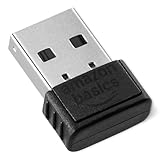
- INSTANT BLUETOOTH ACCESS: Bluetooth dongle adapter receiver for PCs converts non-Bluetooth devices into Bluetooth-capable with simple USB connection
- WIDE COMPATIBILITY: Supports Bluetooth 5.4 and is backwards compatible with Bluetooth 5.3/5.2/5.1/5.0/V4.2/4.0/3.0/2.1/2.0/1.1; ONLY works with Windows 8.1, 10, and 11
- MULTI-DEVICE CONNECTION: Connect up to 6 devices simultaneously; Not compatible with all other operation systems e.g. Mac, Linux, Chrome, Unix, Playstation(PS), Windows 7 and below; Nano bluetooth receiver can be plugged in via any standard USB port
- ENHANCED PERFORMANCE: EDR and BLE technology offers enhanced data rate/transfer speed and low energy consumption
- SYSTEM REQUIREMENTS: Not compatible with all other operation systems e.g. Mac, Linux, Chrome, Unix, Playstation(PS), Windows 7 and below; Disable any built-in Bluetooth of the device before use this product, refer to the user manual for detail
Product prices and availability are accurate as of the date/time indicated and are subject to change. Any price and availability information displayed on Amazon at the time of purchase will apply.

