
Recommended Free Tools
Aerospace firms use ESD measuring devices to verify specific parts of a static-control program—not to certify an entire facility with one reading. A field meter finds charged objects, a resistance meter tests materials such as floors and mats, and other instruments evaluate personnel grounding or ionizers. The right choice depends on what you need to verify and on the procedure required by your customer or quality system.
What an ESD measuring device measures
Electrostatic discharge (ESD) can damage susceptible electrical and electronic assemblies. NASA’s MSFC-RQMT-2918E sets out a consistent ESD-control program for susceptible assemblies and equipment in Marshall Space Flight Center in-house flight-hardware activities: NASA MSFC-RQMT-2918E. The measurement task is to check whether particular materials, people, or equipment behave as intended within that program.
NASA’s guidance describes ANSI/ESD S20.20 as applying to organizations handling electronics susceptible to discharges of 100 V or more Human Body Model (HBM) and 200 V or more Charged Device Model (CDM): NASA Office of Safety and Mission Assurance guidance. IEC 61340-5-1:2024 cites the same reference withstand levels and adds control of isolated conductors to below 35 V: IEC 61340-5-1:2024. These are standards-related reference values, not a claim that every aerospace component has the same ESD sensitivity.
Choose the instrument for the control question
| Device | What it measures | Typical aerospace use | Selection considerations |
|---|---|---|---|
| Electrostatic field meter | Non-contact electrostatic field strength and inferred surface potential | Find charged surfaces, packaging, assemblies, or static hotspots | Range, measurement distance, accuracy, grounding, calibration, and compatible charge-plate or walking-test accessories |
| Surface or high-resistance meter | Resistance to ground, point-to-point resistance, or surface and volume resistance, depending on method | Test ESD floors, mats, benches, garments, packaging, and work surfaces | Resistance range, test voltage, electrode geometry, measurement method, data logging, and calibration traceability |
| Walking-test or body-voltage kit | Voltage generated on a person during movement | Evaluate personnel grounding and footwear/floor systems in an ESD-protected area | Repeatability, electrodes, logging, procedure, and calibration |
| Charged-plate or ionizer monitor | Ionizer discharge time and ion balance | Verify ionization near sensitive assembly or test stations | Plate size, charging voltage, decay-time range, balance accuracy, and standards support |
| Complete ESD audit kit | A combination of field, resistance, environmental, and other verification measurements | Conduct periodic facility audits and document results | Instrument mix, accessories, software, calibration certificates, portability, and reporting |
IEC TS 61340-5-6:2025 describes methodologies, techniques, and instruments for characterizing processes in which ESD-sensitive items are handled: IEC TS 61340-5-6:2025. That process-based framing matters in aerospace, where hardware may pass through manufacturing, integration, inspection, testing, packaging, transport, and service.
#1 Best Overall

- Compact and Portable Design: SIMCO FMX-004 Electrostatic Field Meter features a convenient compact and pocket size design for easy portability and storage
- Versatile Measurement Capability: ESD Test Meter enables you to carry out measurements in awkward places and hard-to-reach locations with ease
- Accurate Distance Indication: The correct measuring distance is displayed by two integrated LED lights, and the electrically conductive plastic housing with an earth connection fitted at the side ensures accurate measurements
- Field Strength and Polarity Measurement: With this simco fmx004 field meter you can measure and store the field strength and polarity for comprehensive static monitoring
- Multi-Function Display: Results are simultaneously shown numerically and in bar graph format on the unique multi-coloured display, with Power ON/OFF, zero adjustment, Ion balance (MODE) and hold all available through push button operation
Field meter or surface-resistance meter?
Use a field meter to locate charge
A field meter is the better fit when the question is whether an object or area has an electrostatic field or potential without making contact. It can help locate charged packaging, surfaces, assemblies, or hotspots for investigation. It does not directly establish that a floor, mat, or bench meets a resistance requirement.
For example, Warmbier’s EFM51 digital electrostatic field meter is specified for a distance-mode range of 0 to ±160 kV and a field-strength mode of 0–800 kV/m. Its product information lists battery operation and optional charge-plate and walking-test modules: ESD Center EFM51 product information. These are instrument specifications; they do not establish the accuracy or suitability of a particular measurement procedure for a given customer requirement.
Rank #2

- Compact and Portable Design: SIMCO FMX-004 Electrostatic Field Meter features a convenient compact and pocket size design for easy portability and storage
- Versatile Measurement Capability: ESD Test Meter enables you to carry out measurements in awkward places and hard-to-reach locations
- Accurate Distance Indication: The correct measuring distance is displayed by two integrated LED. The electrically conductive plastic housing with an earth connection fitted at the side ensures accurate measurements
- Field Strength and Polarity Measurement: With this simco fmx004 field meter you can measure and store the field strength and polarity for accurate electrostatic monitoring
- Multi-Format Display System: Results are simultaneously shown numerically and in bar graph format on the unique multi-coloured display. Power ON/OFF, zero adjustment, Ion balance (MODE) and hold are all push button operation
Use a resistance meter to test materials
A surface or high-resistance meter is the appropriate category for checking whether ESD floors, mats, work surfaces, garments, or packaging fall within the required conductive or dissipative range. The method, electrode configuration, and test voltage matter: resistance results are meaningful only in relation to the applicable procedure and acceptance criteria.
Desco’s 19290/19291 digital surface-resistance meter is described as measuring planar-material surface and volume resistance using ANSI/ESD STM11.11 and STM11.12 methods, and as meeting ANSI/ESD S20.20 resistance-testing requirements: Desco 19290/19291 product information. Warmbier’s SRM 110 is listed as a compact surface-resistance meter for conductive and dissipative ESD-protected-area surfaces: Warmbier SRM 110.
Do these 3 things before closing this tab:
1Fix the driver behind crashes, sound loss and screen glitches2Clear out junk files and repair common Windows errors3Scan for outdated or missing drivers - takes under a minuteRank #3
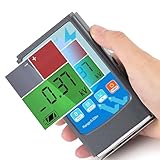
- 【2 IN 1 Versatility】Effortlessly tackle two critical ESD tasks with one versatile tool. This 2-in-1 meter precisely measures surface static voltage on objects (0 to ±20kV) and accurately evaluates the performance of your ionization equipment by testing ion balance (0 to ±200V).
- 【Precision Engineering】Measurement range: 0-20kv | Ion Balance Measurement Range 0~±200V | Measurement Accuracy: ±10% | Engineered for reliable, accurate results. The integrated grounding buckle ensures a stable reference for precise readings. For clear and consistent measurements, two LED guide lights maintain the perfect 1-inch distance from the object.
- 【Instant-Read LCD Display】The high-contrast LCD screen updates 5 times per second for real-time data tracking. It intelligently uses red to indicate positive charges and blue for negative charges, making polarity identification immediate.
- 【Sound Alarm】Automatic alarm when the electrometer is turned on, automatically shut down and exceeds the measurable range. These smart alerts prevent user error and inform you of the instrument's status at all times, enhancing operational safety and convenience.
- 【Broad Industry Application】: Your go-to meter for multiple industries and materials. Ideal for ESD-sensitive environments like electronics manufacturing, laboratories, and cleanrooms. Confidently test a wide range of materials including textile fibers, carpets, paper, rubber, plastics, and PCBs.
How aerospace firms verify ESD controls
- Identify the requirement. Determine which standard, customer specification, or internal quality procedure applies to the hardware and activity. NASA’s MSFC-RQMT-2918E is specific to Marshall Space Flight Center in-house flight-hardware activities; it is not a universal substitute for a company’s governing requirements.
- Define the control question. Decide whether you need to verify material resistance, locate a charged object, assess personnel charge during movement, or check ionizer performance. Select an instrument that measures that property.
- Follow the required measurement procedure. Use the specified test method, electrode or spacer arrangement, measurement distance, and environmental conditions where applicable. Do not treat readings from different methods or setups as interchangeable.
- Confirm instrument suitability. Check range, accuracy, test voltage, accessories, calibration traceability, and compatibility with the applicable ANSI/ESD, IEC, NASA, or customer-specific procedure.
- Retain results and instrument records. Keep measurements, the method used, instrument identification, and calibration or verification records as required by the quality system. A reading without its procedure and acceptance criterion cannot, on its own, demonstrate compliance.
For a wider aerospace EMC context, SAE ARP4242 includes ESD, static electricity, test procedures, and test equipment or instrumentation within EMC control for land, sea, air, and space systems: SAE ARP4242.
What to look for when selecting an aerospace ESD tester
- Measurement purpose and method: Match the device to the required test rather than buying based on a broad “ESD meter” label.
- Range and accuracy: Ensure the instrument covers the expected values and supports the precision required by the governing procedure.
- Test voltage and electrodes: For resistance tests, check the voltage and electrode geometry against the named method.
- Calibration traceability: Confirm calibration documentation and a way to keep calibration status current under your quality system.
- Records and reporting: Data logging, export, and reporting can make recurring audits easier to document and review.
- Accessories and portability: Verify that required probes, plates, grounding leads, electrodes, or walking-test components are included or compatible.
- Standards and customer fit: Confirm that the instrument and procedure are accepted by the applicable ANSI/ESD, IEC, NASA, or customer-specific requirement.
Catalogs show how broad the category is: A1-ESD lists field meters, teraohmmeters, walking tests, charged-plate monitors, ionizer verification systems, and complete audit kits, and identifies aerospace among the industries requiring ESD compliance: A1-ESD product categories.
Rank #4

- 【2 IN 1 Versatility】Effortlessly tackle two critical ESD tasks with one versatile tool. This 2-in-1 meter precisely measures surface static voltage on objects (0 to ±30kV) and accurately evaluates the performance of your ionization equipment by testing ion balance (0 to ±300V).
- 【Precision Engineering】Measurement range: 0-30kv | Ion Balance Measurement Range 0~±300V | Measurement Accuracy: ±10% | Engineered for reliable, accurate results. The integrated grounding buckle ensures a stable reference for precise readings. For clear and consistent measurements, two LED guide lights maintain the perfect 1-inch distance from the object.
- 【Instant-Read LCD Display】The high-contrast LCD screen updates 5 times per second for real-time data tracking. It intelligently uses red to indicate positive charges and blue for negative charges, making polarity identification immediate.
- 【Sound Alarm】Automatic alarm when the electrometer is turned on, automatically shut down and exceeds the measurable range. These smart alerts prevent user error and inform you of the instrument's status at all times, enhancing operational safety and convenience.
- 【Broad Industry Application】: Your go-to meter for multiple industries and materials. Ideal for ESD-sensitive environments like electronics manufacturing, laboratories, and cleanrooms. Confidently test a wide range of materials including textile fibers, carpets, paper, rubber, plastics, and PCBs.
Why one meter cannot prove full compliance
An instrument verifies a measurement, not the whole ESD-control program. A field meter cannot substitute for resistance testing, and a resistance meter does not establish whether personnel movement creates an unacceptable voltage or whether an ionizer performs as required. Aerospace firms need the measurements, procedures, acceptance criteria, and records specified by their applicable program and customer requirements.
ESD is also distinct from electrostatic attraction (ESA), which concerns the attraction of objects due to electrostatic forces. The EOS/ESD Association provides an explanation of that mechanism: EOS/ESD Association standards and technical resources. Keep the instrument choice tied to the hazard or control being evaluated rather than treating all static-related concerns as the same test.
Quick Recap
Best Value

- ACCURATE MEASUREMENT --- The range of the electrostatic tester is 0-22kv, and the error is within 5%. The conductive plastic shell is equipped with a grounding connection on the side to ensure accurate measurement.
- SIMPLE OPERATION --- The electrostatic value can be obtained by pointing the electrometer towards the measuring object until the projection of two red led lamps overlap ( the standard distance is about 25mm).
- PORTABLE --- This electrometer is small in size and light in weight. The compact and delicate design makes it suitable for carrying around, allowing you to easily measure static electricity in various occasions.
- EASY TO READ --- The two-color display screen will display the static electricity value of objects in both digital and graphic ways, and the battery status will also be displayed on the display screen. You can get the values clearly.
- WIDE APPLICATION --- This machine is mainly used to measure the electrostatic properties of textile raw materials and finished products (such as fiber, carpet, etc.) under laboratory conditions, and can also be used to measure the electrostatic properties of other plate materials (such as paper, rubber, plastic, etc.).
Product prices and availability are accurate as of the date/time indicated and are subject to change. Any price and availability information displayed on Amazon at the time of purchase will apply.

