
Quick wins for a faster PC:
Clear out junk files and repair common Windows errorsFree Scan →Fix the driver behind crashes, sound loss and screen glitchesFind Drivers →Repair Windows errors before they cause bigger problemsFix Now →Lowering RAM frequency after enabling XMP does not guarantee that the motherboard will lower DRAM voltage. Many systems retain the profile’s voltage and timings unless you change them, while others adjust settings automatically. Running below a kit’s rated XMP speed at its specified voltage is generally a conservative option for the memory, but it may use more voltage than necessary. Check the values actually applied, then test stability after each change.
What XMP changes
XMP is a stored memory profile, not just a frequency toggle. It can specify a data rate, timings, and DRAM voltage; motherboard firmware may also use it to set additional timings or related options. Intel describes XMP as configuring frequency, voltage, and timings for memory overclocking, while XMP-capable modules retain standard JEDEC settings for default operation (Intel XMP overview; Intel XMP profiles).
On AMD systems, the comparable profile may be called EXPO, DOCP, or another board-specific name. Exact labels and cross-platform support vary. XMP and EXPO settings are performance profiles above standard JEDEC operation, not necessarily the kit’s default operating point.
Frequency is usually shown as data rate
Memory marketed as DDR4-3200 transfers data at 3200 MT/s, while its underlying memory clock is 1600 MHz. DDR5-6000 is 6000 MT/s with a 3000 MHz memory clock. BIOS menus often call the setting “Memory Frequency” or “DRAM Frequency,” and monitoring tools may show the clock rather than the effective DDR data rate. A 3000 MHz reading can therefore correspond to DDR5-6000, not DDR5-3000.
The Tool Desk
Outbyte PC Repair FREEClear out junk files and repair common Windows errorsFree Scan →Outbyte Driver Updater FREEFix the driver behind crashes, sound loss and screen glitchesFind Drivers →#1 Best Overall

- Boosts System Performance:16GB DDR4 laptop memory RAM kit (2x8GB) that operates at 3200MHz to improve multitasking and system responsiveness for smoother performance
- Easy Installation: Upgrade your laptop RAM with ease—no computer skills required Follow step-by-step how-to guides available at Crucial for a smooth, worry-free installation
- Compatibility Guaranteed: Ensure seamless compatibility with your laptop by using the Crucial System Scanner or Crucial Upgrade Selector—get accurate recommendations for your specific device
- Trusted Micron Quality: Backed by 42 years of memory expertise, this DDR4 RAM is rigorously tested at both component and module levels, ensuring top performance and reliability
- ECC Type = Non-ECC, Form Factor = SODIMM, Pin Count = 260-pin, PC Speed = PC4-25600, Voltage = 1.2V, Rank and Configuration = 1Rx16, 1Rx8 or 2Rx8
What lowering frequency does—and does not do
When you lower the selected data rate, you generally reduce the signaling and memory-controller performance demand. But this change does not, by itself, reliably lower DRAM voltage, relax timings, disable XMP, or return the system to JEDEC settings. It also does not necessarily change CPU memory-controller voltages or AMD fabric and controller clock settings.
Motherboards commonly expose the profile, frequency, timings, and voltage as distinct controls. MSI’s AM5 BIOS documentation, for example, lists profile loading separately from DRAM frequency and voltage options; Gigabyte likewise documents separate frequency, timing, training, and voltage controls (MSI AM5 BIOS manual; Gigabyte Z790 BIOS manual).
If you load XMP and reduce DDR5-6400 to DDR5-6000, firmware might retain the profile voltage, choose a lower value, or display “Auto” while applying a value inherited from the profile. Memory training may also fail and trigger a fallback. Behavior varies by board, BIOS version, memory generation, and the chosen voltage mode, so verify the effective value rather than assuming what “Auto” means.
Rank #2

- Capacity – 32GB RAM KIT (2 x 16GB Modules) Speed up to 3200MHz Non-ECC Unbuffered 260-Pin 1.2V SODIMM.
- Specs – PCB Color (Green or Black, or Blue) and Rank (1Rx8 or 2Rx8) may vary depending on production batch. Performance and quality remain consistent across all Timetec products. 3200MHz Memory RAM can automatically downclock to 2933MHz or 2666MHz if system specification only supports 2933MHz or 2666MHz.
- Compatibility – Designed for selected DDR4 Laptop, Notebook, Mini PCs, and All-In-One systems(AIO) that support 260-Pin SODIMM memory. NOT compatible with Desktop DIMM slots.
- Installation – Plug-and-Play Upgrade, Quick and Easy to Install, no expertise required (please refer to your system's manual for guidelines).
- Warranty – All Timetec products are high-quality and rigorously tested to meet stringent standards. Backed by Timetec Limited Lifetime Warranty and professional technical support based in the United States.
Timings can remain aggressive
A frequency change may leave primary timings such as tCL, tRCD, tRP, and tRAS in place, along with secondary and tertiary timings. A lower data rate does not guarantee that the firmware will replace those values with a looser JEDEC set. Retained timings may work, but a board’s automatic training or secondary-timing choices can still cause instability. Frequency, timings, and voltage should be treated as separate settings.
Free tools Windows power users keep installed
One-click scans. No signup required.
Is the XMP voltage safe at a lower frequency?
Usually, using a kit’s specified XMP voltage at a lower frequency is not inherently dangerous to the memory, provided the voltage is within that exact module’s rated operating range and the platform’s limits are respected. For example, a DDR5-6000 kit rated at 1.35 V would generally face less frequency-related signaling demand at DDR5-5600 while still receiving 1.35 V. That does not establish that 1.35 V is a universal safe value, nor does it confirm that other CPU or motherboard voltages are appropriate.
The profile voltage remains above the module’s JEDEC baseline in many cases and may consume more power or create more heat than a lower voltage. Representative values are about 1.20 V for DDR4 JEDEC operation and about 1.10 V for DDR5 JEDEC operation; many performance kits use higher profile voltages. These are examples, not universal limits. Intel’s DDR5 XMP certification data shows that rated voltages vary with the kit’s speed, timings, and capacity (Intel DDR5 XMP certification data).
Rank #3
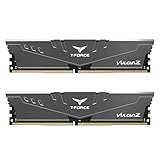
- Simple design to perfectly protect the cooling module with high thermal conductive adhesive
- Supports Intel & AMD motherboards
- Selected high-quality IC
- Supports XMP2.0
- Energy saving with ultra-low working voltage
Use the voltage specified for your exact kit and consider your CPU, motherboard, BIOS, DIMM temperature, and workload. Intel classifies XMP as memory overclocking, and supported memory operation also depends on the processor, motherboard, kit, and configuration; a profile is not a guarantee that every platform will run it reliably (Intel XMP overview; AMD Ryzen memory compatibility).
DRAM voltage is not CPU memory-controller voltage
Changing DRAM voltage does not automatically change the voltages that feed or support the CPU’s memory controller. Depending on the platform, BIOS controls may include:
Windows Errors? Fix Them Before They Spread
Repair common Windows errors and clear accumulated junk for a smoother, more stable PC - no reinstall needed.Free scan · no reinstallCrashes, No Sound, or Screen Glitches?
Random freezes, missing sound and display glitches usually trace back to one bad driver. Find and replace yours safely.Free scan · under a minute- DRAM VDD and VDDQ: DDR5 module voltage domains that may be exposed separately by the motherboard.
- DRAM VPP: another DDR5-related rail that some firmware presents as a separate control.
- CPU memory-controller-related voltages: names vary, and can include AMD SoC or VDDIO/MC controls and Intel System Agent or VDDIO/IMC controls.
- Controller and fabric clocks: AMD systems may expose UCLK or FCLK settings separately from the DRAM data rate.
DDR5 modules commonly include an onboard PMIC, and motherboard BIOSes may offer multiple voltage controls rather than one universal “RAM voltage” setting. Read the manual for your exact board; a monitoring utility’s single voltage reading may not represent every rail. MSI’s BIOS manual illustrates separate DRAM VDD, VDDQ, VPP, and memory-controller-related controls (MSI BIOS voltage controls).
Rank #4
- Boosts System Performance:64GB DDR4 laptop memory RAM kit (2x32GB) that operates at 3200MHz, 2933MHz, or 2666MHz to improve multitasking and system responsiveness for smoother performance
- Easy Installation: Upgrade your laptop RAM with ease—no computer skills required Follow step-by-step how-to guides available at Crucial for a smooth, worry-free installation
- Compatibility Guaranteed: Ensure seamless compatibility with your laptop by using the Crucial System Scanner or Crucial Upgrade Selector—get accurate recommendations for your specific device
- Trusted Micron Quality: Backed by 42 years of memory expertise, this DDR4 RAM is rigorously tested at both component and module levels, ensuring top performance and reliability
- ECC Type = Non-ECC, Form Factor = SODIMM, Pin Count = 260-pin, PC Speed = PC4-25600, Voltage = 1.2V, Rank and Configuration = 2Rx8
If your goal is to reduce CPU memory-controller stress, lowering DRAM voltage alone may not achieve it. Maximum usable memory speed depends on the processor, motherboard, DIMM configuration, and memory kit. ASUS also recommends checking compatibility and its memory QVL (ASUS memory setup and compatibility guidance).
Choose the configuration that fits your goal
| Configuration | Frequency and voltage | Timings | Best suited to |
|---|---|---|---|
| JEDEC/default | Standard default speed and voltage for the modules and platform | Standard settings | Compatibility-first use or troubleshooting |
| XMP/EXPO at rated profile | Profile data rate and specified voltage | Profile settings | Using the kit’s performance profile when the system is stable |
| Profile with lower frequency | Reduced data rate; profile voltage may remain applied | May remain profile-based or be board-derived | A simple compromise when the rated profile is unreliable or the CPU’s memory controller needs more margin |
| Lower frequency and manually reduced voltage | Reduced data rate and a lower value established through testing | May need adjustment | Efficiency or temperature tuning when you can test thoroughly |
Keep the original profile voltage initially if you want a simple lower-frequency configuration and it is within the kit’s specification. Try reducing voltage only after the lower-frequency setup is known to work. Disable the profile and use JEDEC/default settings when reliability and compatibility matter more than performance, or when diagnosing crashes. Consider a matched, better-supported kit if repeated testing fails, you are mixing kits, or your DIMM configuration cannot run the desired profile; ASUS recommends matched kits and QVL checks, and AMD’s compatibility guidance is platform-specific.
How to lower frequency without changing several variables
BIOS labels and menu locations vary by board maker, firmware, chipset, and memory generation. MSI documents separate profile, frequency, and voltage controls, and ASUS uses names such as XMP, EXPO, and DOCP depending on the platform. Treat the following as a control sequence, not a universal menu path.
Best Value

- Capacity – 32GB RAM KIT (2 x 16GB Modules) Speed up to 2666MHz Non-ECC Unbuffered 288-Pin 1.2V UDIMM.
- Specs – Black PCB Color and Dual Rank (2Rx8).
- Compatibility – Designed for selected DDR4 Desktop PCs and workstations that support 288-Pin UDIMM memory. NOT compatible with Laptop SODIMM slots.
- Installation – Plug-and-Play Upgrade, Quick and Easy to Install, no expertise required (please refer to your system's manual for guidelines).
- Warranty – All Timetec products are high-quality and rigorously tested to meet stringent standards. Backed by Timetec Limited Lifetime Warranty and professional technical support based in the United States.
Option 1: Keep the profile voltage and lower frequency
- Enter BIOS/UEFI using the key documented for your motherboard; common keys include
DeleteandF2. - Enable the desired XMP profile, or the equivalent EXPO/DOCP setting.
- Record the profile data rate, primary timings, DRAM voltage, and any visible VDDQ or memory-controller settings.
- Change only “DRAM Frequency,” “Memory Frequency,” or the equivalent setting to the desired lower data rate.
- Initially leave the profile voltage unchanged. “Auto” is not a guarantee of JEDEC voltage; inspect the value the BIOS reports.
- Save and reboot, then confirm the resulting memory speed in BIOS or the operating system.
- Run stability tests before relying on the new configuration.
This is a troubleshooting baseline, not proof that the voltage is optimal. The board may alter other settings automatically.
Option 2: Reduce voltage after confirming stability
- Start from a configuration that boots and operates reliably.
- Lower frequency first and test at the original profile voltage.
- Reduce the relevant DRAM voltage in small increments, changing only that setting.
- Save, reboot, and repeat the same stability checks after each change.
- Return to the last passing value if memory training fails, errors appear, applications crash, WHEA errors occur, or reliability becomes inconsistent.
- Check cold starts and sleep/resume behavior as well as a successful warm boot.
Lower voltage reduces signal margin, so a failure at a reduced voltage does not by itself indicate defective memory. Restore the last known-good value. Avoid changing frequency, timings, DRAM voltage, CPU-related voltages, and fabric settings all at once; otherwise it is difficult to identify the cause of a failure.
Option 3: Return to JEDEC/default operation
- Disable XMP/EXPO/DOCP.
- Leave memory frequency, voltage, and timings on the board’s default or Auto settings.
- Boot and check the resulting speed and, where available, voltage.
- Test the system at those settings.
XMP-capable modules retain JEDEC defaults, and JEDEC operation is the board’s normal fallback before enabling a performance profile (Intel XMP profiles; MSI XMP/EXPO guide).
Independent reader supportYour contribution helps us test, update, and keep practical guides available for everyone.Verify the setting and test for errors
Check the effective speed in BIOS or an operating-system utility such as Windows Task Manager. ASUS documents checking the resulting memory speed after enabling a profile (ASUS memory setup guidance). If a hardware monitor reports half the marketed DDR data rate as the clock, that may be normal; compare like with like. For DDR5, inspect the board’s readings for each relevant voltage rail where available instead of assuming one reported value describes them all.
Recommended Free Tools
A successful boot, game launch, or short benchmark is not proof of memory stability. Use at least one dedicated memory test and a representative workload. Options include bootable MemTest86, Windows Memory Diagnostic as a basic screen, or tools such as TestMem5, Karhu RAM Test, and OCCT; availability, versions, and licensing vary. No single test duration guarantees stability.
| Test stage | What it can reveal |
|---|---|
| Several restarts | Basic POST and memory-training reliability |
| Cold boot | Marginal behavior that may not appear after a warm restart |
| Sleep and resume | Firmware or memory-context behavior after low-power states |
| Dedicated memory test | Errors in the memory subsystem under the test’s conditions |
| CPU-plus-memory workload | Interaction among the memory controller, system load, and temperature |
| Real workload | Application-level reliability for the tasks you actually run |
Troubleshoot common symptoms
| Symptom | Possible explanation and next step |
|---|---|
| No POST or repeated training attempts after a change | The new frequency, timing, or voltage combination may not train. Restore the previous settings or load defaults; if needed, clear CMOS using the motherboard manual. |
| Random application crashes or memory-test errors | The memory configuration may be unstable, or the fault may lie elsewhere. Return to the last known-good settings and change one variable at a time. |
| WHEA errors or crashes continue at lower frequency | Frequency alone may not be the cause. Tight timings, CPU-related voltages, fabric/controller clocks, DIMM placement, or a non-memory fault may be involved. |
| Errors appear only after sleep or cold boot | Training or resume behavior may be marginal even if ordinary boots pass. Include these states in testing and revert the latest change if they fail. |
| Stable at JEDEC but not with XMP/EXPO | The profile may exceed the practical capability of this CPU, board, DIMM configuration, or BIOS. Check the board QVL and consider a lower profile frequency. |
| Stable at lower frequency but not at lower voltage | The lower voltage may lack sufficient signal margin. Restore the last passing voltage rather than assuming a hardware defect. |
| Lowering frequency brings no improvement | Check timings, CPU memory-controller settings, UCLK/FCLK where applicable, DIMM slots, mixed or four-DIMM configurations, and whether the instability is actually memory-related. |
| XMP is missing from the BIOS | The modules may lack an XMP profile, the system may use a different name such as EXPO or DOCP, the BIOS may not support the profile, or an OEM firmware may restrict tuning. Confirm the board and memory documentation. |
If a setting change prevents booting, use the motherboard’s documented recovery procedure. MSI and Gigabyte manuals describe recovery through defaults or CMOS clearing; follow the instructions for your exact model (MSI AM5 BIOS manual; Gigabyte Z790 BIOS manual).
Quick Recap
Product prices and availability are accurate as of the date/time indicated and are subject to change. Any price and availability information displayed on Amazon at the time of purchase will apply.

