
Magnetic tape is the practical choice for cold archives today: it is an established, comparatively low-cost medium with current capacity and speed specifications. DNA storage promises far greater theoretical density and potentially long-lasting storage, but its synthesis and sequencing costs, access speed, and system maturity keep it from being a broadly deployable alternative. The comparison is not simply a matter of bytes per volume: theoretical DNA density is not the same measure as a usable tape cartridge or a complete archive system.
How DNA storage and magnetic tape work
DNA storage represents digital information in sequences of DNA bases. To write data, a system encodes bits and has DNA synthesized; to read it, the DNA is sequenced and the resulting data decoded. The process involves biological molecules and specialized equipment rather than a conventional removable drive.
Magnetic tape records data on a coated strip of moving media. A compatible tape drive writes and reads the data, generally in sequence rather than with the random access of a hard drive. Tape is commonly used for infrequently accessed archives, often as part of a larger system that includes drives and libraries.
How much data can each hold?
DNA: extraordinary potential density, not a product capacity
Microsoft Research estimates potential DNA storage density of up to about 1 exabyte per cubic millimeter. The U.S. Government Accountability Office (GAO) describes a potential of more than 11 trillion gigabytes per cubic inch. These figures describe potential density, not the capacity of a currently available commercial DNA archive. Microsoft Research describes its DNA Storage project as research into molecular-level archival storage using synthesis, manipulation, and sequencing: Microsoft Research: DNA Storage.
#1 Best Overall

- High Storage Capacity of 18TB and up to 45 TB compressed capacity
- Supports transfer speeds of 400 MB/s (native), 1,000 MB/s (2.5:1) with Generation
- Barium Ferrite (BaFe) technology
- Support for tape drive hardware encryption
- Compatible with Linear Tape File System (LTFS)
Tape: current LTO-10 cartridge capacities
The LTO Program lists two LTO-10 native-capacity options. Its compressed figures assume a 2.5:1 compression ratio; actual results depend on how compressible the data is, so native capacity is the more useful baseline when comparing storage needs.
| Format option | Native capacity per cartridge | Compressed capacity at 2.5:1 |
|---|---|---|
| LTO-10 option | 30 TB | Up to 75 TB |
| LTO-10 option | 40 TB | Up to 100 TB |
These are LTO-10 format figures from the LTO Program’s LTO Tape Technology page. A cartridge’s stated capacity is a media specification; using it requires a compatible drive and, in many deployments, supporting infrastructure.
Rank #2

- Upc: 883436693417
- Weight: 0.550 lbs
Which lasts longer?
DNA molecules can be highly stable under suitable conditions, but a molecular longevity estimate is not a guarantee that a complete archive will remain recoverable for the same length of time. Microsoft Research reports a DNA half-life estimate above 500 years, while the GAO says DNA could last thousands of years at very low temperature. Those claims are conditional and concern DNA’s potential stability, not a guaranteed operational lifetime for the whole storage system. Encoding, error correction, sample handling, storage conditions, and access to compatible synthesis and sequencing methods also matter. The GAO discusses the promise and practical limitations of DNA and other alternative storage technologies in its Science & Tech Spotlight: Alternative Data Storage Technologies, published 19 May 2022.
Tape is a mature archival medium, but the sources cited here do not establish a single tape-lifespan number that can be fairly compared with DNA’s conditional molecular estimates. In practice, maintaining a tape archive is a system-management task: the medium, drives, libraries, and format compatibility all affect whether information remains accessible.
Rank #3

- Made in China
- Package height :11.4 cm
- Package length :2.8 cm
- Package width :10.8 cm
How quickly can data be written and read?
For DNA, writing requires synthesis and reading requires sequencing, so the workflow is unlike a drive that can quickly serve routine requests. Speed remains a deployment hurdle, but the sources cited here do not provide comparable current end-to-end DNA throughput figures. SNIA’s overview of the DNA Data Storage Alliance’s standards and industry work identifies speed, capacity, equipment size and complexity, and cost as continuing barriers: SNIA: DNA Data Storage Alliance—Standards Progress, Industry Momentum, and the Road to Commercial Readiness.
The LTO Program specifies a 400 MB/s data rate for LTO-10. Tape is sequential media, so actual performance depends on the drive, data layout, and system configuration; the specification should not be read as a guarantee that every archive workload will sustain that rate. The rate is listed on the LTO Program’s LTO Tape Technology page.
Rank #4
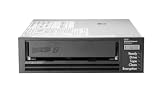
- Recording technology: lto-8 Ultrium 30750
- Capacity: 30 TB
- Host interface 6 GB/s SAS
What does each option cost?
DNA’s economics remain a barrier to broad archival use. The GAO reported a figure of about $3,500 per megabyte in May 2022 and said DNA then cost millions of times more than hard-drive storage. This is historical context from the GAO’s 2022 spotlight, not a 2026 price or a like-for-like total-cost estimate.
Tape is described as a low-cost, low-energy option for infrequently accessed data, but actual system costs vary with drives, libraries, workload, and operations. IBM Research’s 8 January 2025 review surveys tape technology and its role in archival storage: IBM Research: Magnetic Tape Storage Technology. In an August 2025 LTO-10 announcement, the LTO Program quoted IDC Research Vice President Phil Goodwin: “Tape continues to deliver some of the best value in data storage, combining low costs with minimal energy use”. That is an attributed analyst statement, not an independent comparative cost test: LTO Program: Generation 10 announcement.
The Tool Desk
Outbyte PC Repair FREEClear out junk files and repair common Windows errorsFree Scan →Outbyte Driver Updater FREEFix the driver behind crashes, sound loss and screen glitchesFind Drivers →Best Value

- Storage capacity: 25,000GB (2.5TB) native to 625,000GB (6.25TB) compressed
- Transfer rate (native): 160 Mbs
- 2775.59-Feet Storage
A fair total-cost comparison would need equivalent assumptions for DNA synthesis, sequencing, storage conditions, error correction, tape drives and libraries, workload, retention period, and any refresh or migration policy. The available figures do not establish a current, directly comparable DNA-versus-tape price per terabyte.
Independent reader supportYour contribution helps us test, update, and keep practical guides available for everyone.Which should you choose?
- Choose tape for a practical cold archive today when data is infrequently accessed and you can support compatible tape drives and the surrounding infrastructure. LTO-10 provides defined native capacity options and a specified data rate.
- Consider DNA as an emerging research direction when evaluating future high-density archival concepts, not as a readily purchasable consumer backup medium. Its density and longevity potential do not yet establish a commercially deployable system with comparable capacity, throughput, or cost.
For a broader overview of DNA’s archival promise and current limitations, see the GAO’s 2022 spotlight. For tape’s technology and use in infrequently accessed storage, see IBM Research’s 2025 review.
Quick Recap
Product prices and availability are accurate as of the date/time indicated and are subject to change. Any price and availability information displayed on Amazon at the time of purchase will apply.

