
Do these 3 things before closing this tab:
1Clear out junk files and repair common Windows errors2Scan for outdated or missing drivers - takes under a minute3Repair Windows errors before they cause bigger problemsYou can automate a small greenhouse with Home Assistant coordinating ESPHome microcontrollers, sensors selected for your growing setup, and properly matched controls for ventilation or watering. Start with one decision you want the system to make, such as alerting when air temperature is high or watering when growing-medium moisture is low. Then choose the measurement, sensor location, output device, and manual fallback. There is no single temperature, humidity, or moisture threshold that suits every crop and greenhouse.
How can you automate a greenhouse with Home Assistant?
Use Home Assistant to bring readings and device states together, and configure an ESPHome-supported microcontroller to expose sensors and peripherals. Home Assistant’s official ESPHome integration communicates through ESPHome’s native API and maintains a connection that can deliver state changes as they occur. That supports a responsive system, but does not guarantee reliability or offline operation in every installation. Home Assistant’s ESPHome integration documentation explains the connection.
A simple first project is to monitor air temperature and humidity, display those readings in Home Assistant, and send an alert when conditions exceed a limit you have chosen for your crop and setup. Once the readings are trustworthy, add one controlled function—ventilation or irrigation, for example—instead of automating several greenhouse systems at once.
Plan the measurements and actions before choosing parts
For each automation, work through the decision from beginning to end. A temperature-based ventilation rule needs an air-temperature measurement in a representative location, an exhaust fan or other suitable output, and a way to ventilate manually. A watering rule needs a measurement relevant to the growing medium, a water source and delivery method, and a way to water without relying on the automation.
Windows Errors? Fix Them Before They Spread
Repair common Windows errors and clear accumulated junk for a smoother, more stable PC - no reinstall needed.Free scan · no reinstallOutdated Drivers Are Slowing You Down
One free scan finds every outdated or missing driver and matches the right update for your exact hardware.Free scan · exact hardware match#1 Best Overall

- 2.4GHz Dual Mode WiFi + Bluetooth Development Board
- Support LWIP protocol, Freertos
- SupportThree Modes: AP, STA, and AP+STA
- Ultra-Low power consumption, Compatible with Arduino IDE
- ESP32 is a safe, reliable, and scalable to a variety of applications
- Choose the action: Decide whether you need monitoring, an alert, scheduled operation, or automatic control.
- Choose the measurement: Identify which reading can support that action. Add moisture, light, water temperature, leak detection, or nutrient-related measurements only when they inform a specific decision.
- Choose the sensor location: Place it where the reading represents the plants or growing medium you intend to manage, while protecting it from water and condensation.
- Choose the output and fallback: Match the controller and switching hardware to the fan, valve, pump, or light, and plan how to operate it manually if a sensor, network, or automation stops working.
Thresholds and schedules depend on the crop, growing medium, climate, greenhouse design, and consequences of an incorrect reading. The available sources do not establish universal setpoints, so select them for the specific growing context rather than copying a generic value.
Choose a Home Assistant host and ESPHome node
If Home Assistant is already running in your home, you may be able to use that host; it does not have to sit inside the greenhouse. A 2022 Novia University of Applied Sciences project report describes a greenhouse-related arrangement hosted on a Raspberry Pi, which is one example rather than a current hardware ranking or a requirement. Consider network reach, power, storage, and maintenance when deciding whether a separate host is useful. Read the project report.
Rank #2
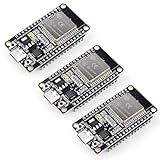
- Dual-Core Performance Up to 240 MHz: Run sensor processing, wireless communication, automation logic and connected-device tasks on a 32-bit dual-core ESP32 platform designed for responsive embedded and IoT projects
- Built-in Wi-Fi and Bluetooth 4.2: Connect to 2.4 GHz Wi-Fi networks or use Bluetooth Classic and BLE for wireless sensors, smart devices, remote controls, home automation and other connected projects
- Flexible Power-Saving Modes: ESP32 power-management features support dynamic clock scaling and low-power operating modes, helping developers reduce energy use in compatible sensing, monitoring and connected-device applications, suitable for battery-powered Internet of Things (IoT) devices.
- USB-C Programming with CP2102: Connect through USB-C for power, sketch uploads and serial monitoring, while GPIO, UART, SPI and I2C interfaces support sensors, displays, motor drivers and other modules (USB-C cable not included)
- Over-the-Air Update Support: Configure OTA functionality through a compatible ESP-32 software framework to update deployed firmware over Wi-Fi without reconnecting the board by USB for every revision
ESPHome supports ESP32 and other microcontroller families. Select a board based on the inputs and outputs your project needs, connectivity, firmware support, power arrangements, and installation environment—not on a claim that one board is best for every greenhouse. ESPHome lets you configure sensors and peripherals for supported devices. ESPHome’s component index lists its documentation by component and platform.
Select and place sensors for greenhouse conditions
Air temperature and humidity
Use a sensor suited to the greenhouse environment, rather than assuming an indoor sensor will tolerate humidity, splashes, or condensation. Sensor placement also affects whether readings reflect conditions around the plants. ESPHome’s HDC302x documentation warns that condensation can form below the dew point and prevent accurate humidity readings. Protect the sensor appropriately and avoid a location where condensation makes its reading unreliable. See ESPHome’s HDC302x documentation.
Quick wins for a faster PC:
Clear out junk files and repair common Windows errorsFree Scan →Scan for outdated or missing drivers - takes under a minuteDriver Scan →Repair Windows errors before they cause bigger problemsFix Now →Rank #3

- Powerful ESP-32 Board: Unlock the world of Internet of Things (IoT) and advanced electronics with the heart of this kit: the ESP-32 board. It features a powerful dual-core processor, integrated Wi-Fi and Bluetooth 4.2, making it perfect for building connected, smart devices that communicate with your phone or the cloud. It's fully compatible with the Arduino IDE for easy programming.
- Super Starter Kit: This kit contains over 35 different modules and electronic components, including sensors, displays, motors, and input devices. From LEDs and buttons to an OLED screen, servo motor, and keypad, you have everything needed to explore a vast range of projects in one box.
- Step by Step Online Tutorial: Jump right in with our detailed, beginner-friendly tutorial. Access 30+ projects with complete code, clear circuit diagrams, and step-by-step instructions. Learn the fundamentals of electronics, coding, and how to utilize the ESP-32's unique capabilities without any prior experience.
- Hands-on Learning for All Skill Levels: Perfect for students, makers, engineers, and hobbyists. Start with basic circuits and coding, then progress to intermediate and advanced IoT applications. Build practical projects like weather stations, smart home controllers, remote-controlled devices, and interactive gadgets. The skills you learn are the foundation for real-world innovation.
- Quality & Great Support: Elegoo is committed to quality. We provide a clear, detailed tutorial guide, refined code, and a well-organized component kit. All modules are carefully selected for reliability and ease of use. Our dedicated technical support team and active online community are ready to help you succeed in your learning journey.
Growing-medium moisture and other measurements
A moisture reading depends on sensor type, the growing medium, and how the sensor is installed. Treat it as an input to a decision that you validate in your own setup, not as a universal measure of whether every plant needs water. Add measurements such as brightness, conductivity, pH, or water temperature only if you know what action they will guide. The AutoGreenHouse community project demonstrates a range of greenhouse-related readings and hardware; it is an example, not a required parts list or verified performance recommendation.
Automate ventilation or climate control carefully
For a first control, use a measured value and a deliberately chosen rule to operate a suitable output. A thermostat-style controller can express a target and operating mode; a simpler threshold automation may be enough for an alert or fan. ESPHome describes climate devices this way: “Climate devices can represent different types of hardware, but the defining factor is that they have a settable target temperature and can be put in different modes like HEAT, COOL, HEAT_COOL or OFF.” Functions vary by component, so check the documentation for the specific platform before relying on a particular mode or behavior. ESPHome Climate Component documentation.
Rank #4

- 2.4GHz Dual Mode WiFi + Bluetooth Development Board
- Support LWIP protocol, Freertos;ESP32 is a safe, reliable, and scalable to a variety of applications
- SupportThree Modes: AP, STA, and AP+STA
- Ultra-Low power consumption, Compatible with Arduino IDE
- 1PCS 30Pin ESP32 Development Board 2.4GHz WiFi Dual Cores Microcontroller Integrated with Antenna RF Low Noise Amplifiers Filters
Before connecting a fan, heater, pump, valve, or light, verify that the switching method and control hardware match the device’s voltage, current, and startup load. Use an enclosure appropriate for the greenhouse environment, and keep a manual operating method available. The cited examples do not validate a particular relay, pump, valve, mains-wiring plan, or installation; do not treat a sample configuration as electrical safety guidance.
Independent reader supportYour contribution helps us test, update, and keep practical guides available for everyone.Choose manual watering or automated irrigation
Manual watering with an alert is the simpler option when you want a reminder but do not want a valve or pump making the decision. Automated watering can use a schedule or a sensor-informed rule to operate a suitable pump or valve and delivery system. ESPHome’s DIY examples include an irrigation controller, showing that irrigation is a supported project direction, not that a particular design will suit every water source or greenhouse. Browse ESPHome’s DIY examples.
Recommended Free Tools
Best Value

- 2.4GHz Dual Mode WiFi + Bluetooth Development Board
- Ultra-Low power consumption, works perfectly with the Arduino IDE
- Support LWIP protocol, Freertos
- SupportThree Modes: AP, STA, and AP+STA
- ESP32 is a safe, reliable, and scalable to a variety of applications
Before automating water delivery, consider the water source, zones, flow and pressure requirements, and what happens if a sensor gives a bad reading or a valve does not behave as expected. The appropriate manual override and safeguards depend on that design; the available project examples do not provide a universal, validated watering plan.
Make readings visible and plan for failures
Put sensor values and device states where you can see them in Home Assistant. Make it possible to notice a disconnected sensor or a reading that does not make sense before that reading drives watering or climate control. Preserve a practical way to ventilate or water manually if an automation, network connection, or controller is unavailable. These are design precautions, not a guarantee that a particular backup arrangement will prevent failures.
What if the greenhouse already has a commercial controller?
Check what the existing controller already measures and controls before adding another system. Home Assistant’s Ridder HortiMaX Pro integration is community-built and read-only; it is not certified or supported by Ridder, and it should not be treated as a DIY control path for that controller. See the integration’s stated limitations. The cited information does not establish whether another commercial controller can be safely controlled by custom Home Assistant automations.
Quick Recap
Product prices and availability are accurate as of the date/time indicated and are subject to change. Any price and availability information displayed on Amazon at the time of purchase will apply.

